How to Build Autonomous Marketing Agents with Claude Code in 2026
Learn how to move from simple prompting to agentic orchestration with Claude Code. This 2026 playbook shows growth marketers how to build autonomous agents that drive 10.3x ROI.
In 2026, the marketing landscape has undergone its most significant transformation since the invention of the search engine. We have officially transitioned from the era of 'Chatting' with AI to the era of agentic orchestration. For growth marketers, this means moving beyond the comfort of the browser-based chat interface and into the realm of autonomous agents that don't just suggest strategies—they execute them. According to latest data from Statista, the global AI marketing market has surged to $128 billion, and 78.4% of practitioners now use AI tools daily to stay competitive.
The 10.3x ROI Gap: Why Agentic Workflows are the 2026 Gold Standard
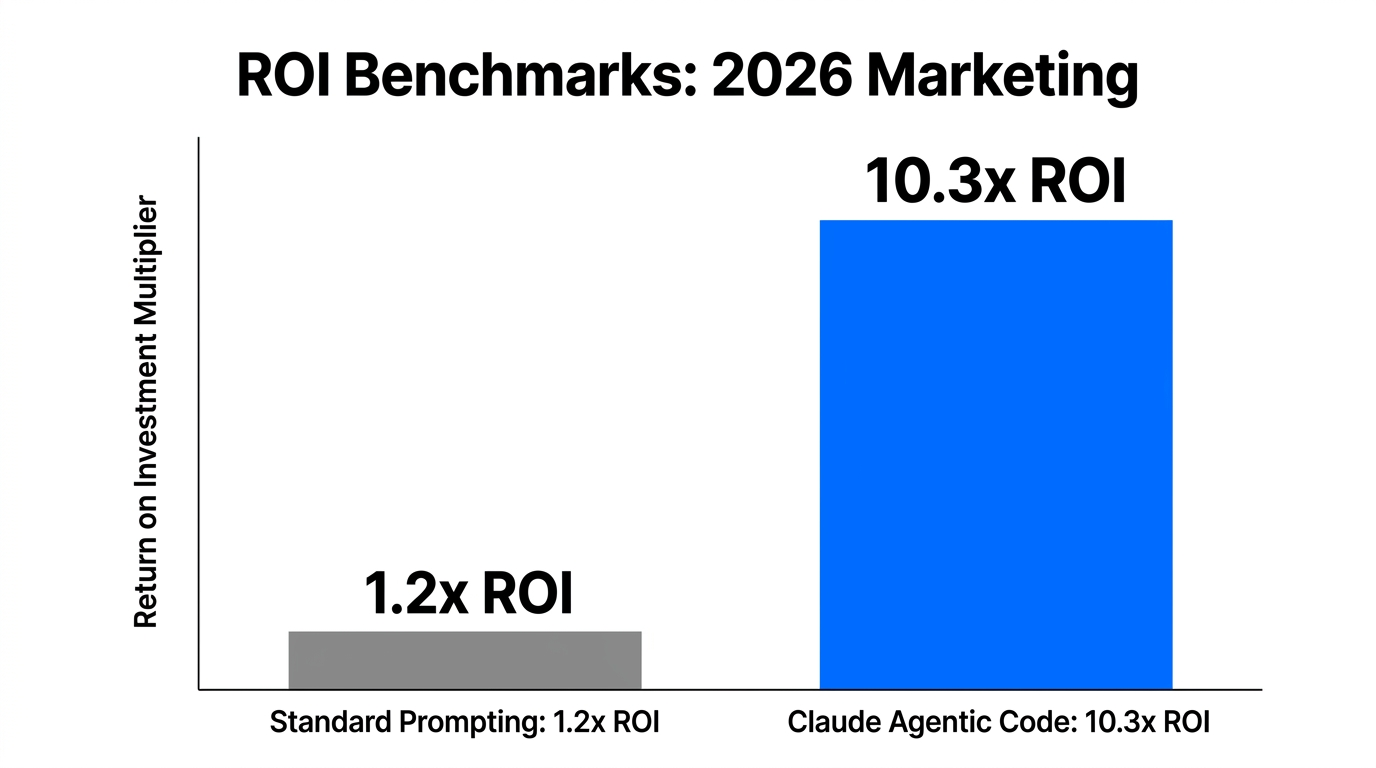
The divide between 'average' and 'high-maturity' marketing teams has never been wider. While the average return for generative AI investments sits at a respectable $3.70 for every $1 spent, teams that have embraced agentic orchestration using tools like Claude Code are reporting an eye-watering ROI of $10.30 per $1 spent, according to Boston Consulting Group (BCG) research. This 2.7x difference in performance is driven by the shift from manual prompt-wrangling to building self-correcting workflows. Instead of spending hours perfecting a single output, modern marketers are building 'doing' engines that handle the heavy lifting of campaign execution.
"The key shift in 2026 isn't about finding the best prompt; it's about building the best autonomous environment where AI can think, code, and deploy on your behalf."
This productivity gain isn't just theoretical. Research indicates that teams using agentic tools report a 75% reduction in time spent on repetitive strategic analysis, such as competitor auditing and content gap mapping. For example, platforms like Stormy AI streamline these complex tasks by automating the entire creator discovery and vetting process.
Choosing Your Engine: Claude 4.6 vs. Gemini 3.1
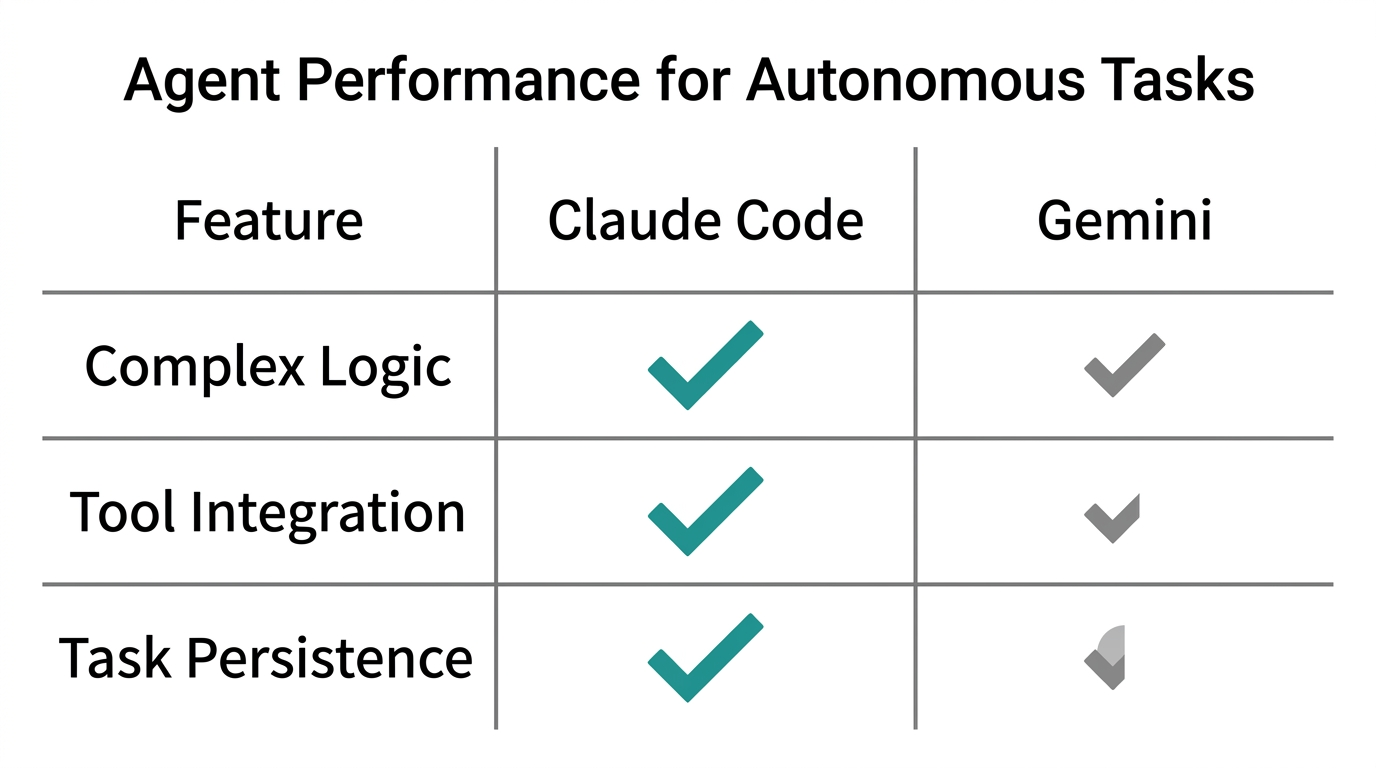
Building an autonomous agent requires a robust foundation. In 2026, the two primary contenders for the 'brain' of your marketing agent are Claude 4.6 (Anthropic) and Gemini 3.1 Pro (Google). While Gemini 3.1 excels at massive context windows and native integration with the Google Workspace, Claude has emerged as the superior choice for autonomous coding and nuanced reasoning. Tools like Stormy AI often integrate these models to allow for natural-language creator discovery, but for building your own custom agents, understanding the technical nuances is vital.
| Feature | Claude 4.6 Opus/Sonnet | Gemini 3.1 Pro |
|---|---|---|
| Best For | Reasoning & Strategic Logic | Real-time Data & Context |
| Coding Agent Skill | Superior (Self-correcting) | Moderate |
| Context Window | 128K+ Tokens | 1M+ Tokens |
| Writing Style | Natural, Human-like | Functional / Serviceable |
| Integration | MCP (Universal) | Native Google Ads/Search |
According to benchmarking data from Anthropic's performance reports, Claude leads in coding benchmarks, which is critical for agents that need to build landing pages or script automated reports without human intervention.
The Playbook: Initializing Your Autonomous Marketing Environment
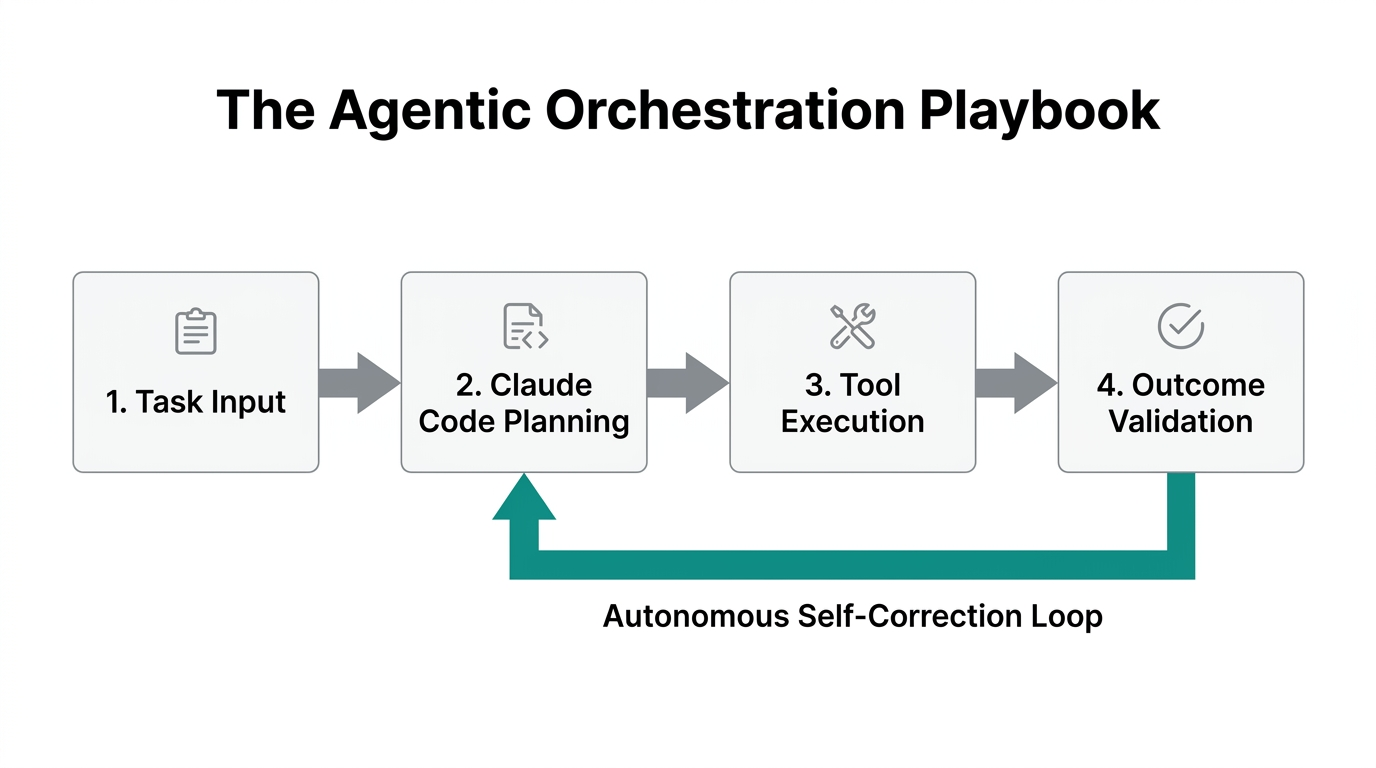
Moving from 'browser chat' to 'agentic CLI' might sound intimidating, but the process has been streamlined for non-technical users in 2026. Follow this step-by-step guide to set up your first autonomous marketing agent.
Step 1: Initialize Your CLI Environment
The first step is moving into the terminal. Use Claude Code to set up a dedicated marketing environment. By running claude init in your terminal, you create a sandboxed workspace where the AI can access local files, such as your brand guidelines, past campaign data, and SEO spreadsheets. This allows the AI to ground its decisions in your specific first-party data rather than generic web knowledge.
Step 2: Connect the Stack with MCP
The Model Context Protocol (MCP) is the 'USB-C for AI.' It allows you to connect Claude directly to your marketing tools without writing complex API integrations. For example, by using a WordPress MCP server, you can allow Claude to 'see' your CMS, identify content gaps, and even draft landing pages directly into your site. This setup eliminates the friction of manual data export-import loops.
Step 3: Deploy Specialized Agents
Once connected, you don't just ask Claude for ideas; you deploy agents for specific tasks. For instance, you can use a command like /audit [URL] to have a sub-agent run a full SEO and competitor report. Because the agent is autonomous, it can visit your competitor's sites, analyze their Meta Ads Library, and present you with a finished gap analysis in minutes.
"The '18-Minute AI Team' isn't a dream—it's what happens when you link Claude Code to your live data via MCP servers."
Real-World Impact: From 31% Higher Opens to 396% Conversion Boosts
Autonomous agents aren't just for startups. Enterprise players like Unilever and Farfetch have already integrated agentic workflows to handle high-volume creative optimization. Farfetch, for instance, used AI agents to optimize email subject lines and CTAs, resulting in 31% higher open rates and a 38% lift in CTR, according to reports on Retail Dive.
Even more impressive is the case of A.S. Watson. By deploying an autonomous AI skincare advisor that predicts customer intent in real-time, the brand saw a 29% increase in average order value and a staggering 396% conversion rate boost. These results are documented by A.S. Watson Group. This level of hyper-personalization—adjusting landing page headlines and offers every 24 hours based on real-time search trends—is impossible with manual workflows.
The Human-in-the-Loop (HITL) Framework: Preventing 'AI Slop'
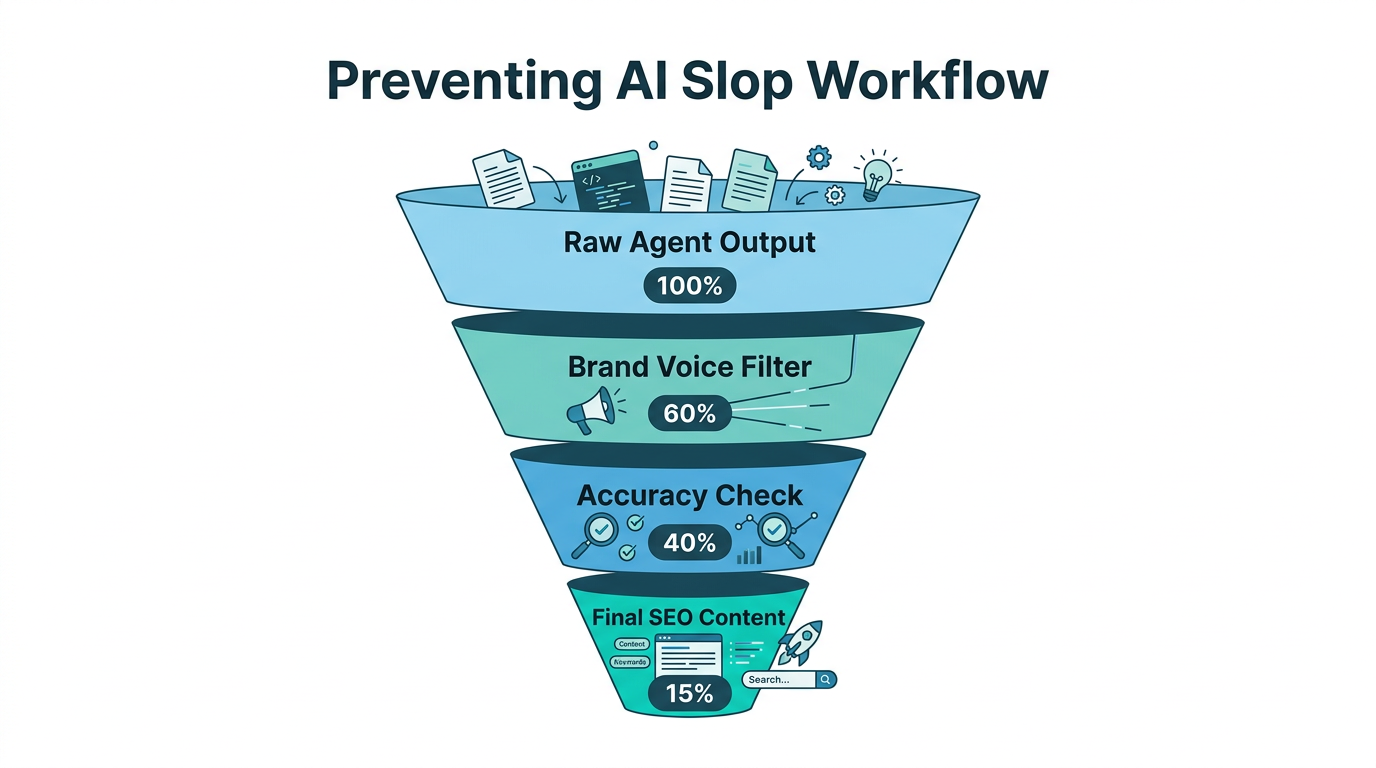
Despite the technical prowess of agents, the 'trust crisis' remains a major hurdle. In 2026, while 77% of advertisers view AI positively, only 38% of consumers share that sentiment. This is largely due to 'AI Slop'—generic, soulless content that floods the market. Shannon Reedy, Chief Brand Officer at Terakeet, warns that "unprepared brands risk losing control of their narrative to third-party AI interpretations," as noted on MarTech.
To avoid this, growth teams must implement a Human-in-the-Loop (HITL) framework. The agent handles the data processing, drafting, and technical deployment, but a human must inject the unique brand perspective and emotional nuance. As seen in the 2025 holiday campaign backlash for brands like Coca-Cola, documented by Forbes, audiences are increasingly rejecting 'too-perfect' AI visuals in favor of human-led creative.
The Future of Visibility: From SEO to GEO
Finally, building autonomous agents in 2026 requires a shift in how we think about search. Traditional SEO is being replaced by Generative Engine Optimization (GEO). Marketers now optimize for mentions in AI answers—such as ChatGPT Search and Gemini Deep Research—rather than just trying to rank #1 for blue links. By using Claude Code to analyze conversational long-tail queries, which now account for 60% of search volume according to Search Engine Land, brands can ensure their agents are creating content that AI engines will prioritize.
As we look forward, the 'Terminal Marketer' who can navigate the CLI, set up MCP servers, and orchestrate sub-agents will be the one who captures the majority of that 10.3x ROI. Platforms like Stormy AI continue to simplify these workflows for creator-led marketing, but the underlying principle remains: the future belongs to those who build agents that do.