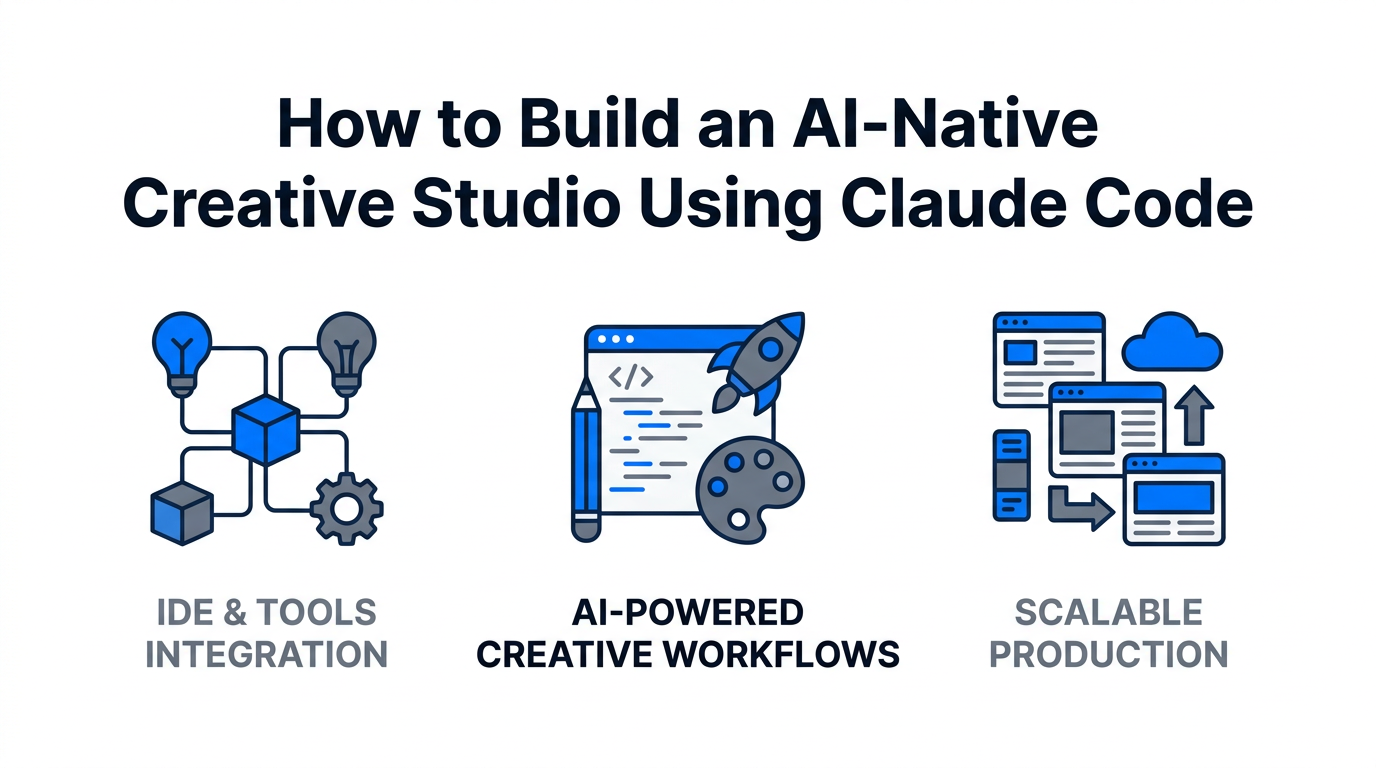
In the rapidly evolving landscape of 2025, the traditional creative agency model is being dismantled and rebuilt from the ground up. We have moved past simple automation; we are now in the era of agentic orchestration. By early 2026, an staggering 92% of businesses have reported plans to invest heavily in generative AI for marketing, according to data from the Digital Marketing Institute. For growth teams, the challenge isn't just about generating more content—it's about building a central nervous system that can reason, design, and execute at the speed of thought. Enter Claude Code: the command-line interface (CLI) that is turning lean marketing teams into high-output creative powerhouses.
The Rise of the Agentic Creative Studio
The shift from static automation to autonomous agents represents a fundamental change in how marketing operations function. While 2024 was about "if-then" triggers in tools like Zapier, 2025 and 2026 are defined by agents that can navigate codebases and manage complex APIs. Research indicates that 79% of companies are now deploying AI agents that can reason and make decisions rather than just follow rigid scripts. This shift is driving massive financial returns; startups using AI-driven automation report 20–30% higher ROI than those relying on traditional manual methods, with an average return of $5.44 for every $1 spent.
"2026 is defined by Autonomous Agents rather than simple 'if-then' workflows. The agency of the future isn't a team of 50; it's a team of 5 and an army of agents."
At the heart of this transformation is Claude Code. Unlike standard chat interfaces, Claude Code allows marketers to interact directly with their file systems and development environments. This means your creative workflows aren't just "asking for copy"; they are building the very tools that generate, validate, and deploy that copy. By leveraging the Model Context Protocol (MCP), Claude can now connect directly to external data sources like Meta Ads Manager or Apple Search Ads without requiring expensive custom middleware.
From 30 Minutes to 30 Seconds: Scaling Ad Creative Strategy
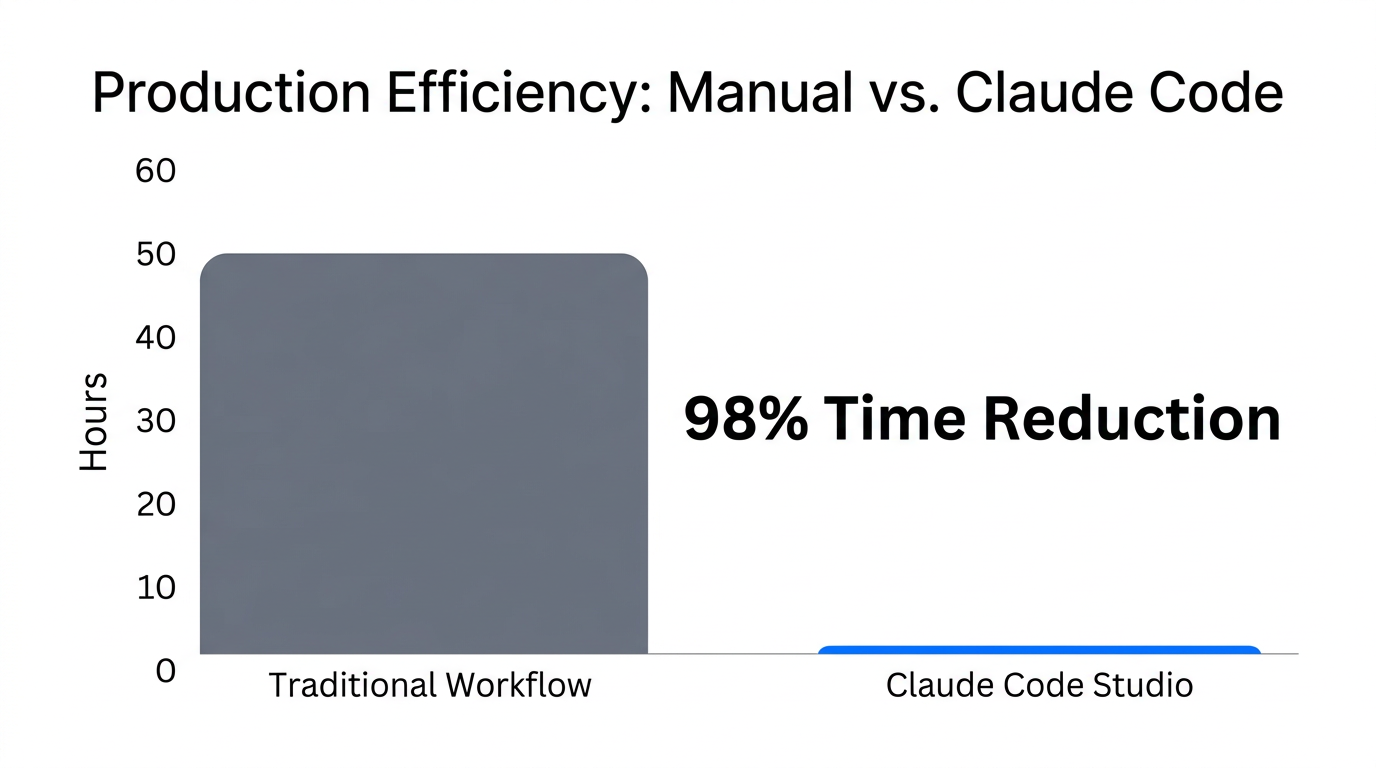
One of the most compelling use cases for an AI-native studio is the radical reduction in production time for ad variations. Anthropic’s own growth team demonstrated that by using Claude-powered workflows, they could reduce the time to produce an ad variation from 30 minutes to just 30 seconds per variant, as reported by Generation Digital. This 60x increase in speed allows for a level of creative testing that was previously impossible for smaller teams.
To achieve this, teams are moving away from manual entry in ad creative strategy. Instead of a designer manually adjusting a Figma file for 20 different headlines, Claude Code can be used to write Python scripts that interface with the Figma API. These scripts automatically inject performance-tested copy into pre-defined design templates. The result is a library of thousands of high-quality, brand-consistent assets generated in the time it used to take to brew a cup of coffee.
Orchestrating the Central Brain: Chaining Multi-Model Workflows
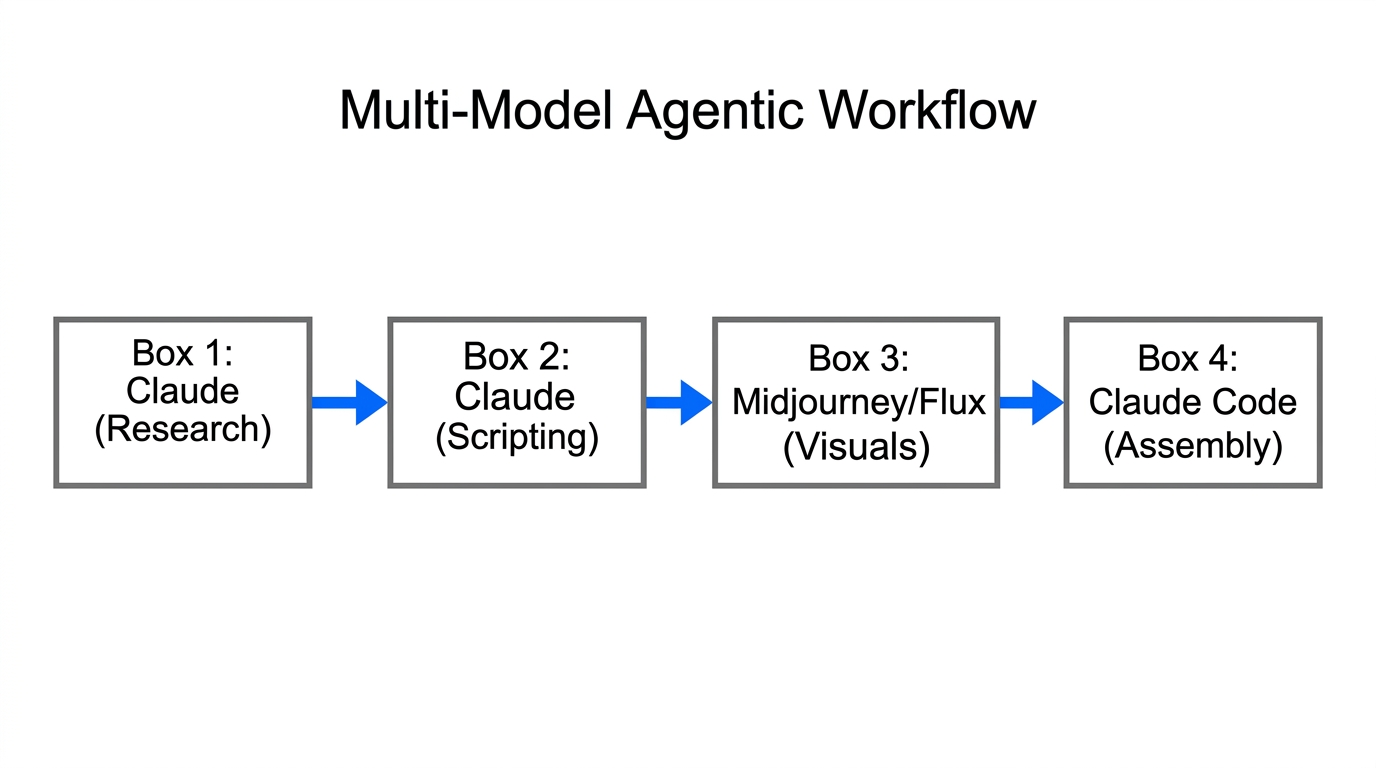
A true AI-native creative studio doesn't rely on a single model. It uses Claude as a "Central Brain" to orchestrate a specialized tech stack. Claude Code acts as the conductor, handling the logic and hand-offs between different specialized AI tools. For example, a content automation workflow might look like this:
- Claude Code writes the creative brief and script based on live ROAS data.
- The script is sent to ElevenLabs for high-fidelity voiceover generation.
- Voice and script are fed into Kling AI for AI video generation snippets.
- Final assets are upscaled using Topaz Labs for production quality.
| Workflow Stage | Tool of Choice | Claude's Role |
|---|---|---|
| Strategy & Scripting | Claude 3.5 Sonnet | Primary Reasoning & brief generation |
| Visual Assets | Midjourney / Figma | Generating prompts and API scripts |
| Audio & Video | ElevenLabs / Kling AI | Managing asset exports and timing |
| Data Integration | MCP Servers | Connecting live ad performance to creative |
This "agentic orchestration" is what allows startups like Genspark to reach $36M ARR within 45 days of launch. By using Claude as a coordinator, they automated complex search-driven ad workflows that would have required dozens of manual hires. For brands focusing on UGC-style content, Stormy AI can be integrated into this flow to discover high-performing creators whose aesthetic can then be used as the "style guide" for AI-generated variations.
Hyper-Personalized Video for Gen Z Demographics
Gen Z consumers demand authenticity and hyper-relevance. Static, broad-market ads no longer convert. AI-native studios are now using AI video generation to create "lifelike" AI actors tailored to specific niche demographics. According to market research on Gen Z demographics, this level of personalization is becoming the standard for 2026.
Using Claude Code, you can automate the generation of thousands of personalized video intros. Imagine an ad that greets the user by their niche interest or location, delivered by an AI avatar that matches their demographic profile. Tools like HeyGen can be triggered via API, with Claude managing the variations in script and visual context. This ensures that the message resonates deeply without the astronomical cost of traditional video production.
"AI-generated ads now deliver click-through rates (CTR) on par with human-made ads—around 0.76% compared to 0.65% for manual creative."
Automating Google RSA Validation and Brand Voice
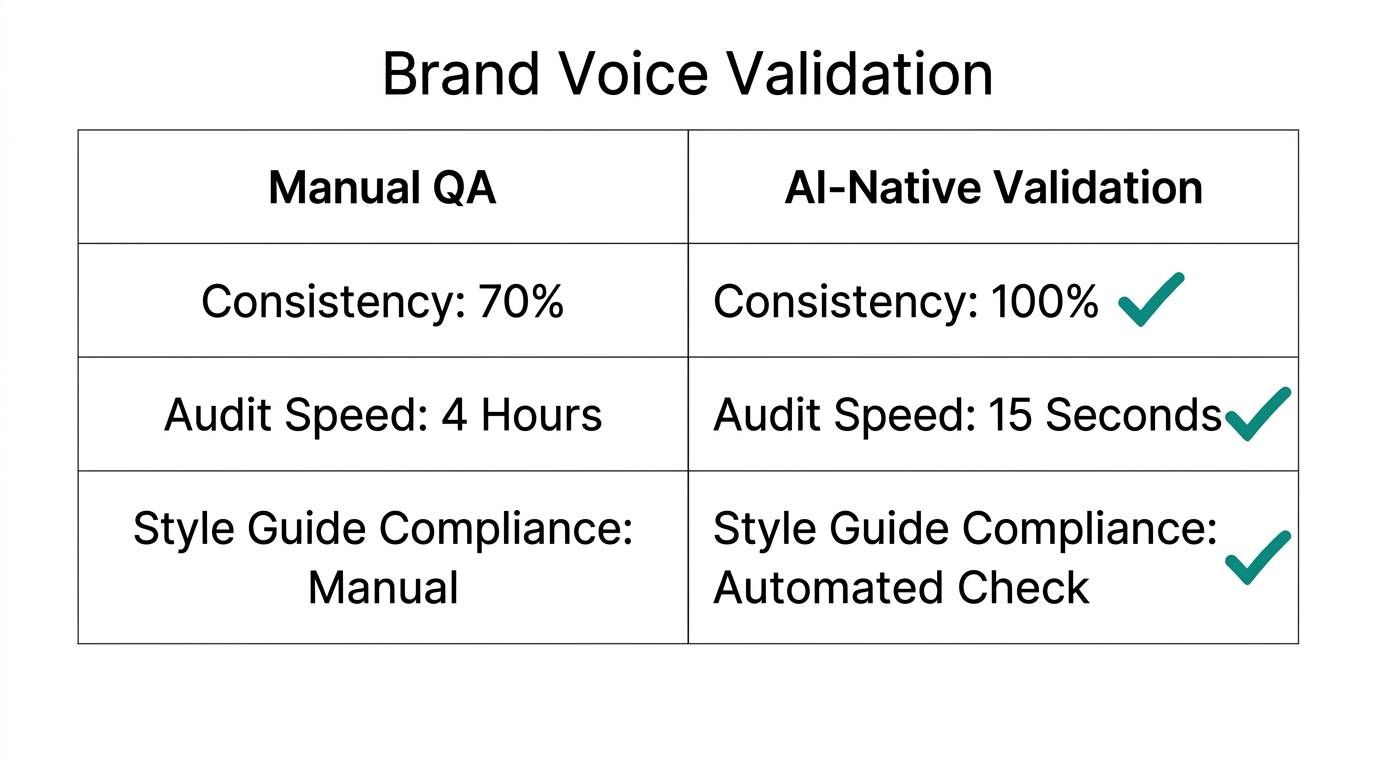
A common friction point in creative workflow automation is the technical constraint of ad platforms. For example, Google Responsive Search Ads (RSAs) have strict character limits and required headline counts. Anthropic’s internal marketing team solved this by using Claude to automate Google RSA copy validation. Claude ensures every headline meets the 30-character limit and maintains the brand's unique tone before exporting the data to a CSV for direct upload.
To maintain brand consistency across these automated channels, it is vital to move beyond generic, one-line prompts. Experts recommend goal-based conversational prompts. Instead of saying "Write a headline," treat Claude as a partner: "We are targeting Gen Z app users who value privacy. Generate 15 headlines for a Google RSA that emphasize our 'no-log' policy, keeping each under 30 characters and using an encouraging but technical tone."
Common Pitfalls in the AI-Native Workflow
While the efficiency gains are massive, there are several traps that can derail an automated creative studio. The most dangerous is the "Set and Forget" mentality. Over-automating without performance monitoring creates blind spots where the AI might produce "hallucinated" or off-brand content. High-performing startups always keep a human-in-the-loop for final quality assurance (QA).
Other common mistakes include:
- Poor Data Hygiene: If your CRM data is fragmented, your hyper-personalized ads will be off-target. Ensure your stack is unified using tools like specialized data platforms or Segment.
- Ignoring Brand Voice: Failing to "train" the AI on specific brand guidelines results in bland, unrecognizable content. Provide Claude with a comprehensive brand bible in its system prompt.
- Generic Prompting: One-line prompts limit Claude's strategic value. Use structured data and detailed context to get the best results from content automation.
The Future of Creative Operations
Building an AI-native creative studio using Claude Code isn't just about saving money; it's about unlocking a new dimension of creativity. By automating the repetitive, technical aspects of ad production, your human team is free to focus on high-level strategy and breakthrough concepts. The statistics are clear: the future belongs to those who can orchestrate these models effectively. As Gartner research suggests, the integration of autonomous agents is no longer optional for brands that want to remain competitive in a search-and-social world.
Whether you are scaling UGC for a mobile app or managing complex global campaigns, the tools are now available to produce production-quality assets in seconds. Start by setting up the Claude Code CLI, connecting your key APIs through MCP, and watching your production time shrink while your ROI grows. For those looking to jumpstart this process by finding the right creator partners to fuel their AI's learning, platforms like Stormy AI provide the essential data layer to ensure your automated creative is grounded in real-world performance.