In the landscape of 2026, the traditional agency model is undergoing a radical transformation. High overhead, unpredictable project cycles, and the constant hustle for the next lead have driven the most successful founders toward a more resilient structure: the productized service model. Perhaps no one has executed this transition more effectively than Carl Hughes, the founder of Draft.dev. By focusing on a hyper-specific niche—technical content for software engineers—Hughes scaled his business to $2.5 million in revenue in just two years.
Transitioning from a solo freelancer to a multimillion-dollar enterprise isn't about working harder; it’s about building systems that decouple your time from your income. In this 2026 playbook, we’ll break down the operational scaling, hiring frameworks, and cash-flow stabilization strategies that allow a B2B service business to achieve SaaS-like predictability without the software development costs.
The Productized Service Advantage: Agency Scale Meets SaaS Predictability
Learn why avoiding one-off projects and discounts creates a sustainable, scalable business model.
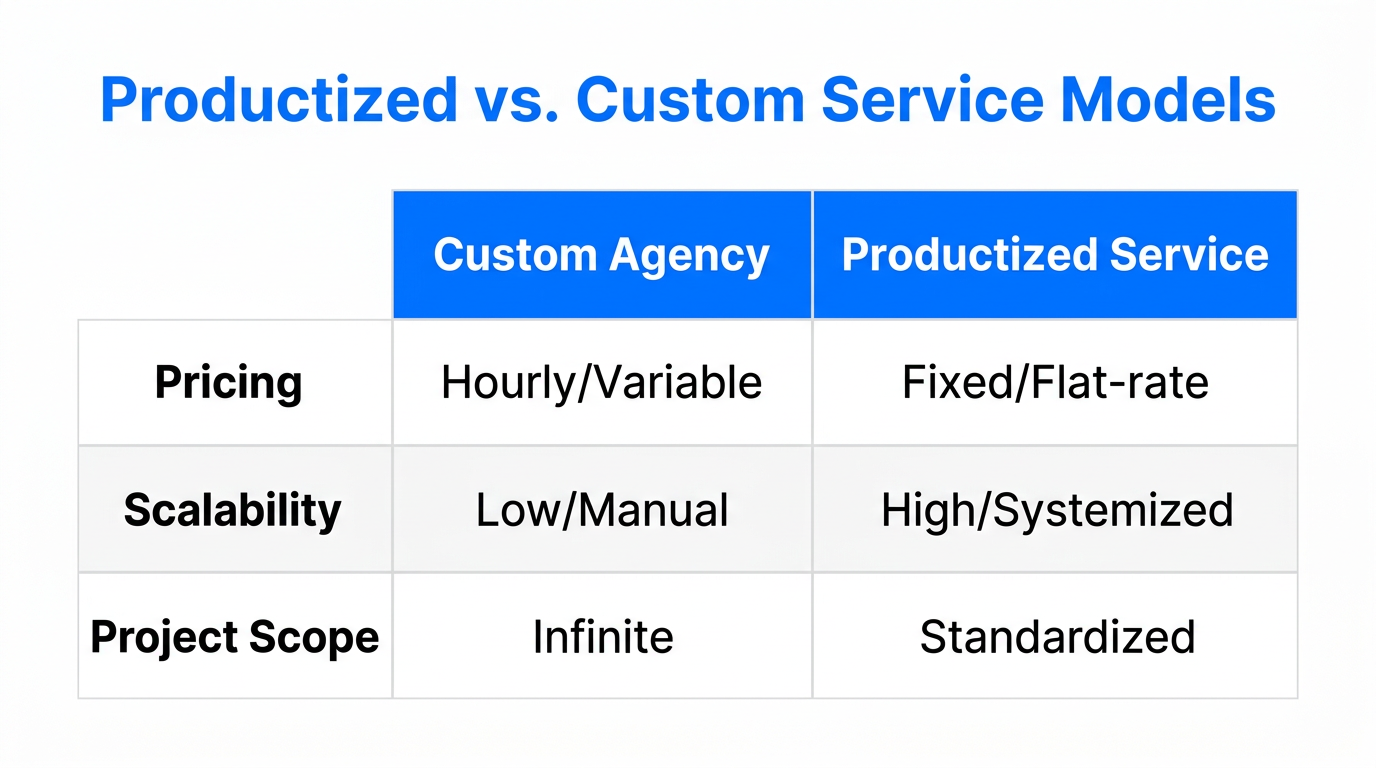
Most service providers fall into the trap of "custom work." Every client gets a unique proposal, a unique price, and a unique delivery timeline. This is the antithesis of growth. A productized service treats its offerings like a SKU on a shelf. You sell a fixed scope of work for a fixed price with a repeatable process.
As Carl Hughes noted in his Starter Story interview, the productized model allowed him to manage hundreds of contractors while maintaining a tiny core team of just six or seven full-time employees. This lean overhead is what makes the recurring revenue service business so profitable compared to traditional consulting.
"Productized services are the best of both worlds: they allow you to start a business that is theoretically scalable but takes very little cost to get started."
Step 1: Identifying a 'Premium Provider' Niche
Carl explains how he transitioned from his job by identifying a high-value niche.You cannot scale a commodity. To charge five-figure monthly retainers, you must solve a high-value problem for a specific audience. Draft.dev didn't just write "blog posts"; they created technical content aimed at software engineers for marketing purposes. This is a niche where the buyers (DevRel and Engineering leaders) have large budgets and a massive pain point: finding engineers who can actually write.
To find your niche in 2026, look for the intersection of three factors:
- Personal Interest/Skill: Something you understand deeply enough to vet quality.
- Market Demand: Companies must already be spending money on this problem.
- Unmet Quality Standards: Where are current providers failing?
Carl suggests talking to 10-12 potential customers who are already using competitors. Ask them: "Why are you unsatisfied?" If you can redesign the service from the ground up to solve those specific frustrations, you’ve found your differentiation engine.
Step 2: Transitioning from Founder-Led Production to Systems
Draft.dev didn't start with a flashy website. In fact, Carl Hughes started with a single page on his personal site called "Carl’s Writing." He sent this to his network, proved the demand, and only then began to build the infrastructure.
| Stage | Focus | Team Structure |
|---|---|---|
| The Soloist | Proving Demand | Founder does everything. |
| The Hybrid | Quality Control | Founder hires first writer/editor; Founder does final review. |
| The Scaler | Operational Oversight | Full-time management team; 100+ specialized contractors. |
When you have more work than you can handle (which Carl hit within three months), you must stop producing and start hiring. To scale agency revenue in 2026, you need a discovery process to find niche experts. For Draft.dev, this meant finding software engineers who also had a knack for writing. Today, platforms like Stormy AI can streamline this by helping brands and agencies find highly specialized subject matter experts across LinkedIn and social platforms to act as the "face" or the "voice" of the content.
Step 3: The Draft.dev Operational Hierarchy
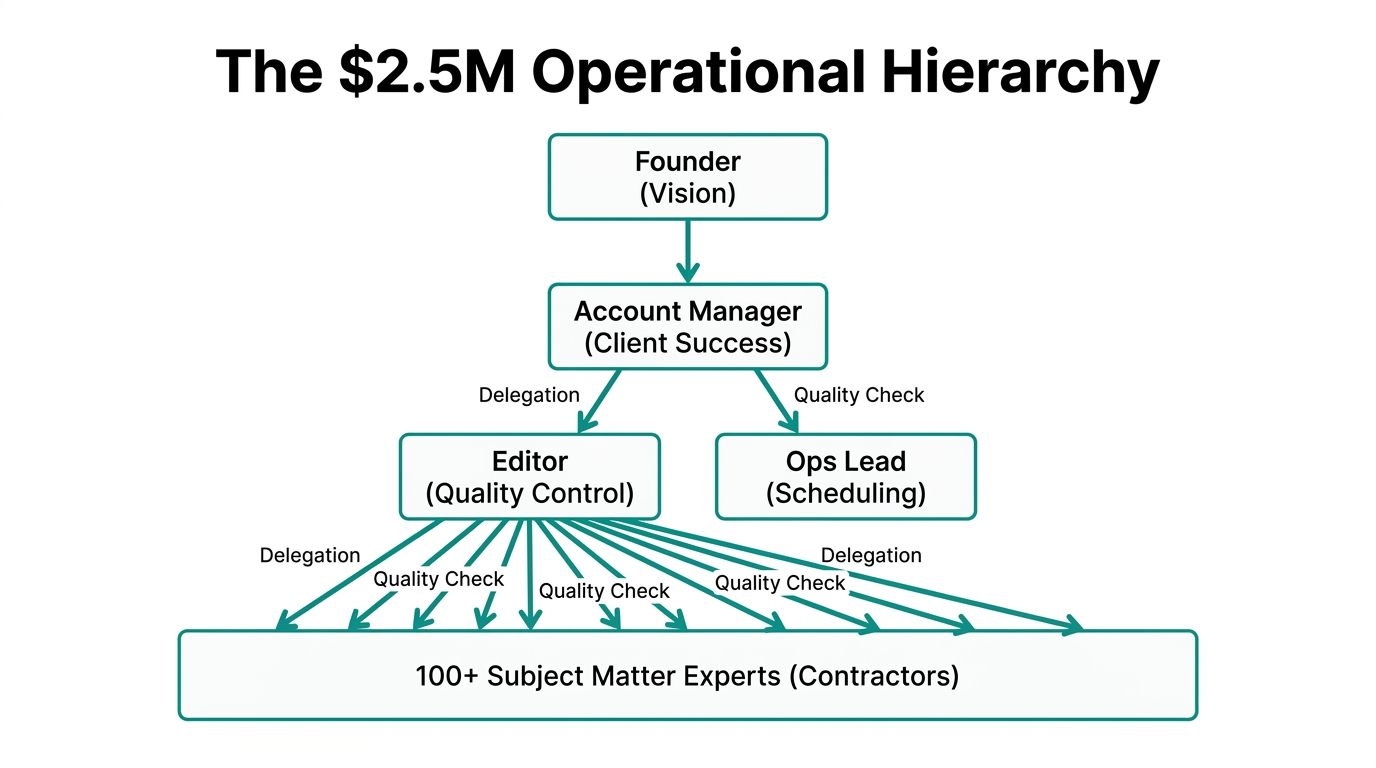
How do you manage quality across hundreds of articles written by 54 different countries? You build a hierarchy that prioritizes technical accuracy over everything else. In the Draft.dev model, every piece of content passes through three distinct layers:
- The Writer: A practicing software engineer (contractor).
- The Editor: A professional wordsmith who ensures clarity and tone (contractor).
- The Technical Reviewer: A senior engineer who verifies the code and technical claims (full-time or senior contractor).
By splitting the "editing" role into "style" and "substance," Hughes ensured that his content would never be dismissed as "fluff" by a technical audience. This structure is essential for any B2B service business growth strategy—protecting the core value proposition at all costs.
"We've always positioned ourselves as the premium service. We don't do one-off trials; we make people sign quarterly commitments."
Step 4: The 'Quarterly Commitment' Model
The biggest killer of agencies is the "one-off project." It creates a roller coaster of cash flow that makes it impossible to hire full-time staff with confidence. Draft.dev solved this by mandating Quarterly Commitments. Clients buy packages of 12, 24, or 48 pieces of content.
This model mimics SaaS billing. It turns a service into a predictable line item for the client and a predictable revenue stream for the founder. It also filters out "bad" clients who are looking for a quick fix rather than a long-term content strategy.
Step 5: Scaling to $2.5M via the 1/3 Rule
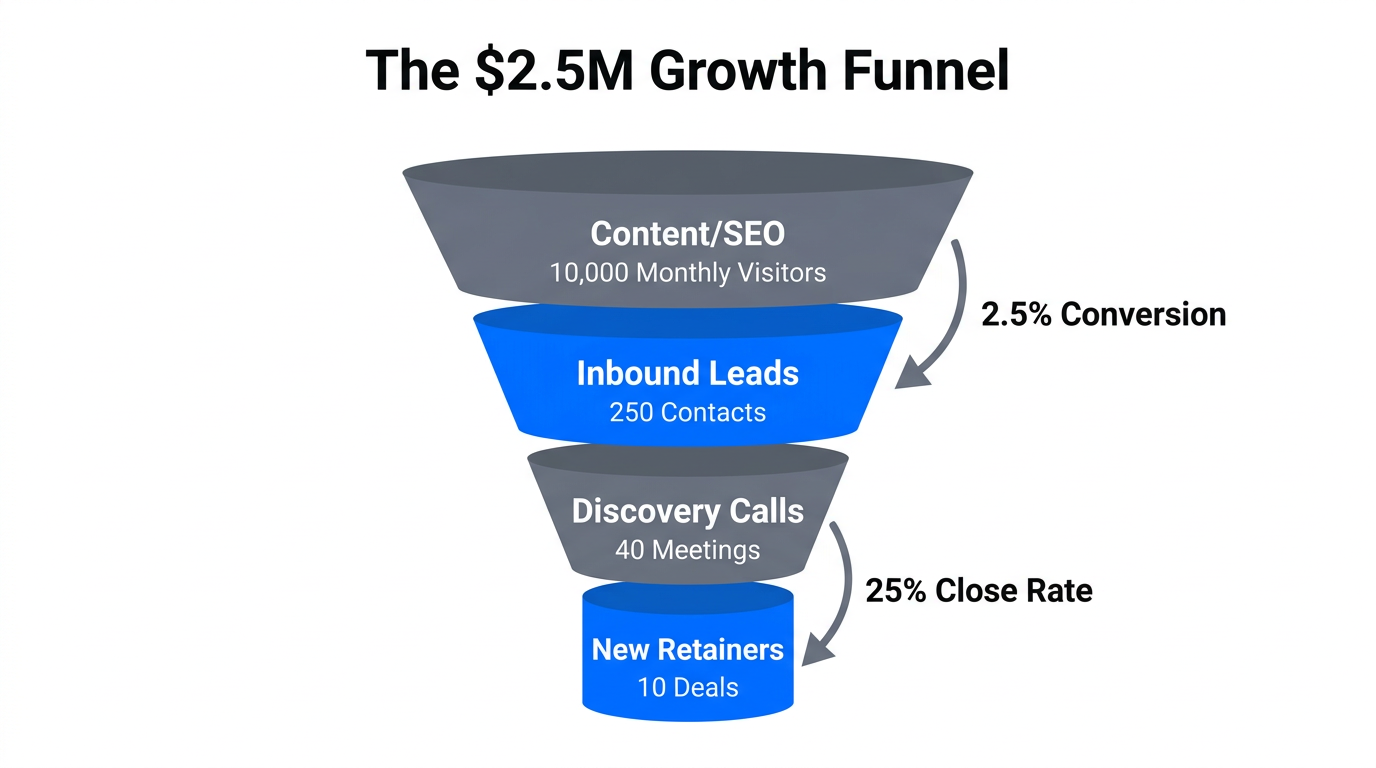
Carl Hughes attributes his growth to a balanced marketing mix. He doesn't rely on a single channel, which is a lesson for anyone looking to scale agency revenue in 2026. His revenue is split roughly into thirds:
- 1/3 Referrals & Word of Mouth: This comes from maintaining "Premium Provider" status. When a marketing manager at Dropbox or Cloudflare moves to a new company, they take Draft.dev with them.
- 1/3 Organic Search & Social: Creating content about the industry (e.g., "What is a Developer Advocate?") to capture top-of-funnel interest on LinkedIn and Google.
- 1/3 Cold Outreach: Targeted, personalized outreach to companies that have just raised funding or launched new technical products.
For the outreach component, modern founders are using AI-driven tools to personalize at scale. While Carl's team handles this manually, many 2026 agencies use Stormy AI to identify potential partners and automate the discovery of creators who can assist in the fulfillment process, ensuring the "human touch" remains even as the volume increases.
The Next Frontier: Entrepreneurship Through Acquisition
Carl shares the transition from building a service to acquiring another productized business.Once you’ve mastered the productized service model, the next step isn't necessarily starting a new business from scratch. Carl Hughes recently expanded by buying a second business—a strategy known as entrepreneurship through acquisition.
By purchasing an existing business, you skip the "zero to one" phase, which is the most common point of failure. You inherit a customer base, a brand, and cash flow. In 2026, many founders are using the profits from their first productized service to acquire undervalued agencies and "productize" them using the Draft.dev playbook.
Final Takeaway: Confidence and Persistence
The Draft.dev case study proves that you don't need a revolutionary AI algorithm to build a multi-million dollar business in 2026. You need a deep understanding of a technical niche and the discipline to build a system that works without you. Carl Hughes spent seven years and tried 24 different side projects before Draft.dev took off. His success was built on a foundation of persistence.