In his 2023 letter to shareholders, Warren Buffett made a startling admission: in 58 years of managing Berkshire Hathaway, only 12 investment decisions truly moved the needle. Out of approximately 400 decisions made over half a century, a mere 3% to 4% of his bets generated the vast majority of the company's legendary wealth. As we navigate the complex landscape of 2026, this "Buffett Rule" provides a sobering yet liberating reality check for every CMO and growth lead: your scaling business growth isn't dependent on being right all the time; it is dependent on surviving long enough to hit your 4%.
In a world where customer acquisition strategy often feels like a frantic race to test every new platform, we forget that investing—and by extension, marketing—is an infinite game. There are no fixed rules, no final whistle, and the only way to lose is to drop out of the game entirely. By applying a rigorous marketing experiment framework based on asymmetric upside and "paint-drying" patience, you can stop chasing marginal gains and start compounding real revenue.
Analyzing Your 2025 Data: Finding Your 'Top 12'
 16:44
16:44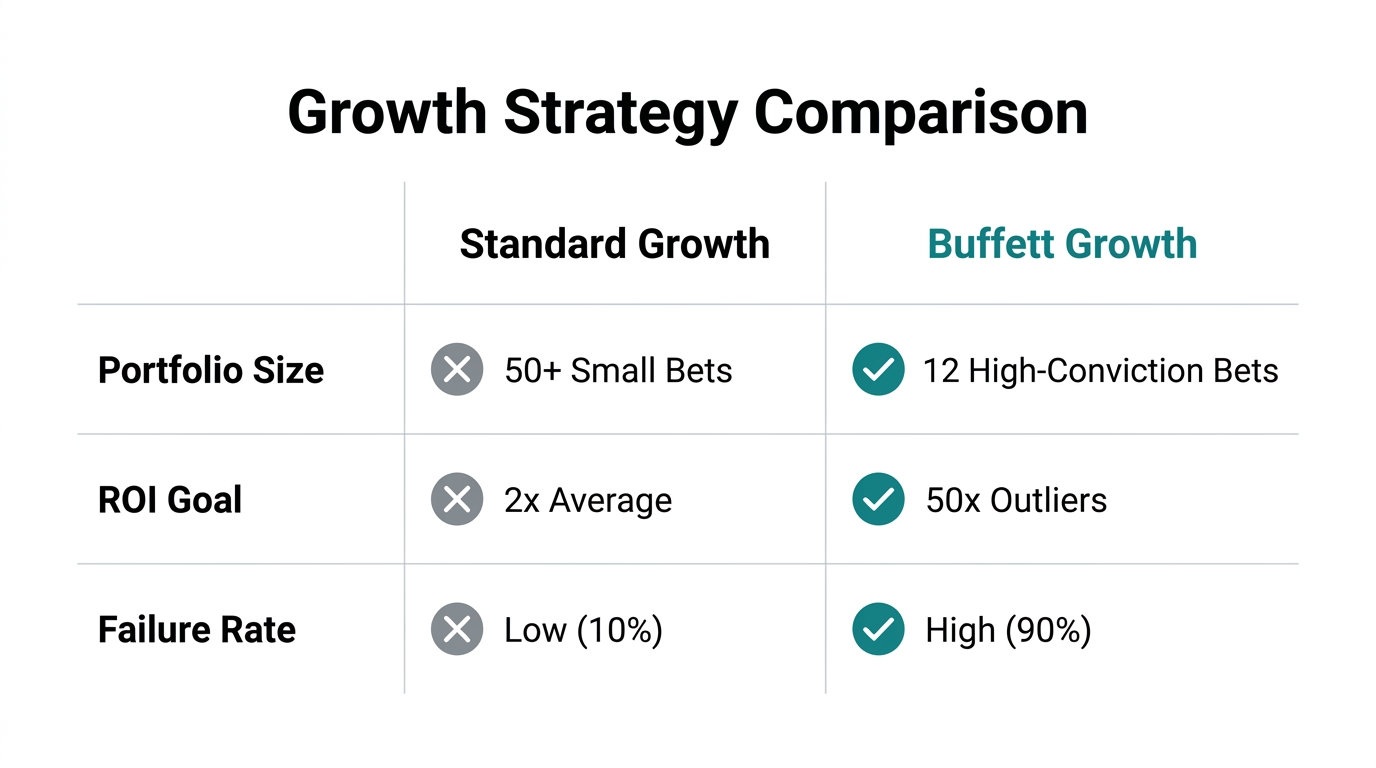
Before you can scale in 2026, you must look back at the wreckage and the riches of 2025. Most marketers treat their data like a finite scorecard rather than an infinite feedback loop. If you analyze your performance in Google Analytics or your Meta Ads Manager, you will likely find a power-law distribution. Out of every 100 ad creatives or 100 influencer partnerships, only 3 or 4 are responsible for the lion's share of your conversions.
Identifying these "Top 12" requires looking past vanity metrics. You are looking for asymmetric opportunities—campaigns where the downside was capped (the cost of the test) but the upside was uncapped. For many brands, this manifests in influencer marketing partnerships that suddenly go viral or a specific hook in a TikTok Ads campaign that resonates far beyond its expected lifecycle. Once you identify these, the goal isn't to find 12 more; it's to ensure these 12 keep running.
"The god of investing has a 4% hit rate. What makes you think you need a 100% success rate in your marketing experiments?"
The 'Paint Drying' Strategy: Why Winning Campaigns Fail from Over-Optimization
17:16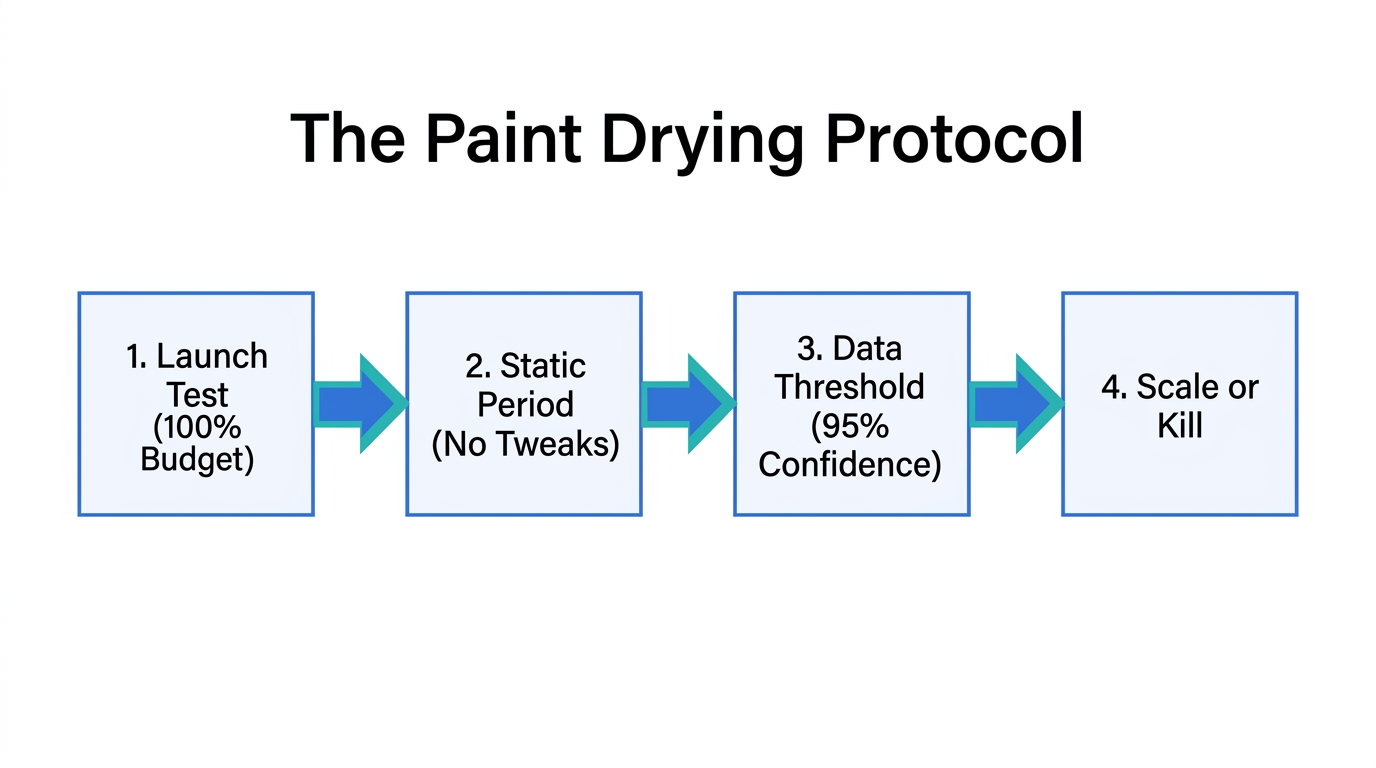
One of the biggest mistakes in modern growth marketing strategy is the urge to constantly "tweak" what is already working. Buffett refers to this as the "paint drying" decision. Once Berkshire bought See’s Candies or Coca-Cola, they didn't call the CEO every week to suggest a new logo or a pivot to crypto. They stayed in the stable for 40+ years.
In 2026, we see too many growth teams "shoot themselves in the foot" by over-optimizing their winners. If you have a creator partnership or a search campaign on Google Ads that is delivering a 4x ROAS, the highest ROI activity you can perform is often nothing. Let the creative breathe. Let the algorithm stabilize. As the 1990 memo "The Route to Performance" suggests, being consistently above average—never in the top 10% but never in the bottom 50%—eventually leads to top-tier compounding results.
| Strategy Component | The Finite Marketer (Reactive) | The Infinite Marketer (Buffett-Style) |
|---|---|---|
| Experiment Frequency | Tests everything, commits to nothing. | Tests broadly, doubles down on the 4%. |
| Winner Management | Constant creative refreshes. | "Paint Drying"—letting winners run. |
| Risk Profile | Chases "certain" 10% gains. | Accepts 90% failure for 100x upside. |
| Success Metric | Monthly ROAS targets. | Long-term compounding and LTV. |
Managing the Portfolio: The Margin of Safety in Marketing
The riskiest belief in marketing is that there is no risk. Just as JP Morgan's historical data showed that buying the S&P 500 when the P/E ratio was 23 led to near-zero returns over 10 years, scaling your customer acquisition strategy during a market peak (when CPMs are at all-time highs) is a recipe for disaster. Prudence is required when others are carefree.
A robust marketing experiment framework in 2026 must include a "Margin of Safety." This means diversifying your spend across different risk profiles. You should have your "Index" (proven channels like Apple Search Ads) and your "Active Bets" (new platforms or high-upside UGC creators). If a market downturn hits, you don't slash the winners; you cut the speculative experiments that haven't shown 10x potential yet.
"When the time comes to buy, you won't want to. The best marketing opportunities appear when your competitors are too terrified to spend."
Step-by-Step: The Asymmetric Growth Playbook for 2026
21:21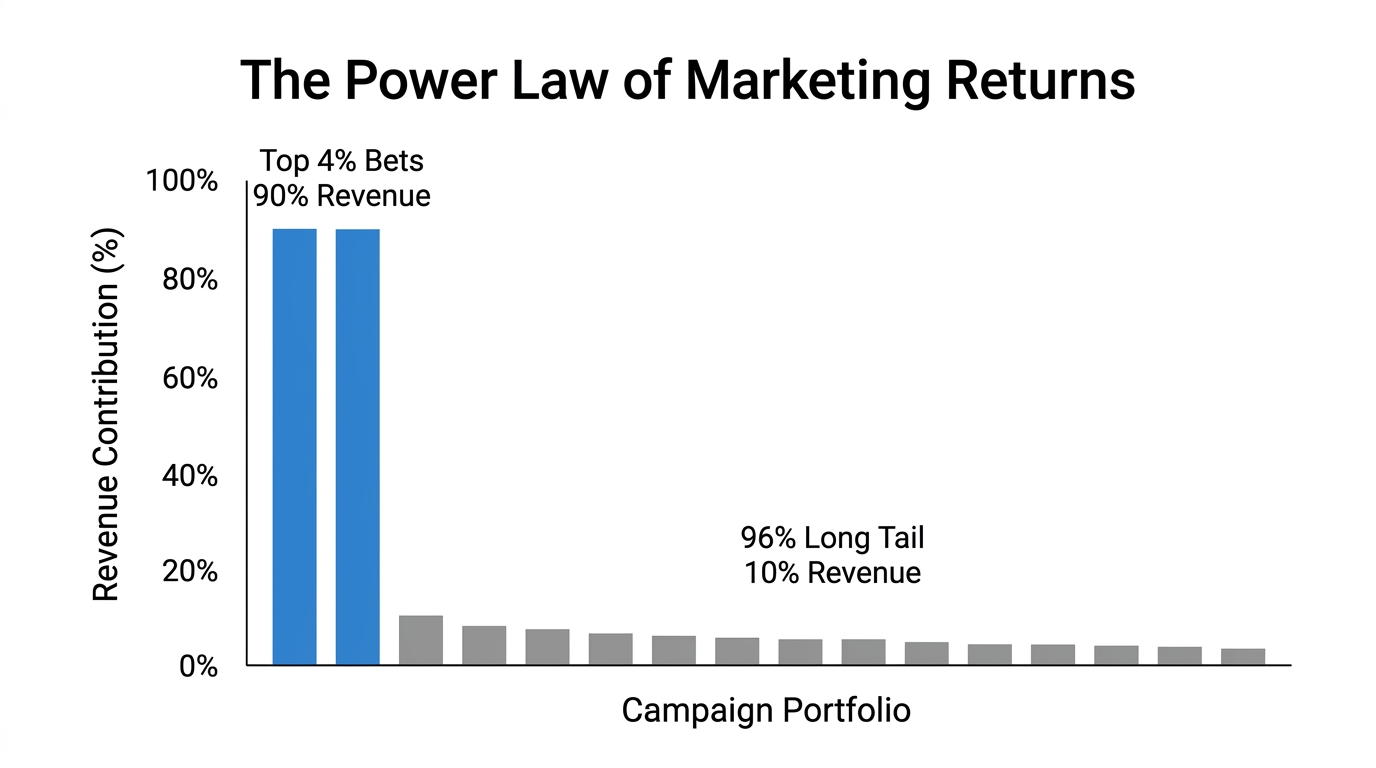
To implement the Buffett Rule in your growth marketing strategy, you need a system that filters for greatness while discarding the mediocre. Here is how to structure your framework this year:
- Establish the Baseline: Use HubSpot or a similar CRM to track the full lifecycle of your 2025 customers. Identify the common denominator of your highest LTV users.
- The 40-40-20 Rule: Allocate 40% of your budget to your "Top 12" winners, 40% to "above average" consistent channels, and 20% to high-risk, high-reward experiments.
- Audit for "Finite" Thinking: Are you cutting campaigns because of one bad week? Are you dropping creators because they didn't go viral on the first post? Remember: investing is an infinite game. You only lose if you drop out.
- Source for Asymmetry: Use AI-powered tools like Stormy AI to find creators who have the potential for massive reach but are currently undervalued by the market. Look for the "Two Gas Stations" scenario—find creators doing everything right that the rest of the market hasn't noticed yet.
- The "Rule of 72" for LTV: Calculate how long it takes for your customer acquisition cost (CAC) to double through organic referrals or LTV growth. If you can double your value every 3.5 years, you are compounding at 20%—a rate that would make Buffett proud according to the Rule of 72.
Conclusion: Playing the Infinite Game of Growth
12:59In 2026, the brands that win won't be the ones with the largest budgets or the most complex tech stacks. They will be the ones that understand behavioral risk. They will be the ones who don't shoot themselves in the foot when the market gets volatile. By embracing the fact that most of your efforts will fail, you gain the courage to stick with the 4% that actually work.
Stop trying to hit a home run on every pitch. Instead, focus on keeping the ball in play, avoiding the "bottom 50%" of bad decisions, and letting your winners compound. Whether you are scaling a Shopify store or a SaaS enterprise, the math remains the same: survive the 96% of mediocrity to reap the rewards of the 4% that change everything. Start by refining your marketing experiment framework today, and remember: the best time to build for the next decade was yesterday; the second best time is now.