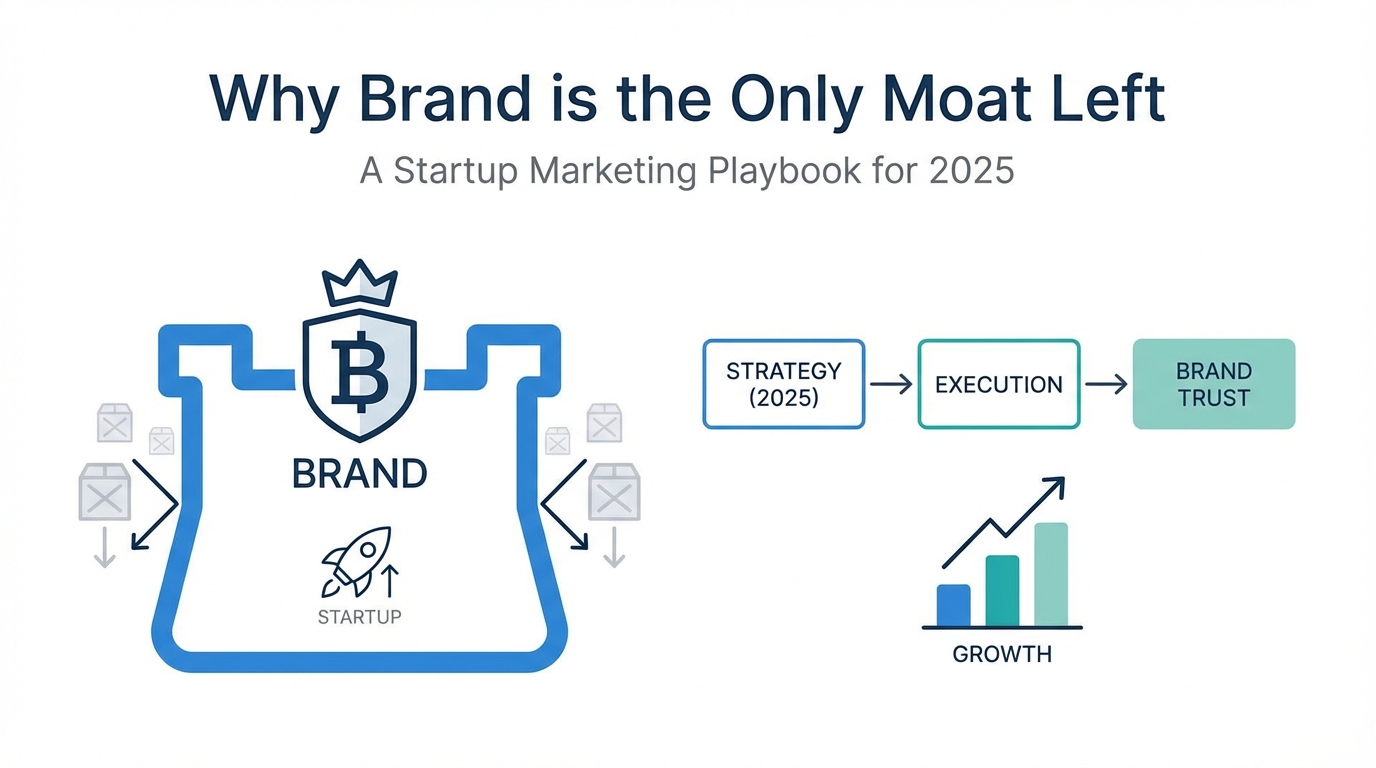
In the early days of Silicon Valley, a moat was built with code. If you had a proprietary algorithm, a complex database architecture, or a massive head start in engineering, you had a competitive advantage that could last a decade. But as we head toward 2025, that reality has shattered. In an era where AI-powered coding tools like Cursor can replicate features in a weekend and low-code platforms allow non-technical founders to launch complex apps in days, technical moats have evaporated. When anyone can build anything, the only thing that cannot be easily replicated is how a customer feels about your company. As Danny Grant, founder of Jam, recently noted, "Moats are dead and brand is the only moat left."
The Death of the Technical Moat and the Thiel Philosophy
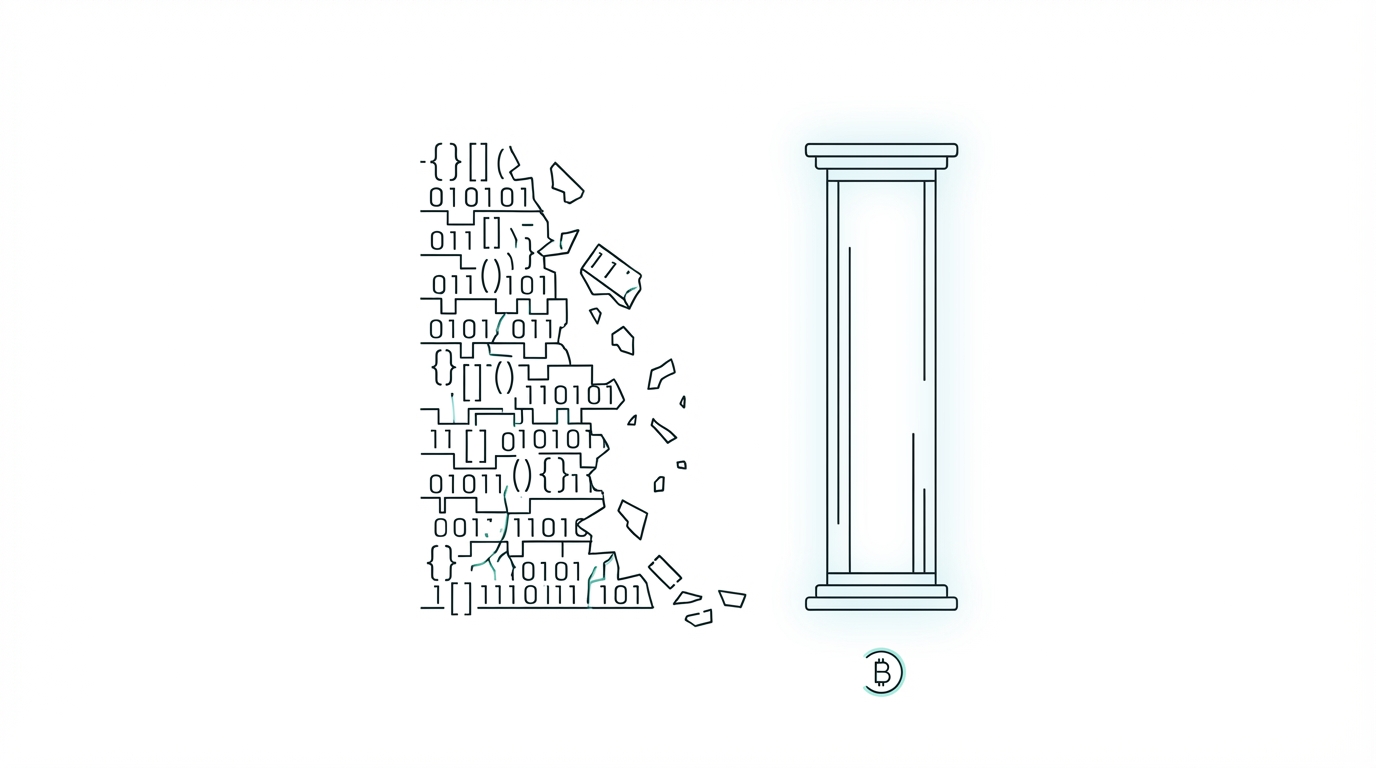
For years, founders lived by the Peter Thiel philosophy: the best way to compete is to not compete at all. In his book Zero to One, Thiel argues that a business should strive for a monopoly by creating something so unique that it exists in a category of its own. However, in 2025, the "Zero to One" moment is becoming increasingly rare. Most startups are entering crowded markets where the barrier to entry is lower than ever. If you build a new project management tool today, a hundred competitors will see your feature set and use v0.dev or similar AI agents to generate a functional clone by Monday morning.
This technological democratization means that network effects—once the holy grail of startup moats—are also weakening. In 2005, it was incredibly difficult to move a social graph or a massive database from one platform to another. Today, data is portable, and switching costs are plummeting. The only way to stop a user from searching for an alternative is to occupy so much mental space that the thought of looking for another tool never even crosses their mind. This is the essence of brand-led growth: becoming the default choice because of identity, not just utility.
The Coca-Cola Strategy for Startups
Think about the last time you bought a soda. Why did you choose Coca-Cola? It wasn't because they had a better "lock-in" mechanism or a more advanced distribution API. You chose it because it's Coca-Cola. It is a brand that occupies a specific emotional and mental territory. For startups in 2025, the goal is to become the "Coke" of their niche.
Take Notion as a modern example. While there are countless knowledge-base tools, Notion won because its brand identity resonated with a new generation of workers who valued aesthetics, flexibility, and a specific "vibe." When teams start a new company, they don't audit 50 different wiki tools; they just use Notion. They have occupied enough mental space that the search for an alternative is effectively canceled. This is the ultimate competitive advantage in business.
Feature-Based vs. Identity-Based Marketing
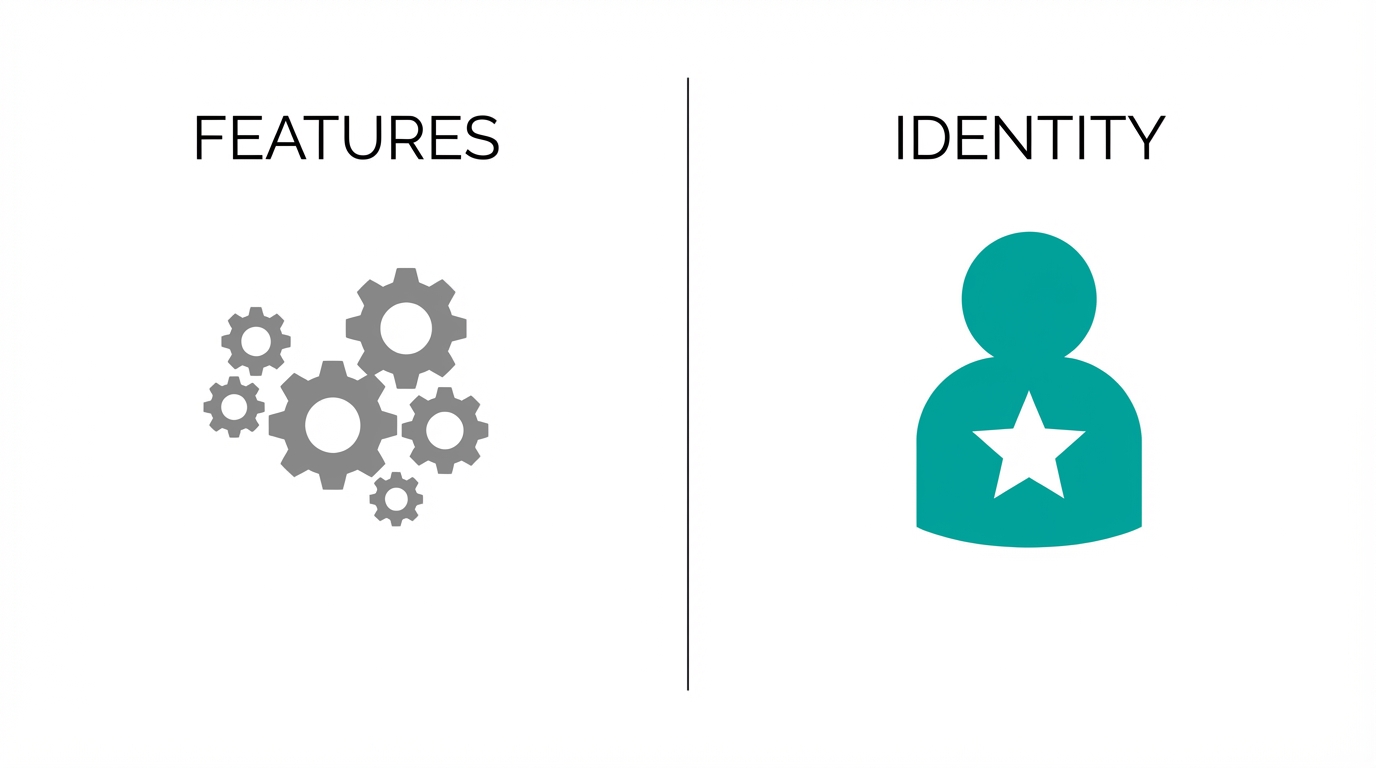
The traditional startup marketing strategy involves a landing page filled with feature bullet points. "We have faster load times," "We have 50+ integrations," or "We are 20% cheaper." In 2025, this is a race to the bottom. Feature-based marketing is easily disrupted. If your only advantage is a specific feature, you are one software update away from obsolescence.
Identity-based branding, on the other hand, focuses on who the customer becomes when they use your product. It’s about building a movement. This is why specialized talent is becoming more valuable than generalists. We are seeing the rise of what Danny Grant calls "K-pop style factories" for talent—specialized programs that churn out elite growth marketers or dev evangelists who don't just sell a product, but build a culture around it. These individuals are unicorns because they understand that modern marketing is a blend of performance and storytelling.
Step-by-Step: Building Distribution Before Product

One of the biggest shifts in the 2025 playbook is the order of operations. First-time founders often focus on building the product first, only to realize later that they have no way to reach customers. Second-time founders know to focus on distribution before a single line of code is written.
Step 1: Identify Your Niche Mental Space
Don't try to own "Productivity." Try to own "Productivity for Design-Led Engineering Teams." By narrowing the focus, you make it easier to become the authority in that specific circle. Use tools like Google Trends to see if your niche's specific terminology is gaining traction.
Step 2: Build a Personal Distribution Platform
In 2025, people trust people more than anonymous corporate accounts. Whether it's a podcast, a newsletter, or a daily presence on LinkedIn, you need a platform that builds trust. Consider the model of Demand Curve, which built a massive audience by sharing tactical growth advice long before selling high-ticket services. They used a generic but high-authority Twitter handle like @growthtactics to aggregate interest and then channeled that into their brand.
Step 3: Source UGC and Creator Partnerships
You cannot build a brand in a vacuum. You need third-party validation. This is where User-Generated Content (UGC) and creator partnerships become essential. By working with creators who already own the "mental space" of your target audience, you borrow their authority.
Managing these relationships at scale can be difficult for a lean startup. This is where tools like Stormy AI can help source and manage UGC creators at scale. Instead of manual searching, you can use AI to find creators who fit your brand's specific "vibe" and automate the outreach process, ensuring your brand message is being spread by the right voices every single day.
Step 4: Create "High-Bar" Content Formats
Standard blog posts are no longer enough. You need content that is functionally useful or highly entertaining. Look at Growth.design, which uses a comic-book format to teach user psychology. Their brand is protected because their quality bar is so high that it would be incredibly expensive and difficult for a competitor to replicate their library of case studies.
The Rise of Specialized Roles: Dev Evangelism and Growth Design
As branding becomes the primary moat, the roles we hire for are changing. Startups are no longer just looking for "Marketers"; they are looking for Dev Evangelists and Growth Designers. A Dev Evangelist is someone who can write code but also has the star power to speak at conferences and build a community. They are the face of the brand in the developer world.
For early-stage startups that can't yet afford a full-time $200k+ superstar, building a bounty program for dev evangelism is a viable strategy. You can pay junior developers or community members to create tutorials, starters, and GitHub repos. This distributes your brand's technical authority without the overhead of a massive headcount. Platforms like Fiverr or specialized marketplaces are beginning to see this shift toward high-end, specialized technical tasks.
How to Measure 'Mental Space' and Brand Authority


If brand is your moat, how do you measure it? It’s harder than tracking Click-Through Rates (CTR), but it is possible. You should monitor Direct Traffic and Branded Search Volume. If people are typing your company name into Google rather than a general category term (e.g., searching for "Jam" instead of "screen recording tool"), you are winning the brand war.
Another metric is "Share of Voice" within your niche community. Using an AI-powered platform like Stormy AI, you can track mentions and post performance across social platforms to see if your creator partnerships are actually moving the needle on brand sentiment and awareness as part of your competitive analysis.
Conclusion: Playing the Brand Long Game

Building a brand-led growth strategy is not a short-term hack. It is a 10-to-15-year commitment. As Danny Grant pointed out, if a startup goes to plan, it becomes a chapter of your life, not just a page. This means you must choose a category and a brand identity that you are genuinely fascinated by.
In 2025, the winners won't be the ones with the most features; they will be the ones who built a community, earned trust, and occupied the mental space of their customers. Start building your distribution today, leverage AI tools to scale your creator outreach, and remember that in a world of infinite software, brand is the only moat that lasts.
If you're ready to start building your brand's presence through creator partnerships, explore how Stormy AI can help you discover and vet the influencers who will define your category.