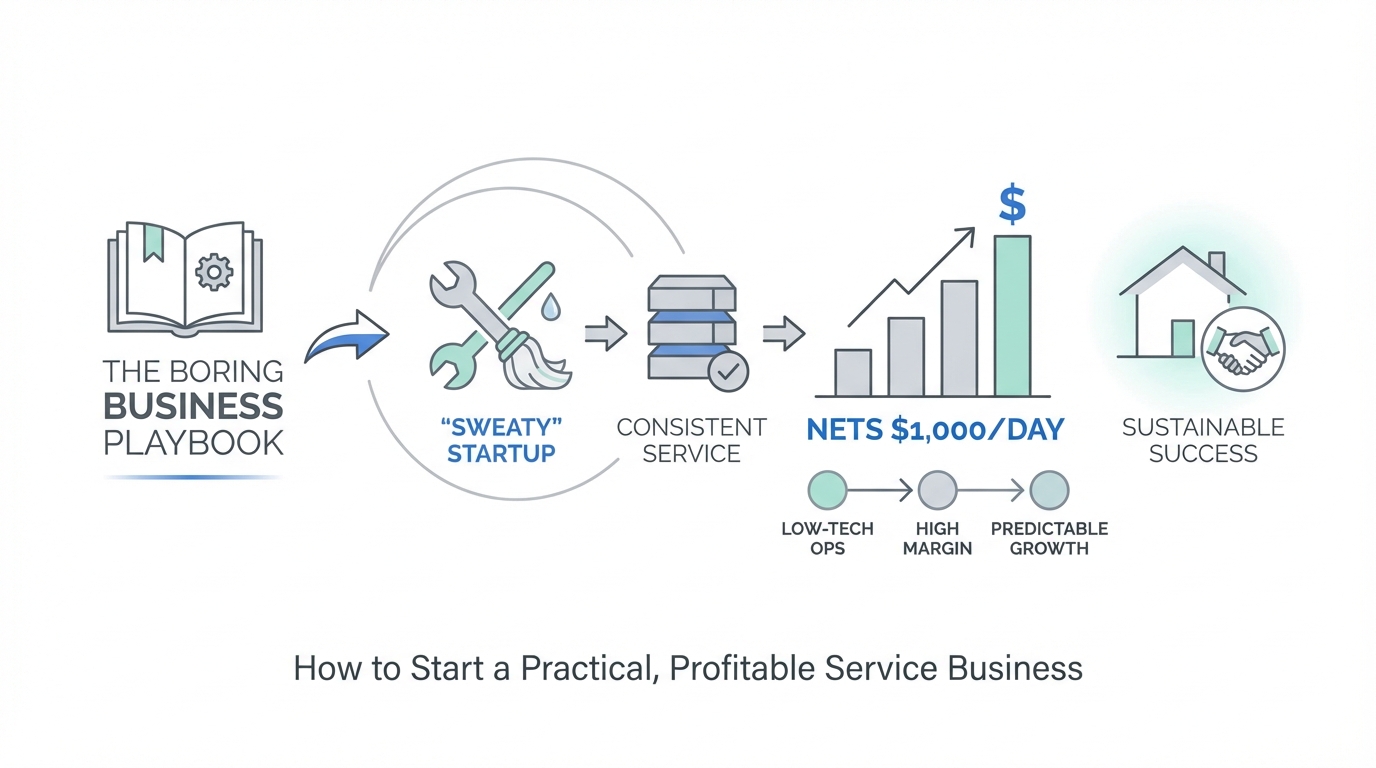
While Silicon Valley remains obsessed with the next AI unicorn and venture-backed SaaS platforms, a quiet revolution of high profit service businesses is making ordinary people extraordinarily wealthy. We often hear about the latest tech founders on the cover of Forbes, but if you look at the owners of the largest houses in your town—the ones with the private jets and vacation homes—they rarely built their wealth in code. Instead, they built empires in underground utilities, HVAC services, surveying, and real estate development. These are the boring businesses to start that offer a much higher probability of success than the hyper-competitive world of tech startups. This playbook breaks down the philosophy of the 'sweaty startup' and provides a step-by-step roadmap for anyone looking to build a recession proof business from the ground up.
The Competitive Advantage of Being Boring
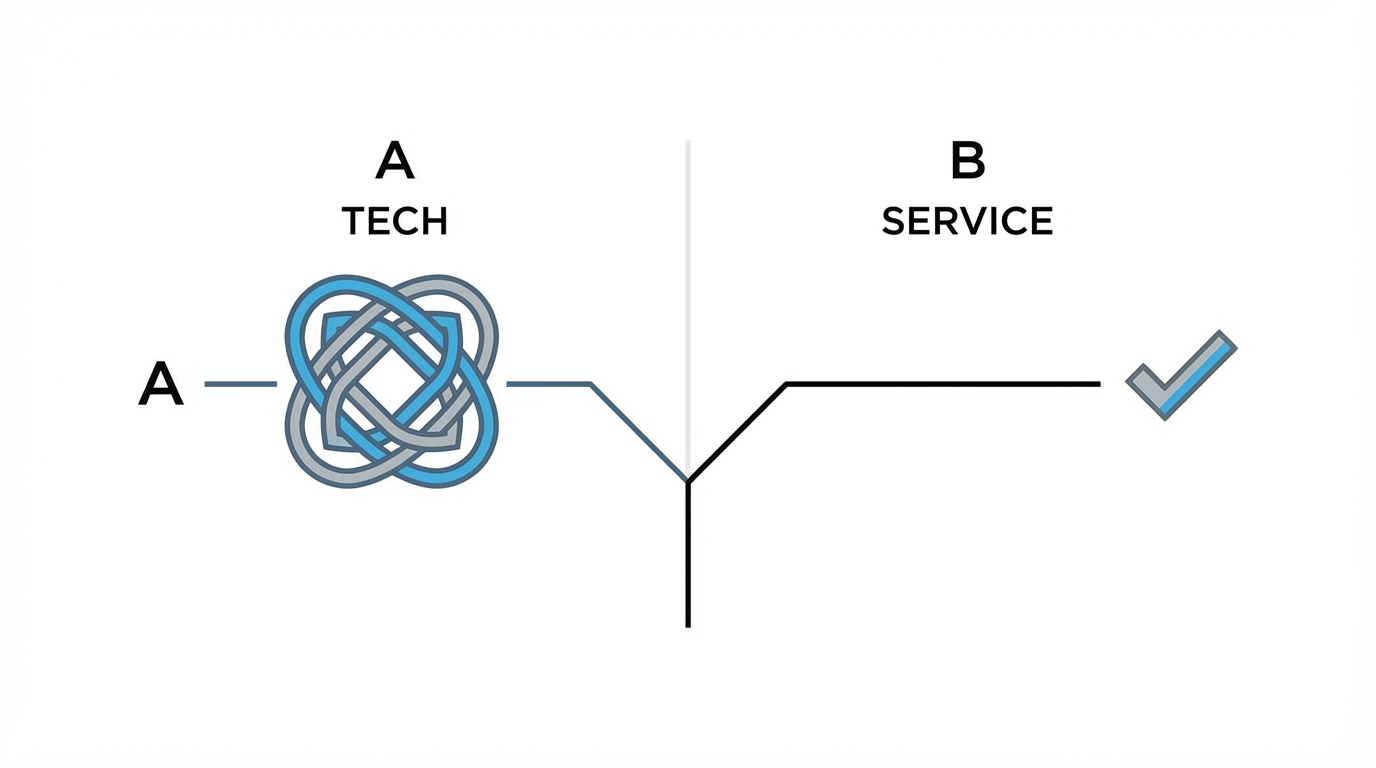
One of the biggest mistakes aspiring entrepreneurs make is trying to compete with 'LeBron James' when they could be playing against a fifth-grade girl. In the world of tech and AI, you are competing against Stanford computer science graduates with $20 million in funding and world-class networks. In contrast, the 'sweaty' startup world is filled with local incumbents who still use fax machines, don't answer their phones on Monday afternoons, and haven't updated their websites since 2005. Choosing sweaty startup ideas means you are entering a market where the barrier to entry is physical effort and basic professional reliability, rather than breakthrough scientific innovation.
As Nick Huber of The Sweaty Startup points out, you don't need to invent something new to get rich; you just need to do something normal, better than the average person. When you provide a service that requires physical labor or 'sweat equity,' you are solving a problem that high-net-worth individuals are willing to pay to avoid. This is the Golden Rule of boring businesses: solve a problem that people have the money to pay for but lack the time or desire to do themselves.
The Math Behind $1,000/Day
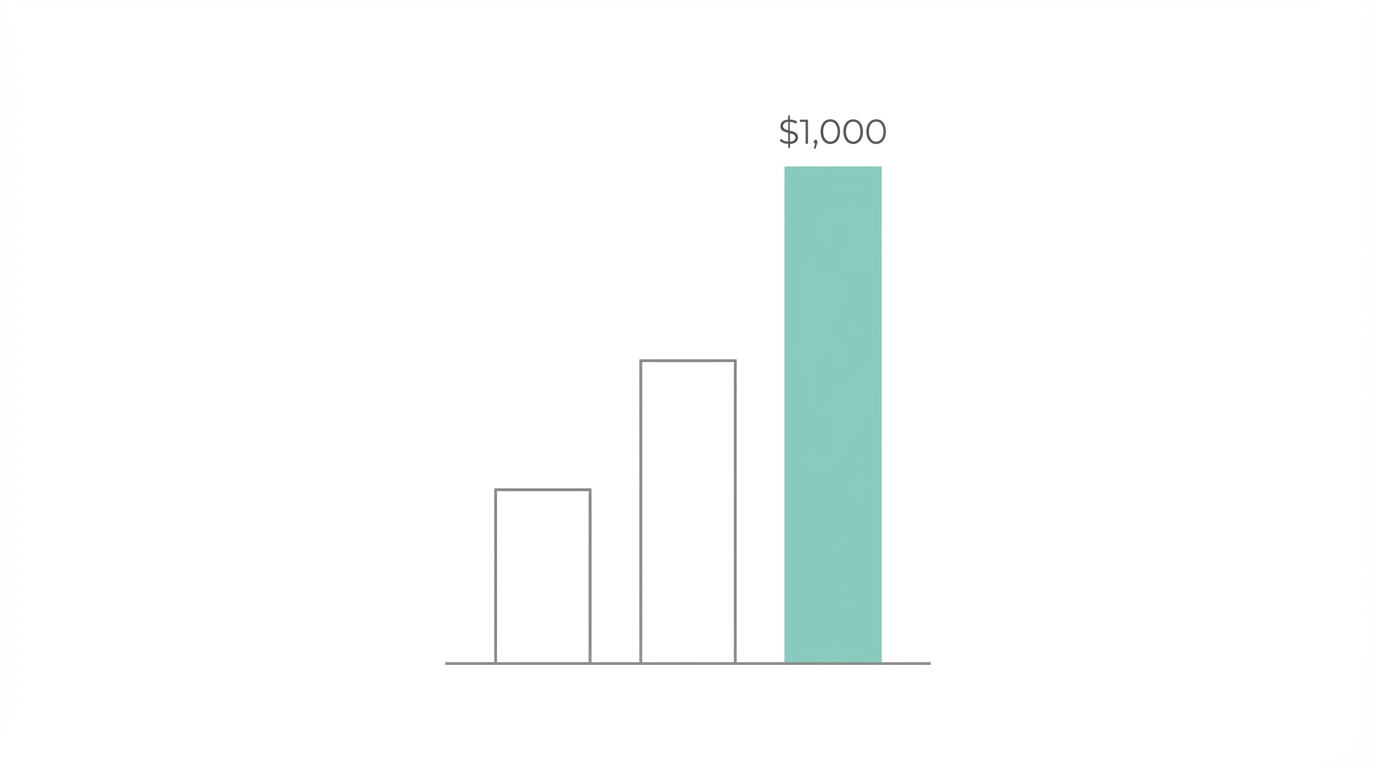
To reach a net profit of $1,000 per day, you need to focus on high profit service businesses with healthy margins. Let’s look at the numbers for a few common sweaty startups. Tree removal is a prime example. A team of two or four skilled workers can remove two trees in four hours and charge upwards of $3,000. Even after labor and equipment costs, the daily take-home is substantial. Another high-margin seasonal business is Christmas light installation. Homeowners frequently pay between $3,500 and $4,000 for a single installation that lasts only a few months. For a business owner, this translates to roughly $1,000 per month in pure 'aesthetic' value for the customer.
Other recession proof business ideas include power washing, deck building, and concrete work. A simple firewood delivery service can be turned into a $1,000/day venture by providing 'seasoned' wood and building high-quality storage racks on-site. If you build a firewood rack for $800 to $1,000 (with $100 in materials) and deliver the wood twice a day, you are netting over $100 per hour. These businesses aren't flashy, but the math is undeniable: high demand + low tech competition = high profit margins.
The Bootstrap Phase: How to Start a Business With No Money
The beauty of sweaty startup ideas is that they can often be launched with minimal capital. You don't need a fancy office or a $100,000 marketing budget. Instead, you use sweat equity. Nick Huber started his storage business, Storage Squad, by purchasing a $1,500 cargo van on Craigslist with rusty panels. He didn't run Google Ads for the first several years. Instead, he used sidewalk chalk.
Step 1: Identify Your High-Traffic Zone
Find out where your customers live, walk, or work. For a student storage business, this meant writing ads in chalk on the bridges where students walked to class. For a lawn care or power washing business, this might mean placing bandit signs at busy intersections or using flyers in specific high-income neighborhoods. Marketing doesn't have to be expensive to be effective.
Step 2: Secure Low-Cost Equipment
Don't buy new. Scour platforms like Facebook Marketplace or Craigslist for used power washers, lawnmowers, or delivery vans. Your goal in the bootstrap phase is to reach profitability on day one. Every dollar saved on overhead is a dollar that stays in your pocket as you scale toward that $1,000/day goal.
Step 3: Execute and Vet Manually
Before you automate, you must be the operator. By doing the work yourself—whether it's moving boxes, cleaning cars, or recruiting nannies—you learn the nuances of the service. This knowledge is critical for when you eventually hire employees and need to maintain service quality.
The Digital-Sweaty Crossover: The 'Night Nurse' Model
Not every boring business to start requires you to be out in the sun. There is a growing category of 'digital sweaty startups' that apply the same bootstrap fundamentals to online directories and marketplaces. A perfect example is a nanny or night nurse recruiting service. Finding a night nurse (someone who watches a baby from 11 PM to 5 AM) is a massive pain point for high-income parents. While platforms like Care.com exist, they are often too broad and lack the specialized vetting required for such a sensitive role.
By owning a premium .com domain like nightnurses.com and building a highly specialized directory, an entrepreneur can charge a $1,000+ finders fee for vetting and placing a single nurse. This is a high profit service business that lives online but solves a real-world, physical problem. To market this, you can target specific local parenting groups or use Meta Ads Manager to reach expecting mothers in affluent zip codes. You are essentially acting as a high-end recruiter for the 'sweaty' workforce.
Marketing and Scaling Your Boring Business
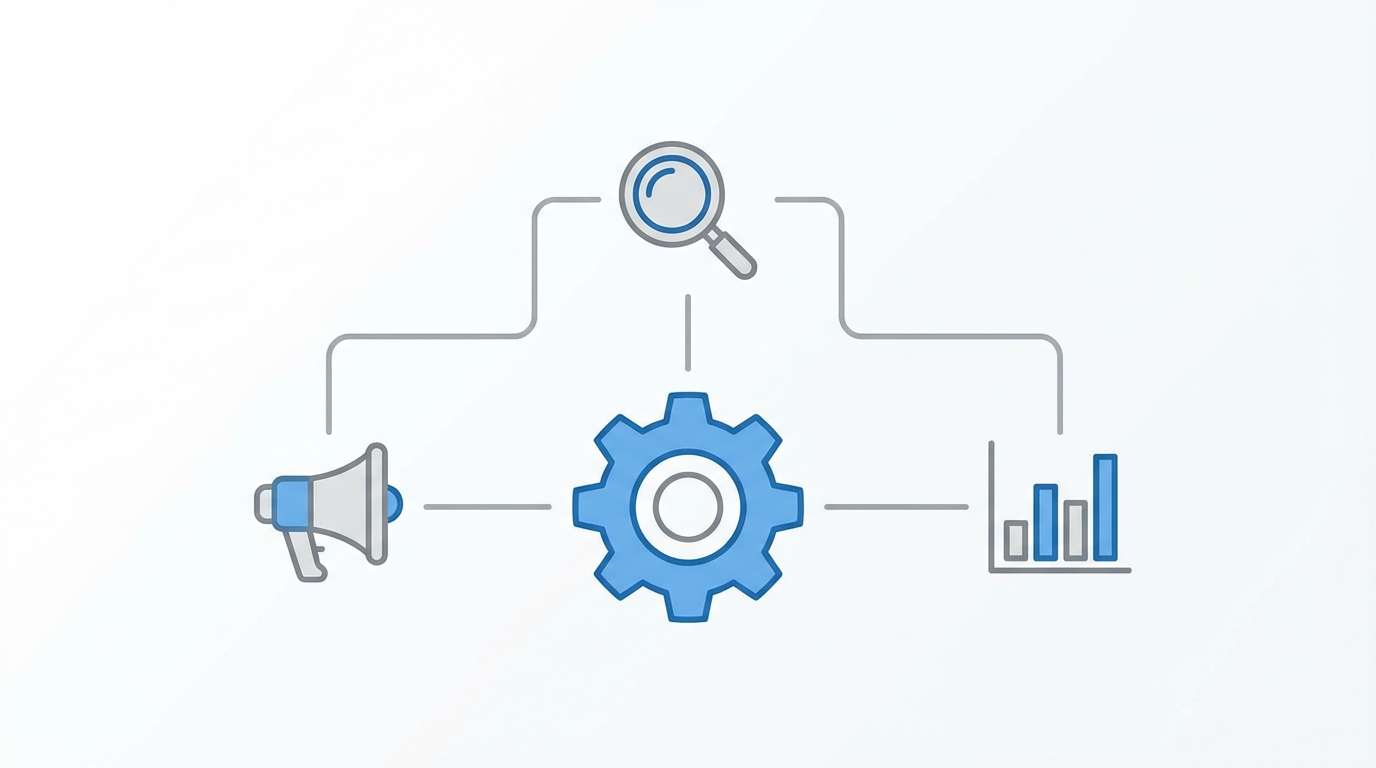

Once you have moved past the 'chalk and Craigslist' phase, your focus must shift to lead generation and professional branding. This is where digital real estate becomes vital. Investing in a strong .com domain is like buying the best storefront on Main Street. It builds instant trust and improves your ranking in search engines and AI-driven discovery tools. While legacy businesses rely on word-of-mouth, you can dominate the local market by combining old-school reliability with modern marketing tools.
For example, if you are running a high-end service like golf green installation or mobile car detailing, you need visual proof of your work. Tools like Stormy AI can help you source local UGC creators who can film 'before and after' videos of your work. Having a local influencer show off their freshly power-washed driveway or their new backyard putting green on TikTok can generate more leads in 24 hours than a year's worth of bandit signs. Using a creator CRM to manage these relationships allows you to treat your local marketing like a professional agency operation.
Transitioning from Operator to Owner
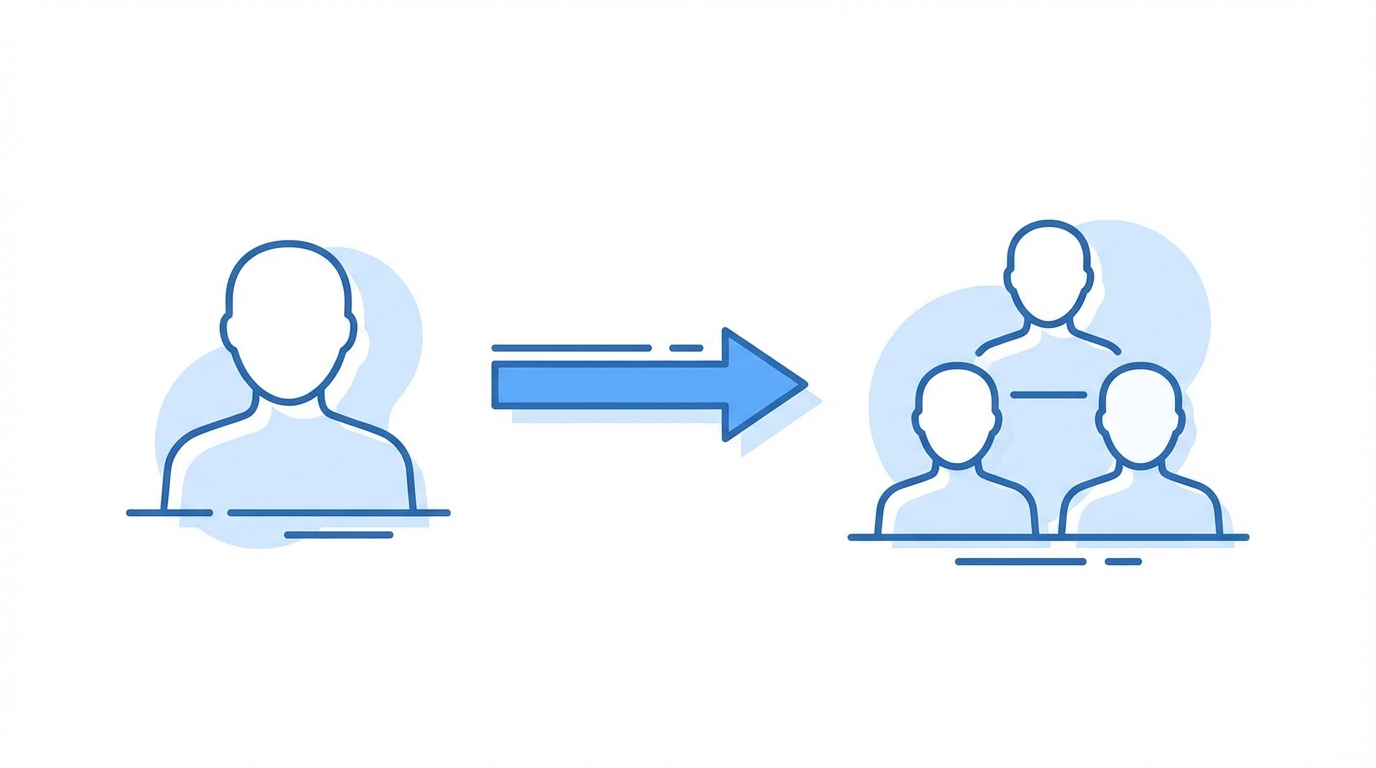
The ultimate goal of a sweaty startup isn't to be the person power washing the deck forever; it's to own the company that power washes 50 decks a week. Delegation is the hardest part of the journey. Once you are consistently netting several hundred dollars a day, you must begin hiring. Start by hiring for the most labor-intensive tasks first, allowing you to focus on sales, rate management, and customer acquisition.
Consider hiring remote assistants through platforms like Startup Empire or specialized recruiting agencies to handle the administrative work, such as answering phones and scheduling appointments. When you stop being the 'technician' and start being the 'owner,' your income potential becomes uncapped. You can replicate your model in the next town over, buy more equipment, and eventually transition into real estate by owning the warehouses or facilities that house your 'boring' business.
Conclusion: The Path to Wealth is Paved in Sweat
Starting a boring business isn't about the glory of the 'startup' label; it's about the math of wealth. By choosing sweaty startup ideas, you are playing a game with an 80% success rate instead of a 1% success rate. Whether you are delivering firewood, installing Christmas lights, or building a digital directory for night nurses, the fundamentals remain the same: solve a painful problem, compete against low-tech incumbents, and bootstrap your way to profitability. If you are willing to get your hands dirty and pick up the phone when no one else will, the path to $1,000 a day is much shorter than you think. Don't wait for the next tech revolution—go find a 'boring' problem and start solving it today.