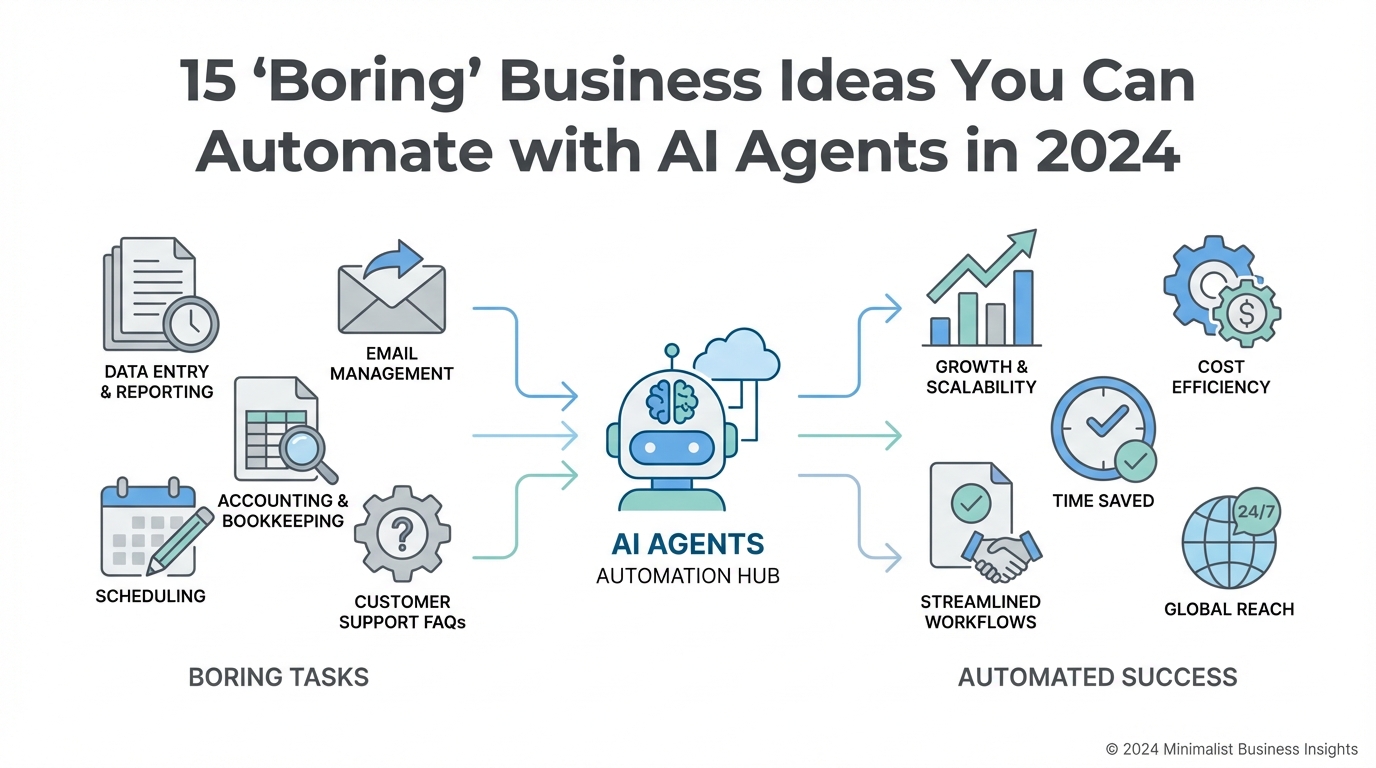
While the tech world is obsessed with building the next generative video model or a humanoid robot, a silent group of entrepreneurs is getting rich off the things nobody else wants to do. We are entering the era of the boring business. These are soul-crushing, repetitive, and unglamorous tasks that companies pay thousands of dollars to solve every month. In 2024, the secret to a successful startup isn't a 'revolutionary' idea; it is finding a manual process that everyone hates and automating it with AI agents. As OpenAI co-founder Sam Altman recently noted, we are in the 'era of the idea guy,' where the ability to identify a niche and orchestrate AI to solve it is more valuable than knowing how to code. According to a McKinsey report, generative AI could enable automation of up to 70% of business activities that take up employees’ time today.
The 'Boring Business' Thesis: Why Insurance Forms and PDFs are Goldmines
The core philosophy behind the most successful micro-SaaS ideas in 2024 is simple: solve a high-friction, low-interest problem. Most founders want to build social apps or AI art generators. However, the real money is hidden in industries like logistics, insurance, and compliance. These sectors are riddled with 'manual labor'—tasks that require a human to look at a document, extract information, and type it into another system. These are business process automation ideas that have zero 'cool factor' but possess massive enterprise value.
By targeting these unsexy niches, you face significantly less competition. While a thousand developers are building AI wrappers for ChatGPT, almost nobody is building an AI agent specifically designed to process international customs paperwork or reconcile medical billing codes. This lack of competition allows for higher pricing power and better customer retention. Once you solve a 'boring' pain point for a business, they are unlikely to ever churn because the cost of returning to manual labor is too high.
The Three-Phase Playbook: From Manual Labor to AI Agent Empire
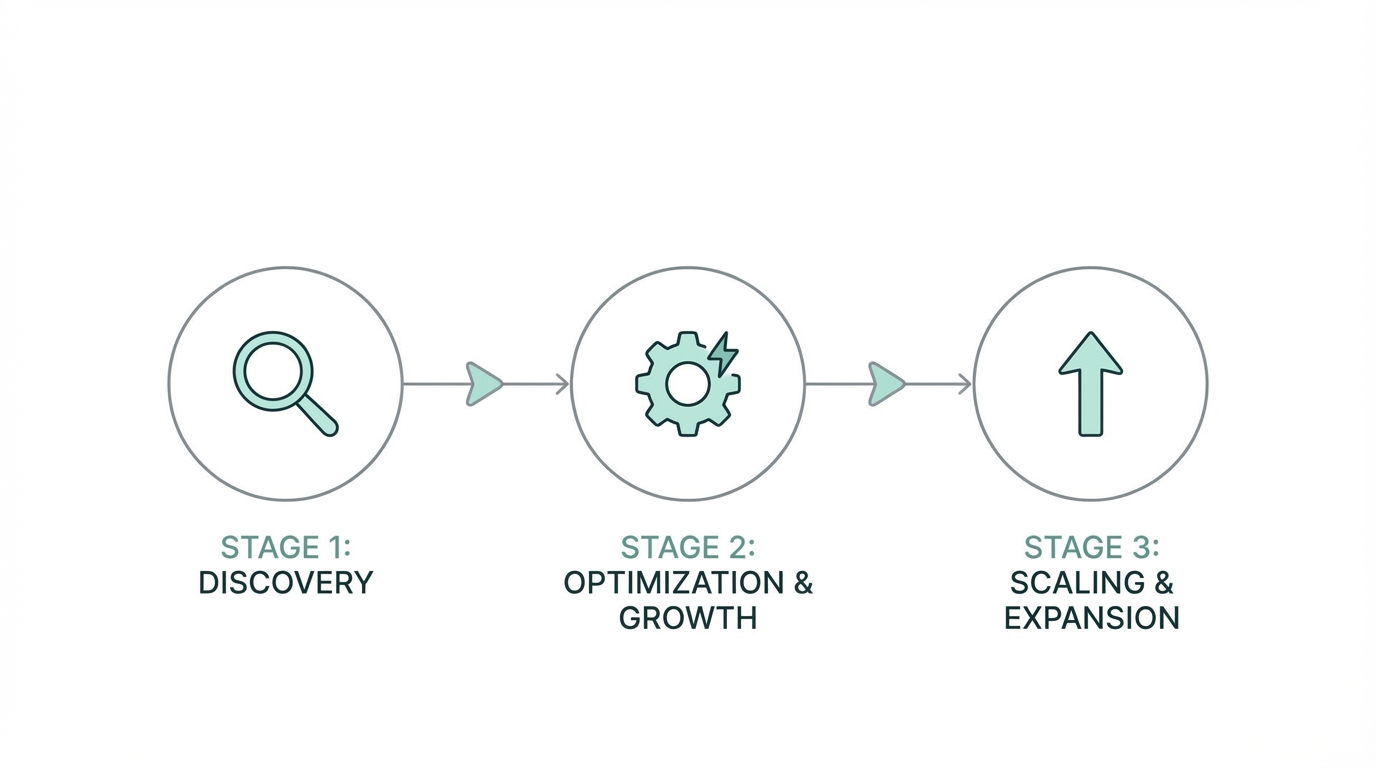
Building an AI startup doesn't require a massive venture capital round from day one. In fact, the most sustainable way to build in this space is what we call a leveraged agency. This model allows you to stay profitable from month one while building product-market fit. Here is the step-by-step workflow automation example for taking a boring task and turning it into a $5M ARR business.
Step 1: The Manual Labor Phase (Months 1-6)
Start by offering a service. Whether it's managing insurance claims or processing invoices, do the work manually. You might hire a few freelancers on a platform like Upwork to help, but you must personally understand every edge case. Your goal here is to reach $1,000 to $5,000 in monthly revenue. By doing the work yourself, you document the Standard Operating Procedures (SOPs) that will eventually become the 'brain' of your AI agent.
Step 2: Build the System (Months 7-12)
Once you have the SOPs, you wire AI agents to mirror those steps. Tools like Gumloop or Lindy AI allow you to create complex workflows without deep coding knowledge. In this phase, your goal is to double your margins from 40% to 80% and scale to 50+ clients. You are no longer selling 'hours'; you are selling a 'result' powered by automation.
Step 3: Scaling and Multi-Tier Growth
By year two, you should have a full AI system handling hundreds of clients. You can then introduce multiple tiers: a self-serve micro-SaaS for small businesses, an enterprise white-glove service for Fortune 500s, and an API for other developers. This is how you transition from a small agency to a high-valuation AI company.
Mining Community Signals: How to Find Your Niche

The best boring business ideas are usually found where people are complaining the loudest. You can use 'community signals' to find these pain points by mining platforms like Reddit and various industry-specific Facebook Groups. Look for phrases like 'How do I automate...', 'I hate doing...', or 'Is there a tool for...'.
For example, searching for 'Excel' and 'frustration' in a real estate subreddit might reveal a massive need for automated listing localization or data extraction from lease agreements. Tools like Idea Browser can automate this discovery process for you, delivering daily startup ideas backed by high-quality data trends directly to your inbox. The goal is to find a niche that is 'one inch wide and a mile deep.'
15 'Boring' Business Ideas to Automate in 2024


- Insurance Claim Form Processing: Managing the back-and-forth between medical providers and insurance companies is a manual nightmare. AI agents can extract data from forms and cross-reference them with policy documents instantly.
- Invoice Reconciliation: Companies with high transaction volumes spend thousands of hours matching invoices to purchase orders. An AI agent can handle this via n8n workflows.
- Automated Review Responses: For local businesses with hundreds of locations, responding to Google and Yelp reviews is a full-time job. AI can generate personalized, brand-aligned responses based on the specific content of the review.
- PDF-to-Salesforce Data Entry: Many sales teams still receive leads or contracts via PDF and manually type the data into their CRM. This is a prime target for a micro-SaaS using Salesforce integrations.
- International Customs Documentation: Shipping goods across borders involves mountains of paperwork. AI agents can ensure every field is filled correctly based on local regulations.
- Bank Statement-to-Excel Conversion: This is a classic example of a 'boring' success story. Companies like Bank Statement Converter are making $40,000 per month just by turning messy PDFs into clean spreadsheets.
- Real Estate Listing Localization: Automatically translating and culturally adapting property listings for international buyers using AI.
- Medical Billing Code Auditing: Ensuring that the codes used by doctors match the procedures performed to prevent insurance denials.
- E-commerce SEO Metadata Updates: For stores with thousands of products, keeping meta descriptions and alt-text updated on Shopify is a never-ending task perfectly suited for AI.
- KYC Document Verification: Fintech companies spend a fortune on manual Know Your Customer (KYC) checks. AI agents can verify IDs and documents in seconds.
- Podcast-to-LinkedIn Content Repurposing: Turning a 60-minute audio file into ten high-performing text posts is a high-demand service for B2B founders.
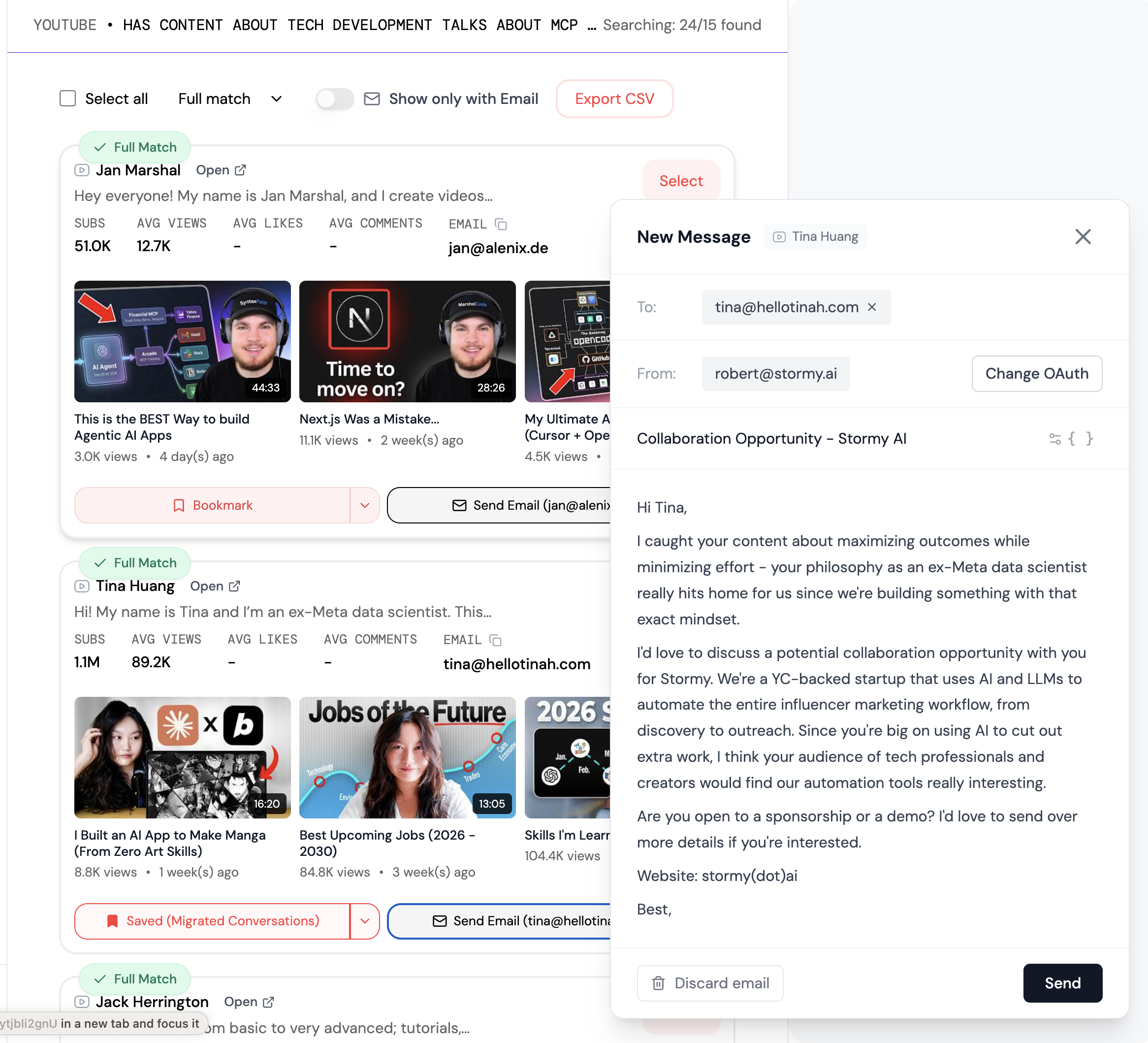
- Influencer Vetting and Outreach: Finding and contacting creators for UGC campaigns is often a manual slog. Modern platforms like Stormy AI allow you to automate the discovery, quality vetting, and personalized email outreach to influencers at scale.
- RFP (Request for Proposal) Drafting: Government and enterprise contractors spend weeks drafting responses to RFPs. AI can generate a 90% complete first draft based on past successful bids.
- Legal Contract Redlining: AI can perform the 'first pass' of a contract review, identifying common red flags or missing clauses before a lawyer even looks at it.
- Customer Support Ticket Tagging: Instead of a human sorting tickets, an AI agent can read, tag, and route support requests to the correct department automatically using Zapier integrations.
Case Study: The $40K/mo Bank Statement Converter Model
One of the most inspiring examples of a boring business idea turned into a profitable reality is the bank statement converter. It does exactly what the name implies: it takes a PDF bank statement—which is notoriously difficult to copy-paste—and converts it into a clean Excel or CSV file. This is a task that accountants and bookkeepers face every single day.
The founder didn't need to build a 'general AI.' They built a hyper-specific tool that solved one single, painful problem for a specific group of professionals. By focusing on accuracy and ease of use, they were able to build a micro-SaaS idea in 2024 that generates significant recurring revenue with almost no overhead. This 'boring' tool now provides immense value to thousands of banks and accounting firms, proving that you don't need to be a rocket scientist to build a successful AI startup; you just need to pick the right niche.
How to Validate Your AI Automation Niche

Before you build a single line of code or an AI workflow, you must validate the demand. The most effective way to do this is to 'build in public' on platforms like X (formerly Twitter). Solve one specific problem publicly and show your process. If you can get 10 people to save your post and one person to ask, 'How can I pay you for this?', you have a business.
Once you have your first few clients, document your results. Use your own AI-powered system to manage your growth. For instance, if you are building an agency that sources UGC creators for mobile apps, using Stormy AI to handle the discovery and outreach allows you to focus on the high-level strategy while the AI agents handle the 'boring' repetitive tasks of creator management. This is the essence of being a 'multipreneur'—using automation to own multiple profitable businesses simultaneously.
Conclusion: The Future Belongs to the Orchestrators
The year 2024 is the best time in history to start a business because the barrier between an idea and an execution has never been thinner. You no longer need a team of 50 people to run a million-dollar company; you need one smart orchestrator and a fleet of AI agents. By focusing on boring business ideas, you can avoid the noise of the 'AI arms race' and build a cash-flowing asset that solves real problems for real companies.
Stop looking for the most exciting idea and start looking for the most boring one. Find the task that makes people sigh with frustration, perform it manually until you know it inside out, and then wire an AI agent to do it for you. Whether you are using Notion to organize your SOPs or specialized platforms to automate your influencer marketing outreach, the path to a $5M ARR startup starts with a single, unglamorous task.