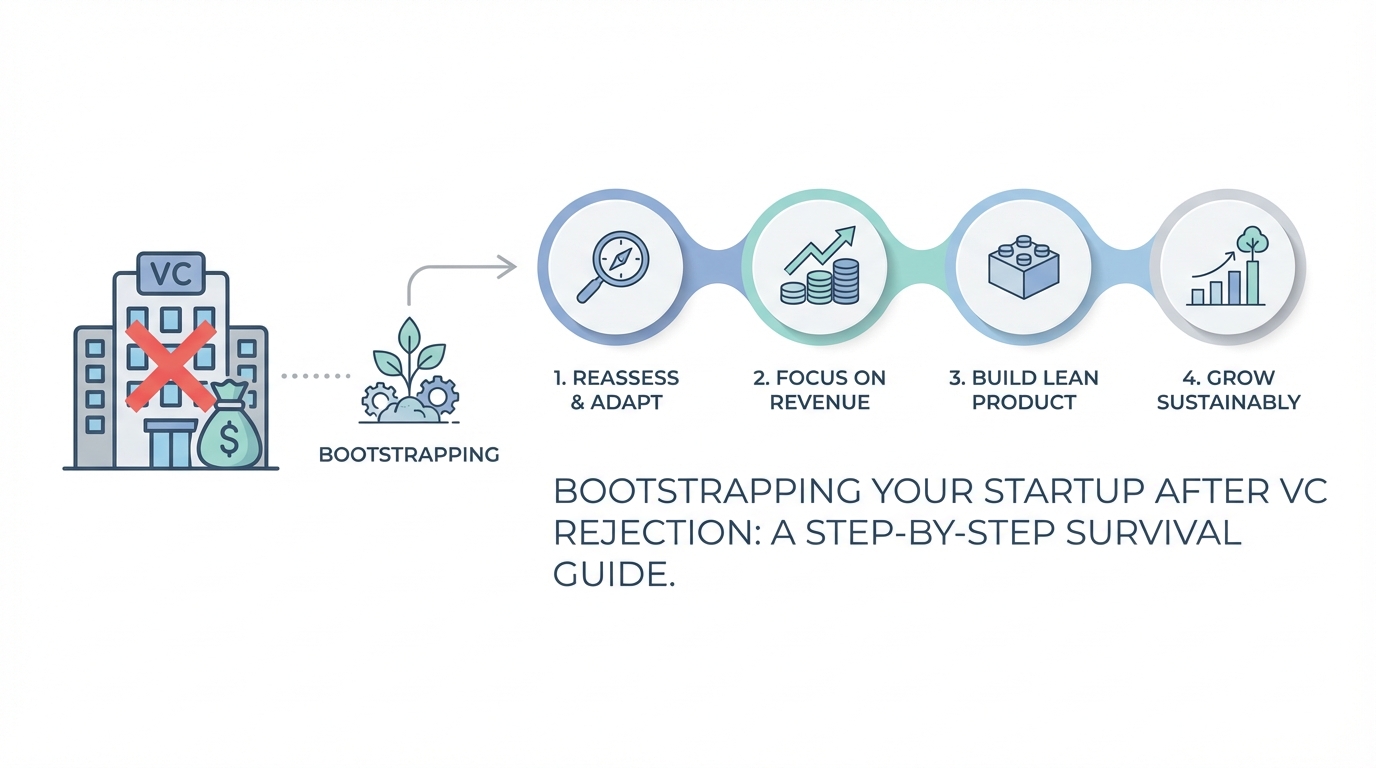
The email arrives at 9:00 PM, a time when most of the professional world is winding down. You have spent months preparing your pitch, years building your prototype, and weeks dreaming of the validation that a Y Combinator acceptance would bring. But the first line is always the same: 'Unfortunately, we have decided not to move forward with your application at this time.' For many founders, this is the end of the road. For Saba Cannajad and Tim Berners, the founders of Veed.io, it was the beginning of a journey that would eventually lead to over $40 million in revenue without a single cent of venture capital. Bootstrapping a startup isn't just about a lack of money; it's about the abundance of entrepreneurial resilience.
The Psychology of VC Rejection: Turning 'No' Into Momentum
Receiving a rejection from a prestigious accelerator or a high-profile VC firm can feel like a personal indictment of your vision. However, the story of Saba Cannajad demonstrates that a 'no' is often just a data point, not a destination. When Veed was rejected by Y Combinator, the founders didn't wallow in self-pity. Instead, they looked at the specific feedback provided: the investors didn't understand why they hadn't started charging their users yet. This feedback became the catalyst for their first revenue-generating features. To survive the 'dark place' of startup failure, you must view every rejection as a free consulting session. If a VC says your market is too small, prove them wrong by finding a niche they overlooked. If they say your growth is too slow, find startup funding alternatives like organic growth or user-generated content strategies.
Building entrepreneurial resilience means realizing that the validation of a check from an investor is secondary to the validation of a payment from a customer. In the early days of Veed, Saba and Tim faced interns quitting, being kicked out of their office space, and emptying their personal bank accounts. They even had to sell their personal cryptocurrency holdings just to keep the servers running. This level of 'brute force' is what separates those who talk about startups from those who build multimillion-dollar businesses. When you are looking for ways to discover creators on Stormy to help market your product, remember that your story of grit is your most powerful asset.
Calculating and Extending Your Runway Through Extreme Frugality


When you are bootstrapping a startup, your runway is not measured in months of venture capital, but in how many 'discount meals' you can eat and how many software subscriptions you can 'nickel and dime.' Saba recalls cycling furiously through London to save on train fare and sharing a single entry card for a co-working space with his co-founder. To effectively extend your runway, you must treat every dollar as if it were your last. This means auditing your tech stack and negotiating every bill. For instance, the Veed founders reached out to their chat provider, explaining they couldn't afford $100 a month, and successfully negotiated it down to $20. This obsession with lowering operational expenses (OPEX) is how to start a business with no money and actually keep it alive.
Modern founders can leverage AI to keep costs low. Instead of hiring an expensive agency to find influencers, you can use Stormy's AI search for discovery across TikTok, YouTube, Instagram, LinkedIn, TikTok Shop, and newsletters to identify high-engagement creators in your niche with a simple natural-language prompt. This allows you to scale your marketing without the overhead of a massive team. By focusing on startup funding alternatives like high-margin digital products or services, you can reinvest every saved dollar back into product development. Extreme frugality is not about being cheap; it is about being capital-efficient so that you can survive long enough for your growth to hit its 'hockey stick' moment.
The 'Day Job' Funding Model: Using Personal Income as Seed Capital
One of the most practical strategies Saba and Tim used was the 'Day Job' funding model. When their bank accounts were empty and the startup wasn't yet profitable, they both took full-time jobs. This might seem like a defeat, but it was actually a strategic move. They used half of their monthly salaries to hire two offshore engineers. This allowed development to continue while they handled the entrepreneurial resilience of working 9-to-5s and then building their dream from 6 PM to midnight. This approach mitigates the risk of total failure and provides a steady stream of capital to invest in essential tools like PostHog for analytics or Google Ads for initial testing.
The Bootstrapper's Playbook for the 'Day Job' Model:
- Strict Financial Discipline: Commit a fixed percentage (e.g., 50%) of your paycheck to the company account immediately upon receiving it.
- Hire for Scalability: Use that money to hire talent that can work while you are at your day job, such as developers or content creators.
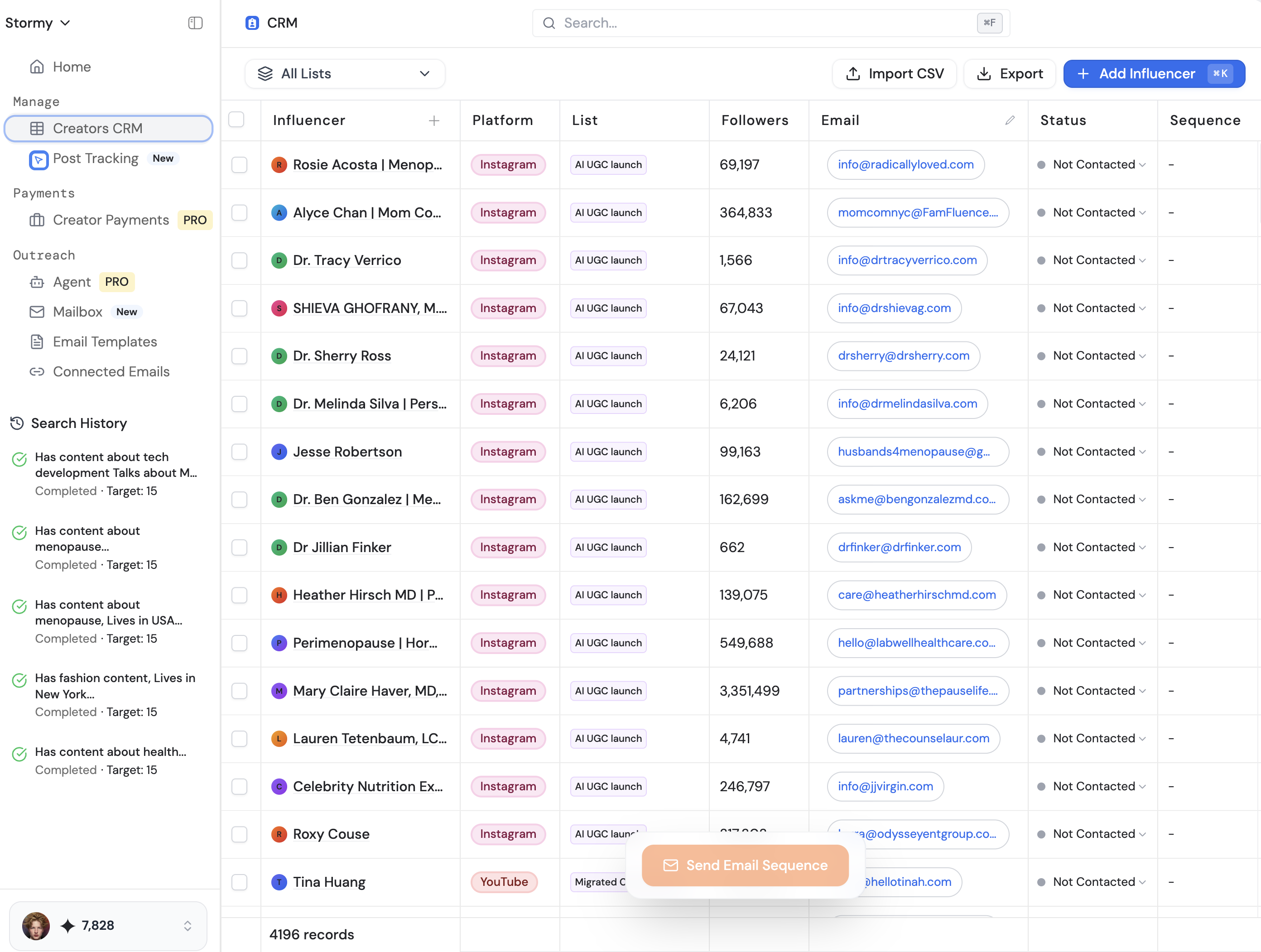
- Leverage AI Automation: Use Stormy AI for AI email outreach with auto follow-ups to automate your creator management. You can set up an AI agent to handle emails and follow-ups while you are at your 9-to-5, ensuring your marketing machine never stops.
- Set a Revenue Milestone: Determine exactly how much monthly recurring revenue (MRR) the startup needs to hit before you can quit your day job.
Turning Investor Feedback into Product Features
The most famous part of the Veed story is their interaction with Y Combinator. After receiving their rejection, they didn't just walk away. They noticed a line in the rejection email: 'We don't understand why you haven't charged your users.' Over a single weekend, they implemented a payment gateway using Stripe and reached out to their 30,000 monthly users. By Monday morning, they had 20 paid users. They emailed YC back, saying, 'We heard you, we implemented it, and we have revenue. Will you reconsider?' Although they were still rejected a second time, they were no longer a pre-revenue company. They had a business.
This is a critical lesson for any founder wondering how to start a business with no money: revenue is the ultimate form of validation. If you are struggling to convert users, analyze your data. Tools like Stormy's influencer analysis can help you see which types of creator-driven content are actually driving conversions versus just vanity metrics. By focusing on the features that people are willing to pay for—whether it's trimming, cropping, or subtitling in Veed's case—you move away from 'hope-based marketing' toward a data-driven business model. When investors say no, let your customers say yes.
Brute Force SEO: The No-Budget Marketing Strategy

Once you have a product people will pay for, the challenge shifts to growth. With zero budget for Meta Ads or expensive PR firms, Saba turned to 'brute force SEO.' He identified 500 search terms related to video editing—things like 'trim video,' 'crop video,' and 'add subtitles to video.' He then built a dedicated landing page for every single one of those terms. Despite being dyslexic and occasionally misspelling words on those early pages, the sheer volume of high-intent pages started to rank on Google. He then doubled down by recording a YouTube video for every single landing page, creating a massive web of content that funneled users into the app.
To replicate this 'brute force' strategy today, you need to be smart about where you spend your time. Instead of manually searching for keywords, look at what creators in your space are already talking about. You can use Stormy's post tracking and analytics dashboard to monitor which videos and posts are trending in your niche. By identifying high-performing UGC (user-generated content), you can create landing pages that specifically solve the problems those creators are highlighting. This synergy between SEO and social media analytics is how you scale from $1 million to $6 million in revenue in just a few months, as Veed did. It isn't about having a big budget; it's about having a big presence where your customers are already looking for solutions.
Metrics That Matter When You Can't Rely on VC Validation

In the venture-backed world, metrics like 'total users' or 'burn rate' are often prioritized. In the bootstrapped world, these are secondary to Cash Flow and Customer Acquisition Cost (CAC). When you are bootstrapping a startup, you cannot afford to acquire customers at a loss. Your CAC must be significantly lower than your Lifetime Value (LTV) from day one. You should be tracking your conversion rates religiously using platforms like PostHog to ensure that every visitor to your 'brute force' SEO pages has a clear path to becoming a paying subscriber.
Another vital metric is Audience Quality. If you are working with influencers to drive growth, you cannot afford to pay for 'ghost' followers or bots. This is where Stormy AI becomes essential for bootstrapped founders, as it provides deep influencer vetting and fake follower detection. It automatically detects fake followers and engagement fraud, ensuring that every dollar of your hard-earned 'day job' money is going toward reaching real potential customers. When you don't have a VC's checkbook to mask your mistakes, your data must be impeccable. Focus on your Net Revenue Retention (NRR)—if your existing customers are staying and paying more over time, you have a business that can eventually scale to $40 million and beyond.
Conclusion: The Endurance Sport of Startups
The journey from a cracked version of Photoshop in the middle of nowhere to a global video editing powerhouse is not a sprint; it is an endurance sport. As Saba Cannajad points out, there were dozens of moments where Veed could have failed. The difference was the decision to keep going. Bootstrapping a startup requires a level of grit that venture capital sometimes dilutes. By embracing extreme frugality, leveraging the 'Day Job' funding model, and using brute force SEO, you can build a resilient business that doesn't need external validation to thrive.
If you are currently in that 'dark place' after a Y Combinator rejection, remember that your lack of funding is actually your greatest competitive advantage. It forces you to be more creative, more customer-focused, and more efficient than any venture-backed competitor. Tools like Stormy AI are built for this new era of lean, AI-powered growth, helping you find and manage creators with the precision of a billion-dollar company on a bootstrapped budget. Keep building, keep charging, and keep going. The best middle finger to those who doubted you is a profitable, multimillion-dollar balance sheet.