In early 2026, the landscape of ecommerce has fundamentally shifted. We have officially entered the era of the billion-dollar solopreneur. As predicted by Anthropic CEO Dario Amodei, the first billion-dollar company with a single employee is no longer a fever dream—it is a mathematical inevitability. This shift isn't happening because people are working harder; it’s happening because they have transitioned from using tools to employing autonomous AI agents. While 2024 was about chatbots that could draft emails, 2026 is about an agentic ecommerce stack where your AI team handles strategy, logistics, and growth while you focus entirely on high-level direction.
The Rise of Agentic Commerce in 2026
The numbers tell a staggering story. The global AI in ecommerce market has surged to nearly $9.9 billion this year, according to data from Statista. We are seeing a massive economic impact from the 29.8 million solopreneurs in the U.S. alone, who now contribute $1.7 trillion to the GDP, based on the MBO Partners State of Independence report. Approximately 25% of these high-leverage individuals are operating in the ecommerce and creative sectors, utilizing an autonomous ecommerce employee to run the messy back-office tasks that used to require a 10-person department.
"The defining characteristic of 2026 is the transition from tools that assist to AI Agents that act autonomously across strategy, growth, and operations."
Today, 93% of ecommerce businesses view AI agents as their primary competitive advantage. The reason is simple: performance. Shoppers who engage with AI conversational agents now convert at a rate of 12.3%, compared to just 3.1% for unassisted shoppers. This 4x increase in conversion is why Stormy AI has become a staple in the modern solo founder's stack—it doesn't just show you data; it acts on it by monitoring inventory, following up with suppliers, and flagging ad performance risks in real-time.
Step 1: Agentic Validation — Finding "Sentiment Gaps"
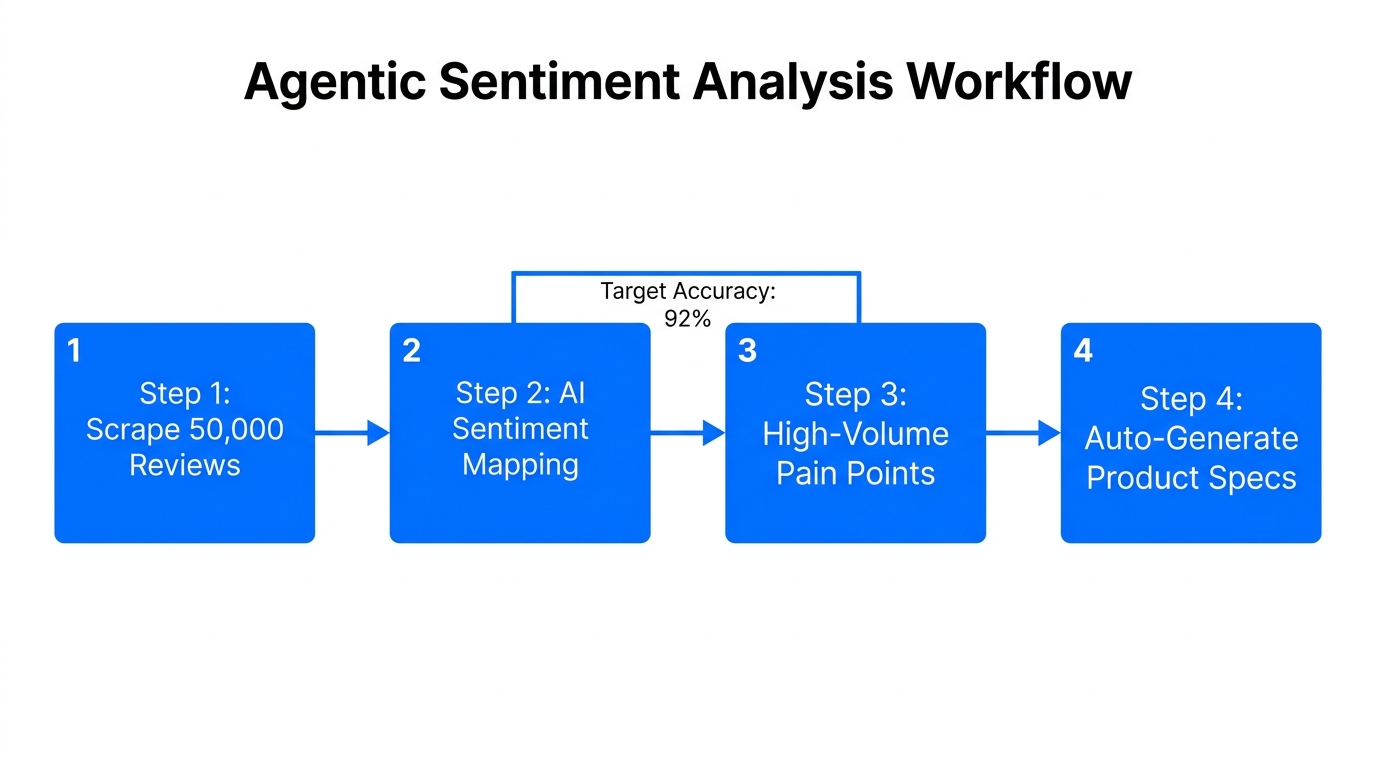
The first step in the billion dollar solopreneur playbook is moving away from generic product research. Instead of looking for high-volume keywords, modern founders look for Sentiment Gaps. This involves using advanced research tools like Helium 10 or Semrush to identify products with 3-star reviews and then using AI to summarize exactly what customers hate.
How to execute the Sentiment Gap play:
- Identify the Category: Use Helium 10 to find categories with high revenue but mediocre average ratings.
- Analyze the Friction: Feed the top 1,000 negative reviews into an LLM. Ask: "What is the specific recurring failure point that customers are willing to pay to solve?"
- Build for the "Hate": Design your product specifically to solve that one technical friction point. AI models prioritize technical specs (e.g., "316L stainless steel") over marketing fluff (e.g., "high quality") because they are looking for information gain.
Once your product concept is validated, you don't hire a sourcing agent. You ask Stormy AI to research suppliers, import their CSVs into a dynamic workbook, and set row-level reminders to follow up on samples. This is how a billion dollar solopreneur operates: they build a factory, not just a storefront.
Step 2: Building a Machine-Readable Shopify Store
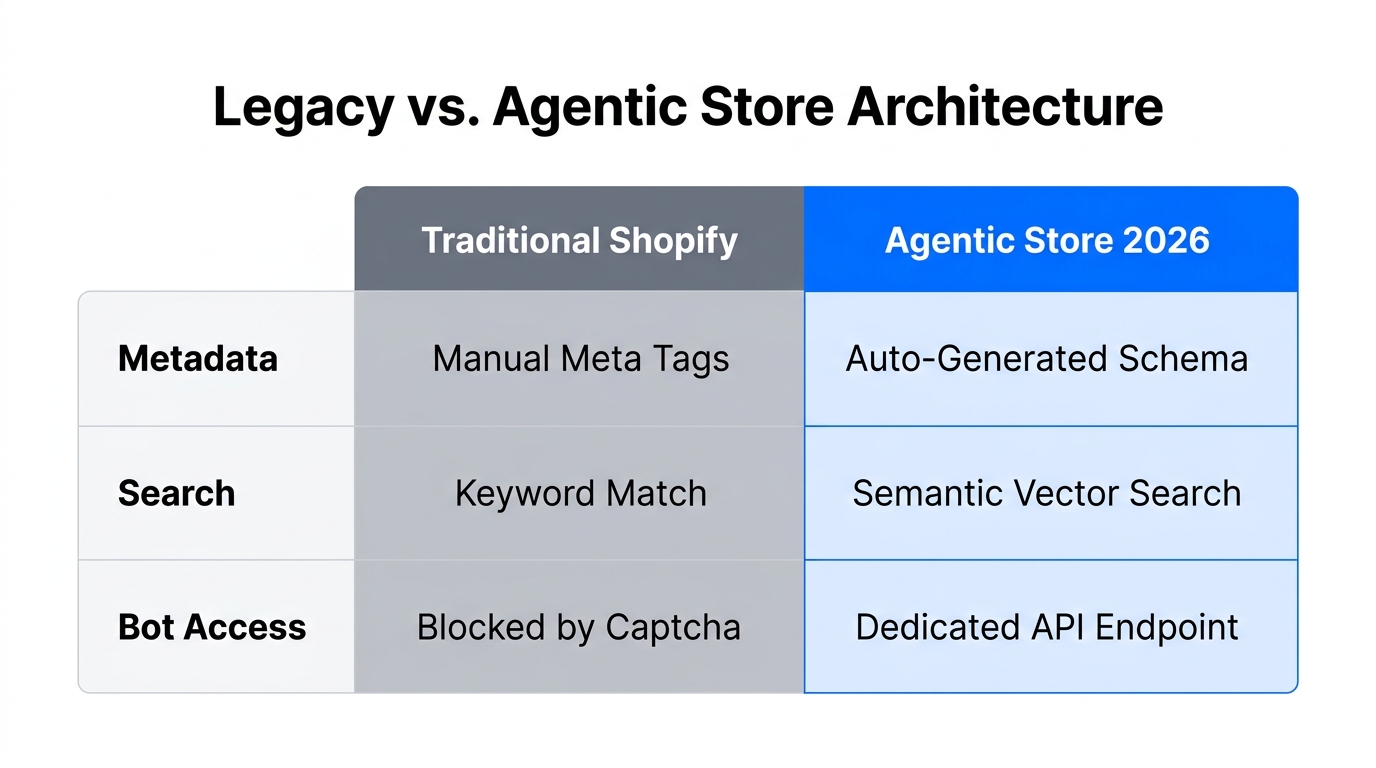
In 2026, your store isn't just for humans—it's for agents. We are seeing the rise of "Zero-Click Commerce," where consumers use "Buy for me" buttons in AI interfaces like Google Gemini or Perplexity. To win, your store must be machine-readable. This is made possible through the Shopify AI Toolkit and the Model Context Protocol (MCP) pioneered by Anthropic.
| Feature | Traditional Solo Store | AI-Driven Solo Store (2026) |
|---|---|---|
| Storefront | Manual SEO & Images | Machine-Readable MCP Feeds |
| Operations | Manual Spreadsheet Updates | Autonomous Back-Office (Stormy AI) |
| Content | Slow Human-Written Blogs | Synthetic/Agentic (Jasper AI) |
| Discovery | Google Search Focus | Answer Engine Optimization (AEO) |
When you launch on Shopify, you must enable Shopify Magic for native AI descriptions and utilize JSON-LD structured data. This ensures that when a user asks their AI agent, "Find me the best coffee maker with a stainless steel boiler and 24-hour shipping," your store is the one recommended. Share of Model Response (SMR) is the new SEO metric that solo founders obsess over.
"20% of commerce by 2030 will be agent-to-agent. If your store isn't machine-readable, you're invisible to the future economy."
Step 3: Managing the Back Office with Stormy AI
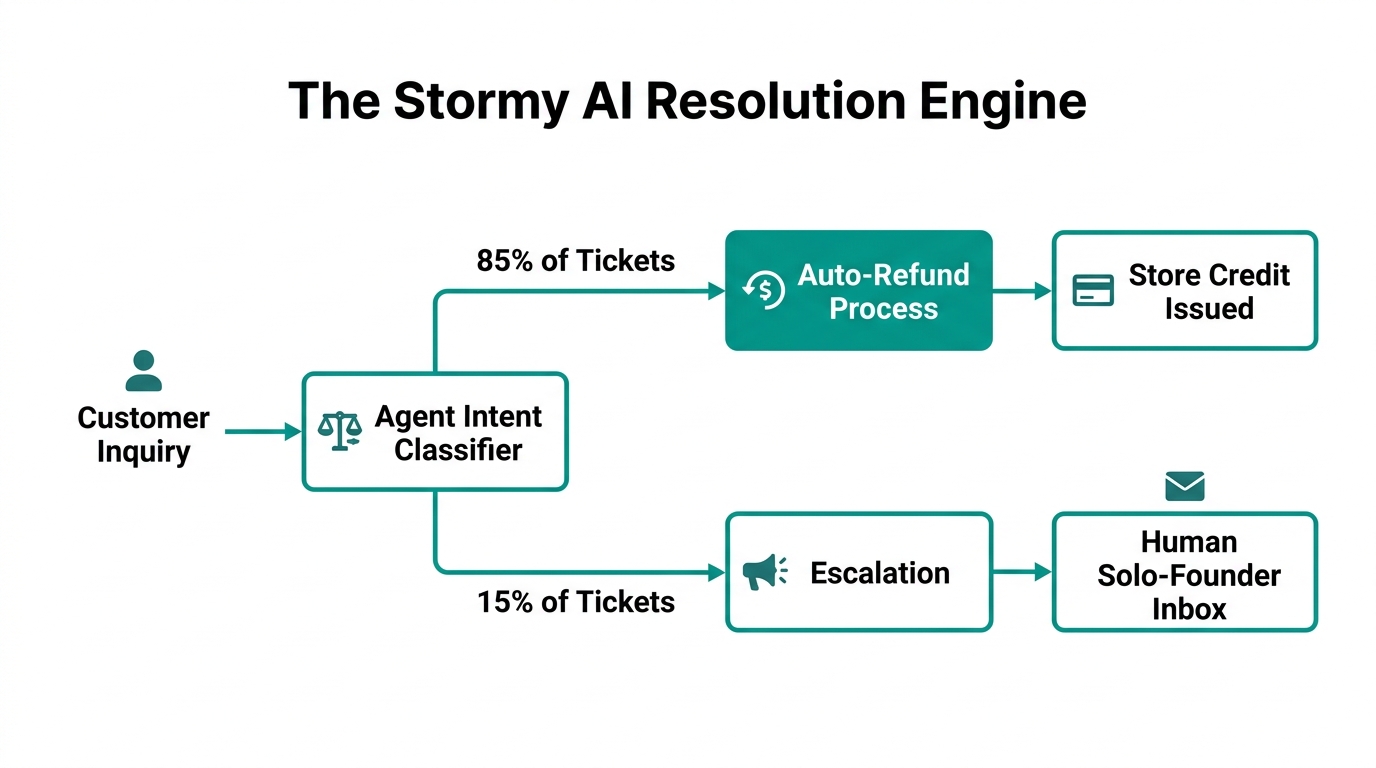
The reason most solopreneurs fail to scale isn't a lack of sales; it's the weight of the "messy back office." In 2026, you don't manage these tasks; your Shopify AI agents do. This is where Stormy AI functions as your first autonomous employee.
Instead of toggling between ten different tabs, Stormy AI uses its browser, spreadsheet engine, and email inbox to keep the operation running. For example, Stormy can pull campaign performance from Meta Ads Manager and Google Ads, then automatically update a master ROAS spreadsheet. If a campaign is underperforming, Stormy won't just tell you—it can be set to flag it and suggest budget moves based on your pre-defined reasoning.
Stormy AI's Workflow Playbook:
- Inventory Monitoring: Stormy connects to Amazon Seller Central and Shopify to track stockout risks. It drafts restock POs for your approval before you even realize you're low.
- Supplier Follow-ups: If a supplier hasn't replied to a shipping inquiry, Stormy detects the silence in your Gmail thread and sends a polite follow-up on day three.
- Creator Ops: Stormy can discover creators on TikTok Shop, manage their status in a CRM, and even handle creator payments.
- Listing Health: Stormy catches suppressed listings or broken variants on marketplaces before they cost you a weekend of revenue.
Case Studies: The Million-Dollar Solo Brands
We are already seeing the agentic ecommerce stack 2026 in action with massive success stories. Take Boston Wardrobe, a brand that utilized AI-generated creatives—no physical models or photographers required. By leveraging tools like Creatify AI for URL-to-UGC video generation, they generated $929,000 in revenue with a staggering $565,000 in profit. Their top three AI-generated images alone drove over $200k in sales.
Similarly, the Australian brand The Lullaby Club implemented an AI sizing agent. In just one week, they saw a 24% conversion increase and achieved a 97% accuracy rate in recommendations, drastically reducing returns—a major profit killer for solo operators. Meanwhile, CABAIA used Yuma AI to achieve a 74% reduction in support costs while maintaining 24/7 global coverage. These aren't just efficiency gains; they are structural changes that allow a single founder to compete with mid-market enterprises.
The Skill Paradox: Managing vs. Performing
As we move deeper into the billion dollar solopreneur era, a new challenge emerges: The Skill Paradox. Success in 2026 depends less on your ability to perform tasks (graphic design, copywriting, data entry) and more on your ability to prompt and manage agents. According to Gartner, by 2027, 75% of business success will depend on an owner's "Agentic Literacy."
You must treat an AI agent like Stormy AI as a teammate, not a software dashboard. This means setting clear objectives, providing high-quality data, and establishing "Human-in-the-Loop" checkpoints for critical decisions like budget changes or refund approvals. The solo founder of the future is effectively a Chief Orchestration Officer. They don't write the ads; they use Jasper AI to align the brand voice and Poppy AI to analyze viral hooks, then let the agents execute.
"The mistake people make is paying $10k a month for an employee when they should be paying for an agentic stack that gives them the output of a 50-person team."
Conclusion: Your 2026 Agentic Playbook
Building a billion-dollar solo brand in 2026 is no longer about finding a "winning product" and running ads. It is about building an autonomous system that discovers opportunities, creates content, and manages the back office while you sleep. The tools to do this are already here. By combining the market-readiness of Shopify Magic with the operational power of Stormy AI, you can effectively decouple your revenue from your time.
Start by validating your next product via sentiment gaps. Move to a machine-readable storefront setup. Finally, hire an autonomous ecommerce employee like Stormy to handle the spreadsheets, emails, and follow-ups. The gap between a struggling solo founder and a billion-dollar solopreneur is no longer headcount—it’s the agents you choose to run your stack.