Building a billion-dollar brand in an established category often feels like pushing water uphill. Most entrepreneurs believe that to win in a crowded market, they must out-spend, out-work, or out-engineer global giants. However, Eric Ryan, the mastermind behind Method Soap, Olly Vitamins, and Wellie, has proven that the most effective brand building strategy isn't about brute force—it is about creative disruption. By spotting what he calls a "sea of sameness" and applying a rigorous four-step model, Ryan has successfully reinvented three different commodity categories and scaled them into nearly billion-dollar entities. This playbook isn't just for consumer packaged goods (CPG); it is a masterclass in identifying untapped value within unsexy industries and using design as a competitive moat.
The Sea of Sameness: Identifying Stagnant Categories
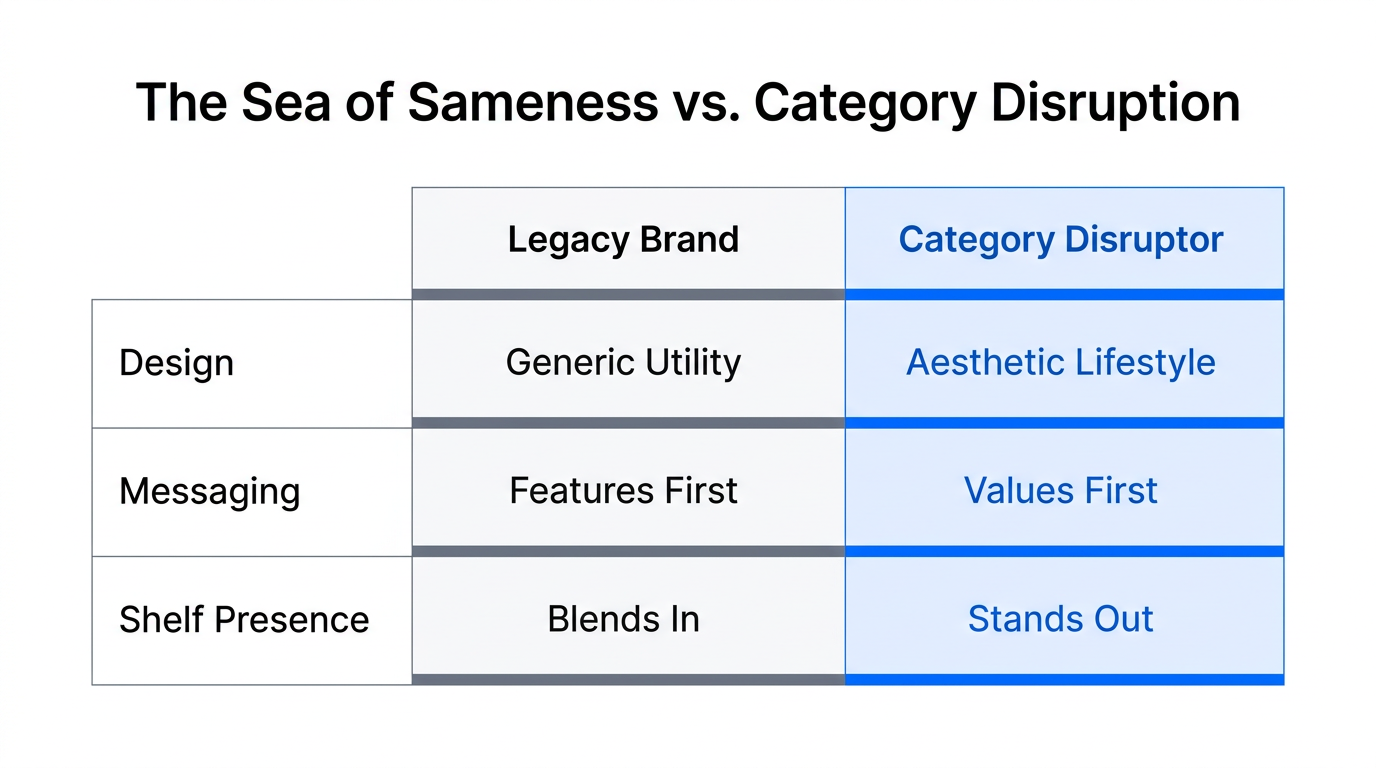
The first step in Ryan’s playbook is learning how to see what everyone else ignores. Most entrepreneurs look for categories that don't exist yet, betting on high-risk innovations. Ryan does the opposite. He hunts for already massive categories that have become stagnant, boring, and visually repetitive. He calls this the "Sea of Sameness."
When walking through a mass retailer like Target, most consumers see a wall of options. Ryan sees a lack of imagination. In 2002, the cleaning aisle was dominated by toxic chemicals in green plastic bottles. Every brand looked like something "your mom used to clean the house." In the vitamin aisle, he found a "dog’s breakfast" of uninspiring labels and pseudo-scientific jargon that left consumers confused and stressed. When everyone in a billion-dollar category is doing the exact same thing, it is an immediate signal for disruption.
"I walk through the aisles and I look for a sea of sameness. If every bottle is round, we have no choice but to be square."
Spotting the Cultural Shift: What Incumbents Miss
Once a stagnant category is identified, the next step in the go-to-market strategy is to identify a cultural shift or macro trend that the industry incumbents have completely missed. The business opportunity lives in the gap between where the category currently sits and where culture is moving.
For Method, the shift was "lifestyling the home." People were beginning to care about the aesthetic of their interior design, yet they were hiding their dish soap under the sink because it was ugly. For Olly, the shift was that Millennials view health and wellness as a lifestyle pursuit, not a medical chore. Ryan noticed how brands like SoulCycle had repositioned fitness into something spiritual and vibrant. He realized that if vitamins could be rebranded as a lifestyle accessory rather than a pill, they would move from the medicine cabinet to the kitchen counter where people would actually remember to take them.
By leveraging tools like Meta Ads Manager or modern analytics, you can track these cultural shifts in real-time, but the core insight often comes from observing other industries. Category disruption happens when you realize the future is already here—it is just not evenly distributed across every aisle of the grocery store yet.
The Thief Strategy: Cross-Industry Design Cues
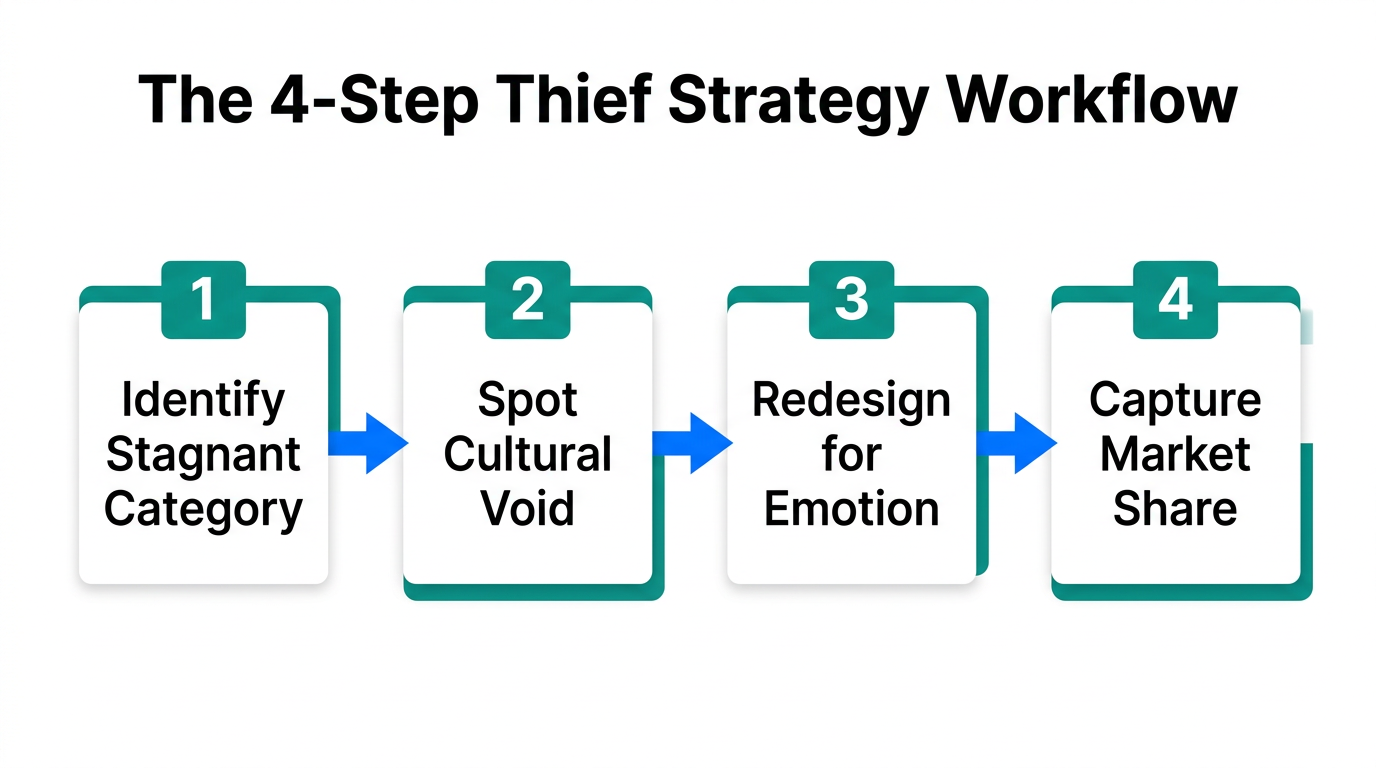
Ryan describes himself as a "thief," but he doesn't steal from his direct competitors. Instead, he steals from industries as far away as possible. This creates creative tension, which is the heart of his design-led approach. If you only look at your competitors, you will only create iterations. If you look at unrelated genres, you create novelty that feels familiar.
- Stealing from Personal Care: Method took colors and fragrances from high-end beauty products and applied them to floor cleaners.
- Stealing from Housewares: Method bottles were inspired by beautiful vase shapes and Scandinavian camping fuel bottles to make them "objects of desire."
- Stealing from Architecture: A building in Tokyo with a specific pillowed texture became the inspiration for a handwash bottle.
- Stealing from Fashion: Wellie took patterns from luxury handbags and put them on bandages, turning a "hideaway" product into a style statement.
When you bring two disparate ideas together—like high design and deep sustainability—you create a product that stands out instantly. This tension is what drives customer loyalty. For startups using platforms like Canva or Figma to mock up their initial concepts, the goal should be to find that intersection of familiar and novel.
| Strategy Component | Legacy Brand Approach | Disruptive Brand Approach |
|---|---|---|
| Packaging | Functional & Sterile | Object of Desire |
| Positioning | Feature-heavy/Technical | Benefit-driven/Emotional |
| Marketing | Fear-based (Killing germs) | Optimism/Lifestyle |
| Customer Experience | Hide it under the sink | Display it on the counter |
Simplification as a Growth Hack: Sleep vs. Melatonin
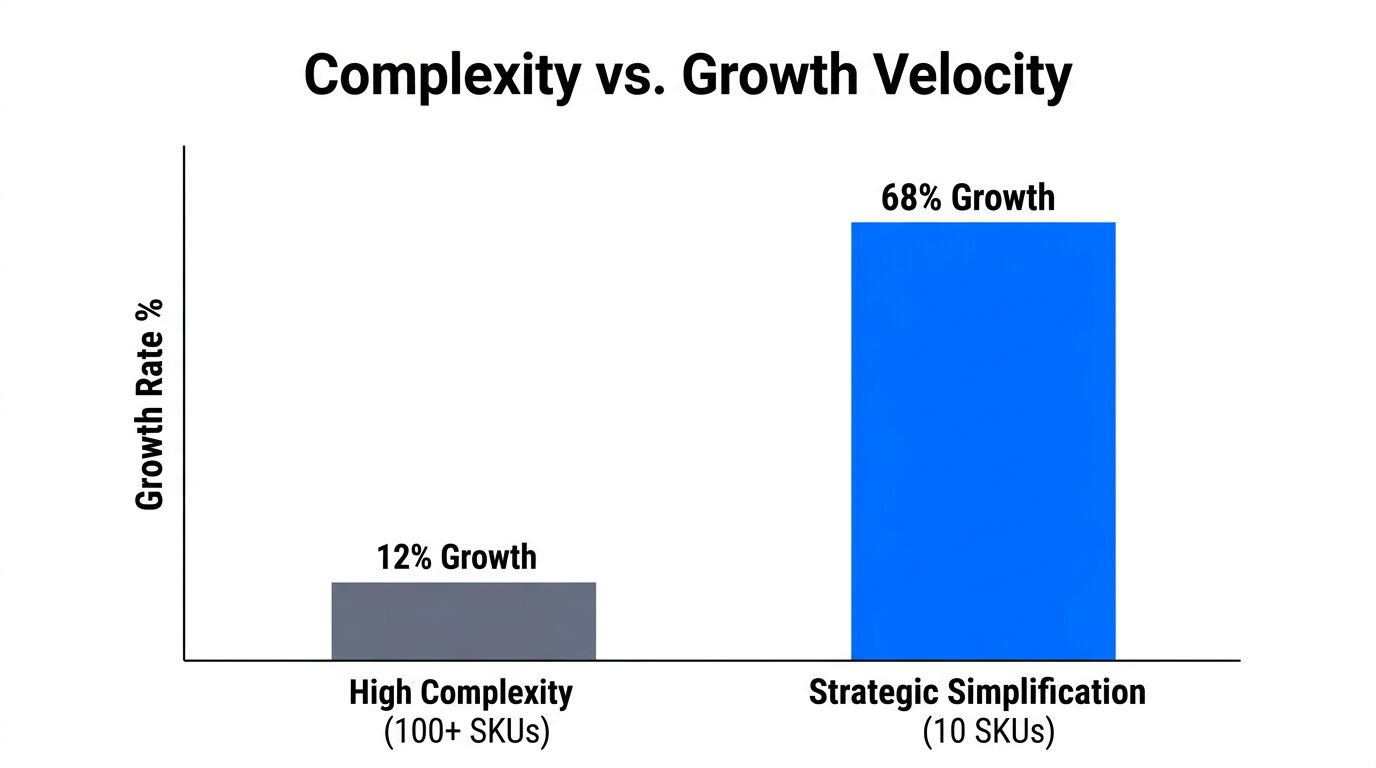
In the world of entrepreneurship growth, many founders fall into the trap of over-complicating their products. They believe that more features or more technical descriptions justify a higher price point. Ryan argues that simplification is the biggest hack in entrepreneurship. Complex ideas are hard to sell, hard to execute, and hard for consumers to remember.
The classic example is Olly's naming convention. While legacy brands were selling "Melatonin" or "Biotin," Olly simply sold "Sleep" and "Beauty." By labeling the product with the benefit rather than the ingredient, they removed the cognitive load for the customer. This approach transforms a product people have to buy into a product they want to buy. In an age of digital noise, brands that use Shopify to sell directly to consumers find that clarity beats cleverness every time.
"Ego causes entrepreneurs to over-complicate things to show how special they are. The best entrepreneurs take complex ideas and simplify them down until they are iconic."
When implementing this, remember the "one egg" rule: if you throw a consumer one egg, they will catch it. If you throw them three, they will drop them all. Change one thing—the shape, the color, or the name—but don't change everything at once or you'll move from "novel" to "foreign." To validate these simplified concepts, modern brands often partner with UGC creators to see which simple hooks resonate most with audiences. Platforms like Stormy AI streamline creator sourcing and discovery, ensuring your simplified message is reaching the right demographics through authentic voices.
The Artisan Operator: Balancing Imagination and Control
Scaling a brand to $1 billion requires more than just a good design; it requires what Ryan calls the "Artisan Operator" model. Many companies are good at one side of the coin: they are either highly creative but disorganized, or they are operational powerhouses with zero soul. The world's most successful brands, like Apple or Nike, master both.
An Artisan Operator culture balances high-level creative imagination with rigorous supply chain, finance, and operational controls. This means having the "artist brain" to see the texture of a building in Tokyo and turn it into a bottle, but also having the "operator brain" to manage a complex global supply chain that puts those bottles on the shelves of every major retailer. As you scale, using a sales-focused tool like Pipedrive for tracking while maintaining a small, agile creative team keeps the business predictable without losing its magic.
The Hustle and TTF: Time to Fun
The final pillar of the disruption playbook is the hustle required to get off the ground. Ryan recalls standing in local grocery stores at 6:00 a.m. to pitch grumpy managers. He views selling as a "transfer of emotion." If you can't get someone to believe in the product, you have to get them to believe in you and your persistence.
A critical metric Ryan borrows from the gaming industry is TTF: Time to Fun. In a mobile game, TTF is the time from opening the app to having the first satisfying experience. In retail, TTF is how quickly a customer experiences the "wow" factor of your brand. For Method, it was the first time the fragrance hit the customer’s nose. For Olly, it was the satisfying taste of a gummy that didn't feel like medicine.
This "Time to Fun" philosophy applies to your digital presence as well. From your landing page built on Webflow to your automated email sequences via Klaviyo, every touchpoint should aim for immediate value. For brands relying on creator marketing, Stormy AI streamlines the outreach process so you can find the right creators and get your product into their hands faster, lowering the "Time to Fun" for your entire marketing funnel.
Conclusion: Finding Your Billion-Dollar Category
The $1B Category Disruption Playbook is built on the belief that if it's hard, it's probably wrong. Success comes from finding the flow—the intersection where a big category's stagnation meets a cultural shift. By being a "thief" of great design, simplifying your message to its core benefit, and operating with both an artisan’s soul and a manager’s discipline, you can turn any commodity into an object of desire.
Whether you are reinventing fiber supplements, chicken farms, or the American diner, the steps remain the same: Identify the sea of sameness, find the cultural shift, steal the tension, and simplify the solution. The next billion-dollar brand is likely sitting on a shelf right now, disguised as a boring, round bottle waiting for someone to make it square.