Migration is the open-heart surgery of ecommerce. For years, the move from BigCommerce to Shopify was a trade-off: you gained the world’s most advanced checkout and app ecosystem, but you sacrificed technical SEO control. In 2026, the stakes are even higher. With Shopify now powering over 5.6 million active stores and commanding a significant global market share, the platform has become the default for growth. However, a sloppy migration still carries a terrifying risk: a 15-20% organic traffic dip that can take months to recover. If your brand relies on search equity, you can't afford a "wait and see" approach.
The 'Fixed Path' Problem: Shopify's Rigid URL Structure
One of the biggest hurdles when migrating BigCommerce to Shopify SEO is the shift in URL architecture. BigCommerce is known as an "Open SaaS" platform that allows full URL freedom. You can have a product live at brand.com/blue-widget. Shopify, however, enforces a rigid structure: brand.com/products/blue-widget and brand.com/collections/all-widgets.
When you move to Shopify, you are essentially asking search engines like Google to re-index your entire catalog under new addresses. In the BigCommerce vs Shopify SEO debate, BigCommerce often wins on technical flexibility, but Shopify wins on speed and conversion. To bridge this gap in 2026, you must prioritize 301 redirect mapping before you even think about your new theme design.
"The single biggest mistake in migration is treating SEO as a post-launch task. By the time you notice the traffic drop, the damage to your domain authority is already done."
A 301 Redirect Strategy for 2026: Using AI Agents
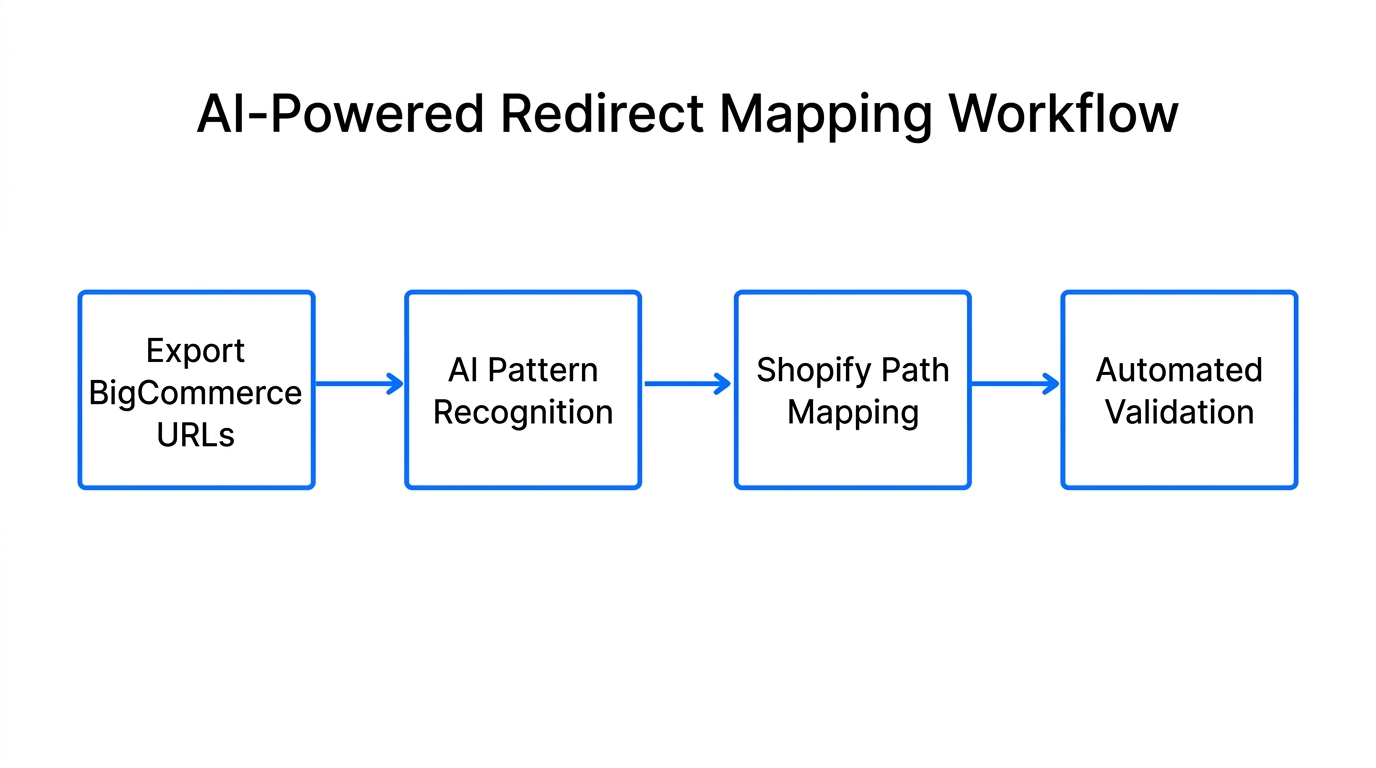
In the past, mapping thousands of URLs from BigCommerce to Shopify was a manual nightmare involving massive Excel sheets and VLOOKUPs. In 2026, we use an AI ecommerce employee like Stormy AI to handle the heavy lifting. Stormy can import your migration CSVs, identify the old BigCommerce paths, and automatically map them to the new Shopify /products/ structure based on SKU matching.
Step 1: Export your BigCommerce data. Use the built-in export tool to grab your product and category URLs. Ensure you include the unique SKU for every item.
Step 2: Let Stormy AI build the map. Ask Stormy AI to create a dynamic spreadsheet that pairs every old BigCommerce URL with its new Shopify equivalent. Stormy can even flag potential duplicate content issues where multiple old URLs might point to the same new Shopify canonical tag.
Step 3: Bulk upload to Shopify. Use an app like LitExtension or Shopify’s native redirect import to finalize the move. Stormy AI can then wake up post-launch to crawl your new site and verify that every redirect is returning a 301 status code rather than a 404.
Leveraging the 2,048 Variant Limit for Complex Catalogs
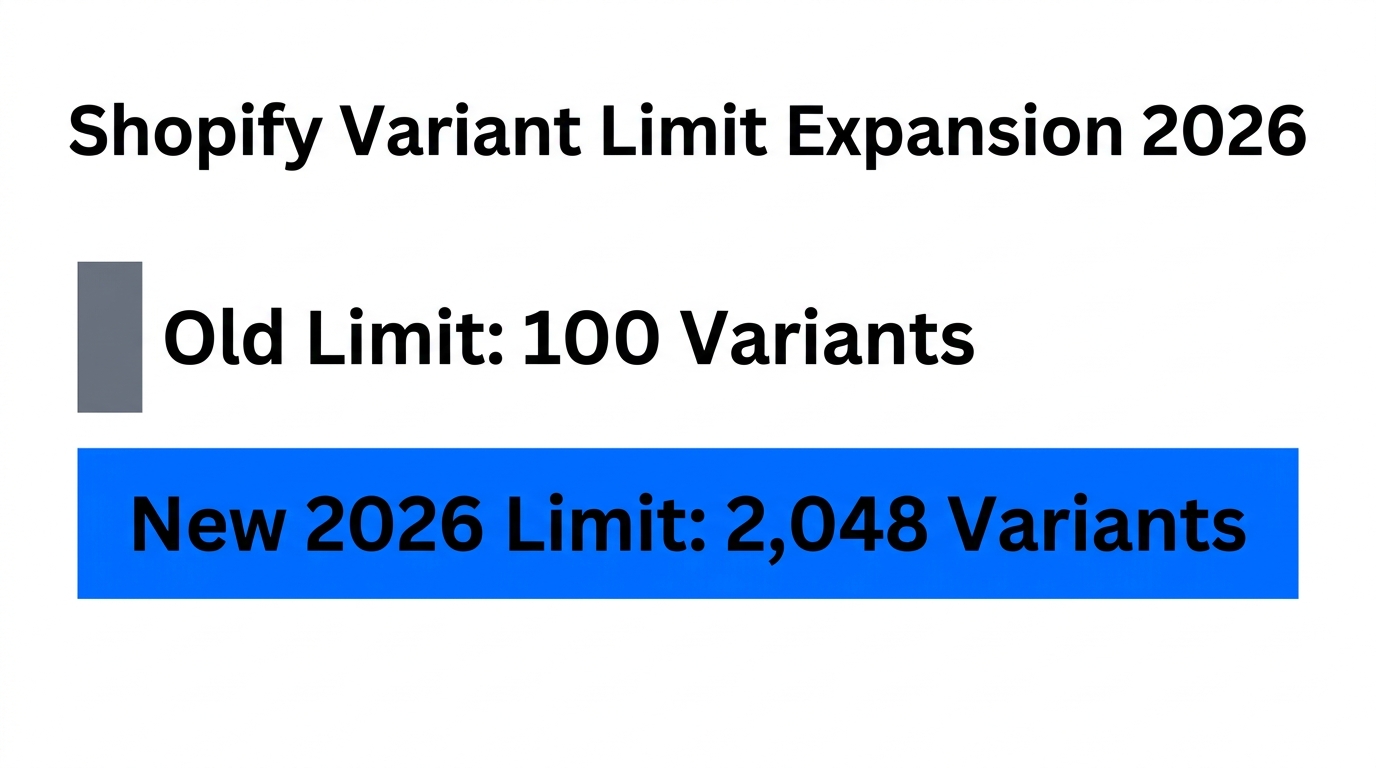
For years, many enterprise brands stayed on BigCommerce because of Shopify’s restrictive 100-variant limit. If you sold car parts or custom furniture, Shopify just couldn't handle the complexity without messy third-party apps. That changed with the Shopify Winter ’26 Renaissance Edition.
Shopify has shattered the limit, increasing native product variants from 100 to 2,048 per product. This Shopify variant limit 2026 update removes the single biggest technical barrier for BigCommerce power users. You can now migrate complex B2B catalogs with thousands of options directly into Shopify's core architecture.
| Feature | Shopify (2026) | BigCommerce (2026) |
|---|---|---|
| Native Variants | Up to 2,048 | Up to 600 |
| URL Control | Rigid (Prefixes) | Full Freedom |
| Checkout Conversion | 15-36% Higher | Industry Standard |
| API Rate Limits | Leaky Bucket | Unlimited/High Volume |
When migrating these complex items, Stormy AI can monitor your inventory levels across all 2,048 variants, flagging stockout risks in a shared workbook so your operation doesn't miss a beat during the transition.
Optimizing for SGO: The New SEO Frontier
In 2026, ranking on Page 1 of Google is only half the battle. You must also optimize for Search Generative Optimization (SGO) — ensuring AI bots like ChatGPT, Claude, and Gemini recommend your products. Shopify’s clean schema markup and high-speed Catalyst frontends make it highly readable for AI agents.
To maximize SGO visibility post-migration:
- Standardize Product Data: Use Shopify’s metaobjects to provide structured data about materials, dimensions, and usage instructions.
- Optimize for Intent: AI search focuses on "best for X" queries. Ensure your product descriptions answer specific user problems.
- Speed is Non-Negotiable: Use Shopify’s Hydrogen/Oxygen framework to achieve Core Web Vital scores in the 90th percentile.
"If an AI bot can't crawl your site in under 2 seconds, your product doesn't exist in the future of search."
Financial Audit: Calculating the True ROI of Migration
Before pulling the trigger, you need a cold, hard look at the numbers. Independent studies show Shopify offers a Total Cost of Ownership (TCO) advantage of 33% to 36% compared to other enterprise platforms, but there are hidden costs to consider.
The Transaction Fee Factor: If you use a third-party payment gateway instead of Shopify Payments, you will pay a 0.5% to 2% transaction fee. For high-volume merchants, this can be significant. However, Shopify’s 15% higher average conversion rate (thanks to Shop Pay) usually more than offsets these fees.
Ask Stormy AI to pull a performance report comparing your current BigCommerce CPA and ROAS against Shopify benchmarks. Stormy can build this in a shared XLSX, helping you justify the migration cost to your CFO.
The Ecommerce Migration Checklist 2026
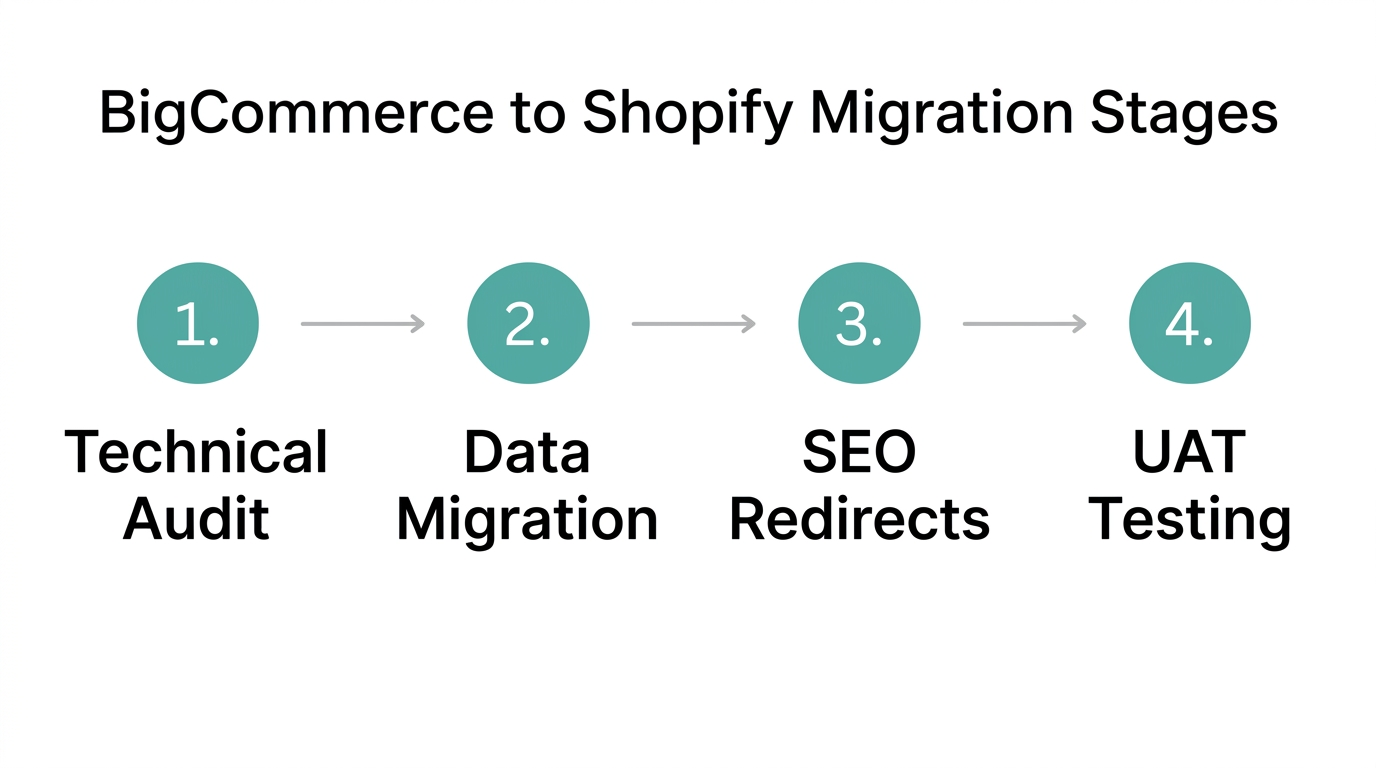
To ensure your transition is seamless, follow this ecommerce migration checklist 2026 for technical SEO and operations:
- Audit Core Web Vitals: Benchmark your BigCommerce speed. Your new Shopify store should aim for sub-2.5s Largest Contentful Paint (LCP).
- Map All Redirects: Use Stormy AI to pair 100% of your old URLs to new paths.
- Update Product Feeds: Ensure Google Ads and Meta Ads feeds are updated instantly to avoid spending money on 404 links.
- Configure Shopify Markets: If selling globally, set up localized domains and currencies in Shopify Markets to maintain international SEO.
- Post-Launch Audit: Have Stormy AI monitor your Google Search Console for crawl errors for the first 30 days.
Final Takeaway: Moving to a Leaner, AI-Driven Future
Migration from BigCommerce to Shopify in 2026 is no longer about just changing your CMS; it’s about upgrading your entire operational stack. By leveraging Shopify's new 2,048 variant limit and utilizing AI agents to protect your SEO equity, you can move your brand to a more scalable, higher-converting environment without the dreaded 20% traffic loss. Focus on the 301 redirect mapping, audit your TCO, and treat your AI ecommerce employee as the project manager that keeps the details from slipping through the cracks. Ready to scale? Let Stormy AI handle the messy back office of your migration so you can focus on the growth that follows.