In 2026, the ecommerce landscape has shifted fundamentally. We are no longer in an era where ranking #1 on a search engine results page (SERP) is the only goal. Today, discovery begins with a prompt, not a homepage. As BigCommerce CEO Travis Hess recently noted, the quality of your product data determines whether an AI agent—like Perplexity, ChatGPT, or a dedicated shopping assistant—recommends your product or ignores it entirely. This BigCommerce SEO guide 2026 moves beyond the basics of meta titles to focus on Data Standardization and Answer Engine Optimization (AEO).
The Death of Keyword Stuffing: Why Data Structure is the Primary SEO Signal
For years, SEO was a game of repeating keywords in headers and alt-text. In 2026, those tactics are officially obsolete. AI search agents don't just look for matches; they parse the underlying intent and technical specifications of your catalog. Modern search is powered by Universal Commerce Protocol (UCP) and structured data manifests. If your data isn't standardized, you are invisible to the bots that now account for over 40% of ecommerce referral traffic.
To win, your store must prioritize structured data for AI agents. This means moving away from generic descriptions and toward deep attribute tagging. While you focus on strategy, an AI ecommerce employee like Stormy AI can monitor your product listings in the background, flagging suppressed listings or missing images that would otherwise prevent an AI agent from indexing your SKU.
"When product discovery begins with a prompt, quality of data determines whether you get purchased—not just whether you rank."
Utilizing Feedonomics Surface for AI Data Enrichment
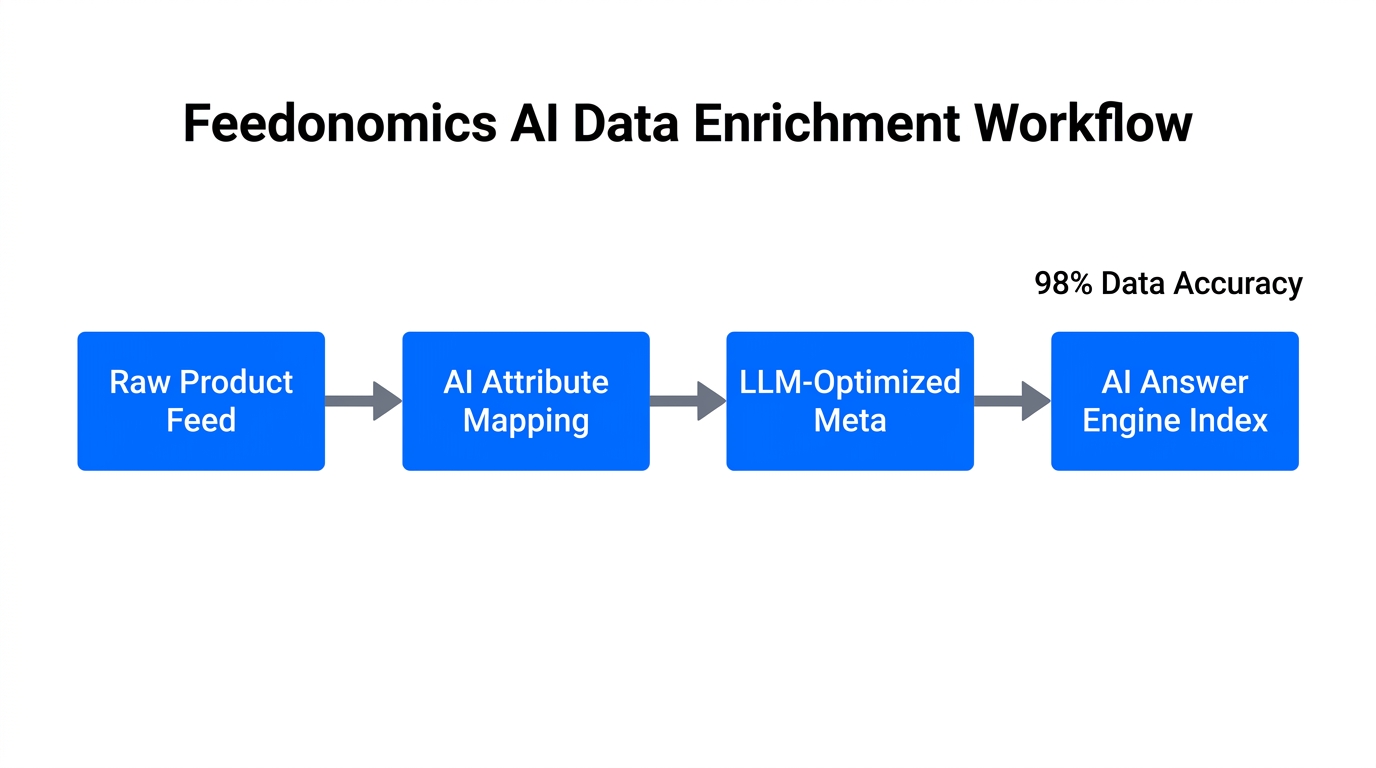
One of the most significant developments for BigCommerce merchants this year is Feedonomics Surface. Launched as a self-service AI data enrichment tool, it allows even SMBs to compete with enterprise giants by standardizing their data for AI crawlers. According to research from Digital Commerce 360, this tool is central to the Commerce.com rebrand, unifying platform power with data intelligence.
Feedonomics AI data enrichment works by scanning your existing catalog and automatically adding long-tail attributes. For example, if you sell industrial equipment, the AI might identify material density, heat tolerance, and specific compliance certifications from your raw PDF manuals and inject them into your product feed as structured meta-attributes. This level of detail is exactly what Perplexity and OpenAI's crawling agents use to rank products in their answer summaries.
BigCommerce vs Shopify SEO 2026: The URL Advantage
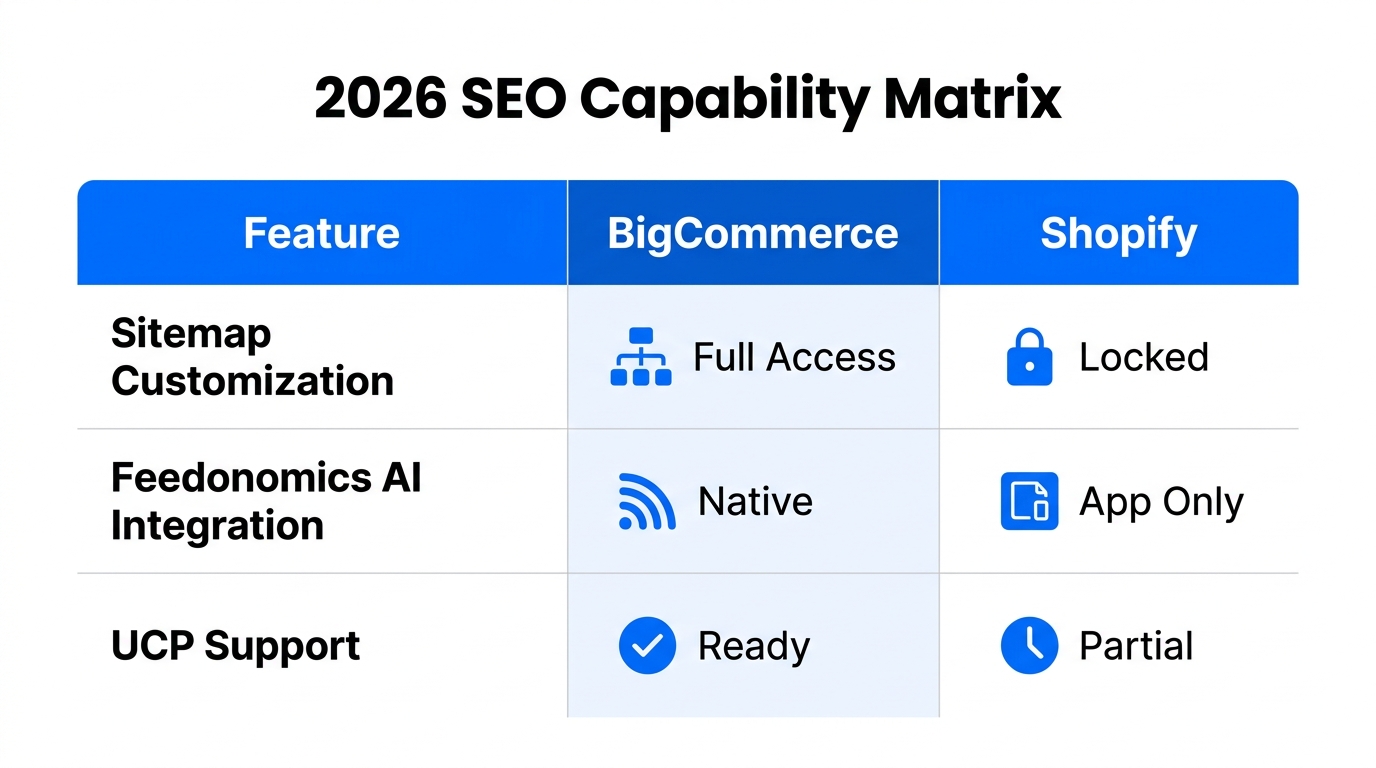
The debate between BigCommerce vs Shopify SEO 2026 often centers on technical flexibility. While Shopify remains a powerhouse for D2C brands that want to "launch in an afternoon," its fixed URL structure (e.g., /products/product-name) can be a limitation for complex catalogs. BigCommerce allows for short, structured URLs that provide a significant ranking advantage in 2026's semantic search environment.
| SEO Feature | BigCommerce (2026) | Shopify (2026) |
|---|---|---|
| URL Customization | Complete Control (Short, hierarchy-free URLs) | Moderate (Fixed /products/ folder) |
| Native B2B SEO | High (Integrated B2B Edition) | Requires Plus ($2.3k/mo) |
| API Latency | Low (Better for 100k+ SKUs) | Variable (App-heavy stacks slow down) |
| AI Discovery | Native UCP Support | Native UCP Support |
Short URLs are easier for AI agents to crawl and categorize. By eliminating unnecessary subfolders, you reduce the "crawl budget" required for an agent to map your entire store. For merchants scaling beyond $10M ARR, Frooition reports that BigCommerce often results in a 12-15% better long-term margin due to its lack of transaction fees and robust native SEO tools.
Fixing the Product Sitemap 404 Glitch
Despite BigCommerce's strengths, 2026 has seen a persistent technical issue reported across the BigCommerce community on Reddit: the Product Sitemap 404 glitch. This error prevents search engines from accessing the full list of products, which can lead to a sudden drop in indexed pages.
Step-by-Step Fix for Sitemap 404s:
- Verify WebDAV Access: Connect to your store's file server using a client like Cyberduck.
- Check the XML Root: Ensure your sitemap index at
/xmlsitemap.phpis pointing to valid sub-sitemaps. - Manual Regenerate: If the 404 persists, go to Settings > Website > Search Engine Optimization and toggle the "Sitemap" switch off and on to force a refresh.
- UCP Manifest Check: Ensure your
ucp.jsonmanifest (located at/.well-known/ucp) is properly formatted. This manifest is the 2026 version of a sitemap, specifically designed for AI agents.
To prevent these issues from hurting your revenue, you can ask Stormy AI to perform a daily "inventory pulse." Stormy can wake up every morning, check your critical SEO pages for 404 errors, and alert you immediately if your sitemap goes down, ensuring your store stays visible to Google Ads and organic crawlers alike.
"Technical SEO is no longer about just 'fixing' things; it's about constant monitoring in an environment where agents crawl your site 24/7."
The 2026 Playbook: Agentic Commerce and Catalyst
If you are setting up a store this year, the industry consensus is clear: do not build on Stencil. The older theme engine is being replaced by Catalyst, a Next.js/React framework that delivers 90+ Lighthouse scores out of the box. High performance is a prerequisite for Answer Engine Optimization for ecommerce.
Beyond speed, you must prepare for "Agentic Commerce." This is the shift from search results to autonomous agents that research and buy on behalf of the customer. BigCommerce has pioneered this with its support for the Universal Commerce Protocol (UCP). By deploying a ucp.json file, you allow agents from OpenAI to not just see your products, but to understand inventory levels, shipping times, and tax implications in real-time.
How Stormy AI Automates Your SEO Heavy Lifting
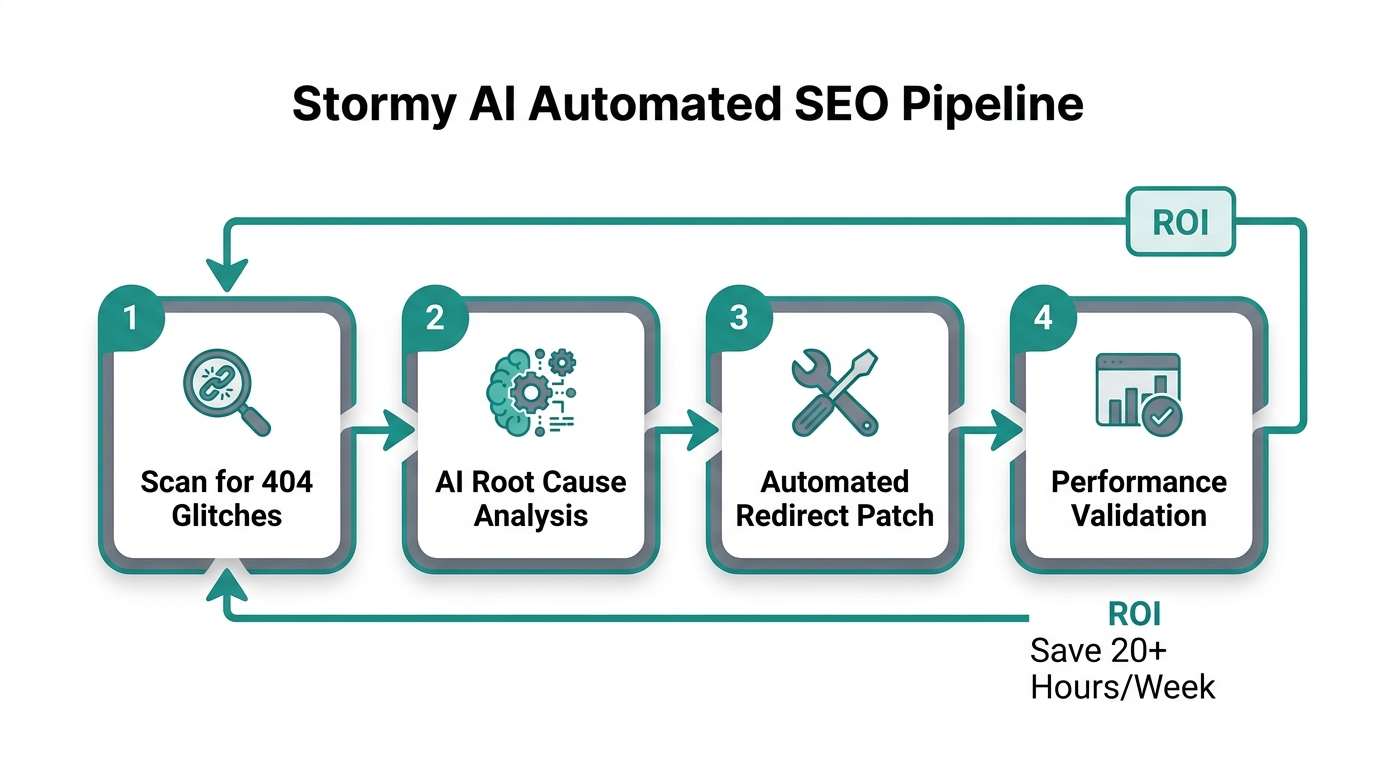
Running a high-growth BigCommerce store in 2026 involves thousands of moving parts. An AI ecommerce employee like Stormy AI acts as a teammate who handles the messy back-office tasks that keep your SEO engine running. Here is how Stormy integrates into your 2026 SEO workflow:
- Automated Meta-Attribute Updates: Stormy can monitor real-time performance data from Meta Ads Manager and TikTok Ads. If a specific product benefit (like "eco-friendly") is driving high ROAS in your ads, Stormy can draft updated meta-titles and descriptions for your Shopify or BigCommerce store to capitalize on that trend.
- Inventory-Driven Ad Management: Stormy tracks SKUs across Amazon Seller Central and BigCommerce. If a product is at risk of stockout, Stormy can automatically flag the relevant campaigns in Google Ads to prevent wasted spend.
- Competitor Intelligence: Ask Stormy to pull weekly reports on how competitors are pricing similar items. It can drop this data into a shared Stormy AI workbook, complete with a summary of which products need a "Price Drop" attribute to win the "Best Price" badge in AI search results.
Conclusion: Your 2026 SEO Roadmap
To succeed in the 2026 ecommerce landscape, you must move beyond the traditional SEO playbook. Success now requires a data-first approach that prioritizes AI agents over human browsers. By utilizing Feedonomics AI data enrichment and the BigCommerce Catalyst framework, you ensure your store is fast, structured, and discoverable.
The key to scaling without burning out is automation. While you focus on brand and product, let an AI employee like Stormy AI handle the inventory checks, follow-ups with B2B suppliers, and performance reporting. The brands that win in 2026 will be those that treat their data as their most valuable asset and their AI agents as their most productive employees.