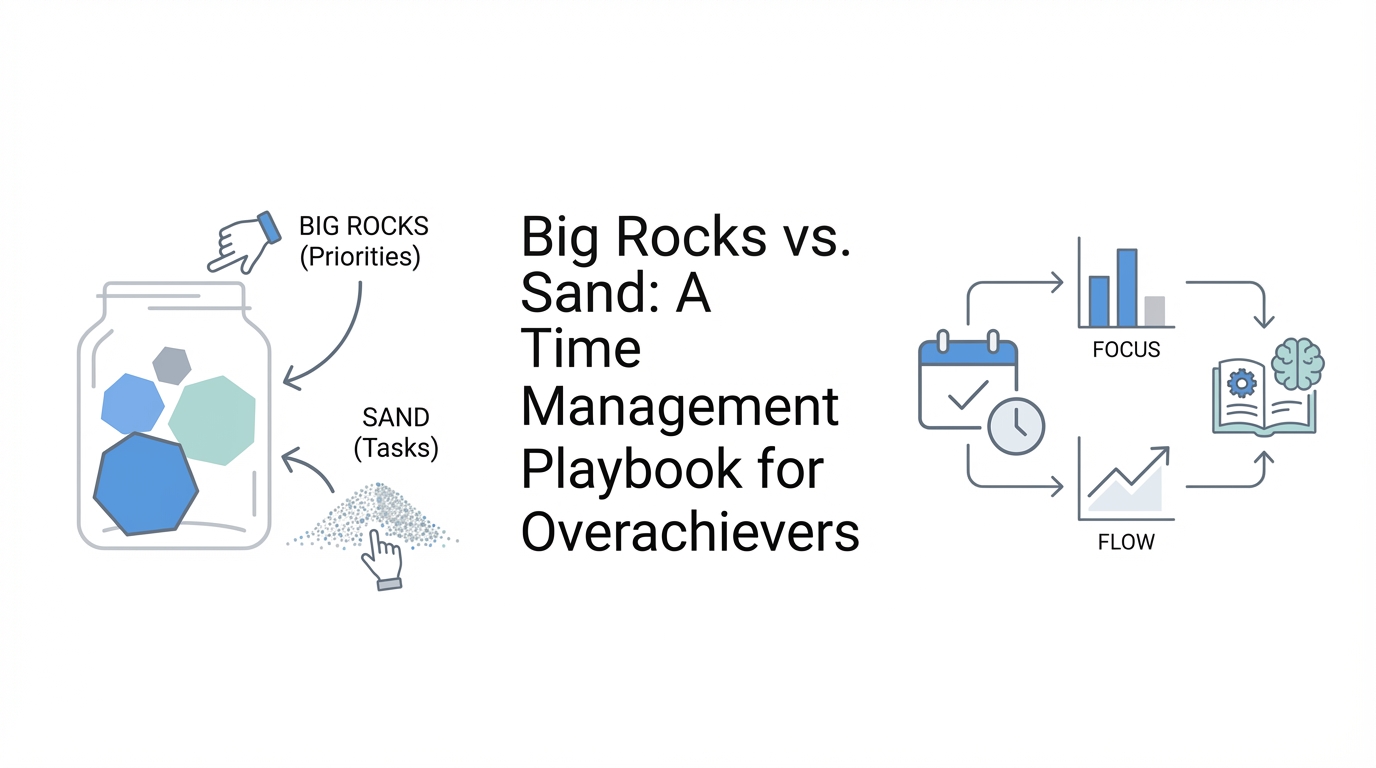
Most founders and creators live their lives in a state of perpetual preparation. They build a metaphorical well, they pump the water, and they keep pumping until they realize they are still thirsty. They spend an entire lifetime gathering resources but never actually drinking the water they worked so hard to procure. If you are an overachiever, a high-performer, or a Type A personality, you likely struggle with the feeling that there isn’t enough time to do the things that actually matter. The secret to time management for entrepreneurs isn't found in a better calendar app; it’s found in changing the order in which you fill your life's container.
The Jar Analogy: Sorting Sand from Legacy
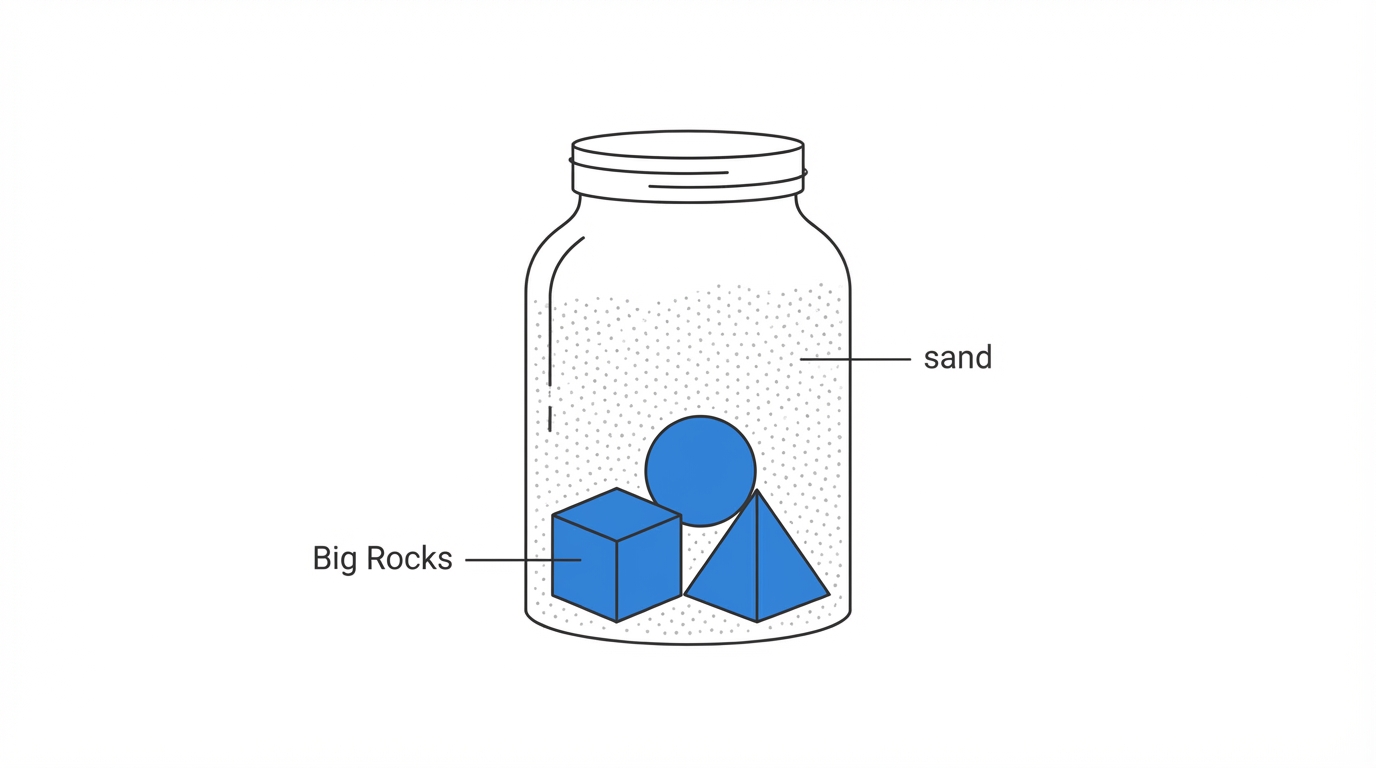
To understand priority management framework, you must first visualize your life as a glass jar. Beside that jar, you have three piles: sand, small rocks, and big rocks. The sand represents the daily administrative friction—the endless Zoom calls, the Slack pings, the inbox management, and the errands. These are necessary, but they rarely make it into a legacy photo album. The small rocks are your projects and initiatives, the things that move the needle professionally but aren't necessarily life-defining.
Finally, you have the big rocks. These are the life-defining moments: taking that month-long family trip, visiting your parents while they are still healthy, or finally launching that legacy-defining product. Most people fill their jar with sand first. They handle the emails, the chores, and the minor meetings, hoping to fit the big rocks in at the end. But the jar is already full. To succeed, you must use strategic time blocking to place the big rocks in the jar first. The sand is like a liquid or a gas; it will always expand to fill the remaining crevices. If you schedule the big things first, you'll find that the "sand" of work still gets done, but your life actually contains the things you care about.
Die with Zero: Why Timing is the Ultimate Currency
We are often taught that responsibility means delayed gratification. However, the Die with Zero philosophy by Bill Perkins suggests that delaying gratification for too long is actually a form of irresponsibility. There is a window for every experience. You cannot go backpacking through European hostels when you are 90 years old with the same vitality as when you are 22. Even if you have more money at 60, you have lost the timing required to enjoy that specific experience.
As Stormy AI helps app developers find the right creators at the perfect moment through AI-powered search, you must find the right moments for your life energy. Bill Perkins tells a story of a friend who quit a job in his 20s to go backpacking for six weeks. At the time, it seemed reckless. But years later, after Perkins himself finally took the trip at age 33, he realized he had missed the window. The hosteling experience wasn't the same. He had squandered the time in his 20s for the sake of a job he could have always returned to. Work life balance for founders requires acknowledging that you can always make more money, but you can never recapture time.
Money as Life Energy: Calculating the True Hourly Cost
Every dollar you spend represents a portion of your life energy. If you earn $100 an hour and you want to buy a luxury watch for $5,000, you aren't just spending money—you are spending 50 hours of your life. When you view purchases through this lens, your perspective on consumption shifts. Before buying a new gadget, ask yourself: "Am I willing to go into the office and work for 20 hours specifically for this item?"
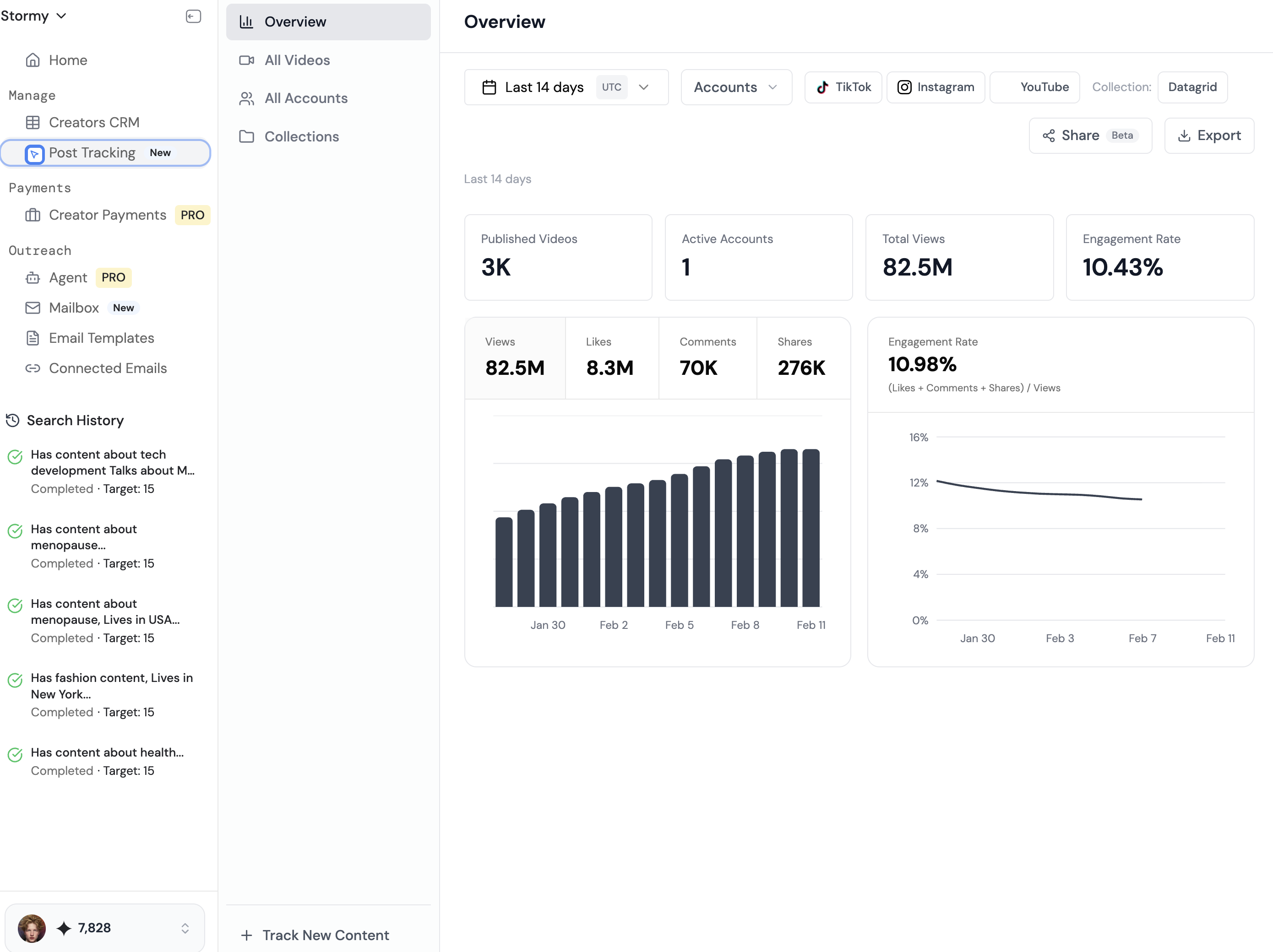
This principle also applies to business commitments. Overachievers often take on extra work for a higher salary, but if a 50% raise requires 100% more work hours, your hourly life energy rate has actually plummeted. It is more efficient to make $200k working 20 hours than $300k working 60 hours. Tools like Meta Ads Manager or the Stormy AI post-tracking dashboard are designed to automate and simplify performance monitoring precisely so you can reclaim that life energy rather than spending it on manual, repetitive tasks.
The Decision Register: Sharpening Entrepreneurial Judgment
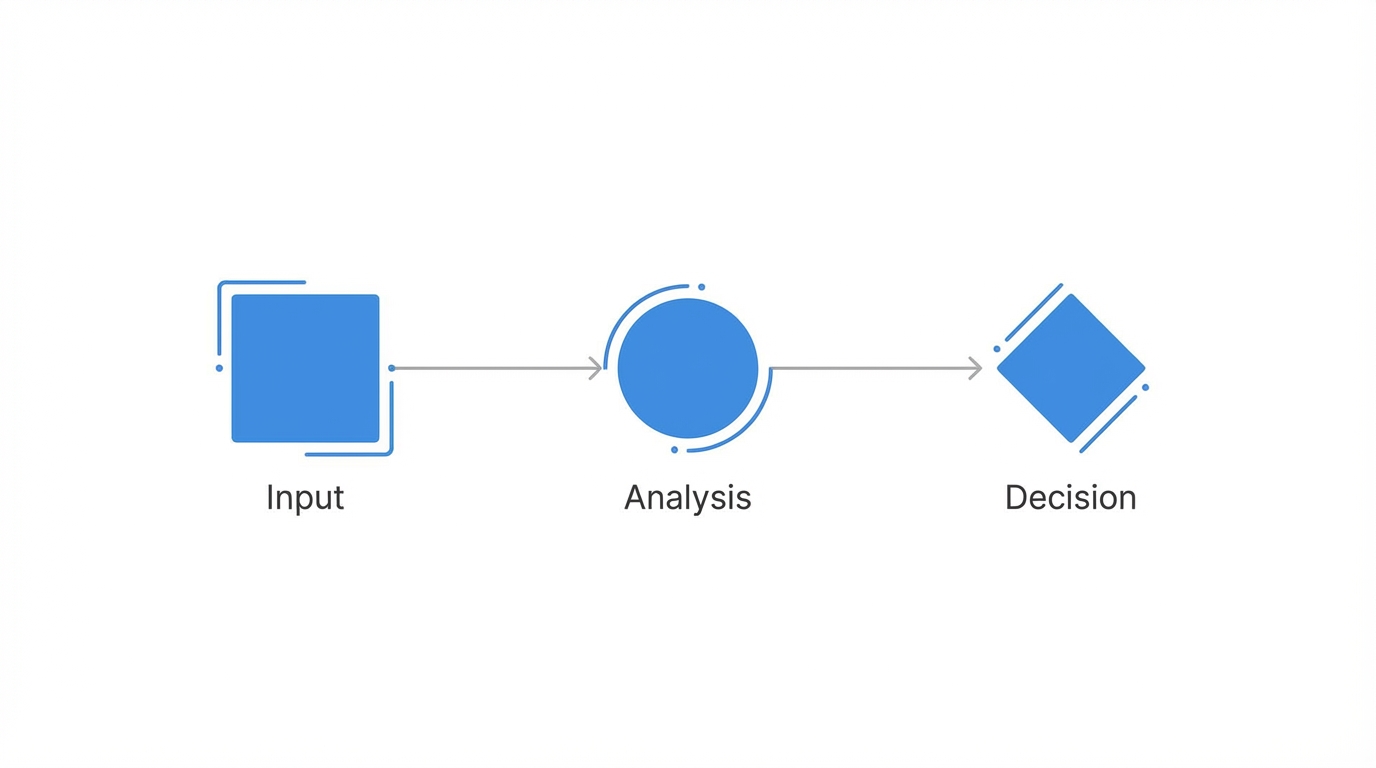
If your life is the sum of your decisions, then judgment is your most valuable lever. Most entrepreneurs spend zero time consciously improving their judgment. To combat this, you should maintain a Decision Register. This is a simple table or document where you record high-stakes decisions before you execute them. By documenting your process, you avoid the trap of "resulting"—judging a decision only by its outcome rather than its logic.
To use this big rocks productivity tactic, answer these questions for every major decision:
- What is the decision? (Summarize it in the length of a tweet).
- What are my feelings? (Are you making this out of extreme fear or extreme greed?).
- What is the one decisive reason? (Blended reasons are usually bad reasons; you need one core driver).
- What is the strongest argument against this? (Let the "for" and "against" arguments arm-wrestle).
- Is it reversible? (If yes, move fast. If no, sleep on it).
- What is the upside if I'm right, and the downside if I'm wrong?
Avoiding the 'Well-Pumping' Trap
There is a specific form of tragedy in the life of a successful entrepreneur: the person who becomes a billionaire but still worries about the cost of a flight. This is an irrational financial fear. Once the math shows you are "fine," you must transition from a lifetime of gathering (pumping the well) to a lifetime of using (drinking the water). Time management for entrepreneurs eventually becomes less about efficiency and more about liberation.
If you don't define what "enough" looks like, you will default to more. More revenue, more headcount, more market share. But as the retention data from organizations like Hampton shows, meaningful connection and in-person relationships are often what actually reduce the "churn" in our personal lives. Digital overload makes us lonely; "belly-to-belly" conversations make us whole. Use your resources to buy back the time required for these high-impact human connections.
Work Smarter, Not Harder: The Akon Strategy

Productivity isn't just about doing things faster; it's about choosing the right things to do. Consider the rapper Akon and his approach to the music business. While other artists were focused on selling full-length singles for $1.99, Akon noticed that ringtones—10-second snippets of songs—were selling for $4.99. He realized the record labels had no digital clauses for ringtones in his contract.
Akon began writing songs specifically to be ringtones. He focused on the hooks, the catchy 10-second windows that would work as a phone alert. He eventually sold 11 million ringtones, generating over $50 million in sales with significantly less "work" than a traditional album cycle. This is the essence of strategic time blocking: finding the high-leverage opportunity that yields 10x the results for 1/10th the effort. For app marketers, this might mean using Stormy AI to set up an autonomous AI agent that discovers, outreaches, and follows up with creators on a daily schedule while you sleep, rather than spending weeks on manual outreach.
Reading for Sparks, Not Information
Many overachievers approach reading as a chore—a way to download information from a book into their brain. This often leads to guilt when they don't finish a book or forget the details. Naval Ravikant suggests a different mindset: reading is like rubbing two sticks together to create a bonfire. You aren't reading to "get the stuff"; you are reading to catalyze a spark of thought.
If a book like Howard Marks' memos triggers a new realization about your investment strategy, the book has done its job—even if you only read five pages. You don't need to memorize 23 cognitive biases to be a good thinker. You simply need to maintain a habit of high-quality consumption that keeps your mind active and creative. When you stop reading for information and start reading for sparks, the pressure disappears, and the time management of your intellectual life becomes a joy rather than an obligation.
Conclusion: Filling Your Jar Today
The big rocks productivity framework is a reminder that your time is not an infinite resource. It is a container that is currently being filled, whether you are intentional about it or not. If you don't decide what your big rocks are—the health goals, the family memories, the creative legacy—the sand of everyday administrative tasks will take their place. Start today by identifying your top three big rocks for the next quarter and scheduling them into your calendar before you book a single Zoom call. Use Stormy AI—an all-in-one platform for everything from creator discovery to automated payments—to automate the mundane, embrace the Die with Zero mentality, and stop pumping the well long enough to enjoy the water.