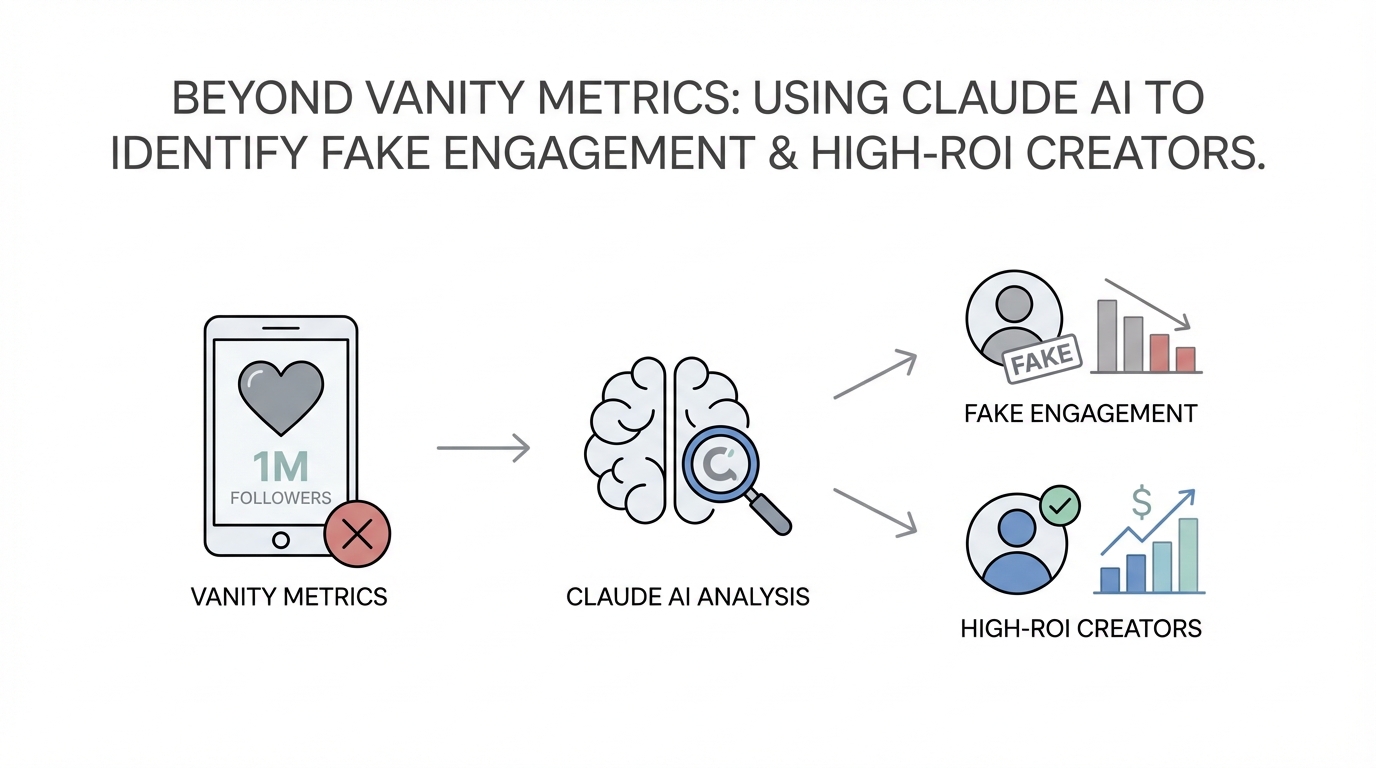
In the rapidly evolving landscape of digital marketing, the reliance on follower counts as a primary KPI is becoming a costly mistake. As the global influencer marketing industry is projected to reach a staggering $32.55 billion by 2025, according to data from indaHash, the sophistication of engagement fraud has grown alongside it. Brands are no longer just fighting for attention; they are fighting to ensure the attention they buy is actually human. For growth marketers and app developers, the challenge is clear: how do you distinguish between a creator with a genuine, high-intent audience and one bolstered by bot-driven vanity metrics? The answer lies in the shift from basic chat interfaces to Action AI.
The Fall of the Follower Count: Why Traditional Metrics are Obsolete

For years, marketing teams have treated follower counts as a proxy for reach. However, in an era where 63% of marketing professionals are turning to AI and machine learning to refine their strategies, as noted by Artsmart.ai, we now know that reach does not equal resonance. A creator might have a million followers but a negative ROI if those followers are inactive or purchased. This is why data-driven influencer vetting has moved away from surface-level numbers toward "Engagement Quality"—a metric that measures the depth and authenticity of interactions.
When you rely on vanity metrics, you risk falling into the trap of "fake influencers" who use comment pods and automated scripts to inflate their standing. Brands using AI-driven creator matching have already seen a 25–30% lift in Return on Ad Spend (RoAS) by moving past these superficial layers, according to research by The Cirqle. To achieve these gains, marketers are adopting tools like Claude Code to treat their influencer vetting process with the same rigor as software development.
Enter Claude Code: The New Operating System for Influencer ROI Tools
The defining trend of 2025 is the move from "Chat AI"—where you manually copy-paste prompts—to "Action AI," powered by terminal-based environments. Claude Code, a command-line interface (CLI) by Anthropic, allows marketers to automate complex research tasks that previously took hours. By utilizing the Model Context Protocol (MCP), Claude can now connect directly to live social media data, payment gateways, and web scrapers.
For example, instead of manually checking every profile, a marketing team can use the Apify MCP to scrape real-time data from TikTok and Instagram. This data is then fed into Claude to run a fake influencer detection AI sequence. This approach has allowed forward-thinking agencies to reduce campaign production time by 40% while significantly increasing the consistency of their content output, as reported by Hashmeta.
How to Calculate 'Engagement Quality' Using Claude AI
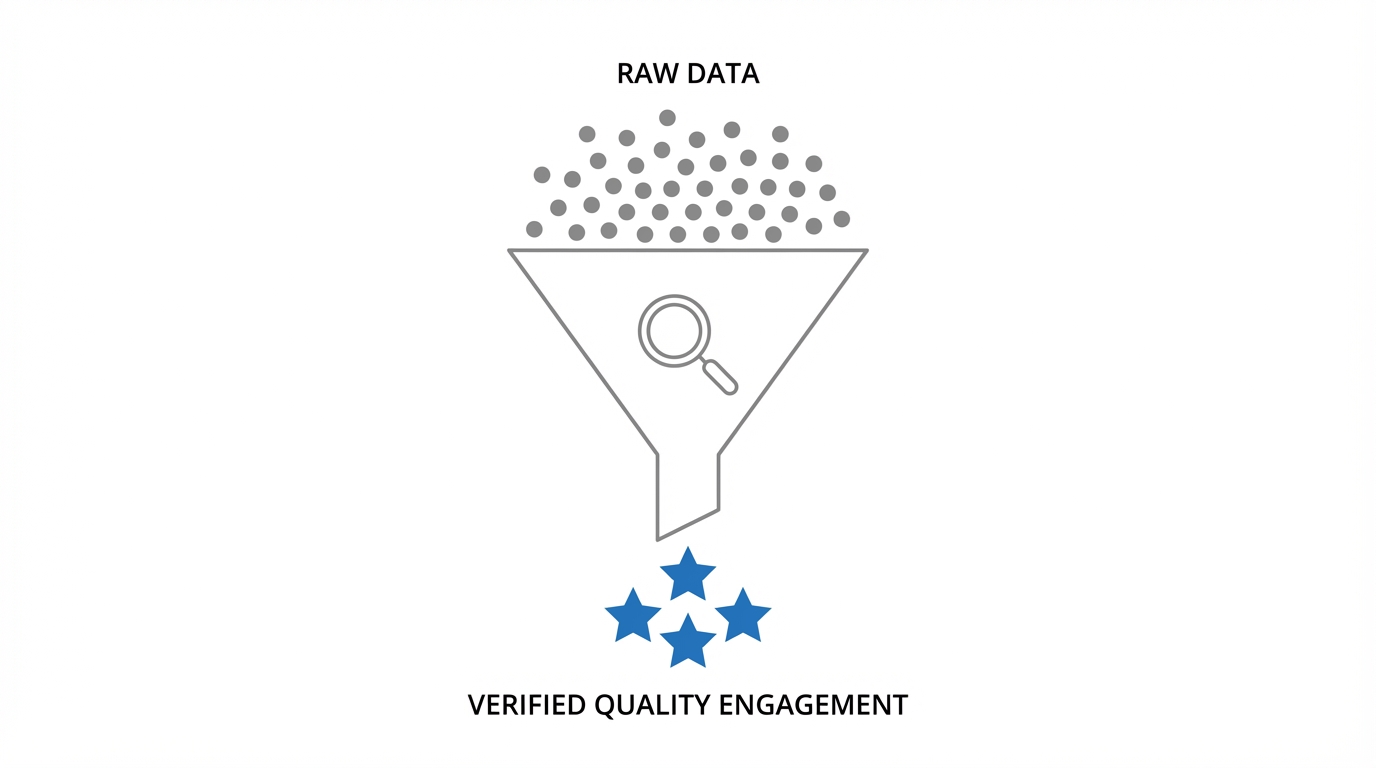
To truly understand a creator's value, you must look at the quality of their engagement. Fake influencer detection AI works by analyzing the ratio of likes to comments, the diversity of commenters, and the speed at which engagement occurs after a post goes live. Claude can be trained to calculate an Engagement Quality Score by processing raw JSON data from social platforms.
The Vetting Playbook: Step-by-Step
- Extract Data: Use a tool like Firecrawl.dev to convert an influencer’s profile or recent post history into clean Markdown format.
- Define the Logic: Instruct Claude to look for "red flags" such as repetitive emojis, generic phrases (e.g., "Great post!", "Love this!"), or a high percentage of comments from accounts with zero followers.
- Sentiment Categorization: Perform influencer sentiment analysis to see if the audience is actually discussing the product or just praising the creator's appearance.

By automating this workflow, you move from a subjective "vibe check" to a data-driven influencer vetting process that protects your budget from fraud. This level of technical scrutiny is what separates modern growth teams from those still stuck in the era of manual spreadsheets.
Leveraging Social Listening MCPs for Real-Time Bot Detection
One of the most powerful features of AI social media tracking is the ability to monitor patterns in real-time. By connecting Claude to a social listening MCP, you can detect bot-driven activity as it happens. Bots often leave comments in clusters—hundreds of interactions within seconds—which is a biological impossibility for a human audience. Claude can analyze the timestamps of these interactions to flag suspicious behavior instantly.
Furthermore, using an "Escrow Agent" logic via platforms like Latenode allows you to verify that a post meets all campaign requirements—such as specific tags or links—before any payment is triggered. This level of automation, including the use of the Stripe MCP to process creator payments, ensures that you only pay for performance that is verified and authentic.
Predicting 'Sales Potential' with Influencer Sentiment Analysis
Beyond detecting fraud, influencer sentiment analysis is a powerful predictor of conversion. Claude can be used to analyze historical comment data to determine Sales Potential. If the comments on a creator's previous UGC (User-Generated Content) posts include questions about price, shipping, or specific product features, that is a high-intent signal. Conversely, if 90% of the comments are generic praise, the audience is likely passive and unlikely to convert.
Platforms like Stormy AI can help source and manage these UGC creators at scale, providing the infrastructure to track these metrics without manual intervention. By integrating high-quality sentiment data into your workflow, you can prioritize creators who have a track record of driving actual purchase intent rather than just vanity engagement.
Avoiding 'AI Slop': The Importance of Human-in-the-Loop (HITL)
While automation is efficient, the biggest mistake a brand can make is removing the human element entirely. Over-automation in creator outreach often leads to what many in the industry call "AI slop"—generic, robotic messages that creators immediately delete. According to LinkNow Media, the most successful campaigns use AI for the heavy lifting of research and vetting but maintain Human-in-the-Loop (HITL) for the final personalized outreach.
To avoid a robotic brand voice, you should use a "Style Reference" skill to train your AI on your specific brand identity. As seen in the case of Zapier, which deployed over 800 internal Claude-driven agents, the goal is to enhance human productivity, not replace human judgment. Use AI to find the data, but use humans to build the relationships.
Building Your Influencer ROI Tech Stack
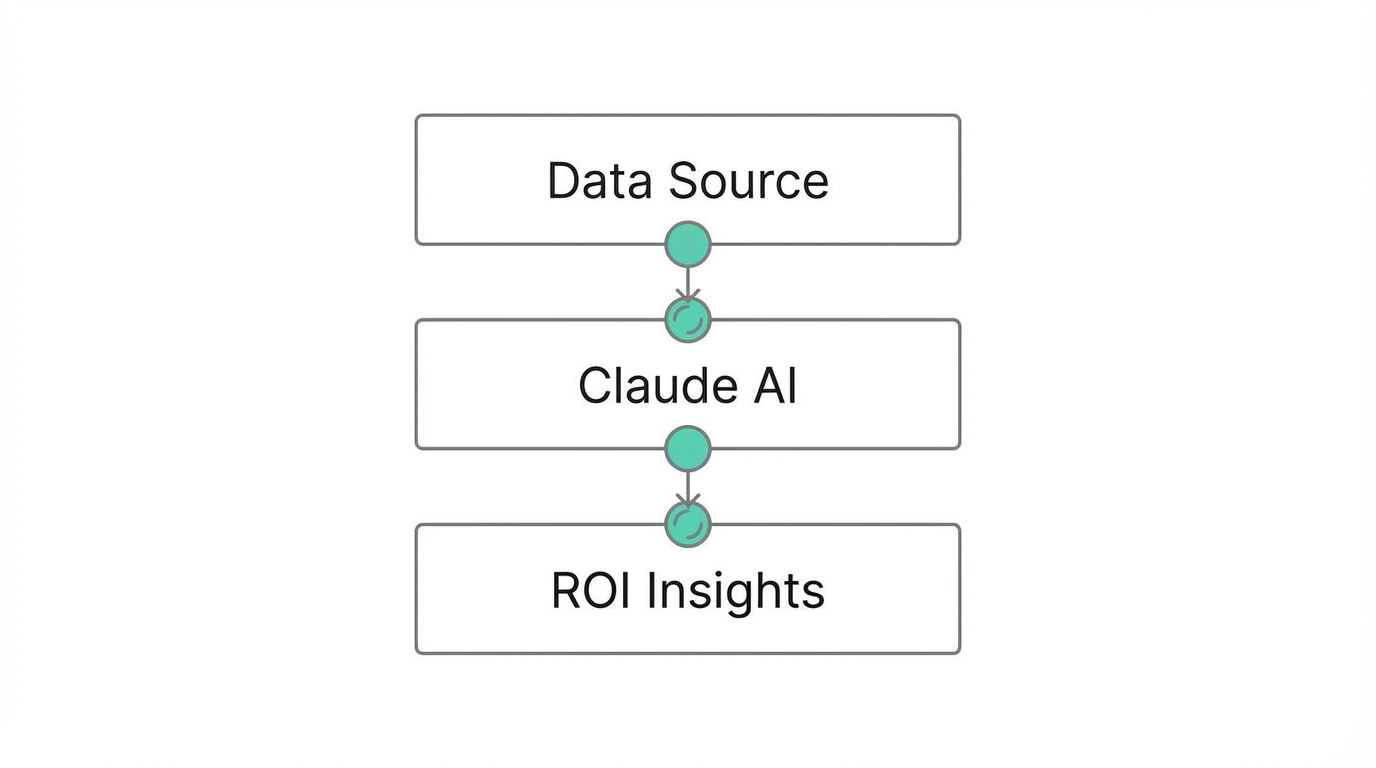
To execute a data-driven strategy, you need a stack that connects discovery, vetting, and execution. While legacy platforms provided basic databases, the modern marketer uses a combination of influencer ROI tools and automated workflows. For enterprise-level needs, companies like TELUS have saved over 500,000 staff hours by building internal AI tools with Claude, as noted by DataStudios.org.
Your workflow should look like this:
- Discovery: Use AI-powered search engines to find creators within your niche.
- Vetting: Run automated scripts to detect fake followers and analyze engagement quality.
- Analysis: Use influencer sentiment analysis to score potential ROI.
- Management: Tools like Stormy AI allow you to track posts and manage the entire creator relationship in one place.
Conclusion: Protecting Your Budget with Data
The era of "spray and pray" influencer marketing is over. By leveraging Action AI and tools like Claude Code, brands can now identify fake influencer detection AI red flags in seconds rather than days. Protecting your budget requires a move away from vanity metrics and a commitment to data-driven influencer vetting. By focusing on engagement quality, social listening, and sentiment analysis, you ensure that every dollar spent on creators is an investment in real human connection and measurable ROI.
Start by auditing your current creator list. Are you paying for followers, or are you paying for influence? With the right AI-powered stack, the answer should always be the latter.