In 2025, the role of the performance marketer is undergoing a radical transformation. We are moving away from the era of "Prompt Engineering"—where humans manually talk to a chat box—and entering the era of Agentic Orchestration. As the global AI in marketing market surges to an estimated $47.32 billion in 2025, the competitive edge no longer belongs to those who can write the best copy, but to those who can code the most efficient systems. While 88% of marketers now use AI daily, only a fraction have successfully integrated it into autonomous execution workflows. This guide explores how to bridge that gap using Claude Code, the command-line interface from Anthropic that treats your marketing campaigns as a software codebase.
The Shift to Agentic Marketing Operations
For years, marketers have been tethered to visual dashboards in Google Ads and Meta Business Suite. These dashboards are built for human eyes, not for scale. Claude Code changes the paradigm by allowing you to interact with your ad accounts through a terminal, effectively treating your marketing infrastructure as code. This approach, often championed by industry leaders like Greg Isenberg as part of the "Vibe Marketing" era, focuses on coding the system rather than just prompting the tool.
Organizations using "Action AI" or agentic workflows report a 65% reduction in campaign launch times and a 30% boost in advertising efficiency. Instead of manually checking for CPA spikes every morning, you can now build an AI agent that audits your accounts 24/7. This transition is critical because, as the market is projected to hit $107.5 billion by 2028, manual management will simply become too slow to compete.
Using MCP to Bridge Claude Code with Google and Meta APIs
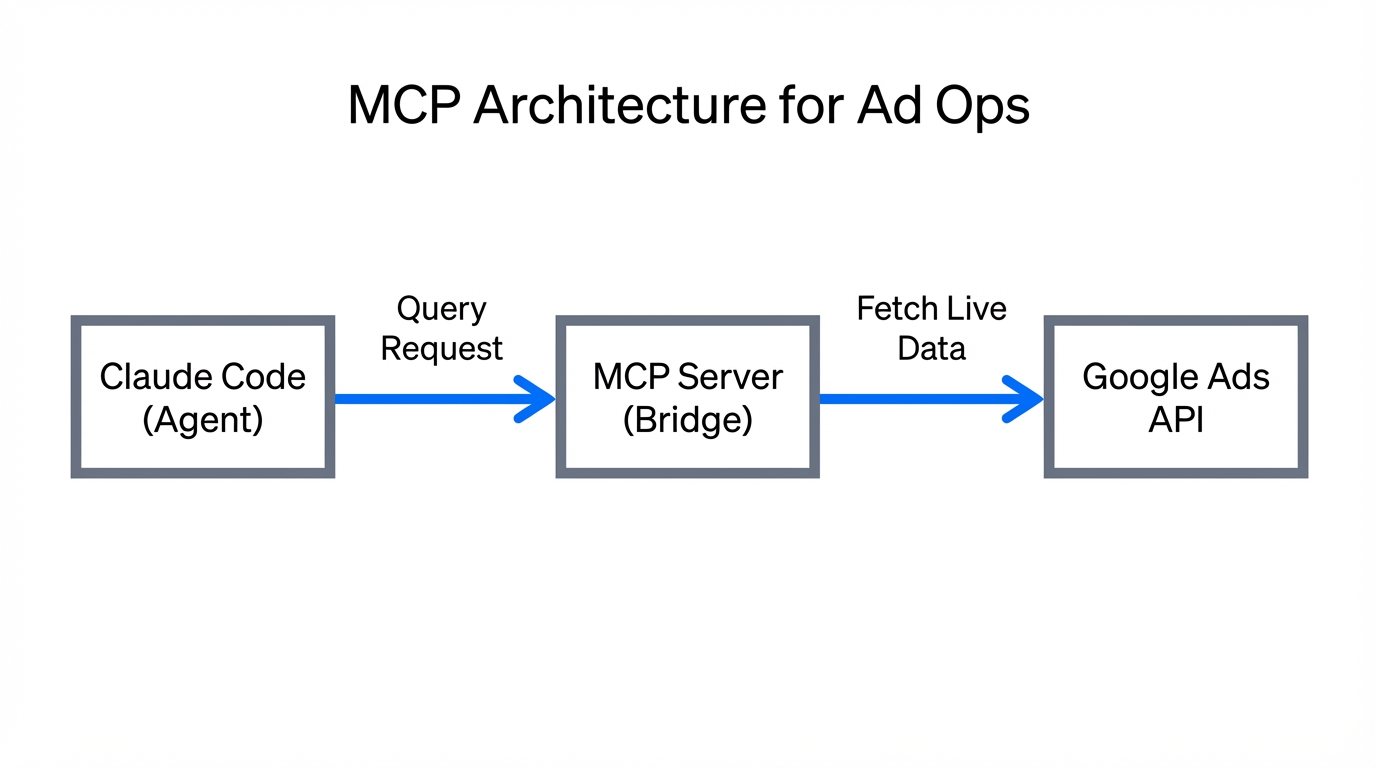
The secret sauce behind Claude Code's power is the Model Context Protocol (MCP). MCP allows the AI to "talk" directly to live external data sources. In a marketing context, this means Claude can query the Google Ads API or the Meta Marketing API in real-time. This is not just about reading data; it's about the ability to execute changes based on performance.
| Feature | Traditional Ad Management | Agentic Ad Operations (Claude Code) |
|---|---|---|
| Data Retrieval | Manual dashboard exports (CSV) | Real-time API calls via MCP |
| Performance Audit | Weekly or daily manual review | Autonomous 24/7 monitoring |
| Action Velocity | Hours/Days to pivot strategy | Seconds to adjust bids or budgets |
| Scalability | Limited by headcount | Unlimited through AI agents |
By connecting these APIs, you enable Claude to perform complex tasks like cross-platform budget rebalancing. For instance, if your LinkedIn campaigns are seeing a 20% higher CPA than your YouTube ads, an agentic workflow can detect this and propose a budget shift through the CLI instantly. This level of AI marketing automation turns your terminal into a global control room for your entire ad spend.
Setting Up Automated Triggers with n8n
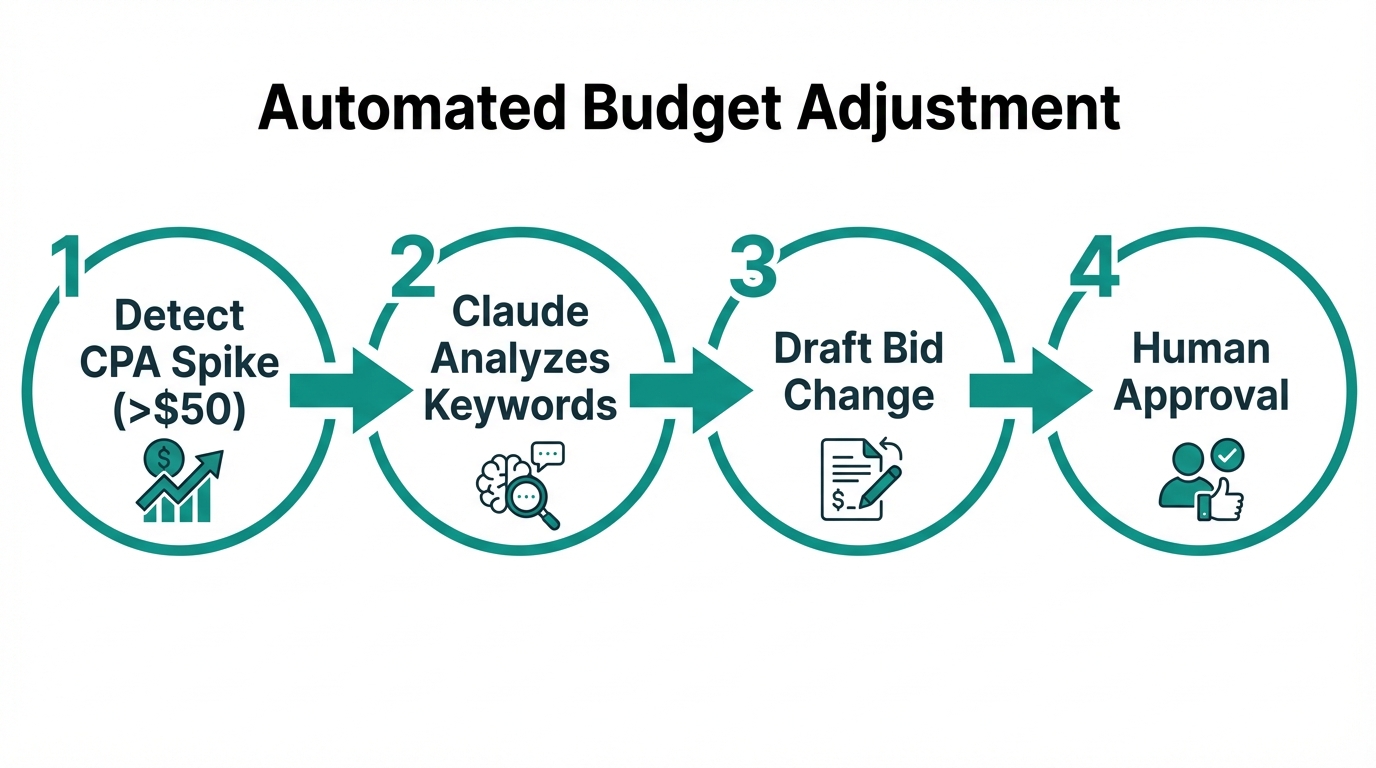
While Claude Code provides the intelligence, you need an automation engine to act as the central nervous system. n8n is a leading choice for this, acting as the bridge between your live ad data and your Claude agent. You can set up workflows that trigger whenever a specific KPI benchmark is missed.
The CPA Spike Alert Workflow
A classic use case is the CPA (Cost Per Acquisition) watchdog. You can configure n8n to pull data from the Claude API and cross-reference it with your live Google Ads performance. If the CPA exceeds your predefined limit for more than 4 hours, n8n sends a payload to Claude Code with the prompt: "Audit the keywords in Campaign X and identify why efficiency is dropping."
"AI shouldn't just write your ad copy; it should audit the Google Ads API, detect a CPA spike, and autonomously pivot the budget."
This "Source of Truth" strategy ensures that your budget isn't wasted on underperforming segments while you're asleep. By integrating Firecrawl into this stack, the agent can even scrape your competitors' landing pages to see if a new offer is driving your costs up, providing a contextual audit that goes far beyond simple numbers.
The 'Source of Truth' Strategy: CLAUDE.md
One of the most effective ways to manage AI agents is by maintaining a `CLAUDE.md` file in your project root. This file acts as the permanent memory for your Google Ads automation efforts. Without persistent context, AI can suffer from what experts call a "Context Death Spiral," where it loses track of your brand voice or specific constraints over long conversations.
Your `CLAUDE.md` should include:
- Target Audience Personas: Deep psychological profiles of your ideal customers.
- Negative Keyword Lists: A living list of terms the AI should never bid on.
- KPI Benchmarks: Hard limits for CPA, ROAS, and CPC.
- Brand Voice Guidelines: Rules for tone, visual style, and prohibited language.
When sourcing new content for these campaigns, platforms like Stormy AI streamline creator sourcing and outreach, providing the raw material (videos and testimonials) that Claude can then audit for performance. By keeping all your creative specs and performance history in a centralized markdown file, you ensure that any agent you spin up has the full context of your historical marketing efforts.
Data Hygiene: Organizing CSVs and JSON for AI Accuracy
An AI agent is only as good as the data it consumes. Poor data hygiene is the number one reason AI marketing automation fails. If you feed Claude a messy CSV with redundant columns and inconsistent date formats, its performance insights will be flawed. To avoid this, move toward structured JSON specs for your campaign data.
When preparing data for auditing, follow these rules:
- Normalize Date Formats: Ensure every timestamp follows ISO 8601.
- Clean Your Headers: Use descriptive, lower-case, underscore-separated headers (e.g., `total_conversion_value` instead of `Conv. Value`).
- Isolate Variables: Don't mix platform data in a single file unless you have a `platform` column for the AI to filter.
- Use Schema: Define what each data point represents in a small documentation file so the AI doesn't guess the meaning of a metric.
Companies like Zapier and TELUS have shown that consolidating martech stacks and cleaning data allows for the creation of thousands of internal AI tools, saving hundreds of thousands of staff hours. For smaller DTC brands, this same discipline allows scaling from 5 to 50 active campaigns without increasing headcount.
The Human-in-the-Loop QA Checklist
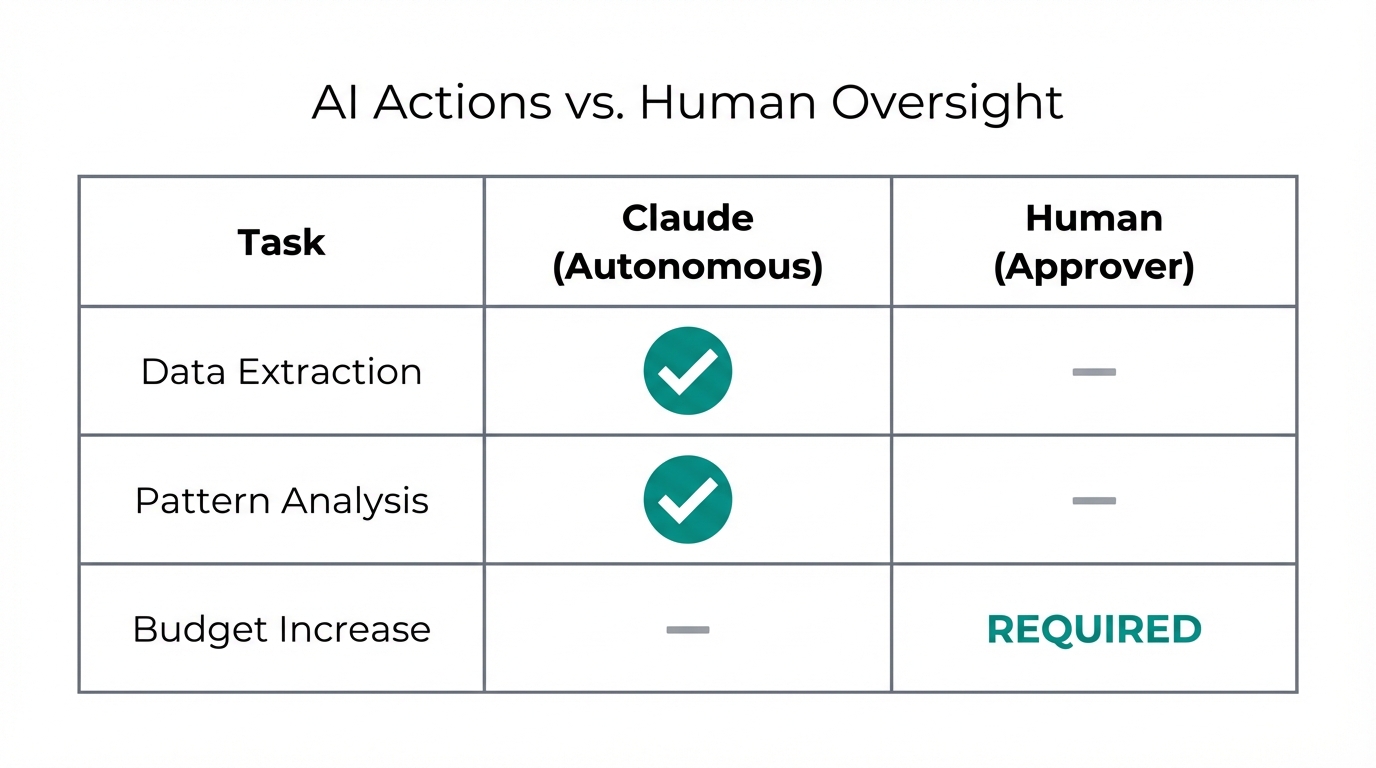
Automation is powerful, but over-automation without QA is a recipe for disaster. If you allow an AI to push ads live without Creative Calibration, you risk running off-brand visuals or tone-deaf copy. Anthropic’s own growth team, which reduced creative generation time from 2 hours to 15 minutes, still maintains human oversight for the final approval.
Use this checklist before letting your Claude Code agents run wild:
- [ ] Threshold Validation: Are the automated budget change limits (e.g., +/- 10%) set to prevent massive accidental spend?
- [ ] Tone Check: Does the AI-generated copy pass the "vibe check" for your brand's unique humor or professional standards?
- [ ] Link Verification: Has the AI verified that all destination URLs in the new ads are functional and tracked?
- [ ] Audience Alignment: Did the agent correctly apply the negative keyword lists from your `CLAUDE.md`?
- [ ] Post-Action Tracking: Is the agent logging every change it makes in your CRM or a shared Slack channel?
For high-volume campaigns, especially those involving influencer content sourced via Stormy AI, this human oversight ensures that the "vibe" of the creator's content isn't lost in the technical optimization process. Human marketers are shifting from being "doers" to being "editors" and "strategists."
Conclusion: Building Your Marketing Command Center
Building an automated ad auditing system with Claude Code is no longer a futuristic concept—it is a current necessity for brands that want to scale. By leveraging the Model Context Protocol to bridge live APIs and maintaining a strict Source of Truth in your project files, you can achieve a level of advertising efficiency that was impossible just 24 months ago. Remember that tools like CData Connect AI can further assist in bridging these gaps between your disparate data silos and your Claude agent.
The road to 10x marketing output is paved with clean data, agentic workflows, and a relentless focus on Creative Calibration. Start small by automating your daily performance reports, and gradually move toward autonomous budget management. The marketers who master the terminal today will be the ones leading the agencies of tomorrow.