The initial gold rush of Generative AI has reached a predictable plateau. In the early days of 2023, you could build a multi-million dollar business by simply putting a pretty user interface on top of an OpenAI API call. These generic "GPT wrappers"—tools that essentially just summarize PDFs or generate generic marketing copy—were the first to market, but they are rapidly becoming a race to the bottom. As the underlying models become more capable, the value of a thin layer of software on top of them evaporates. To build a truly enduring, culture-changing company in the current landscape, founders must look beyond the generic chatbot and toward the world of specialized AI applications. The real opportunity lies in solving high-stakes, industry-specific problems that general-purpose LLMs simply cannot touch.
The Limitation of Generic Wrappers: A Race to the Bottom

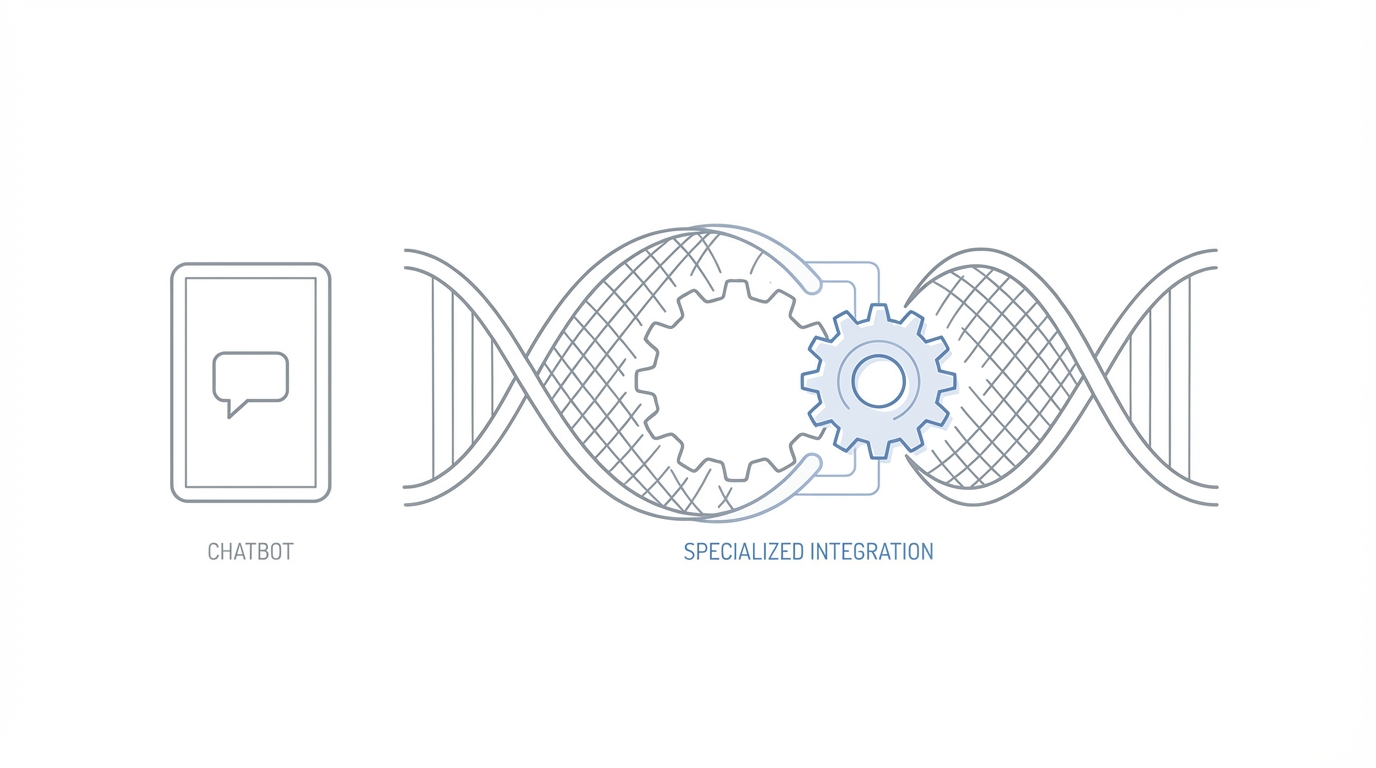
In the tech world, we often see a pattern: a massive technology inflection occurs, and the first wave of entrepreneurs rushes to build the most obvious utilities. Think of the early internet when "getting online" was the product itself. But as the novelty fades, these generic tools become commodities. If your business value is 90% derived from a third-party API that your competitors also have access to, you don't have a moat; you have a temporary lease on a trend. We are seeing this now with the saturation of AI writing assistants and basic image generators. These products suffer from low retention because they aren't deeply integrated into a specific workflow or solving a unique, high-value problem.
The most successful founders are shifting their focus from broad utility to deep specialization. Instead of building a tool for "everyone," they are building for specific industries—like law, engineering, or computational biology startups—where the data is proprietary and the problems are complex. This is where Stormy AI, an all-in-one AI-powered platform for creator discovery, especially for mobile app marketing and UGC campaigns, sees the most growth; in the same way that marketing teams need specialized tools to find the perfect UGC creator for a mobile app ad, high-level researchers need AI that understands the fundamental laws of their specific field. When you specialize, you move from being a "nice-to-have" utility to an essential piece of infrastructure.
The AlphaFold Revolution: AI Solving the Impossible
If you want to see the blueprint for the next generation of profitable AI niches, you have to look at Demis Hassabis and the team at DeepMind. Long before the world was obsessed with chatbots, Hassabis was obsessed with using computers to think and learn like humans. His story, as detailed in the documentary The Thinking Game (available on Prime Video), is a masterclass in mission-driven building. Hassabis wasn't interested in just making a better search engine; he wanted to solve AGI (Artificial General Intelligence) to accelerate scientific discovery.
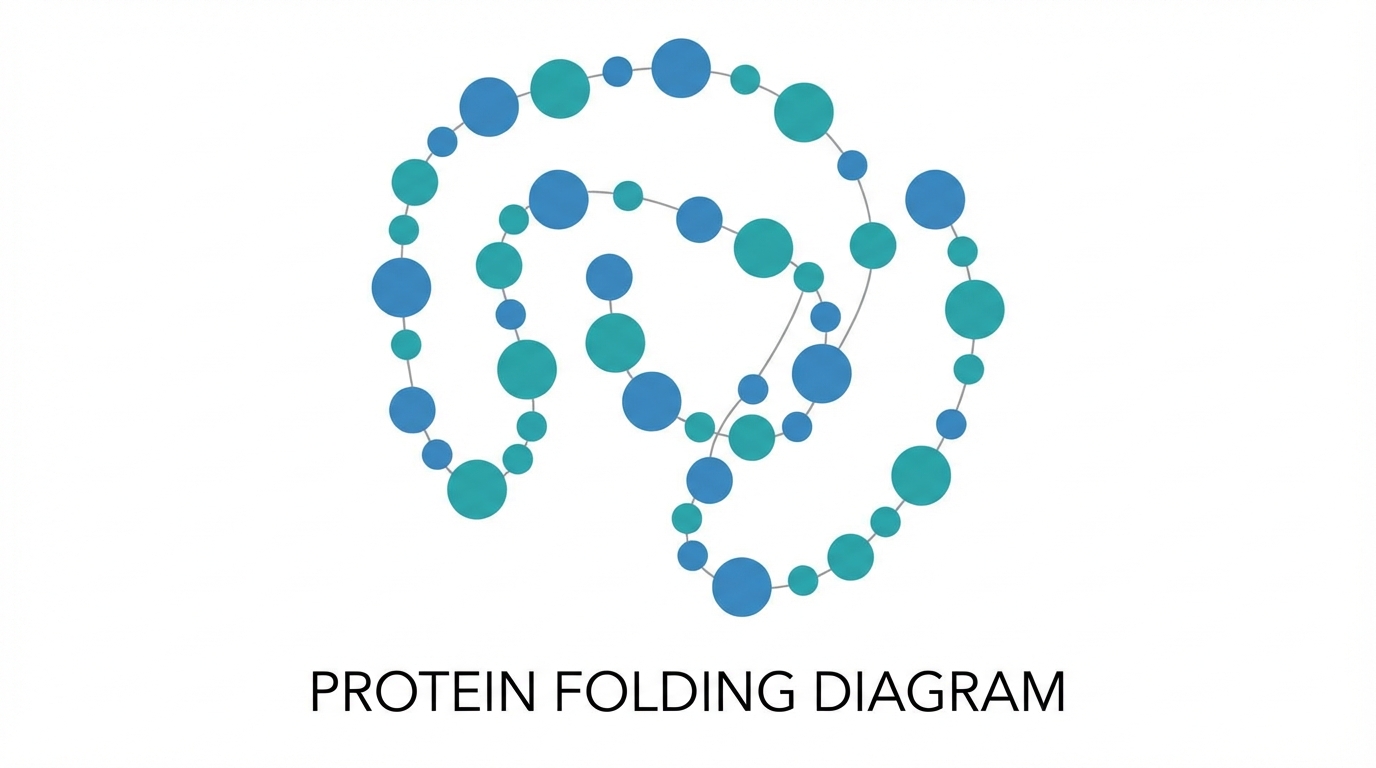
DeepMind’s crowning achievement, DeepMind AlphaFold, represents the transition from AI as a game-player to AI as a scientific savior. For over 50 years, the "protein folding problem" was the holy grail of biology. Proteins are the building blocks of life, but their function is determined by their 3D shape—how they fold. Predicting this shape from a sequence of amino acids was a task so complex it was considered unsolvable. Before AlphaFold, the scientific community had spent decades reaching only 30-40% accuracy in predictions. DeepMind didn't just improve the score; they shattered it, reaching over 90% prediction accuracy and effectively solving a 50-year-old problem in a fraction of the time.
This is the ultimate example of a specialized application. It wasn't about "chatting" with a scientist; it was about predicting the fundamental structure of biological life. This breakthrough has paved the way for a new era of AI in healthcare, where drug discovery is no longer a game of trial and error but a series of high-probability simulations.
Finding Your Niche: The Inflection Framework
To identify the next "AlphaFold-level" opportunity, founders need to look for what venture capitalist Mike Maples calls "inflections." An inflection is a change in technology, regulation, or culture that makes a previously impossible business suddenly viable. For Uber, the inflection was the widespread adoption of smartphones with GPS. For computational biology startups, the inflection was the ability of AI to predict protein structures with 90% accuracy.
When searching for a niche, look for industries where prediction is the primary value driver. AI, at its core, is a prediction machine. In self-driving cars, the AI predicts where the car will be in one second. In medicine, it predicts how a molecule will bind to a protein. In finance, it predicts market movements. If you can find a high-value dataset that has been previously unpredictable, you have found your gold mine. This is why platforms like Stormy AI are so valuable; they provide the structured Creator CRM data and AI-powered vetting frameworks that allow entrepreneurs to spot these patterns before they become mainstream.
The "AlphaFold Wrapper" Opportunity: High-Value Verticals
While Hassabis and DeepMind did the heavy lifting of solving the core scientific problem, a massive secondary market has emerged. Hassabis himself realized that the real value wasn't just in the discovery, but in the application. This led to the creation of Isomorphic Labs, a company spun out of Google with the goal of solving all disease by reimagining drug discovery from first principles. With $600 million in initial funding, Isomorphic Labs isn't just a research project; it’s a commercial powerhouse aimed at a multi-billion dollar market.
For the average founder, the "AlphaFold Wrapper" opportunity means building the tooling, user experiences, and secondary services around these massive scientific breakthroughs. Think of what Cursor did for coding: they didn't build the underlying LLM (they use Claude and GPT-4), but they built a vertical-specific interface that makes those models 10x more useful for programmers. Just as Stormy AI acts as a specialized AI wrapper for influencer outreach and recruitment, there is a desperate need for similar tools in pharmaceutical research labs, agricultural tech, and materials science. If you can build the "Cursor for Pharma," you are building a business with deep defensibility and massive upside.
Playbook: A 4-Step Process for Building a Vertical AI Solution

Moving from a generic utility to a specialized powerhouse requires a different strategic approach. Follow this playbook to identify and build in a high-value AI niche.
Step 1: Identify a Stalled Industry Metric
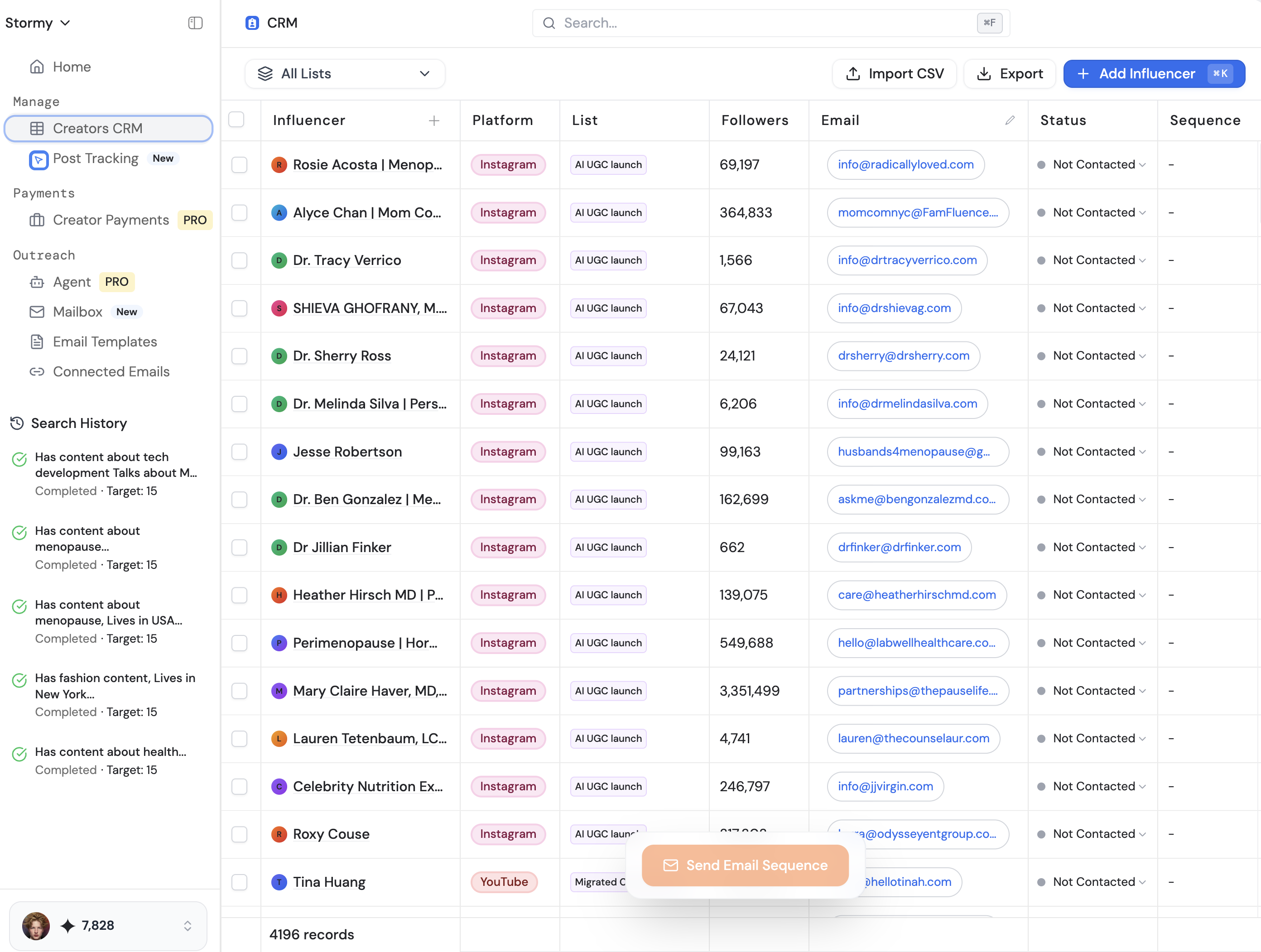
Look for industries where progress has flatlined for a decade or more. In biology, it was protein folding accuracy. In logistics, it might be route optimization in complex urban environments. Your goal is to find a metric that is currently stuck at 30-40% efficiency because humans (or traditional software) can't handle the permutations. Just as Stormy AI solves the "needle in a haystack" problem of finding the right UGC creators among millions of social profiles using natural language search, you must find a bottleneck that only AI-powered prediction can break.
Step 2: Secure a Proprietary or Specialized Dataset
AI is only as good as the data it trains on. While generic LLMs train on the whole internet, a vertical AI needs the "dark data" of a specific field. This might mean partnering with a research lab, using open-source scientific databases like the AlphaFold Protein Structure Database, or creating a new way to synthesize data. Hassabis’s team used games like Go and Starcraft as a training ground because they provided a closed loop with clear rules and infinite data via self-play simulations. If your niche doesn't have a dataset, you may need to build a "wet lab" or a data-collection utility first.
Step 3: Build for the Expert, Not the Amateur
Generic wrappers target the 95% of people who want a quick summary. High-value vertical AI must target the 0.1% of experts who need precision. Your product should not aim to replace the expert but to give them superpowers. In the case of AlphaGo and its legendary Move 37, the AI didn't just mimic humans; it made a move so original that the world's best Go player, Lee Sedol, was visibly shaken. Your tool should provide insights that even a 20-year veteran of the industry would find novel.
Step 4: Navigate the J-Curve of Progress
When you implement a new AI approach, expect the "J-Curve." As Hassabis noted during the development of AlphaFold, when you try a new creative approach, results often get worse before they get better. An amateur founder panics when conversion rates or accuracy scores drop 20% after a major update. A sophisticated founder knows that this dip is the precursor to an explosion in performance. Stick to your project selection and push through the dip to reach that 90%+ accuracy that creates a true competitive moat.
The Future of AI and Human Creativity
One of the most profound takeaways from the AlphaFold story is that AI doesn't just do things faster; it does things differently. When AlphaGo beat the world's top players, it wasn't because it was a faster calculator; it was because it had developed a unique "style" of play that humans had never seen in 3,000 years. This is the Sputnik moment for every industry. It’s a wake-up call that there are entirely new ways to solve old problems.
For founders, this means we are entering an era of computational everything. Whether it's computational biology, computational law, or computational marketing, the winners will be those who can harness AI to find the "Move 37" in their respective fields. Don't waste your talent building another chatbot that writes mediocre emails. Look for the hardest problem in the most complex industry you can find, and build the specialized wrapper that finally solves it.
Conclusion: Your Next Move
The era of the generic GPT wrapper is ending, but the era of specialized AI applications is just beginning. By looking at the success of DeepMind AlphaFold, we can see that the most profitable AI niches are those that solve fundamental, predictive challenges in high-stakes industries. Whether you are building computational biology startups or specialized tools for AI in healthcare, the playbook remains the same: find a hard problem, secure the data, and build for the experts.
If you're ready to start building, don't just look at what's trending on social media. Look at where the data is messy, where the experts are frustrated, and where a 90% prediction rate would change the world. Using Stormy AI to automate your influencer discovery and CRM management is a perfect example of how specialized AI-native platforms are outperforming generalist tools. Use tools like Google Ads to test demand, but keep your eyes on the long-term mission. The last invention has already been made; now it’s time to use it to build everything else.