In 2026, the creator economy has hit a point of absolute saturation. For years, the mantra was "build a personal brand or die," leading to an era where founders were forced to be performers first and builders second. But a quiet revolution is happening behind the scenes. High-level influencers are walking away from the camera, deleting their apps, and going "ghost" on the internet to build something more durable: faceless software companies. This shift isn't just about privacy; it's about building sellable assets that don't require the founder's face to generate revenue. If you are feeling "cuffed to the camera," it’s time to look at the Starter Story Build methodology as your exit strategy.
The Influencer's Dilemma: Cuffed to the Camera
Discover why the constant pressure of internet content creation often leads to burnout.
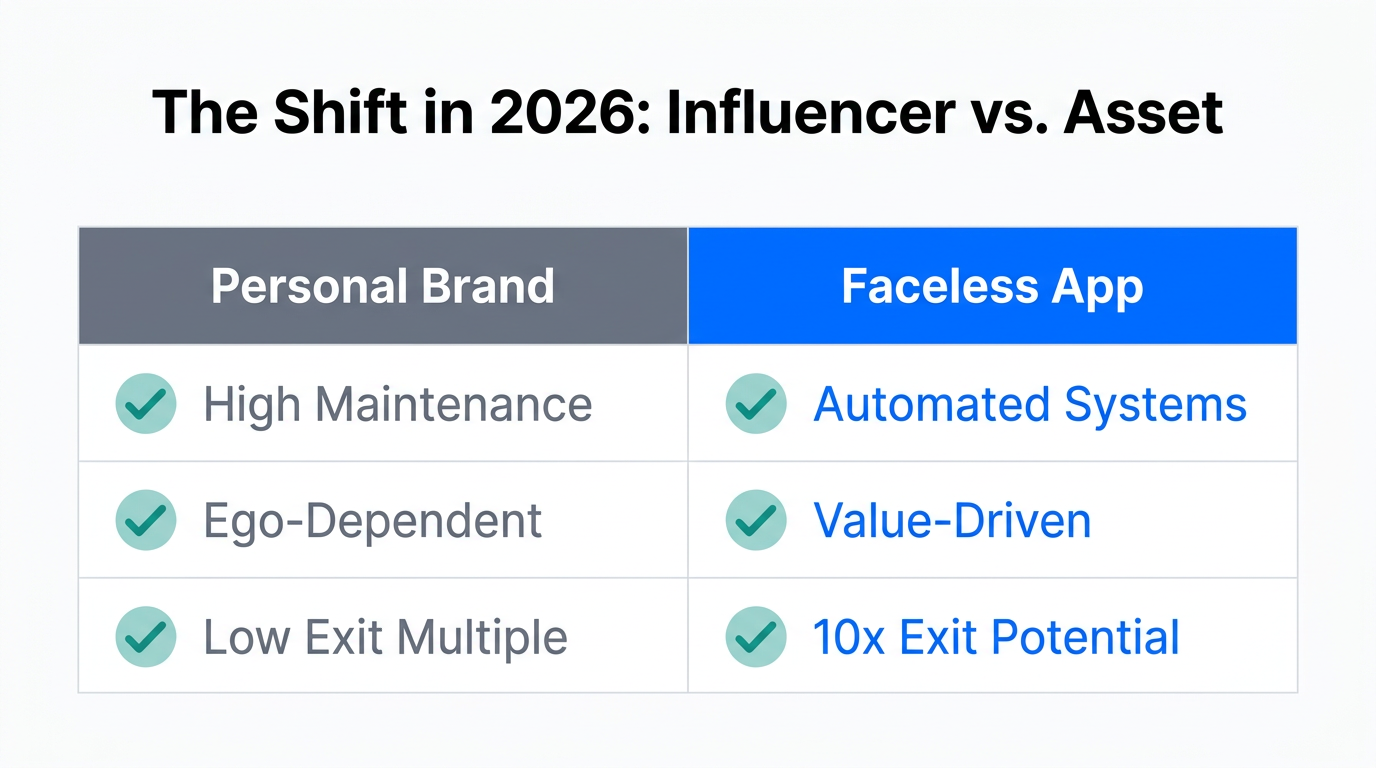
By 2026, many creators have realized that an audience-based business is a golden cage. Sebastian Ghiorghiu, a creator who once commanded nearly 1 million subscribers on YouTube, experienced this firsthand. Despite making millions and living the "influencer dream," he found himself misaligned. Every dollar earned was tied to his ability to turn on a camera and monetize attention. In the world of faceless brand building 2026, this is known as being "cuffed to the camera."
"I had this feeling like I had to basically turn on a camera and talk and get attention in order to make money. I really wanted to break that chain."
The problem with a personal-brand-dependent business is valuation. When you are the brand, you are the single point of failure. You can’t easily sell a YouTube channel where you are the only star. In contrast, a SaaS (Software as a Service) business built via the Starter Story framework is valued based on its recurring revenue, code quality, and customer retention—not your charisma. This transition from short-term attention to long-term equity is the defining creator economy trend of 2026.
The Starter Story Build Approach: From Idea to App in Days
Learn the specific step-by-step framework used to scale a business to massive success.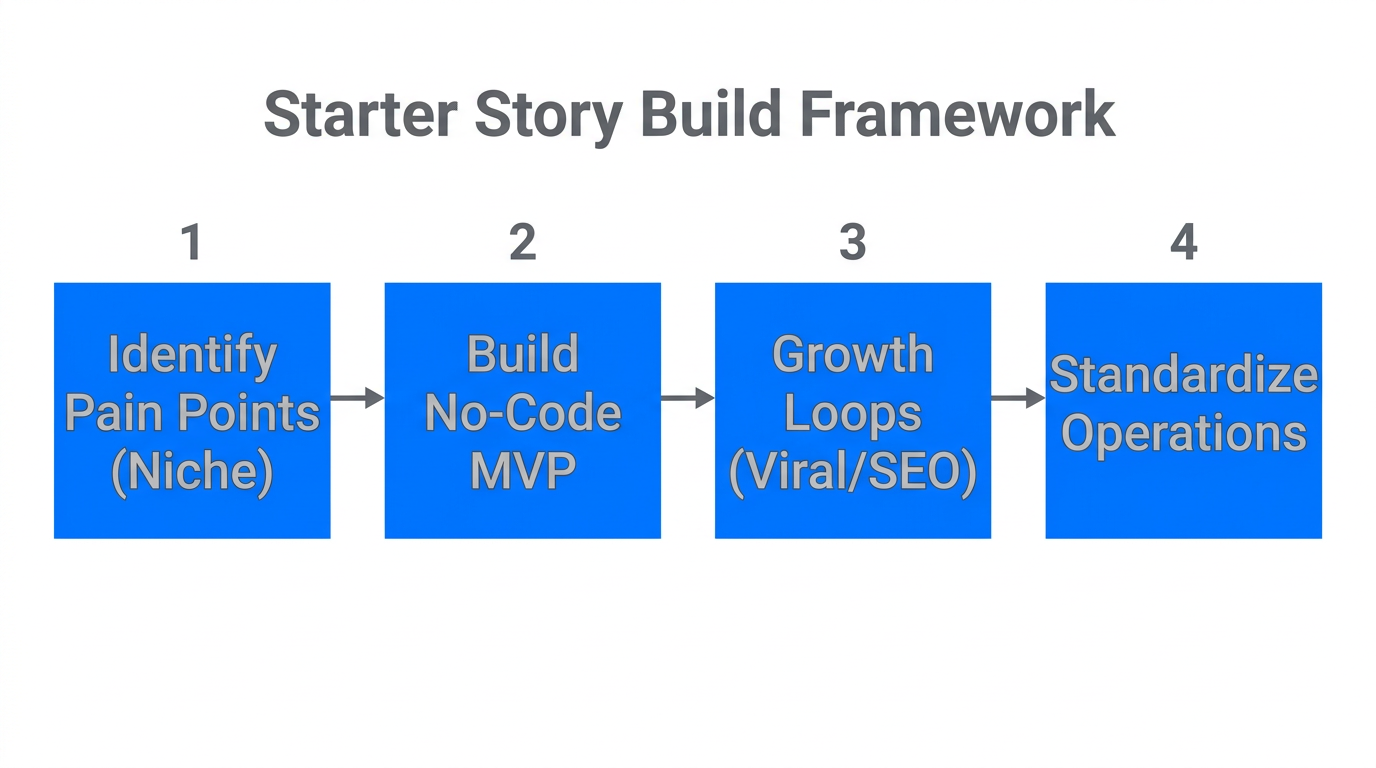
One of the biggest hurdles for non-technical founders has always been the "build" phase. In previous years, you needed a $50,000 budget and a six-month development cycle to launch a MVP. In 2026, that barrier has vanished. The Starter Story Build approach emphasizes using AI-powered coding tools like Cursor and Replit to ship functional apps in a matter of days.
Step 1: Identify Real Market Demand
Stop building what you think is "cool" and start building what people are already searching for. Use tools like Google Trends or Sensor Tower to identify gaps in the App Store. Sebastian Ghiorghiu didn't launch his software to his fans; he launched it "in the wild" to see if it could survive against real competition without his face to prop it up.
Step 2: Vibe Coding and AI Development
For app marketing for non-technical founders, the technical build is often the scariest part. However, with modern AI agents, you can now "vibe code"—describing features in natural language and having AI generate the codebase. This allows you to focus on the user experience and growth loops rather than debugging syntax. The goal is to get a version 1.0 into the hands of users within 72 hours.
| Feature | Traditional Build (2023) | Starter Story Build (2026) |
|---|---|---|
| Time to Market | 4-6 Months | 3-7 Days |
| Initial Cost | $20k - $100k | <$500 (AI & Hosting) |
| Technical Barrier | High (Need Senior Devs) | Low (AI-Assisted) |
| Focus | Feature Bloat | Core Utility & Growth |
Leveraging 'Invisible' Influence for Growth
Understand the motivation behind choosing to build a successful business without personal fame.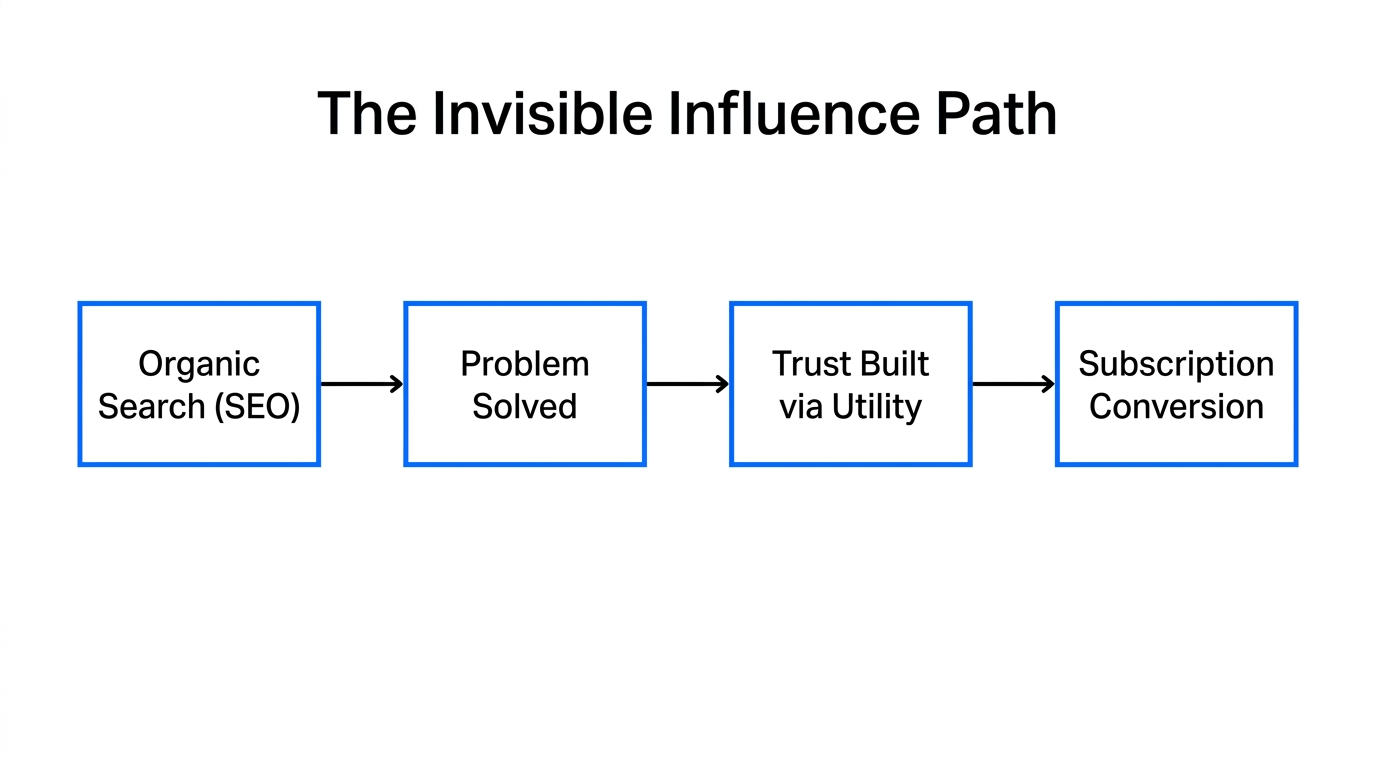
Going "ghost" doesn't mean deleting your contacts. It means shifting your influence from the public eye to the private network. Sebastian used his personal brand as leverage for hiring and high-level outreach rather than as a customer acquisition channel. This is the hallmark of the SaaS exit strategy: using your reputation to build a team that operates without you.
"Audience makes everything way easier. I didn't post videos to drive traffic, but I used my brand as leverage. Developers wanted to work with me, and a single post on X/Twitter would bring in top-tier applications."
When you aren't the face of the brand, you must build a growth flywheel that works 24/7. This usually involves a mix of:
- Short-form Content: Creating faceless accounts on TikTok and Instagram that highlight the product's utility.
- Paid Ads: Using TikTok Ads Manager to scale what works.
- Influencer Partnerships: Finding *other* creators to be the face of your product.
To scale a faceless brand effectively, many founders now use AI-powered platforms like Stormy AI to discover and vet creators. Instead of being the influencer yourself, you become the orchestrator—using Stormy AI to find creators in specific niches who can produce UGC (user-generated content) for your app, allowing you to stay behind the scenes while the product goes viral.
The Shift to Competence: Performance Over Applause
Explore the pivotal moment when business confidence turns into a sustainable long-term strategy.Building a faceless $1M app requires a mindset shift from "monetizing attention" to "delivering competence." When you are an influencer, you are rewarded for being interesting. When you are a software founder, you are rewarded for being useful. Sebastian noted that the biggest con of this shift is the need for extreme operational discipline.
By focusing on a product-led growth model, you ensure that the business has a sustainable path. Sebastian took his business from $0 to $250k MRR in just nine months by listening to customer feedback and constantly iterating on the software. He eventually reached a point where 65% of his traffic came from diverse channels like SEO, the App Store, and ChatGPT citations.
Hiring for Growth: Building the 'Ghost' Team
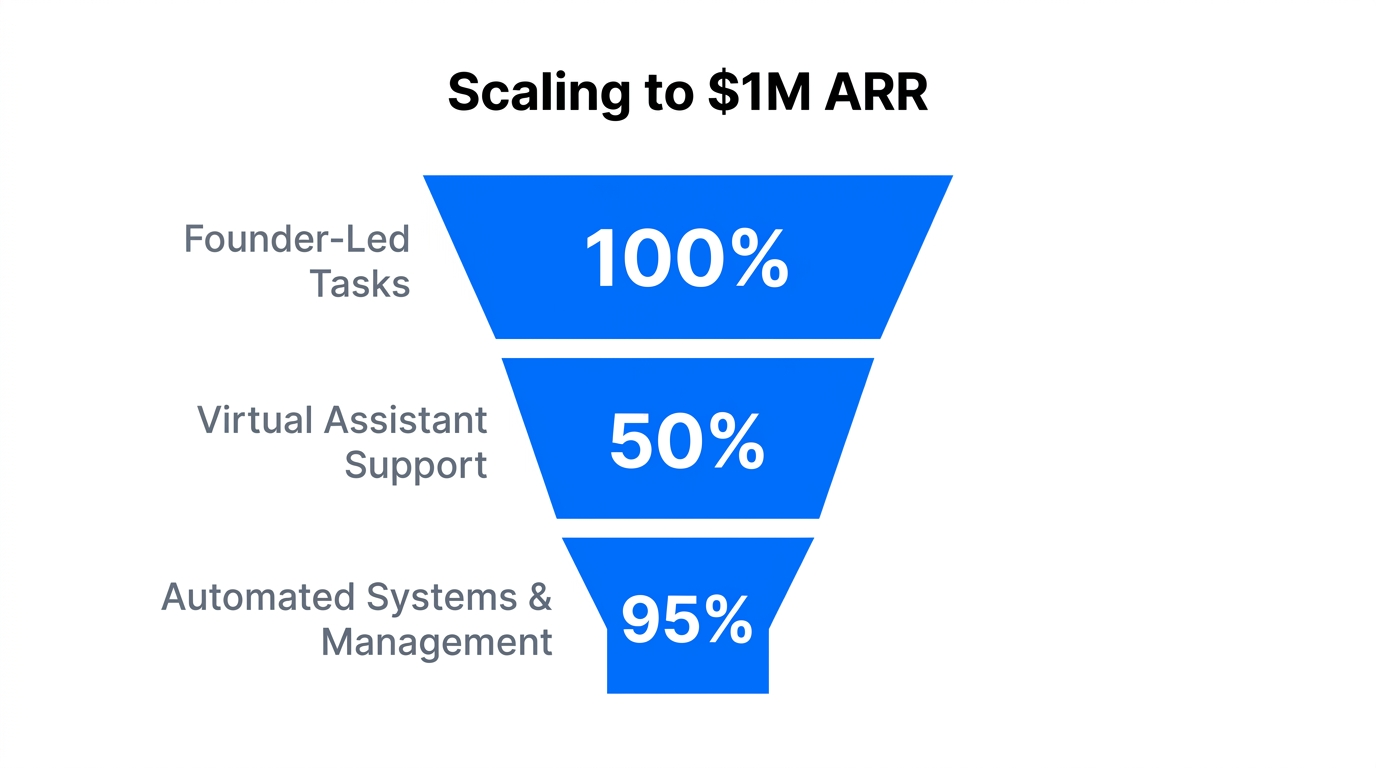
To reach the $1M+ valuation mark, you cannot be a solopreneur forever. Sebastian now manages a team of 10+ people, including elite engineers and designers. The secret to a lean, high-output team in 2026 is hiring for specific value rather than general roles. Whether you need a Figma designer or a CRO expert, the goal is to build a structure where the boat lifts for everyone with every new hire.
Use platforms like LinkedIn and Linear to manage your distributed team. By remaining the "operator" in the shadows, you maintain the genuine freedom that being a public figure often destroys. You can work when you want, where you want, and on what you want, without the pressure of maintaining a specific internet persona.
"The pro is that it's just way more fulfilling. You have genuine freedom. If you have a business attached to your face, you are kind of cuffed to the camera."
Conclusion: Choosing the Long-Term Path
As we navigate the creator economy trends of 2026, the choice is clear: do you want quick cash from a short-term audience, or do you want to build a long-term, sellable asset? The Starter Story Build methodology provides the blueprint for the latter. By leveraging AI to build quickly, using your existing network to hire talent, and staying focused on product competence, you can build a faceless $1M app that pays dividends long after you've gone ghost.
If you're ready to stop performing and start building, your first step is to stop waiting for the perfect time. Use the tools available today—whether it's AI for coding or Stormy AI for creator-led growth—to ship your first idea. The most successful founders are simply the ones who were crazy enough to keep failing until they won.