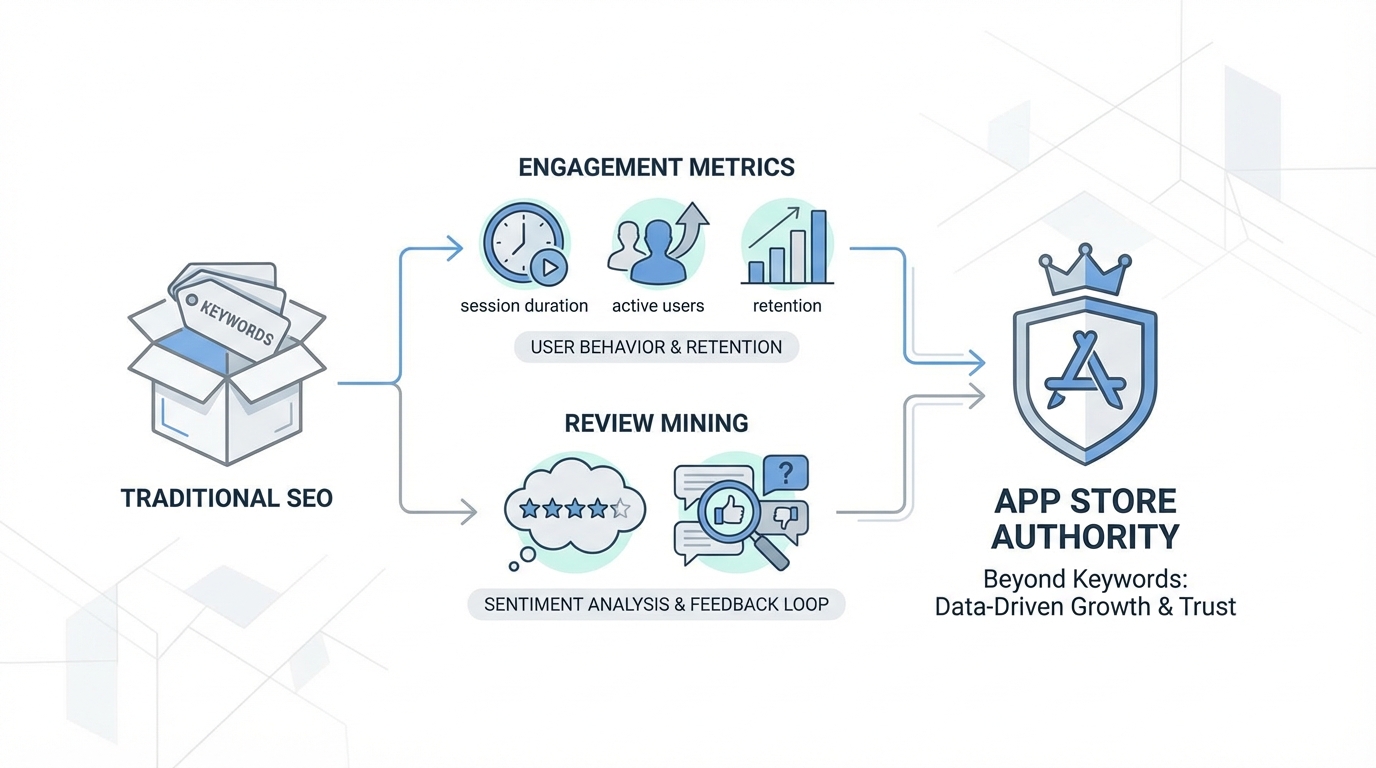
The era of keyword stuffing and "lexical matching" in the App Store is officially over. As we move through 2025 and into 2026, the iOS App Store has matured into a hyper-competitive ecosystem where simple word associations no longer guarantee visibility. Today, approximately 70% of App Store visitors use search to find new apps, and 65% of all downloads occur immediately after a search query, according to research from Mobile Action and Apple Search Ads. To win in this environment, developers and marketers must look beyond the metadata field and understand the deep user engagement signals that now dictate authority.
The Shift from Lexical to Semantic Understanding
Apple’s algorithm has undergone a fundamental transformation. It no longer just looks for the specific string of characters you type into your title; it now prioritizes semantic indexing. This means the algorithm clusters apps based on "thematic relevance." For example, if your app ranks highly for "meditation," the store may automatically associate you with "mindfulness" or "breathwork," even if those specific terms aren't in your metadata. Insights from AppTweak suggest that this movement toward thematic clusters is designed to improve the user experience by surfacing the most relevant tools rather than the best-optimized ones.
With roughly 1.9 to 2.1 million apps currently competing for attention, as reported by Statista, Apptunix and TekRevol, being "thematically relevant" is your only path to long-term survival. The algorithm is now smart enough to recognize the intent behind a search, making app ranking signals like category-defining "anchor" keywords more important than ever.
"The App Store has moved from a library index to a neural network that understands what users actually want, not just what they type."
The 'Semantic Penalty': Why Retention is the New SEO
One of the most significant changes in 2025 is the weight given to post-install behavior. Conversion Rate (CVR), long-term retention, and even technical performance metrics like crash rates are now primary ranking signals. According to ASOMobile and official Apple Developer documentation, an app that manages to hit the #1 spot for a high-volume keyword but suffers from a high uninstall rate will face a semantic penalty and be quickly demoted.
This penalty ensures that only high-quality apps maintain their authority. It’s no longer enough to drive a download; you must drive a successful download. This shift means that mobile app user engagement is now a core pillar of ASO. If your app’s technical stability is poor, no amount of keyword optimization will save your rankings. The algorithm is effectively crowdsourcing quality control by watching how users interact with your product after the click.
Mining User Reviews for 'Natural Language' Keywords
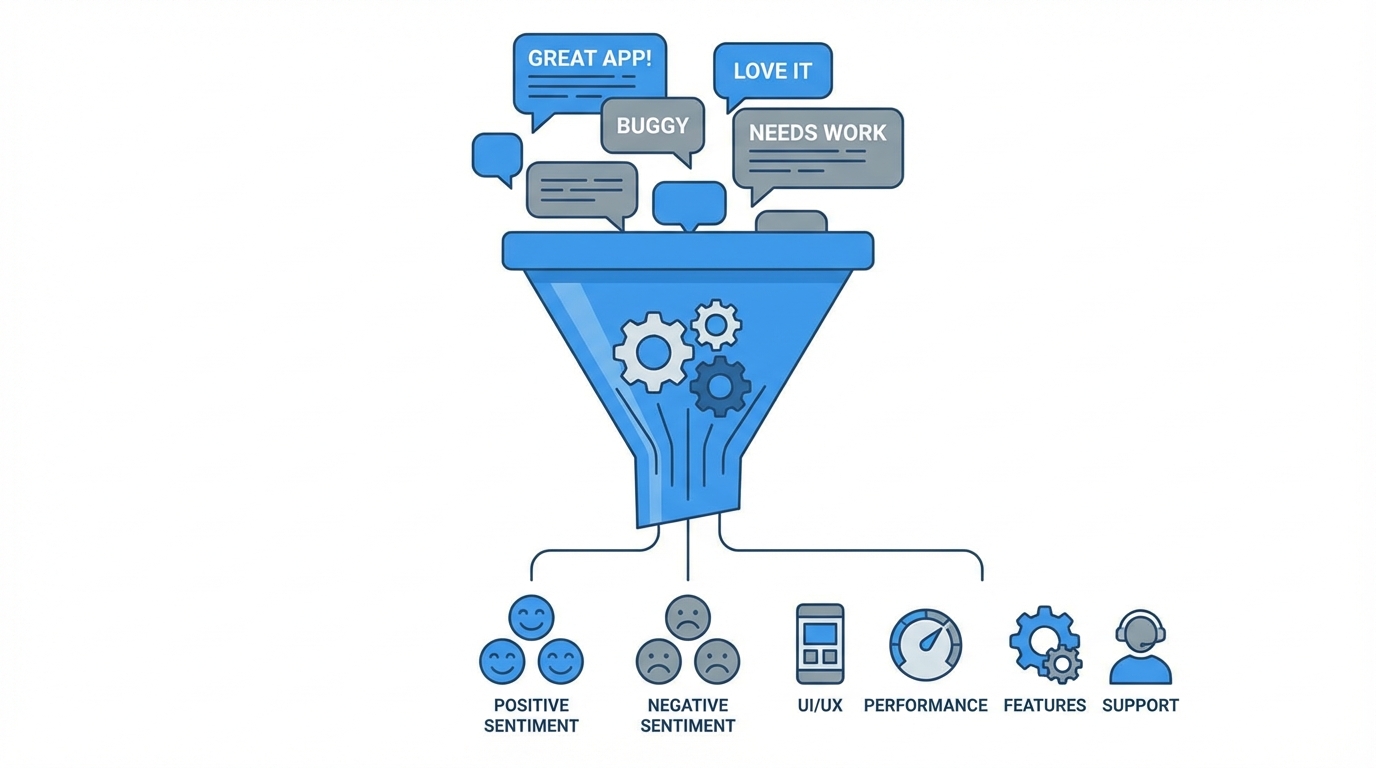
Traditional keyword research often misses how real humans actually describe their problems. This is where app review keyword analysis becomes a goldmine. Apple's algorithm increasingly uses keywords found within user reviews for semantic indexing. If your users consistently praise your "seamless sleep tracker," Apple will begin to associate your app with those terms, even if you didn't include them in your 100-character keyword field.
Ignoring user feedback means missing out on the "natural language" of your market. To capitalize on this, you should:
- Identify recurring phrases in 5-star reviews to use in your Subtitle.
- Look for pain points in 3-star reviews to address in your "What's New" updates.
- Use tools like App Radar to track competitor sentiment and find gaps in their service that you can highlight in your own metadata.
By mirroring the language your customers use, you improve your ios app conversion rate because the listing feels more authentic and relatable. This "message match" between user intent and your app's description is a powerful driver of authority.
Visual Optimization: OCR and the Power of 'Active' Captions
A major algorithmic shift revealed by Appfigures in mid-2025 is that Apple now uses Optical Character Recognition (OCR) to index text within screenshot captions. This means the text you overlay on your images is no longer just for the user—it's for the search engine. Using Apple's Vision framework, the store can now understand the context of your visual creative assets.
"OCR indexing means your screenshots are now part of your metadata. Every caption is a searchable keyword opportunity."
To maximize this, you must move away from generic phrases like "Easy to Use" and toward high-contrast, 'active' captions. Phrases like "Track Sleep Patterns" or "Edit 4K Video" are far more effective for both the user and the algorithm. Using aso competitor analysis to see which terms your rivals are highlighting in their visuals can give you a significant edge. When you align your screenshots with high-volume search terms, you create a visual reinforcement of your relevance.
For brands looking to create high-converting visual assets, tools like Stormy AI can be invaluable. By helping marketers discover creators who specialize in UGC (User Generated Content), platforms can source authentic video and imagery that resonates with target audiences, ultimately boosting the conversion metrics that Apple's algorithm watches so closely.

The 2025 ASO Playbook: Steps to Authority
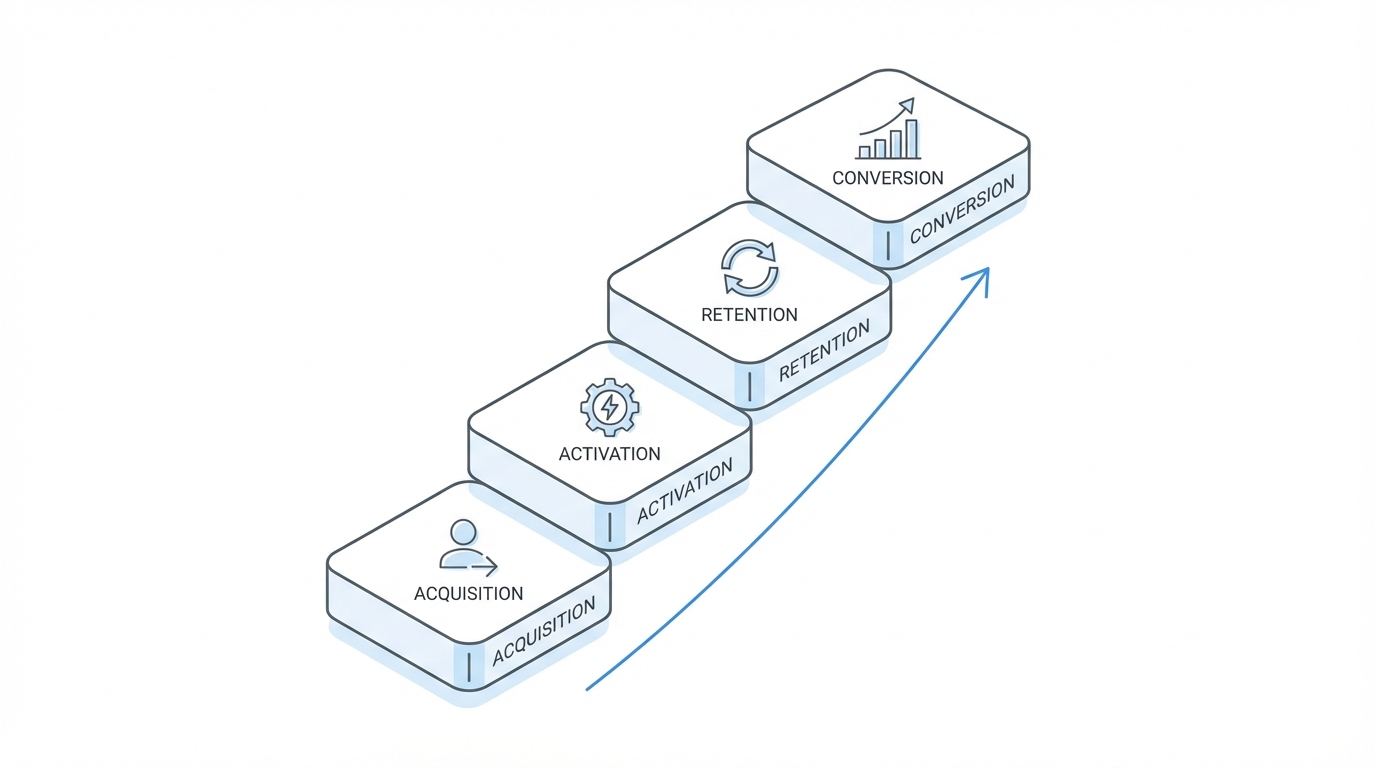
To maintain authority, your ASO strategy needs to be dynamic. Experts at SplitMetrics emphasize that ASO is not a "one-and-done" task; metadata should be updated every 4 weeks based on performance data. Here is the sequential playbook for modern app authority:
Step 1: Execute the 30-30-100 Rule
Structure your metadata with a strict hierarchy. The Title (30 characters) carries the most weight; place your primary, broad keyword here. The Subtitle (30 characters) should focus on the "how" or "why," using secondary keywords. Finally, the Keyword Field (100 characters) is for synonyms and long-tail variations. Remember, as App Store Connect guidelines point out, repeating keywords across these fields does not increase weight—it only wastes space.
Step 2: Leverage Seasonal Trends
Updating your keywords for specific events—like adding "New Year Fitness" in January—can increase conversion by up to 40%, according to Business of Apps. This keeps your app relevant to current search behaviors.
Step 3: The Localization Hack
You can effectively double your keyword real estate by utilizing secondary locales. For instance, the US App Store indexes keywords from the Spanish (Mexico) locale. By placing unique keywords there, you expand your reach without cluttering your primary listing. Tools like ASO.guru can help you navigate these hidden opportunities.
Using Advanced Tools for Competitor Intelligence
Success in 2025 requires more than intuition; it requires data. Utilizing aso competitor analysis tools allows you to see exactly which keywords are driving downloads for your rivals. For example, a developer recently identified "hair product scanner" as a trending term with low competition and reached #35 on their first day by building specifically for that niche, a case study highlighted by Darius on YouTube.
To stay ahead, you should monitor:
- Keyword Difficulty: Use Sensor Tower or Mobile Action to find high-volume terms that aren't yet dominated by giants.
- Custom Product Pages (CPPs): Follow the lead of experts at App Radar and use CPPs to target specific keyword clusters with tailored visuals. This ensures that a user searching for a specific feature sees that feature immediately upon landing on your page.
Managing the relationship between your creative assets and your keyword strategy is complex. If you are leveraging influencer-driven UGC to populate these pages, having a creator CRM is essential. While specialized ASO tools track the rankings, platforms like Stormy AI can help manage the actual creators producing the content, ensuring a steady stream of high-quality visuals to test against your top keywords.
Conclusion: Building Long-Term App Authority
Building app store authority in 2025 requires a holistic view of the user journey. It starts with the right app ranking signals in your metadata, but it is sustained by high mobile app user engagement and technical excellence. By mining user reviews for natural language, optimizing your screenshots for OCR indexing, and strictly monitoring your conversion and retention rates, you can navigate the shift toward semantic search.
The goal is no longer just to rank; the goal is to convert and retain. When your visuals, metadata, and user experience align, the algorithm will reward you with the visibility you need to scale. Stop chasing keywords in isolation and start building a product that the App Store—and its users—can trust.