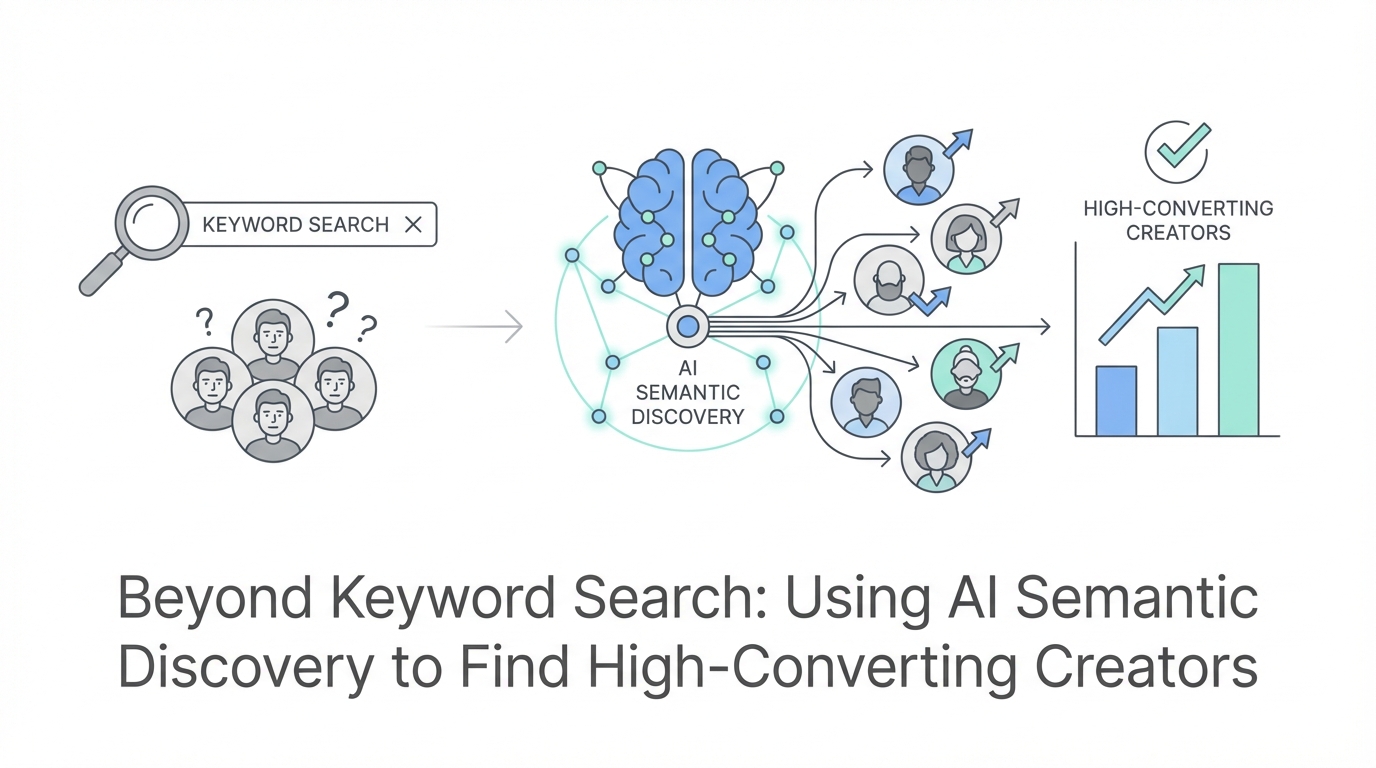
For years, the gold standard for finding influencers was the basic keyword search. Marketers would log into a database, type in "fitness," filter by follower count, and hope for the best. But as the influencer marketing industry matures—projected to reach a staggering $32.55 billion in 2026—this surface-level approach is no longer enough. The problem? Metadata like bios and hashtags doesn't tell you the truth about a creator's actual content or the sentiment of their community.
We are entering the era of semantic discovery. This next generation of influencer discovery tools uses natural language processing (NLP) to understand the *vibe* and *context* of content, rather than just the text labels attached to it. Instead of searching for tags, savvy marketers are now using AI-powered agents to find creators who align with specific brand philosophies and audience values.
The Limits of Traditional Keyword Search: Why Metadata Fails
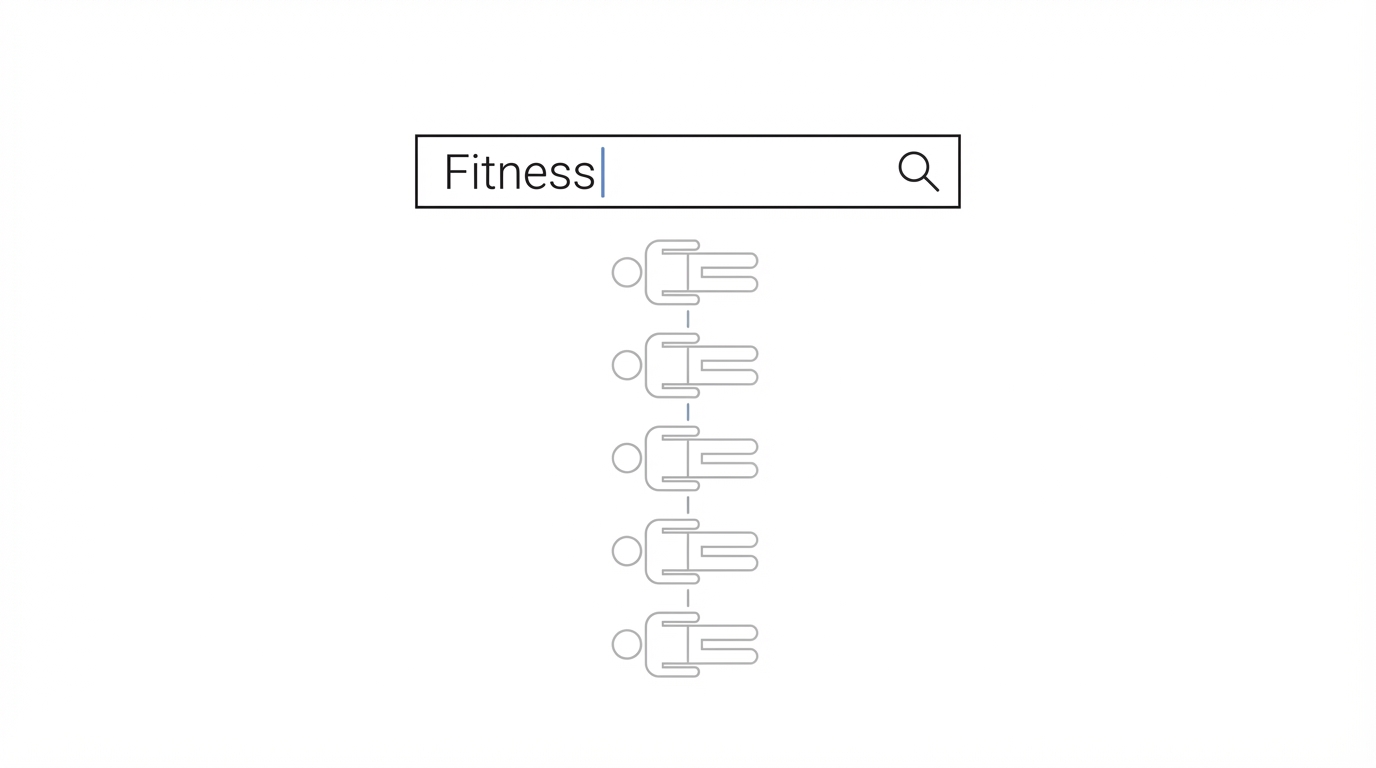
Traditional influencer discovery tools rely on static data. They look at what a creator puts in their bio or the specific hashtags they used six months ago. This creates two massive problems for modern brands. First, it leads to oversaturated creators—the same influencers appearing in every search, leading to higher prices and lower engagement. Second, it fails to capture nuance. A search for "vegan" might give you a creator who occasionally posts a salad, but misses the deep-tech sustainable living advocate your brand actually needs.
According to research from industry analysts, top-performing campaigns that move beyond these vanity metrics see an average ROI of $5.78 for every $1 spent. To hit those numbers, marketers are shifting toward Content-Level Queries. This means analyzing the actual transcript of a video, the visual aesthetics of a feed, and the sentiment of the comments section to ensure a perfect brand match.
What is Semantic Discovery? Finding Creators by "Vibe"
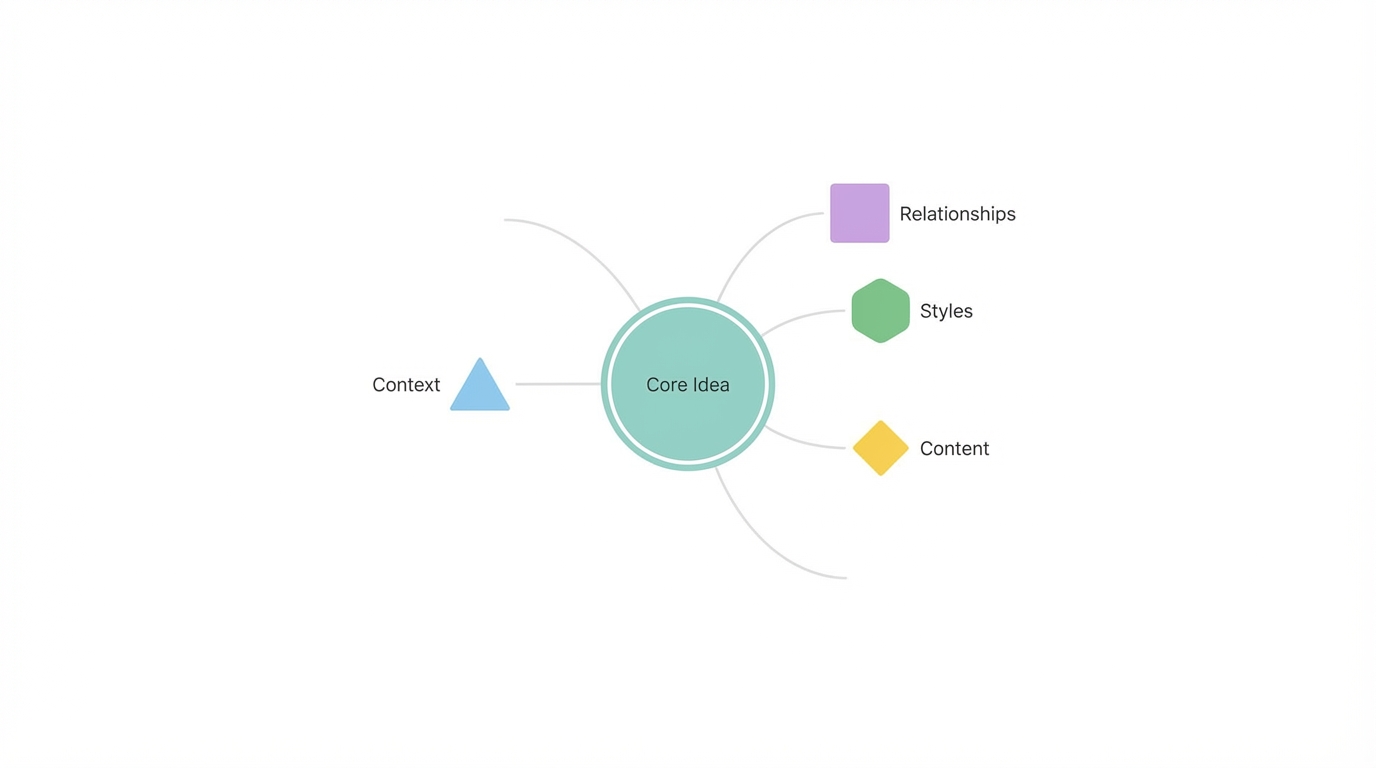
Semantic search allows you to find influencers using natural language prompts. Instead of a keyword like "nutrition," you can search for "fitness creators who avoid fad diets and focus on holistic wellness" using modern discovery engines. This technology analyzes thousands of data points to understand the intent behind the content.
This approach is particularly effective for finding nano-influencers (1k–10k followers). Data from market research shows that these smaller creators make up over 75% of the influencer base and deliver 50% higher engagement rates than their celebrity-tier counterparts. Semantic search is the only way to surface these "hidden gems" who might not have optimized their bios but are creating high-impact content for a loyal niche.

The Modern Tool Stack: Integrating AI for a Unified View
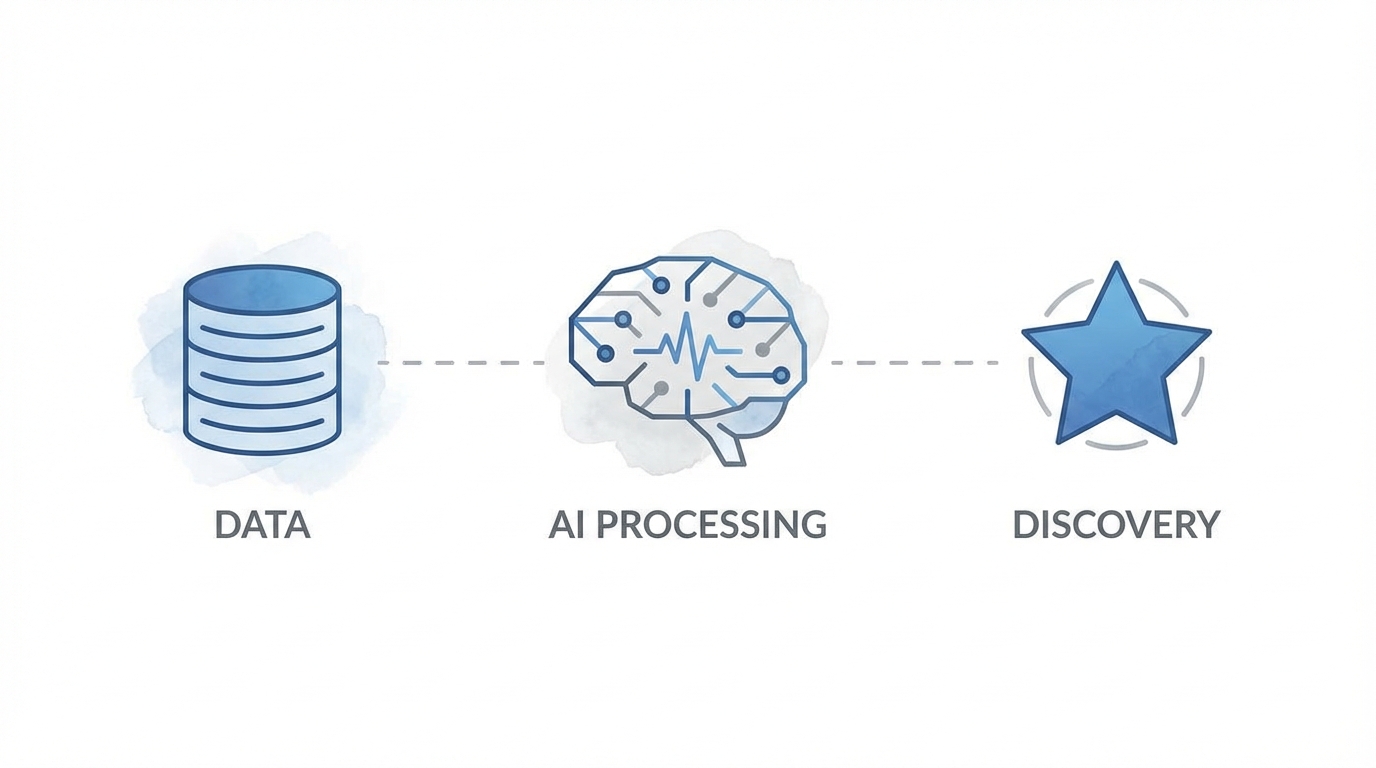
To execute a semantic discovery strategy at scale, you need a robust tool stack that connects disparate data sources. While legacy platforms often lock you into their own narrow databases, modern workflows utilize Model Context Protocol (MCP) servers and specialized APIs. For example, using Firecrawl for web scraping and Apify for real-time social data allows you to feed fresh content directly into an AI model for analysis.
For a unified view of metrics across TikTok, Instagram, and YouTube, many brands rely on Phyllo. However, managing five different subscriptions can become a logistical nightmare. This is where Stormy AI shines. It acts as an all-in-one AI search engine that lets you type natural-language prompts to find matching influencers across all major platforms instantly. By combining creator discovery with built-in vetting, it eliminates the need for a fragmented tool stack.
Using Claude Code for Content-Level Alignment
One of the most advanced techniques in 2026 is using Claude Code, a terminal-based AI agent from Anthropic, to vet creators. By giving Claude access to a creator's recent post data via Influencers Club or specialized scrapers, you can run a "Content Alignment Check."
Step 1: Extract Recent Content
Use an agent to scrape the last 5-10 Reels or TikToks from a potential candidate. You aren't just looking for views; you are looking for visual consistency and tonal alignment.
Step 2: Run Semantic Analysis
Provide Claude with your brand's voice guidelines and ask it to analyze the creator’s transcripts. A prompt like "Does this creator's advice on home sustainability align with our brand's focus on plastic-free living?" can save hours of manual review.
Step 3: Score the Creator
Assign a quality score based on audience sentiment. AI can quickly scan comments to see if the audience is asking product questions or simply leaving spammy "fire" emojis.
Case Study: Transitioning from One-Off Tactics to Digital Ambassadors
The days of the "Black Friday blast" are over. Modern performance marketing requires long-term trust. Using AI semantic discovery, a sustainable home brand moved away from 50 one-off posts to a 10-person "Digital Ambassador" program. By finding creators whose lifestyle was inherently sustainable—rather than those just using the hashtag #ad—they saw a 40% increase in long-tail conversions.
According to Boksi, long-term partnerships allow creators to weave a brand into their daily narrative, making the promotion feel authentic rather than intrusive. AI makes this possible by identifying the creators who already share your brand's values before you even send the first email.
The Outreach Engine: Personalization at Scale
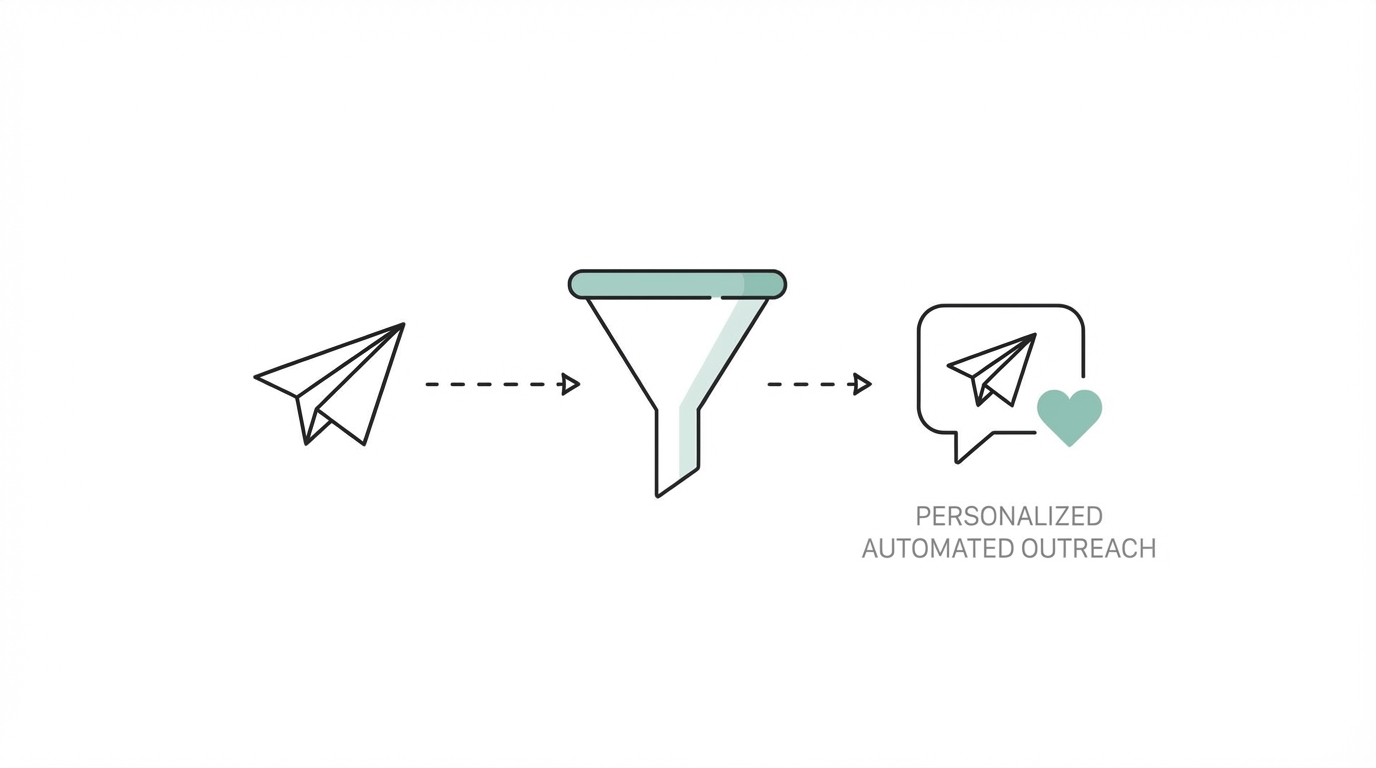
Discovery is only half the battle. Once you find the perfect creators, you have to win them over. Influencers in 2026 are savvy; Talent Resources reports that 65% of influencers prefer to be part of the creative process early on. Sending a generic, mass-produced email is a surefire way to get ignored.
Tools like Instantly.ai allow you to automate the sending process, but the AI-generated personalization should happen at the content level. An AI agent can mention a specific point made in the creator's third-to-last video, proving that you've actually done the research. However, experts warn against the "AI Slop" trap—always keep a human-in-the-loop for final approvals to ensure the tone remains authentic.
For those managing massive campaigns, Stormy AI's automated outreach handles this perfectly. Its AI agents can discover, vet, and contact creators on a daily schedule, generating hyper-personalized emails that reference specific creator achievements while you sleep.
Conclusion: The Future is Agentic
The transition from keyword search to semantic discovery is a fundamental shift in how we understand influence. By moving beyond metadata and focusing on content-level alignment, brands can find higher-quality creators, build deeper trust, and drive significant ROI. As Bernard Marr suggests, the future of marketing departments is "Agentic Teamworking," where humans provide the vision and AI agents execute the discovery and outreach with surgical precision. Stop searching for keywords and start searching for intent—your ROI will thank you.