Beyond Email: Multi-Channel AI Abandoned Cart Email Recovery in the Conversational Era
Discover how conversational commerce 2026 strategies like WhatsApp cart recovery and AI voice assistants are helping brands achieve 22x more recovered orders.
In the fast-evolving landscape of ecommerce, the year 2026 has ushered in a paradigm shift where traditional, static email sequences are no longer enough to win back lost sales. While the global average cart abandonment rate continues to hover between 70.19% and 76.8%, according to data from the Baymard Institute and Sendtric, the methods for recovery have been completely reimagined. High-growth brands are moving beyond the inbox, leveraging an omnichannel marketing strategy that combines AI-driven email with WhatsApp, SMS, and even voice assistants to achieve a staggering 22x more orders than standard promotional efforts.
The Rise of Conversational Recovery: WhatsApp AI and Real-Time Engagement
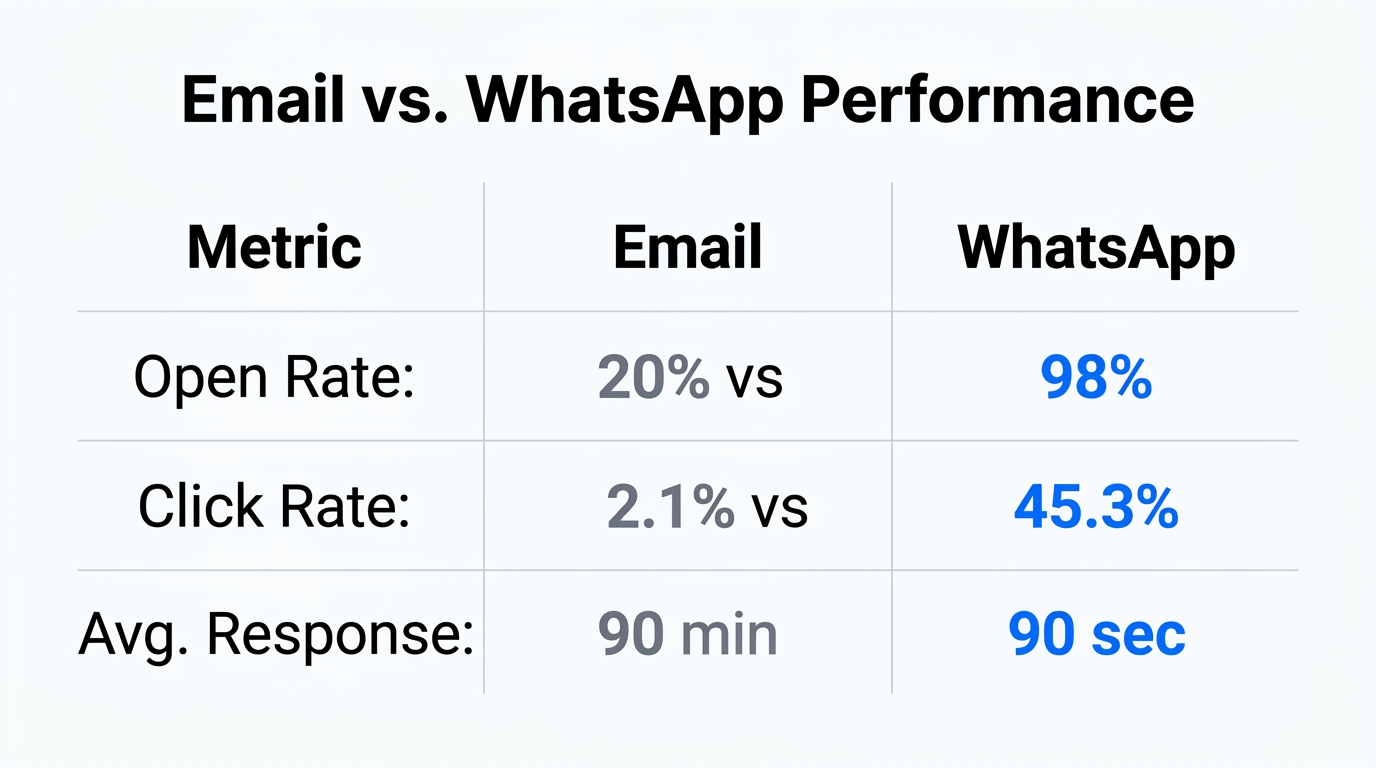
The era of "talking at" customers has ended; 2026 is the year of "talking with" them. Leading brands are now utilizing Blueknow and other advanced AI marketing tools for retail to deploy WhatsApp AI agents that act as real-time concierges. Instead of a generic reminder, these agents intervene when a shopper hesitates, resolving friction points like shipping costs or complex return policies in a natural, two-way dialogue. Research shows that WhatsApp cart recovery efforts yield success rates up to 3x higher than traditional email because they meet the customer exactly where they spend their time.
"AI-powered recovery systems achieve a success rate of 45–56%, nearly triple the 15% industry average for traditional, static email sequences."
This shift is driven by the fact that AI-driven cart recovery generates an average of $3.65 revenue per recipient (RPR), with high-value sectors like home improvement seeing this figure skyrocket to $75.66 RPR, as noted by Klaviyo. By integrating these conversational layers, brands are transforming a lost session into a personalized shopping experience. Platforms like Stormy AI also play a secondary role here; as brands source UGC creators to build social proof for these automated chats, the conversion rates for conversational commerce 2026 strategies continue to climb.
Optimizing for the Mobile Abandonment Crisis
The mobile experience is where most sales go to die. Currently, mobile abandonment rates are significantly higher than desktop, sitting at a daunting 78–80.2%. According to Envive, this necessitates a mobile-first recovery architecture. SMS marketing for ecommerce has become the backbone of this response, providing immediate, high-visibility nudges that bypass the cluttered promotional tabs of mobile email apps.
To combat this, sophisticated AI tools now employ Predictive Intent Scoring. Rather than waiting for the user to close the tab, machine learning models from Alhena AI analyze mouse velocity, scroll depth, and tab switching patterns to intervene 2–4 seconds before the user exits. This proactive approach allows brands to offer a solution—like a targeted FAQ or a limited-time discount—while the user is still actively engaged on their smartphone.
Voice Assistant Integration: The Next Frontier of Reminders
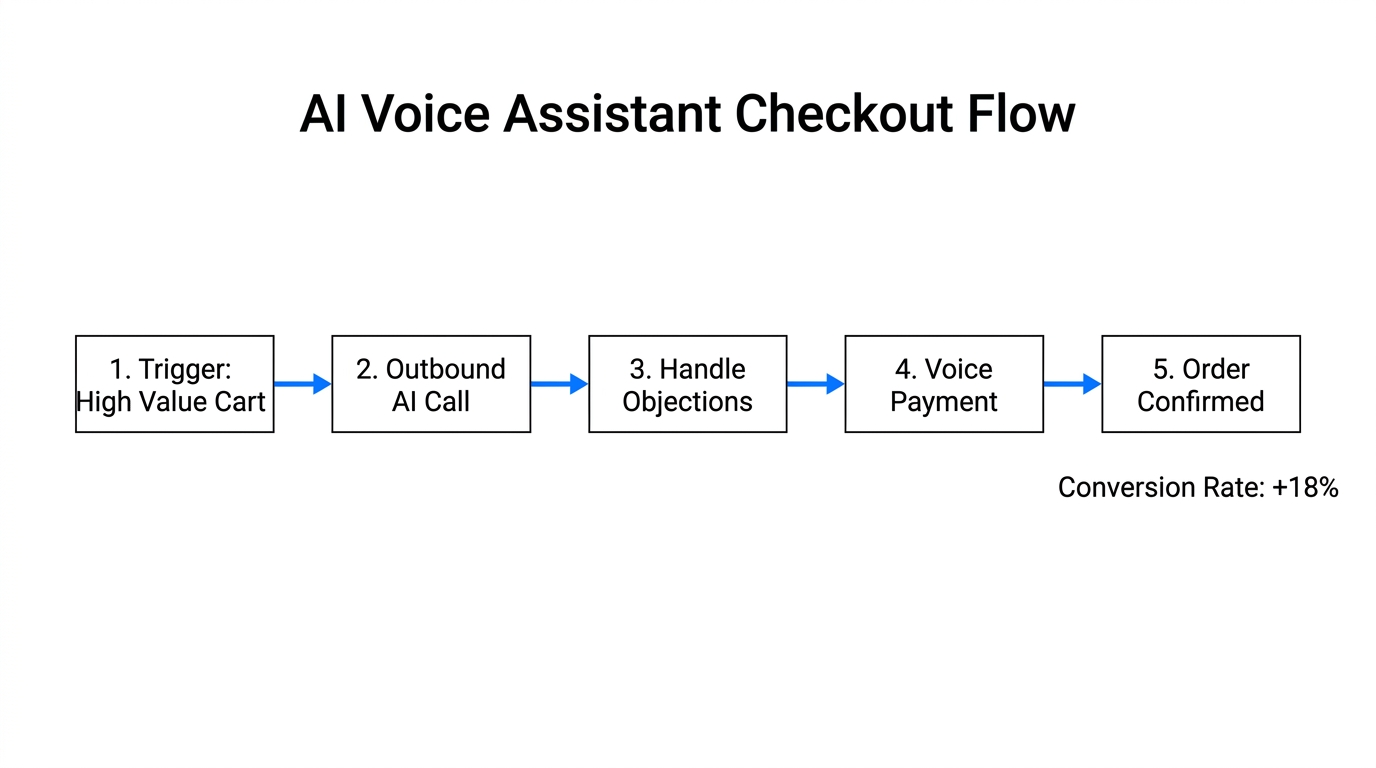
As smart home adoption reaches critical mass in 2026, voice assistants have become a legitimate channel for cart recovery. Optimization for 'Hey Alexa, remind me to check out' is no longer a gimmick but a standard feature in high-end recovery suites like Easy Subscriptions. This allows for a seamless transition from a mobile browsing session to a voice-assisted purchase completion while the customer is busy at home.
Nick Trafimov, an expert at byVoice, highlights the power of this medium: "Most retailers fail because they talk at the shopper... voice automation allows a two-way discussion while purchase intent is fresh." This two-way capability enables the AI to ask, "Would you like me to apply your loyalty points to this order?" effectively removing the final barrier to conversion without the customer ever touching a screen.
"The key to 2026 recovery is not just frequency, but the medium; voice and chat turn a transaction into a consultation."
The 2026 AI Recovery Playbook: A Three-Stage Strategy
Success in omnichannel marketing requires a structured approach. Simply blasting messages across all channels will lead to brand fatigue. Instead, high-growth retailers follow a refined AI-driven sequence:
- Stage 1: The Reminder (The Golden Hour): Send the first AI-triggered notification within 30–60 minutes. According to Easy Subscriptions, this timing boosts open rates by 18–25%.
- Stage 2: Social Proof (24 Hours): Deploy AI-selected reviews. Tools like Remarkable AI can dynamically insert a testimonial from a customer who bought the exact item sitting in the abandoned cart.
- Stage 3: The Final Incentive (3–5 Days): A last-chance offer or a unique discount generated by Dynamic Discount Logic.
This strategy ensures that you are providing value at every touchpoint. For brands looking to drive the top-of-funnel traffic that feeds these sequences, using Stormy AI to identify high-converting TikTok and Instagram creators is the most efficient way to ensure your cart is filled with high-intent shoppers in the first place.
Case Study: $42,000 Recovered in 60 Days
A mid-sized Shopify store recently demonstrated the power of real-time AI intervention. By integrating AgentiveAIQ, the store was able to monitor users on the payment page. When the AI detected hesitation—defined by long dwell times on the shipping selection—it triggered a real-time AI chat offering free shipping for the next 15 minutes.
| Metric | Traditional Email Sequence | AI-Powered Multi-Channel |
|---|---|---|
| Recovery Rate | 15% | 48% |
| Orders Generated | Baseline | 22x Increase |
| Customer Feedback | Low Engagement | High Satisfaction |
| Revenue (60 Days) | $4,500 | $42,000 |
This implementation proves that Omnisend's findings on AI-powered emails and chats generating 22x more orders are not just theoretical. Furthermore, by using automated workflows from n8n, the brand was able to recover an additional $150,000 during the peak holiday season by prioritizing high-value carts for immediate AI voice follow-ups.
Choosing the Right Multi-Channel Stack
Selecting the right AI marketing tools for retail depends on your brand's scale and primary customer touchpoints. Here is how the top players in 2026 compare:
| Tool | Best For | Key Advantage |
|---|---|---|
| AgentiveAIQ | Real-time Conversion | Instant AI Chat on payment pages. |
| byVoice | High-Ticket Retail | Personalized AI Voice & WhatsApp agents. |
| CartStack | Omnichannel SMBs | Seamless Multi-channel recovery logic. |
| Bluecore | Enterprise | Predictive Personalization at scale. |
While these tools handle the recovery, remember that the most common mistake is Wait Times Too Long. Sending the first recovery message after 24 hours results in a mere 12.2% conversion rate, whereas messages sent within the first hour see a 20.3% conversion, per Unific. Additionally, ensure you are using AI "identity resolution" through tools like Blueknow to track anonymous shoppers who haven't logged in.
Conclusion: The Future is Conversational
As we navigate 2026, the brands that thrive are those that view cart abandonment not as a lost sale, but as the start of a conversation. By combining the precision of Klaviyo with the immediacy of WhatsApp recovery and the innovation of AI voice assistants, you can reclaim a significant portion of the $260 billion that the Baymard Institute estimates is recoverable through better design and intelligent intervention. Start by auditing your mobile experience and implementing a "Golden Hour" response—your bottom line will thank you.