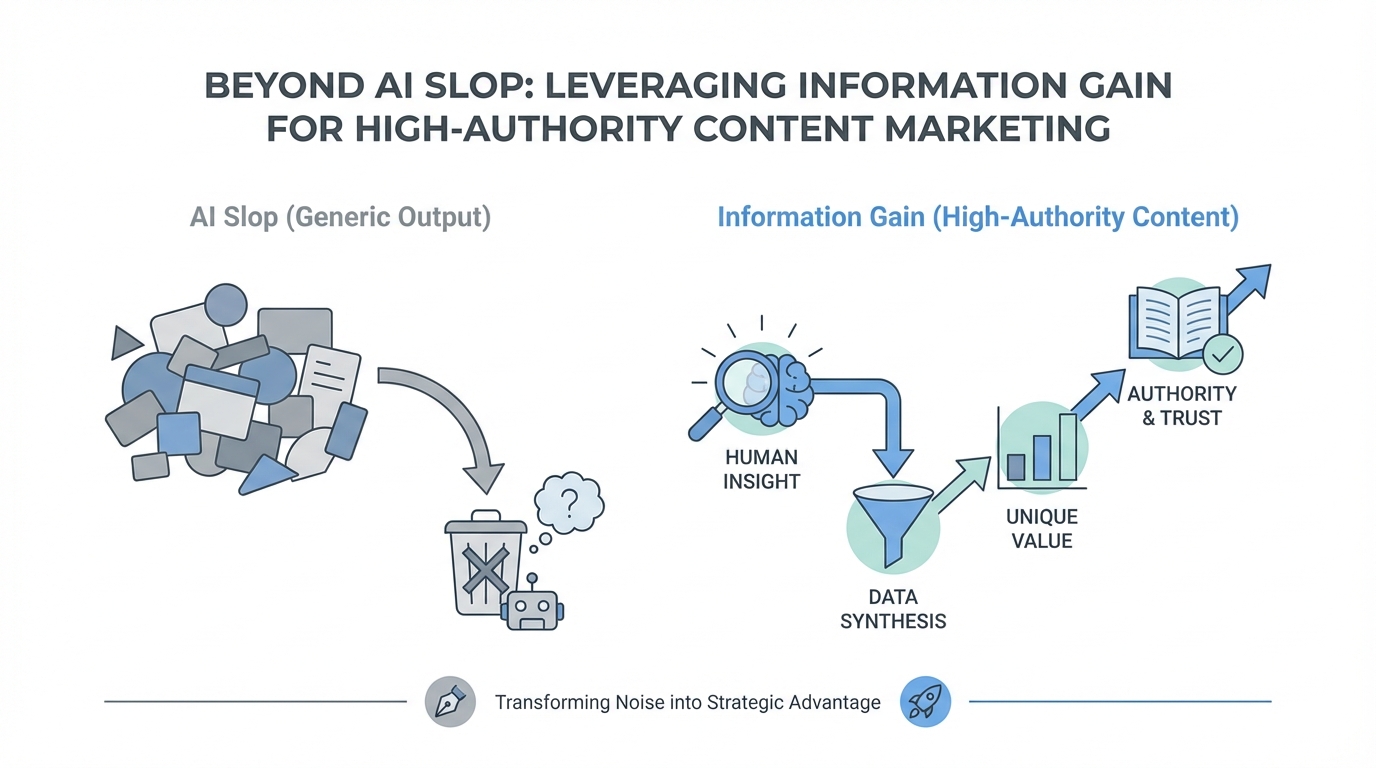
The search landscape is undergoing its most radical transformation since the invention of the hyperlink. By 2026, the traditional SEO playbook—writing 2,000 words on a keyword and hoping for a click—will be obsolete. We are entering the era of the "Zero-Click SERP," where approximately 65% of desktop searches and a staggering 75% of mobile searches are resolved on the search engine results page itself. For marketers, this means the metric of success is shifting from traffic extraction to brand authority and citation. To survive, brands must move beyond AI slop and embrace a high-authority content marketing strategy 2026 focused on Information Gain.
The Rise of AI Slop and the 2026 De-Ranking Risk
As Large Language Models (LLMs) become ubiquitous, the internet is being flooded with what industry experts call "AI Slop." This refers to generic, repetitive content that summarizes existing web data without adding new value. While this content might have ranked in 2023, by 2026, search engines will aggressively de-rank it. AI-generated summaries in search results (AIOs) now appear in 13% to 15% of queries, and 99.5% of their sources are pulled from the top 10 organic rankings, according to recent Semrush analysis. If your content provides nothing but a rehash of what the AI already knows, you have zero information gain seo value.
Relying on raw AI output leads to a lack of "Experience," the newest pillar of E-E-A-T. As content strategists point out, AI slop is essentially killing rankings because it offers no new perspective. Search engines are incentivized to surface content that adds to the "global knowledge graph," not content that simply mirrors it.
The Information Gain Framework: How to Rank in AI Search
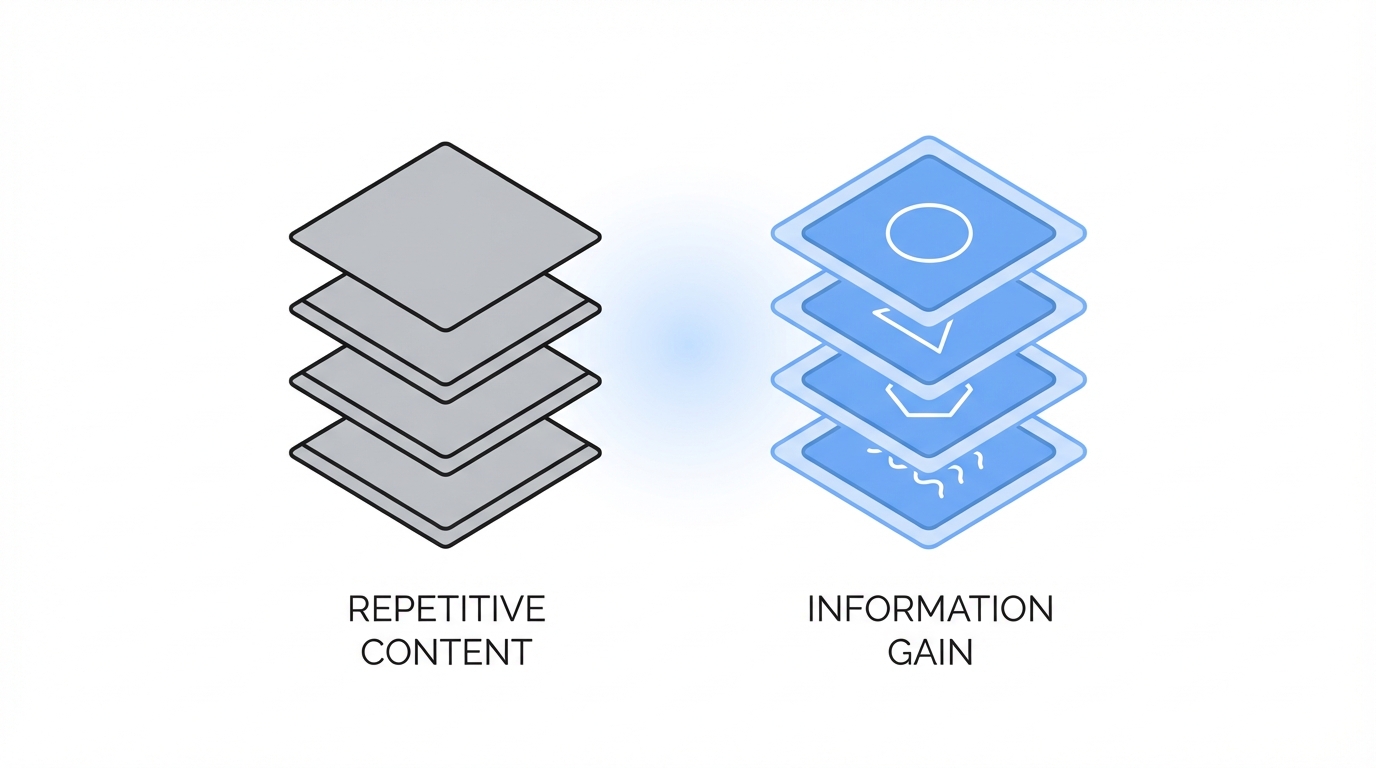
Information gain seo is the concept of providing information that a user hasn't seen elsewhere in the search results. If Google sees ten articles about "how to lose weight" and your article provides a unique case study on a specific metabolic habit backed by original data, your page has high information gain. This concept, derived from Google's Information Gain Score patent, makes you a primary candidate for an AI Overview citation. To implement this, brands must shift toward an EEAT content strategy that prioritizes primary research.
"The citation economy is the new currency of the web. Earning a mention in an AI summary can increase brand trust and subsequent direct search by over 80%."To maximize your information gain, incorporate the following elements into every piece of content:
- First-party Data: Poll your customers or analyze your own internal metrics to release unique industry benchmarks.
- Contrarian Viewpoints: Challenge the status quo with logical, data-backed arguments that differ from the top 5 results.
- Case Study Deep-Dives: Move beyond surface-level advice to provide technical, step-by-step breakdowns of real-world projects.
- Expert Interviews: Use quotes from actual human practitioners to provide nuance that AI models, trained on generalities, often miss.
Tools that facilitate this "human-first" data collection are becoming essential. For instance, when sourcing authentic user-generated content or expert creator opinions, platforms like Stormy AI can help brands discover and manage creators who provide the raw, experiential data needed to fuel high-information-gain content.
Mastering Zero-Click Brand Anchoring
Since 75% of mobile users won't click through to your site, your goal must change from "traffic acquisition" to Zero-Click Brand Anchoring. This strategy involves embedding your brand identity so deeply into the answer that the user internalizes your authority without ever visiting your domain. Instead of defining a term generically, you define it through your proprietary lens.
For example, instead of writing "What is Influencer Marketing?", you write "The [Brand Name] Framework for Influencer ROI." When AI engines like Perplexity or Google Gemini summarize this, they are forced to cite your framework by name. This ensures that even in a zero-click environment, your brand becomes synonymous with the solution. Zero-Click Brand Anchoring turns search engines into awareness engines rather than just traffic drivers.
The 2026 EEAT Content Playbook
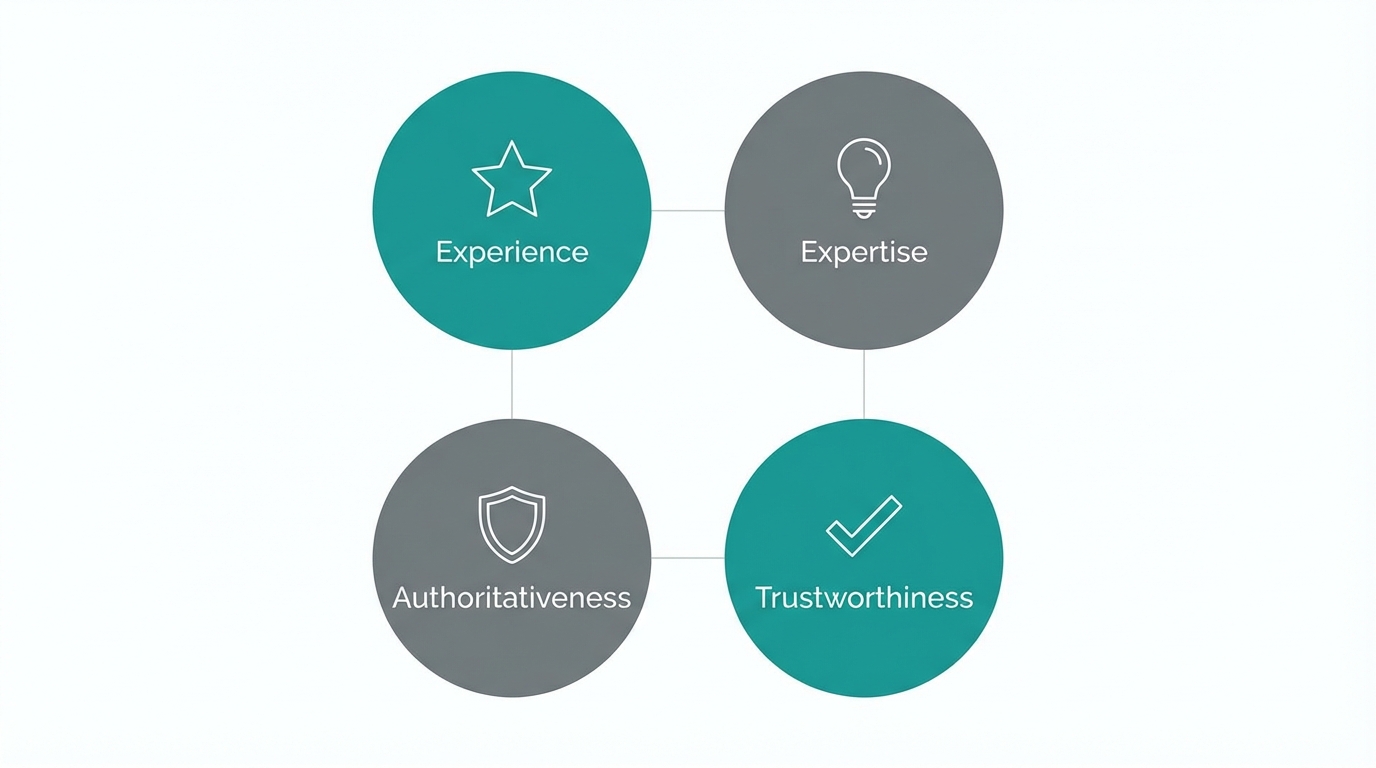
To prove human origin and high authority, follow this sequential playbook for every high-value page on your site. This is how you build a resilient EEAT content strategy.
Step 1: The Inverted Pyramid Answer
Place a direct, 40–60 word answer to the primary search query at the very top of your article. This "Inverted Pyramid" structure maximizes the chance of your content being pulled into AI Overviews and featured snippets.
Step 2: Entity-First Topic Clustering
Instead of keyword stuffing, build "Topic Clusters" of 15–20 related subtopics. This helps AI identify your site as a "topical authority" for an entire entity, such as "SaaS Growth," rather than just a single page. This is a core component of how to rank in AI search because LLMs look for semantic relationships between concepts.
Step 3: Experience Attribution
Explicitly state the "who" and "how" behind the content. Use author bios that link to LinkedIn profiles and mention specific years of experience. Content that lacks a verifiable human expert will be treated as AI slop. High-authority brands like Contently emphasize that the "Experience" in E-E-A-T is the only thing AI cannot simulate effectively.
"AI will not replace SEO; it will transform it into a more sophisticated, intent-based matching system that rewards authentic human expertise."Case Studies: Gymshark and Spotify’s Authority Loops
Success in 2026 requires creating "Authority Loops" where users generate the content for you, creating massive information gain. Gymshark is a master of this. By using a micro-influencer strategy on TikTok, they created the #Gymshark66 challenge. This generated millions of views of unique, human-led content that search engines and AI models now use as the "source of truth" for fitness community engagement. They didn't just write about fitness; they became the entity that fitness creators reference.
Similarly, Spotify uses its "Spotify Wrapped" campaign to turn user data into viral, organic shareable content. This strategy creates massive information gain across the web as thousands of unique screenshots and data points are shared, creating a feedback loop that reduces acquisition costs and cements their brand authority in the music space.

For brands looking to replicate this, using an AI-powered influencer platform like Stormy AI to discover and manage these creator relationships can automate the discovery of the "Experience" data that fuels these loops.
Essential Tools for AEO and Information Gain
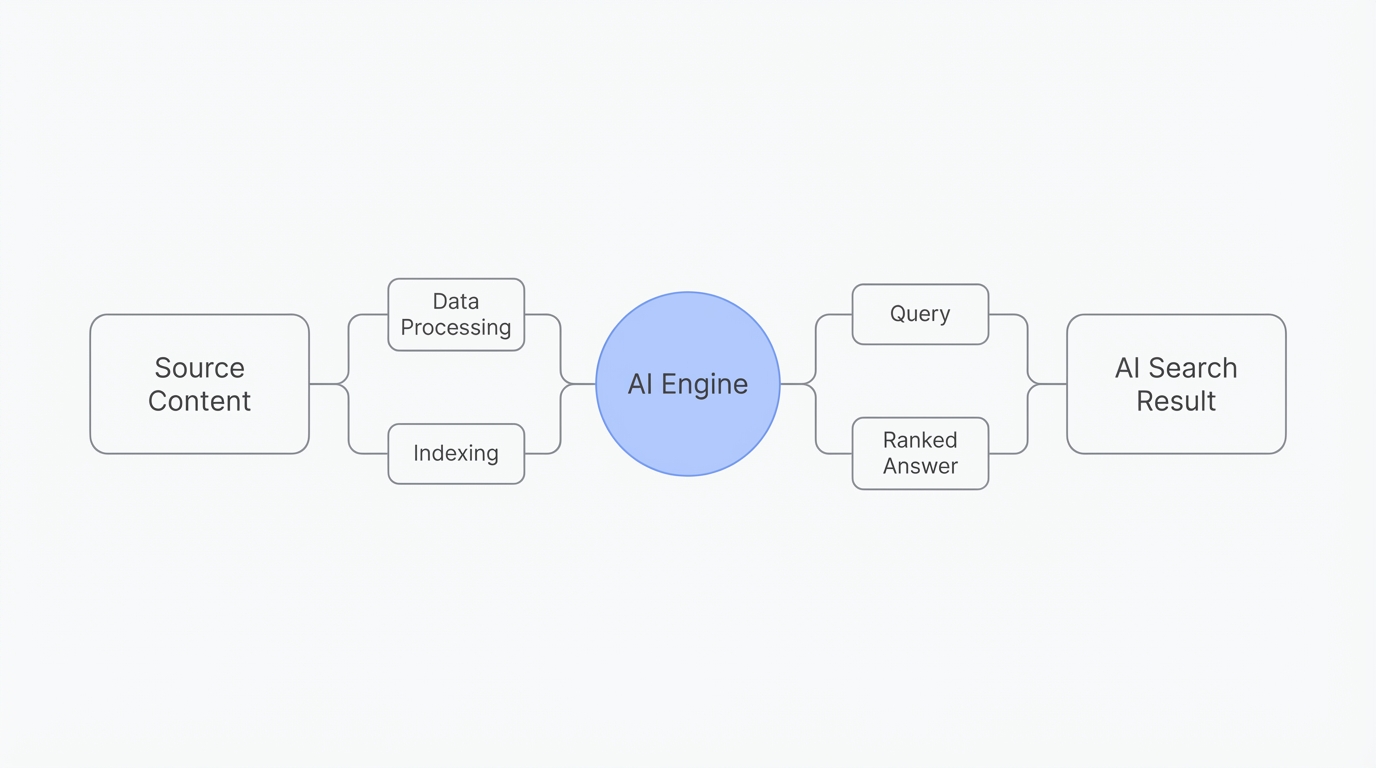
To stay ahead of the curve, you must measure your visibility not just in Google Search Console, but in the "Citation Economy." Use these tools to track your progress:
- Perplexity AI: Use it to test how AI recommends your brand for specific queries. Perplexity is a bellwether for AI search behavior.
- Relixir: This platform allows for autonomous AEO execution and citation tracking, ensuring your content is optimized for LLM consumption.
- Semrush AI Visibility Toolkit: Essential for measuring brand presence in AI overviews and understanding which of your pages are being used as sources.
- DataSlayer: For advanced marketers, DataSlayer helps bridge the gap between diverse data sources to identify content gaps.
The Future of High-Authority Content
As we move toward 2026, the brands that win will be those that stop acting like publishers and start acting like sources. Information gain is no longer an "extra" SEO tactic; it is the foundation of digital survival. By focusing on primary data, human experience, and Zero-Click Brand Anchoring, you can ensure your brand remains a canonical authority in an AI-driven world. Don't contribute to the AI slop—be the source the AI is forced to cite.