Beyond ACoS: Tracking SKU-Level EBITDA with Stackline Amazon Analytics in 2026
Master SKU-level EBITDA tracking in 2026. Learn how to use Stackline Amazon analytics and AMC to drive bottom-line profitability and reduce aged inventory costs.
In 2026, top-line revenue is no longer the metric that defines a successful Amazon brand. With Amazon marketplace sales hitting record highs and ad spend soaring to over $68.5 billion annually, the "Amazon Tax" has become too heavy for brands to ignore. The era of focusing solely on Advertising Cost of Sales (ACoS) is over. To survive, DTC operators must pivot toward SKU-level EBITDA tracking—a granular view of profitability that accounts for every hidden fee, shipping surcharge, and manufacturing cost.
The complexity of the modern back office means that static dashboards are no longer enough. While Stackline provides the enterprise-level intelligence needed to see the market, an AI ecommerce employee like Stormy AI handles the messy execution, pulling arbitrary CSVs from Amazon Seller Central and ad platforms to keep your profitability spreadsheets updated in real-time. This guide explores how to leverage 2026's most advanced analytics to move from vanity metrics to bottom-line mastery.
The Death of ACoS-Only Marketing
For years, ACoS was the gold standard. But as Amazon's ecosystem has evolved, a low ACoS can actually mask a dying product. If your ad spend is efficient but your FBA storage fees are spiking and your manufacturing COGS have risen 12%, you might be losing money on every unit sold. In 2026, the 100,000+ sellers generating over $1 million in annual revenue are shifting their focus to Total Advertising Cost of Inventory (TACOI) and net EBITDA.
"The competitive advantage in 2026 has shifted from who has the most data to whose team can execute on it with the most precision." — Daniel McIntosh, VP Customer Success, Profitero
Achieving this precision requires integrating over 40 different Amazon fee types. This includes everything from referral fees and FBA fulfillment costs to more obscure items like high-volume listing fees and return processing charges. Relying on manual exports is a recipe for error; instead, brands are using Stormy AI to monitor these fees daily and flag any SKU where the net margin drops below a defined threshold.
Stackline vs. Pacvue: The 2026 Landscape
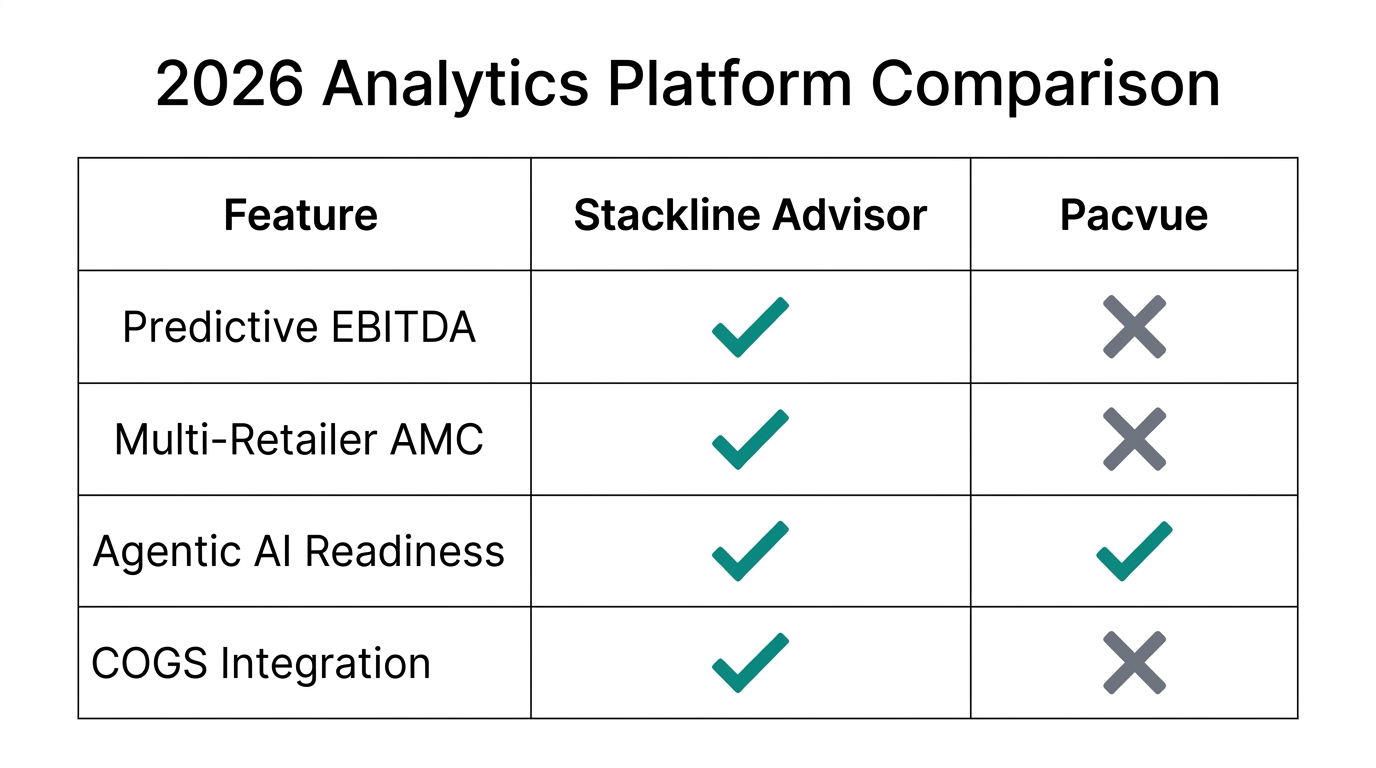
Choosing the right analytics partner is critical. In early 2026, we've seen a significant shift in the market. Many high-spend sellers have initiated what is being called the "Pacvue Exodus," moving away from percentage-of-spend pricing models that compress margins. Stackline has capitalized on this by doubling down on Agentic Commerce and AI-driven visibility.
| Feature | Stackline | Pacvue | Perpetua | Intentwise |
|---|---|---|---|---|
| Ideal User | Enterprise (CMO level) | Mid-to-Large Brands | Growth-Stage Brands | Data-Savvy Analysts |
| AI Support | Advisor AI (Conversational) | Rule-based Automation | AI-driven "Always On" | Custom Dashboards |
| Omnichannel | Full (AMZ, WM, Target, Kroger) | High (AMZ, Walmart) | Limited | Medium |
| Pricing Model | Custom / Enterprise | % of Spend | Tiered / % of Spend | Flat Fee |
While Stackline's revenue has grown to nearly $110 million, it remains a tool for those who need deep market intelligence. If you are managing 50+ SKUs across multiple retailers, the ability to run quarterly profit simulations and price elasticity models inside Stackline Advisor is indispensable. For those just starting, Helium 10 or SmartScout offer more accessible entry points for granular keyword tracking.
Integrating Manufacturing COGS into EBITDA
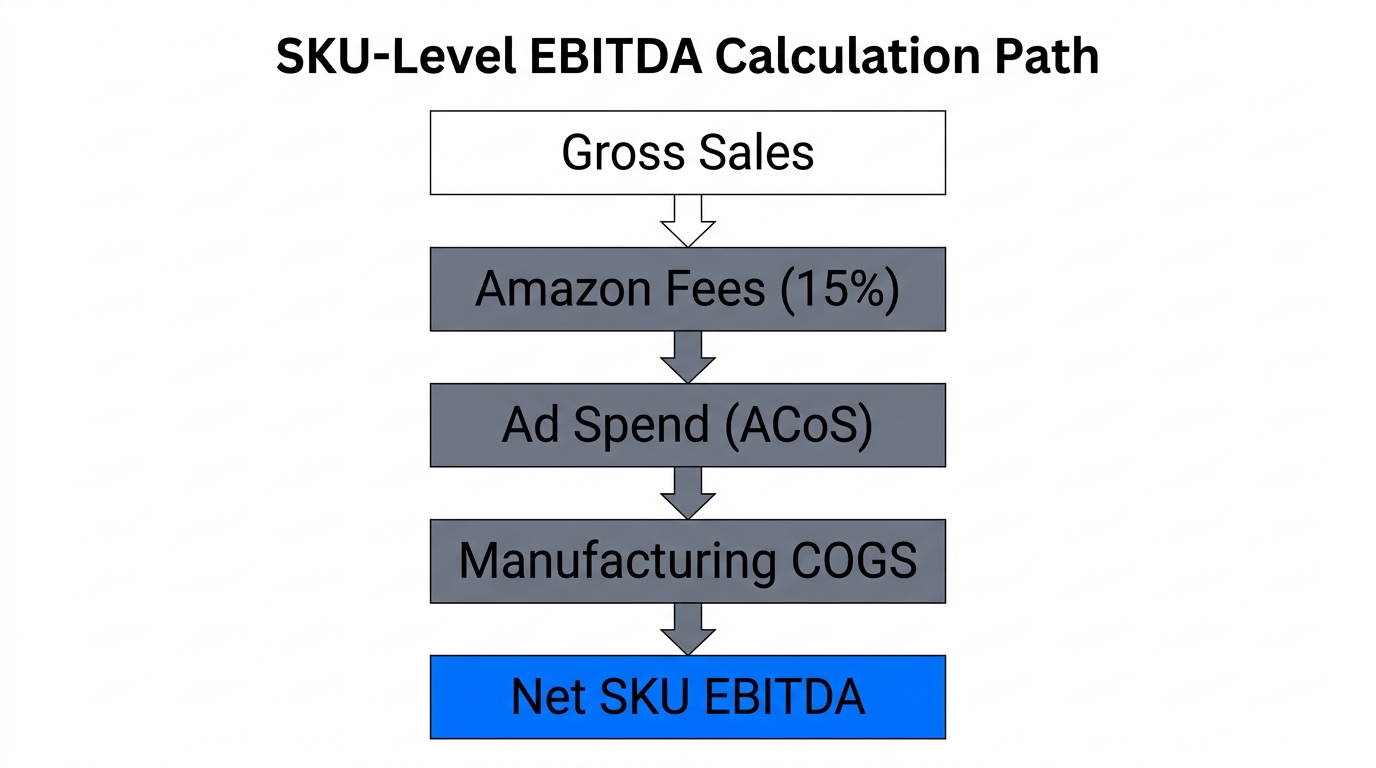
The biggest hurdle to true EBITDA tracking is the data silo between your factory invoices and Amazon's Seller Central. To bridge this, practitioners use a multi-step integration strategy. Stackline’s Beacon module allows you to map internal manufacturing COGS directly to Amazon SKUs, but the manual data entry remains a bottleneck.
This is where Stormy AI excels as your AI ecommerce employee. You can ask Stormy to "import the latest production CSV from our supplier in Shenzhen, update the COGS column in our Stackline workbook, and alert the team if any SKU's landed cost has increased by more than 5%." This ensures your profit simulations are based on real-world costs, not outdated estimates.
How-To Tutorial: Profit Simulations with Stackline Advisor
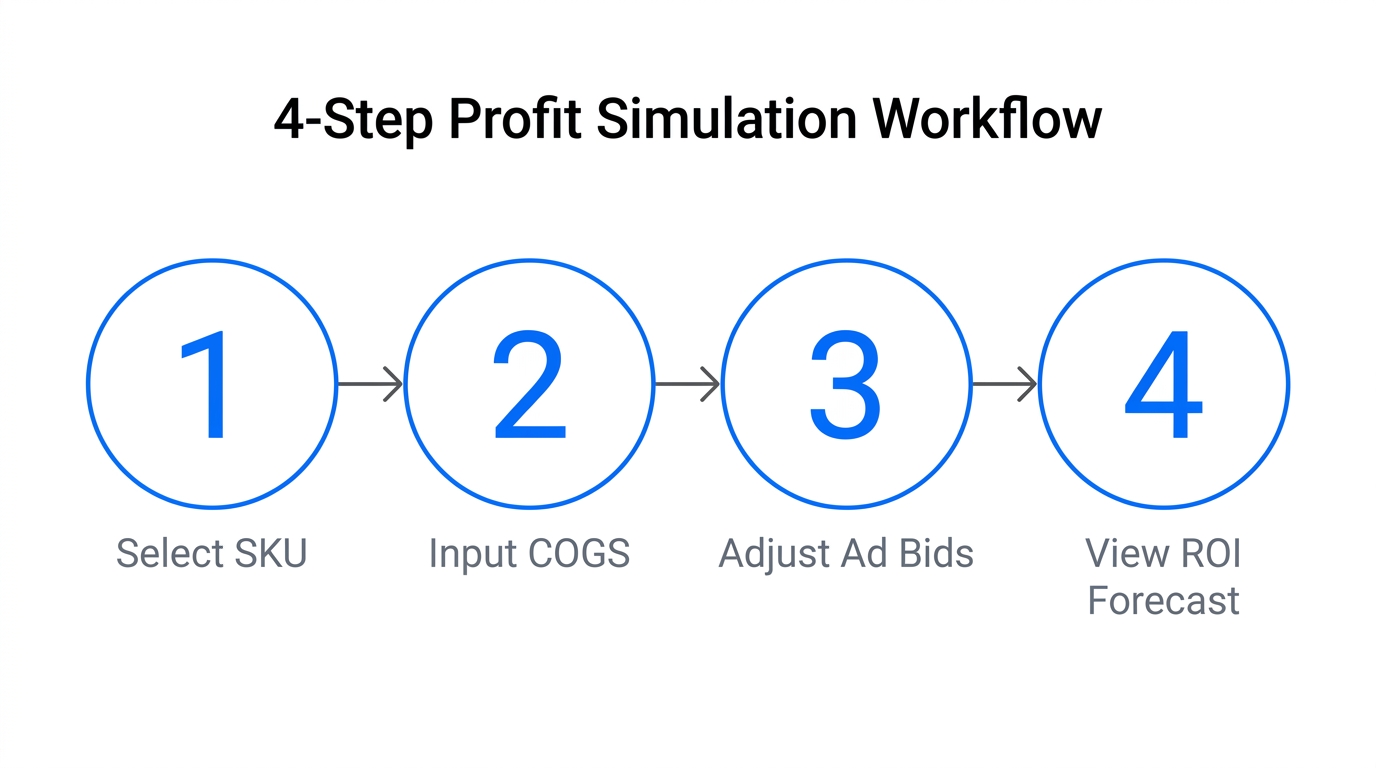
Stackline Advisor, launched in early 2026, has replaced static reporting with conversational intelligence. It allows operators to generate boardroom-ready presentations in under five minutes. Here is the playbook for running a quarterly profit simulation:
Step 1: Account Initiation & Mapping
Connect your APIs for Amazon Seller Central, Walmart, and Target. Ensure all SKUs are mapped to their corresponding manufacturing data using the REST or GraphQL endpoints. If you’re using Stormy AI, it can automatically check for "Buy Box" status and featured offer rates, ensuring your simulations account for periods of lost sales.
Step 2: Define the Scenario
Use the Advisor AI to run a "Scenario Model." Instead of clicking through filters, you can type a natural language prompt: "What is the impact on SKU-level EBITDA if we increase our price for the Collagen Peptides SKU by 8% but lose 12% in unit volume?"
Step 3: Analyze the Output
The system will cross-reference historical data, competitor price moves, and current ad spend to give you a projected net profit. Brands like Deoleo (Carapelli) used these insights to expand their unit share from 0.75% to 3.1% by making precise weekly adjustments rather than reactive monthly pivots.
"Stackline gives us the agility to defend market share with precision, turning complex data into weekly actionable sprints." — Raquel Cuesta Lopez, Head of Ecommerce, Deoleo
Multi-Retailer Attribution (MRA) via Amazon Marketing Cloud
One of the most powerful 2026 trends is Multi-Retailer Attribution (MRA). Brands often struggle to justify high Amazon DSP spend because they only see the sales happening on Amazon. However, the expansion of MRA tools now allows you to use Amazon Marketing Cloud (AMC) data to prove that your Amazon ads are driving sales at Kroger, Target, and Walmart.
For example, the supplement brand Olly found that customers who were initially exposed to Amazon ads had a 34% higher Lifetime Value (LTV) across all channels. This level of attribution allows CMOs to stop viewing Amazon as a silo and start treating it as the top-of-funnel engine for the entire retail stack. Stormy AI can sit on top of this data, pulling the weekly AMC reports and summarizing the omnichannel impact for your leadership team, saving hours of manual data crunching.
Reducing Aged Inventory with Predictive Analytics
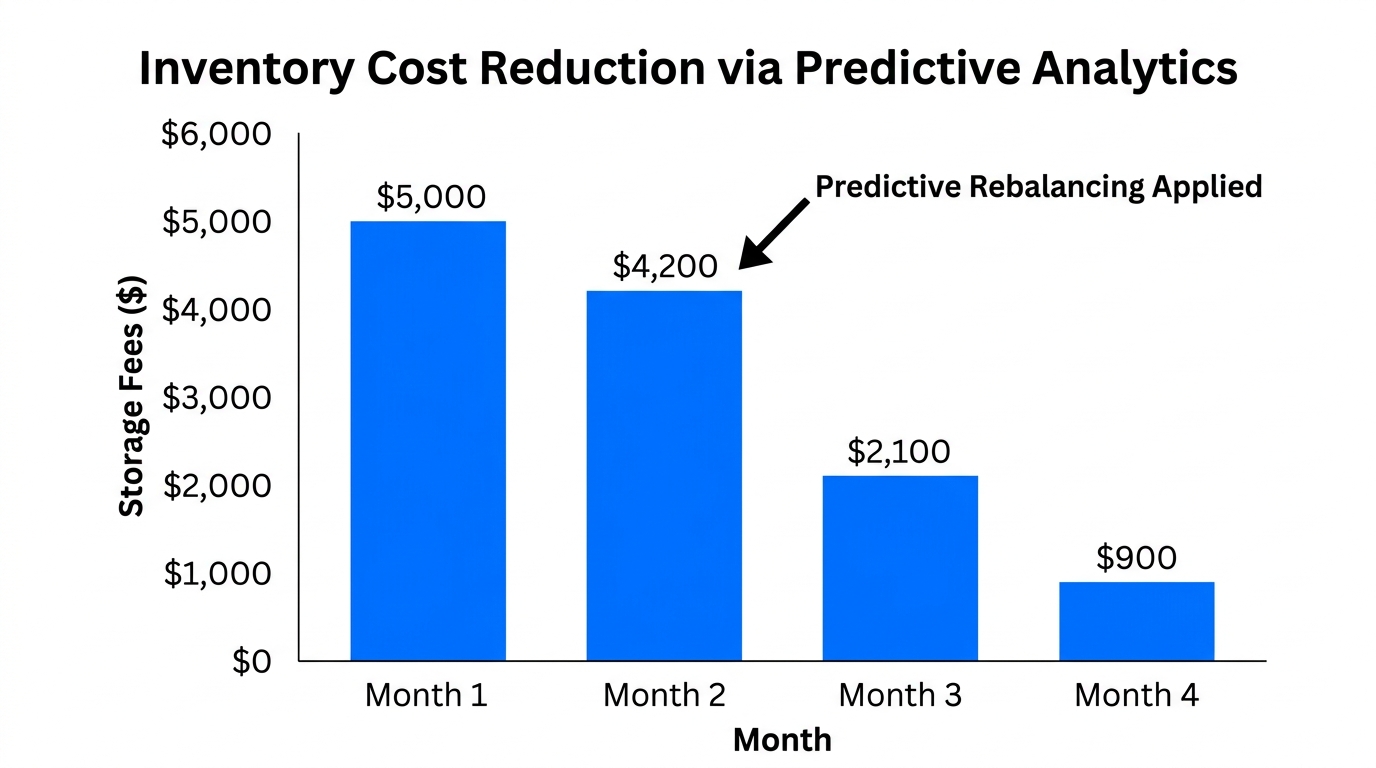
Dead stock is the silent killer of EBITDA. FBA storage fees in 2026 are punitive, especially for "Aged Inventory" (items in-stock for over 180 days). By using predictive analytics, top sellers are flagging slow-moving SKUs six weeks in advance.
A recent case study showed that early flagging allowed a brand to implement "promotional pivots"—shifting ad budgets toward slow-moving items while they still had 89% margins—rather than waiting until they had to liquidate at 40%. This proactive approach resulted in an $18,000 monthly reduction in storage costs. To automate this, you can instruct Stormy AI to monitor inventory levels daily and automatically create a reorder task or a promotion task the moment a SKU's velocity falls below its 30-day average.
Optimizing for Agentic Commerce and Amazon Rufus
As of January 2026, visibility on Amazon has shifted from traditional SEO to AEO (Agentic Engine Optimization). Shoppers are increasingly using Amazon Rufus and ChatGPT to find products. Stackline’s AI Visibility tool measures "Question-Level Intelligence," showing how often your brand is cited in AI-generated shopping answers.
- Map Intent: Identify the top 50 questions shoppers ask (e.g., "What is the best eco-friendly pre-workout?").
- Audit Rank: Check if Rufus recommends your brand or a competitor.
- Content Injection: Update your A+ Content with natural language phrases to ensure AI agents index your product accurately.
While you focus on the creative strategy, Stormy AI handles the background checks—monitoring your listing status, catching suppressed images, and flagging whenever a competitor starts outranking you in AI recommendations.
Conclusion: Building Your 2026 Profit Engine
Moving beyond ACoS isn't just about better software; it's about a fundamental shift in how you view your ecommerce operations. By integrating 40+ fee types into a SKU-level EBITDA dashboard, leveraging Stackline's predictive analytics, and using AMC for multi-retailer attribution, you can ensure that every dollar spent on ads translates into bottom-line profit.
But the most successful brands of 2026 aren't just using these tools—they are automating the boring parts. Stormy AI acts as the teammate that keeps the operation running, watching the messy back office and escalating only when a human decision is needed. Whether it’s following up with a supplier on a late shipment or flagging an underperforming ad campaign, an AI ecommerce employee allows you to focus on the "idea" while the machine handles the execution.