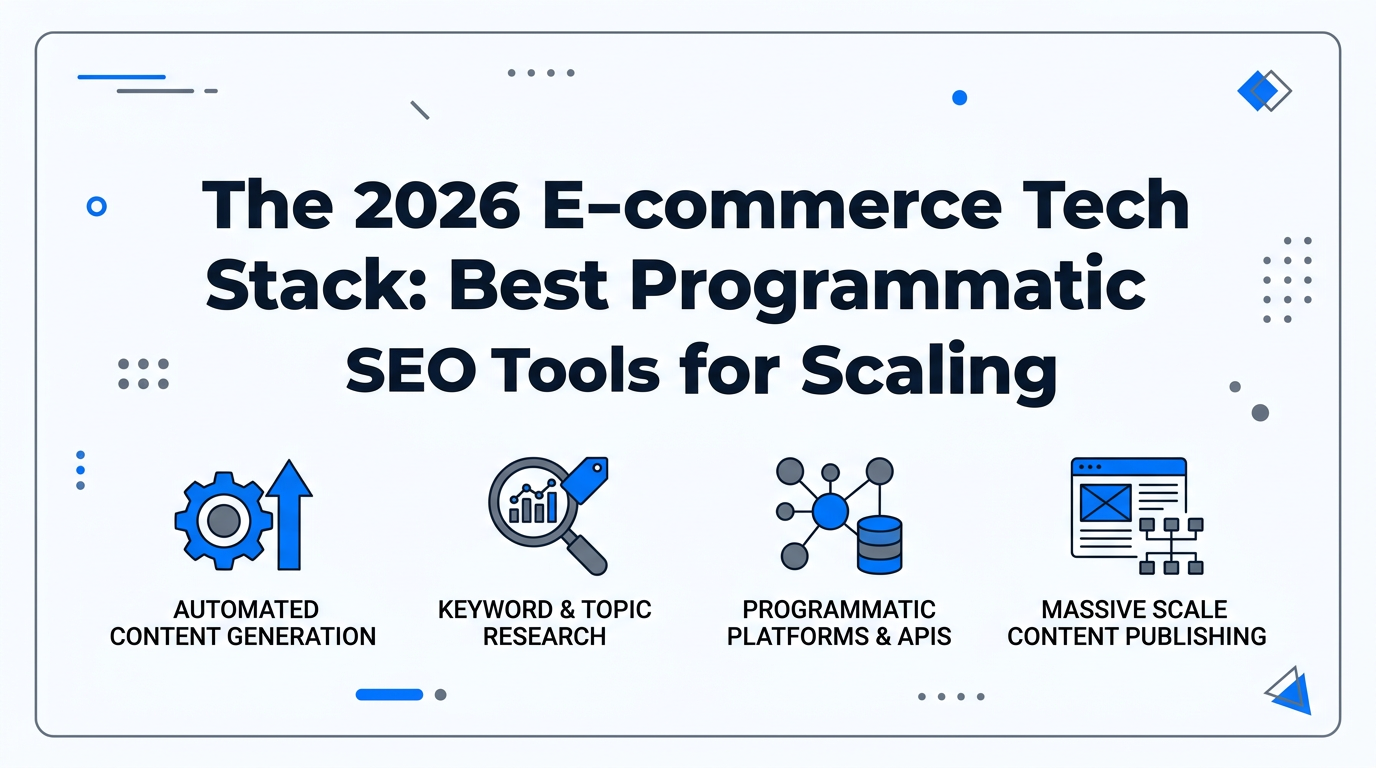
In 2026, the landscape of organic growth has shifted from manual content creation to high-fidelity, automated engines. E-commerce brands that successfully implement programmatic SEO (pSEO) are no longer just building pages; they are building data-driven utilities that serve specific user intents at a massive scale. According to recent performance data from Stormy AI, brands leveraging modern pSEO stacks report an average 30%–80% surge in organic traffic and a significant boost in conversion rates within months. However, the stakes are higher than ever: as search engines evolve into generative engines, the quality and uniqueness of your data determine whether you rank or disappear into the "traffic cliff" that claims 1 in 3 pSEO implementations.
The Foundation: pSEO Data Management and the "Source of Truth"
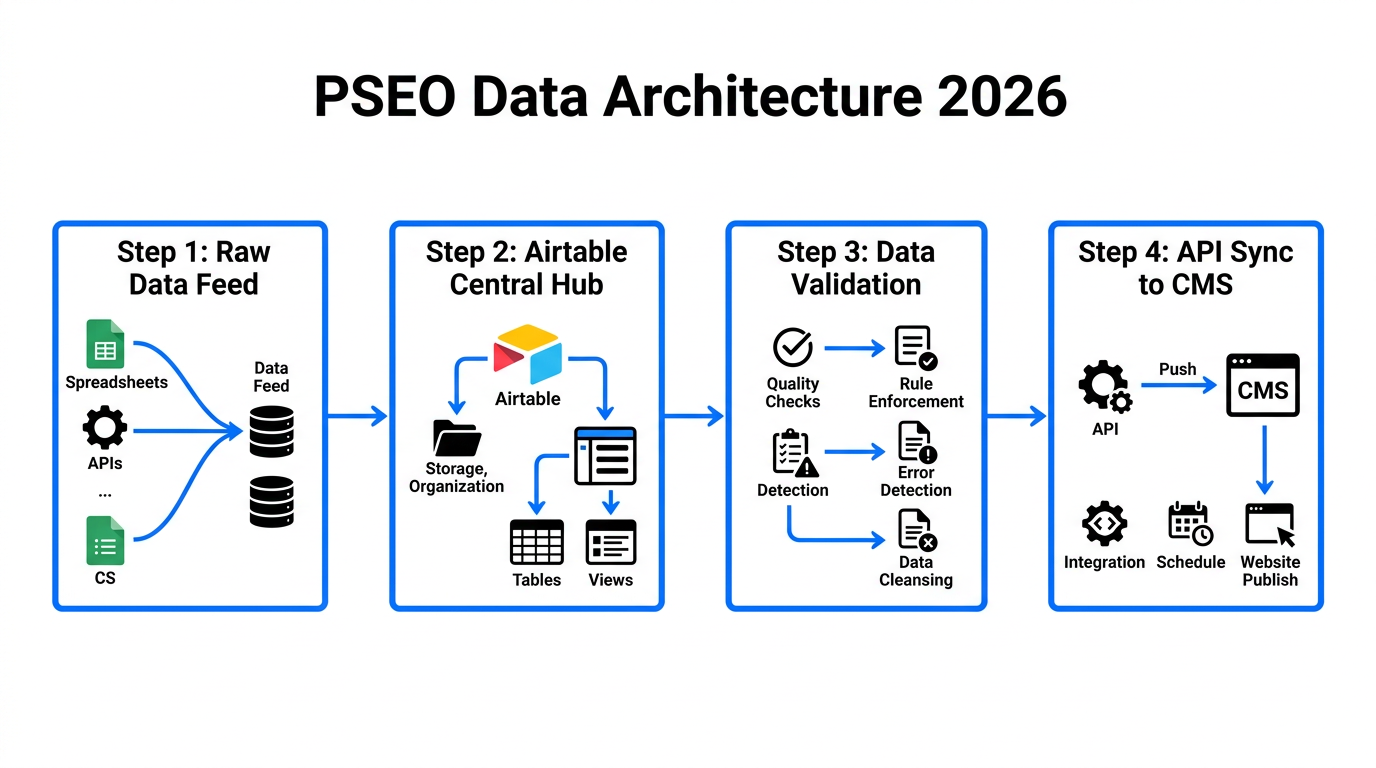
The core of any programmatic strategy is the data that powers it. In 2026, we have moved past messy CSV files. High-growth e-commerce teams now use relational databases to manage SKUs, features, and pricing dynamically. Airtable has become the industry standard for this "source of truth," allowing marketers to build complex relationships between products, categories, and use cases without needing a backend engineer.
To take data management a step further, tools like Clay are being used to enrich product data. For example, if you are selling fitness equipment, Clay can scrape the web to find specific user pain points or technical specifications that aren't in your manufacturer's manual. This enriched data is then fed into pSEO templates to create pages that aren't just "scaled," but genuinely helpful. As growth advisor Kevin Indig notes, the winning strategy in 2026 is "Automation in Insights"—using AI to mine forums like Reddit to understand customer problems and reflecting those solutions in your automated templates.
"The key to pSEO in 2026 isn't just creating more pages; it's creating the most cited pages for AI search agents through structured, relational data."
CMS-Specific Generation: Shopify Programmatic SEO vs. WooCommerce
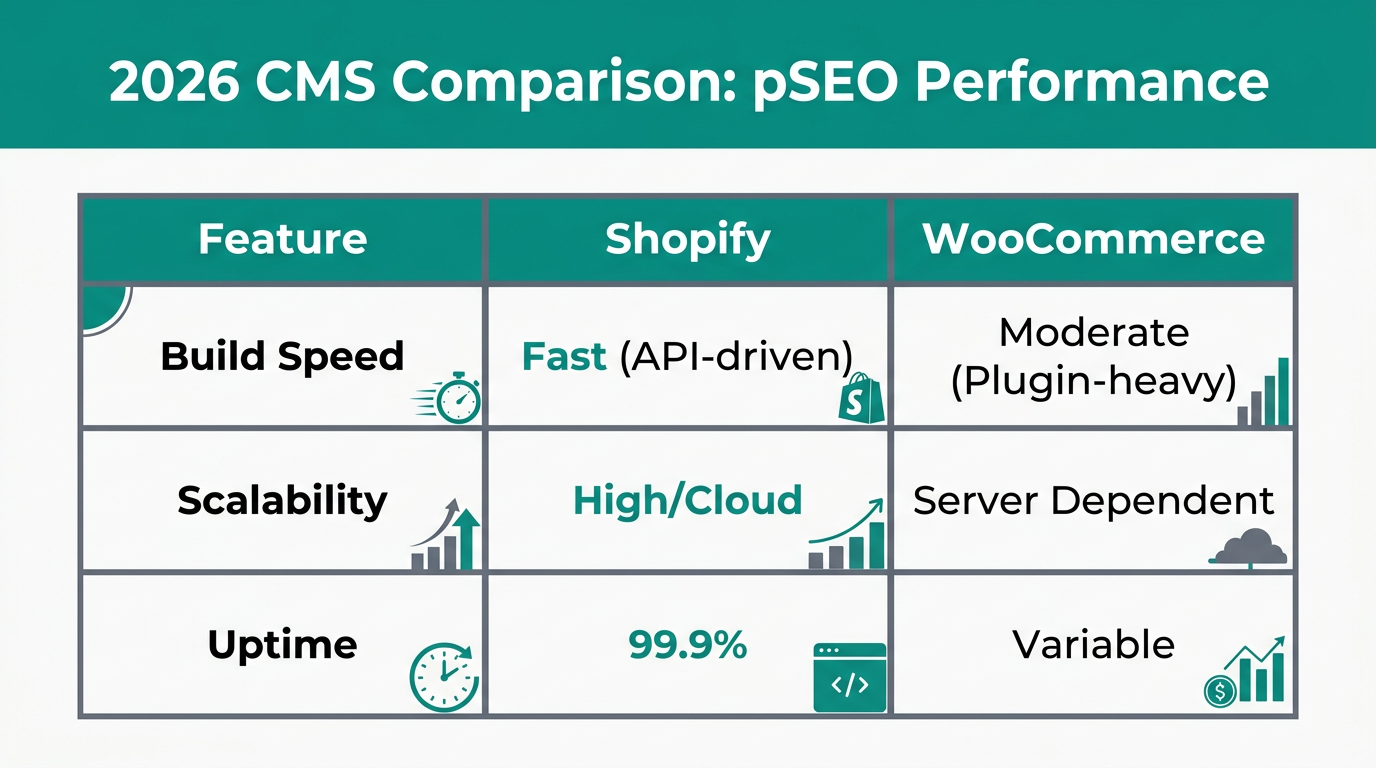
Choosing the right tool to turn your data into live pages depends heavily on your existing CMS. The 2026 e-commerce tech stack offers specialized plugins that handle the heavy lifting of URL routing and template rendering.
| Platform | Primary Tool | Best For | Key Advantage |
|---|---|---|---|
| Shopify | SEOmatic | D2C Brands | Instant indexing and seamless sync with Shopify Liquid templates. |
| WooCommerce | WP All Import | High-SKU Catalogs | Granular control over custom fields and complex XML/CSV logic. |
| Webflow | Whalesync | Visual-First Stores | Two-way sync between Airtable and Webflow CMS collections. |
For Shopify users, Shopify programmatic SEO has been revolutionized by apps like ConvertMate, which uses AI to optimize product descriptions at scale. Meanwhile, enterprise retailers often look toward solutions like Verbolia to create "vPages" that live outside the main site structure, ensuring that massive pSEO experiments don't compromise site speed or core database performance.
Visual Uniqueness: The Role of Dynamic Image Generation
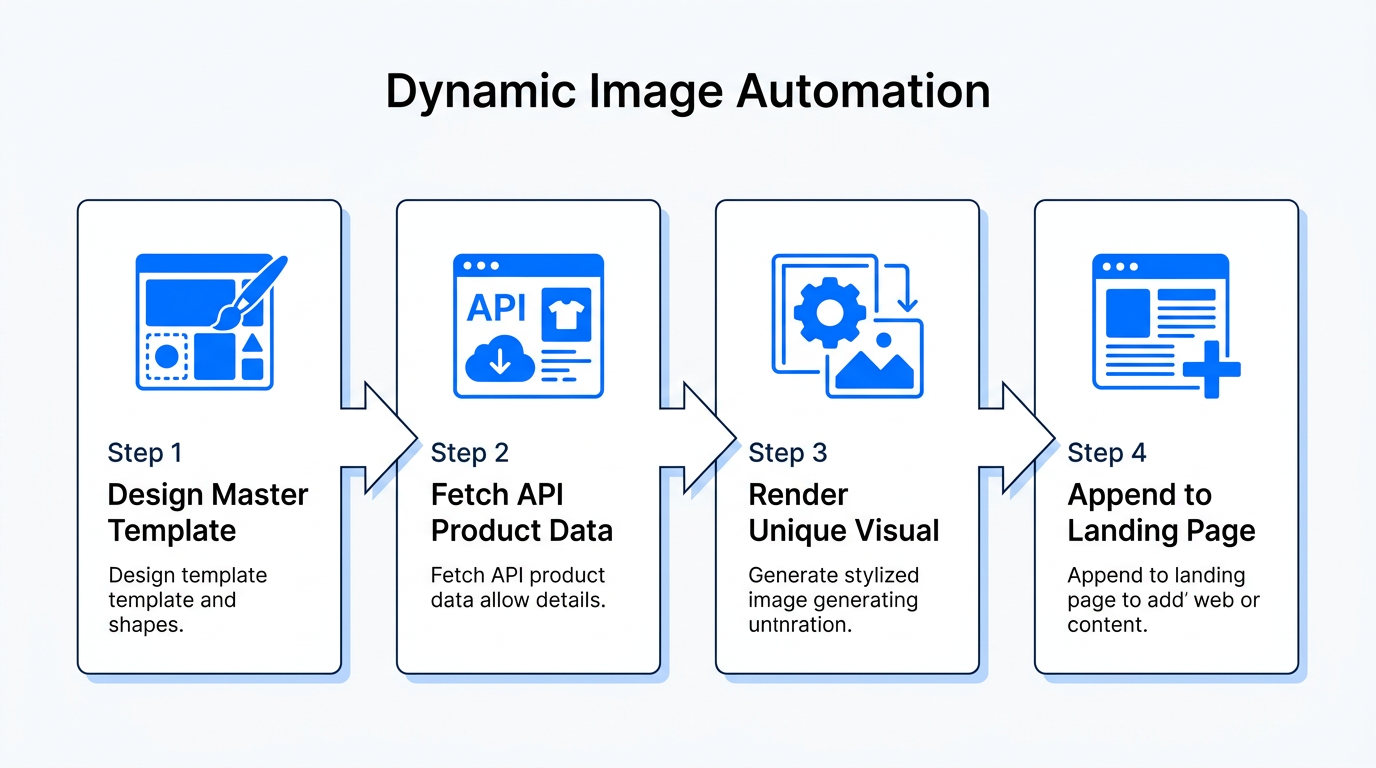
Google’s 2026 algorithms have placed a massive premium on visual uniqueness. Stock photos or the same manufacturer product shot across 5,000 pages will now trigger thin content flags. This is where dynamic image generation tools like Orshot become essential. By using APIs to generate unique product visuals—such as overlaying different background environments or adding specific technical callouts—brands can satisfy the search engine's demand for original assets.
Imagine a pSEO strategy targeting "best running shoes for [City Name]." Using Orshot, you can programmatically generate a hero image for each of the 500 targeted cities, featuring the product against a backdrop of that specific city's skyline. This level of localization and personalization is what separates elite e-commerce brands from the 1 in 3 pSEO implementations that suffer from a "traffic cliff" due to poor quality control, as noted by Passionfruit.
"In a world of generative AI, the uniqueness of your visual assets is the strongest signal of brand authority you can send to search engines."
High-Speed Content: Integrating Byword.ai and HITL Models
Content is still king, but the method of production has changed. Scaling 10,000 category pages manually is impossible; using raw LLM output is risky. The 2026 standard is a Human-in-the-Loop (HITL) model. Byword.ai has emerged as a leader in this space, offering high-speed content generation optimized for programmatic scaling.
Byword allows you to feed in your Airtable data and generate thousands of articles or product descriptions that follow strict brand guidelines. However, as Emina Demiri-Watson of Vixen Digital highlights, editorial oversight is required for the "last 20%" of quality. This prevents the creation of "slop" content that triggers helpful content penalties. Successful brands use AI to handle the heavy lifting of structural writing, then employ editors to add the "human voice" and community validation—often by integrating insights from Reddit or forums—which search engines now prioritize.
Real-Time Insights: Connecting DataForSEO APIs
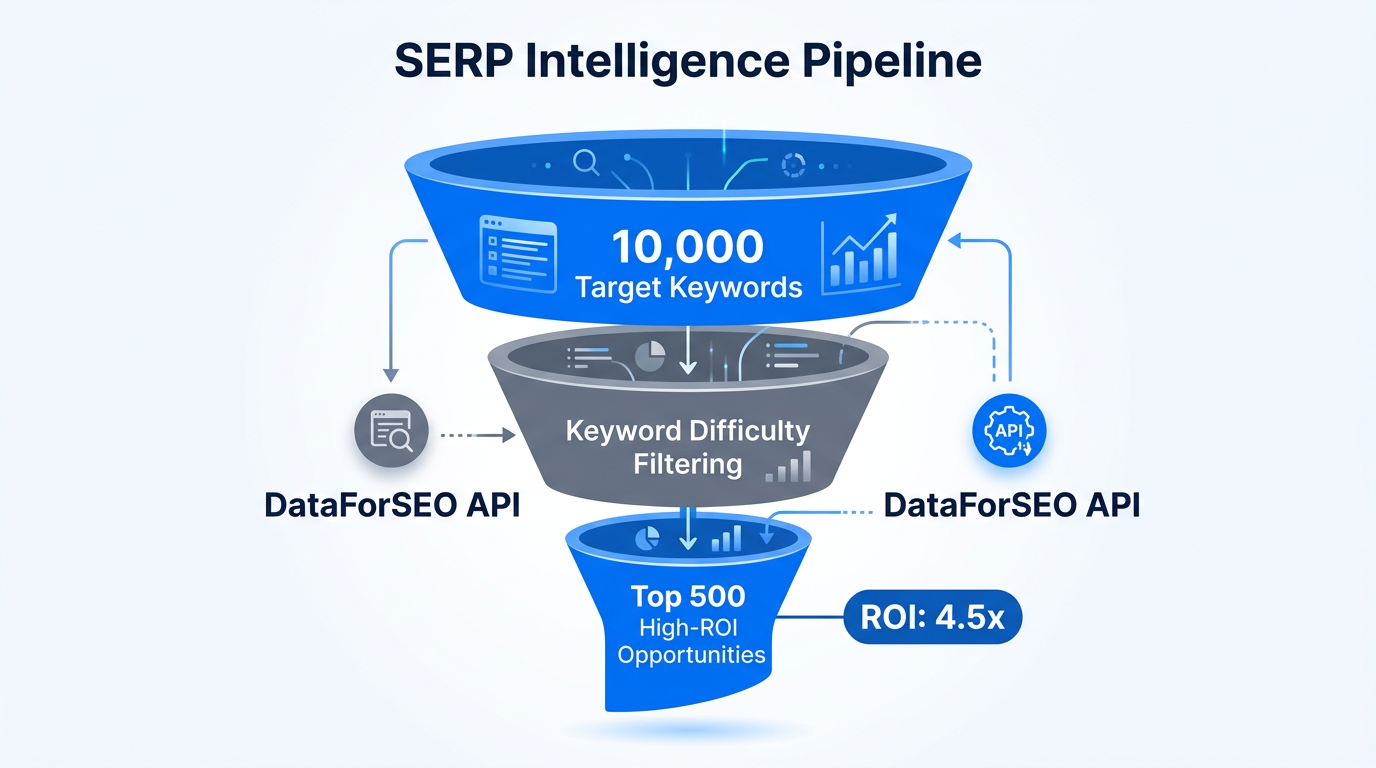
Static templates are a relic of the past. To stay competitive in 2026, your programmatic pages should react to the market. By integrating DataForSEO APIs directly into your pSEO templates, you can pull real-time SERP insights, competitor pricing, and search volume directly onto your pages.
For example, a "Price Comparison" programmatic page can use these APIs to update daily, ensuring your brand always shows the most current data. This turns a standard SEO page into a dynamic tool, which Eli Schwartz argues is the "Amazon gold standard" of pSEO architecture—where SEO is built into the product itself rather than being a separate content strategy.
Sourcing UGC for pSEO: The Growth Marketer's Secret Weapon
To truly differentiate programmatic pages, leading marketers are now embedding User-Generated Content (UGC) and creator reviews. When you have 1,000 landing pages, you need a scalable way to find and work with creators who can provide authentic testimonials. This is where platforms like Stormy AI come into play. By using Stormy's AI search engine, growth teams can instantly find fitness or lifestyle creators to produce short-form videos for specific product categories.
Managing these relationships at scale requires a robust Creator CRM. By integrating creator videos into your pSEO templates, you add a layer of social proof that AI-generated text cannot replicate. This combination of automated infrastructure and authentic human content is the winning formula for e-commerce in 2026.
Common Pitfalls and Your 2026 Playbook
Scaling with the best programmatic SEO tools is not without its risks. To avoid common errors, follow this simple playbook:
- Avoid Keyword Cannibalization: Ensure your templates don't create overlapping intent (e.g., "Blue Yoga Mats" vs "Yoga Mats in Blue").
- Manage Inventory Sync: If a product is out of stock, keep the page live but add an email capture and remove internal links. Use a 301 redirect only for permanently discontinued items to preserve backlink equity, as recommended by Yoast.
- Prioritize Page Speed: Use static site generators or tools like Next.js to ensure your 400,000 pages load instantly.
The 2026 e-commerce tech stack is defined by interconnectivity. By pairing Airtable for data, Byword for content, and Stormy AI for creator-led social proof, you can build an organic growth engine that doesn't just rank—it dominates. The future of SEO belongs to those who can automate the mundane while doubling down on the authentic.