Choosing the Best Influencer CRM 2026: A Growth Guide to GRIN, CreatorIQ, Aspire, Upfluence, and Favikon
Discover the best influencer CRM 2026 strategies. Compare GRIN, CreatorIQ, and Aspire to maximize influencer marketing ROI and scale your creator programs.
As we navigate through 2026, the landscape of digital growth has shifted permanently. Influencer marketing is no longer a peripheral experiment; it has matured into a $30+ billion market powerhouse where data-driven decisions outweigh gut feelings. For brands looking to scale, the search for the best influencer CRM 2026 is about finding more than just a contact list—it is about deploying a "Creator Operating System" that can predict revenue, automate logistics, and maintain brand safety at scale.
The 2026 Shift: From Databases to Creator Operating Systems
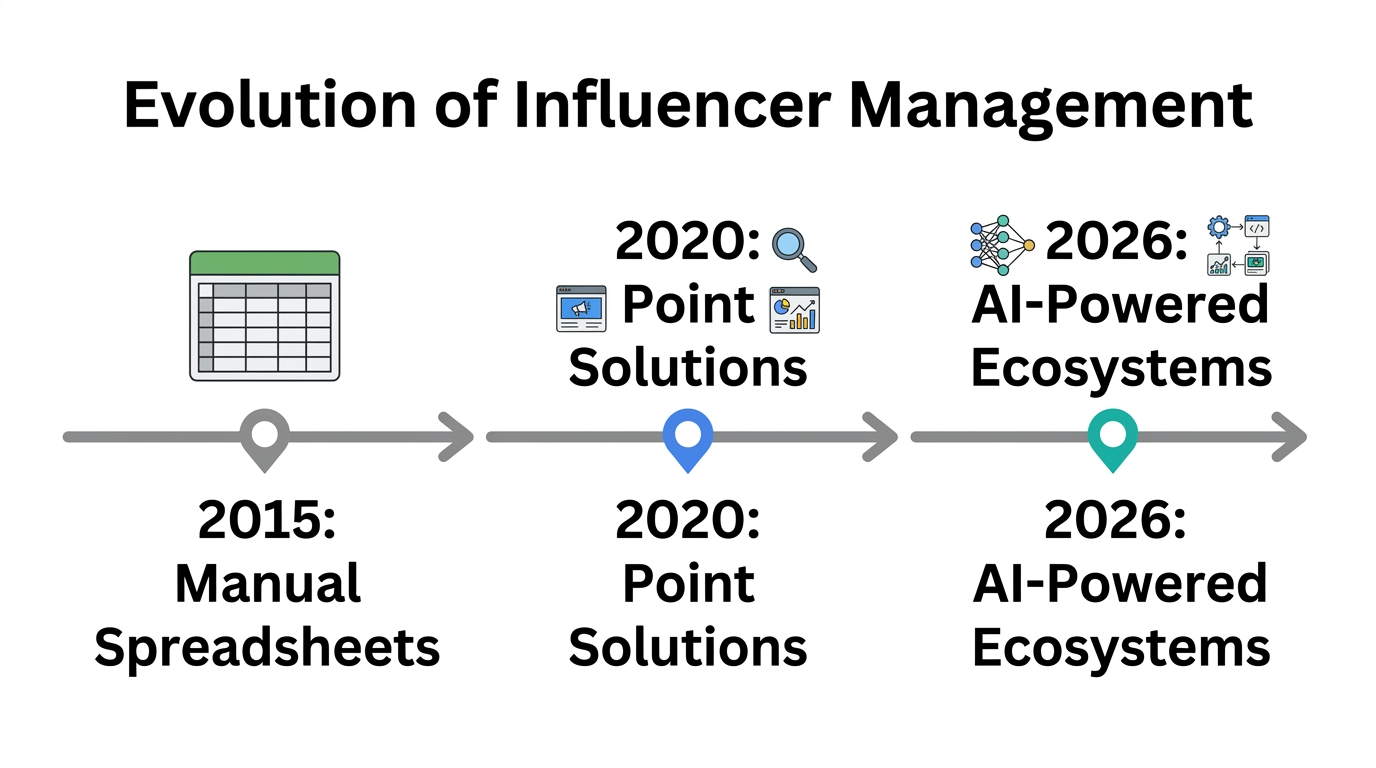
The current year has marked a definitive end to "vanity metric" marketing. According to the latest Influencer Marketing Hub report, 87% of brands plan to increase their influencer marketing budgets in 2026. However, that capital is being deployed with surgical precision. Marketers are no longer satisfied with likes; they are demanding Performance Accountability.

In fact, Impact.com research indicates that 74% of brands have transitioned their budgets into creator programs specifically measured by Customer Acquisition Cost (CAC) and Return on Ad Spend (ROAS). This shift has forced influencer tracking tools to evolve into comprehensive ecosystems that handle everything from discovery to automated payments.
"In 2026, the best influencer CRM isn't judged by how many names it contains, but by how accurately it predicts the revenue those names will generate."
Deep Dive: The Best Influencer CRM 2026 Contenders
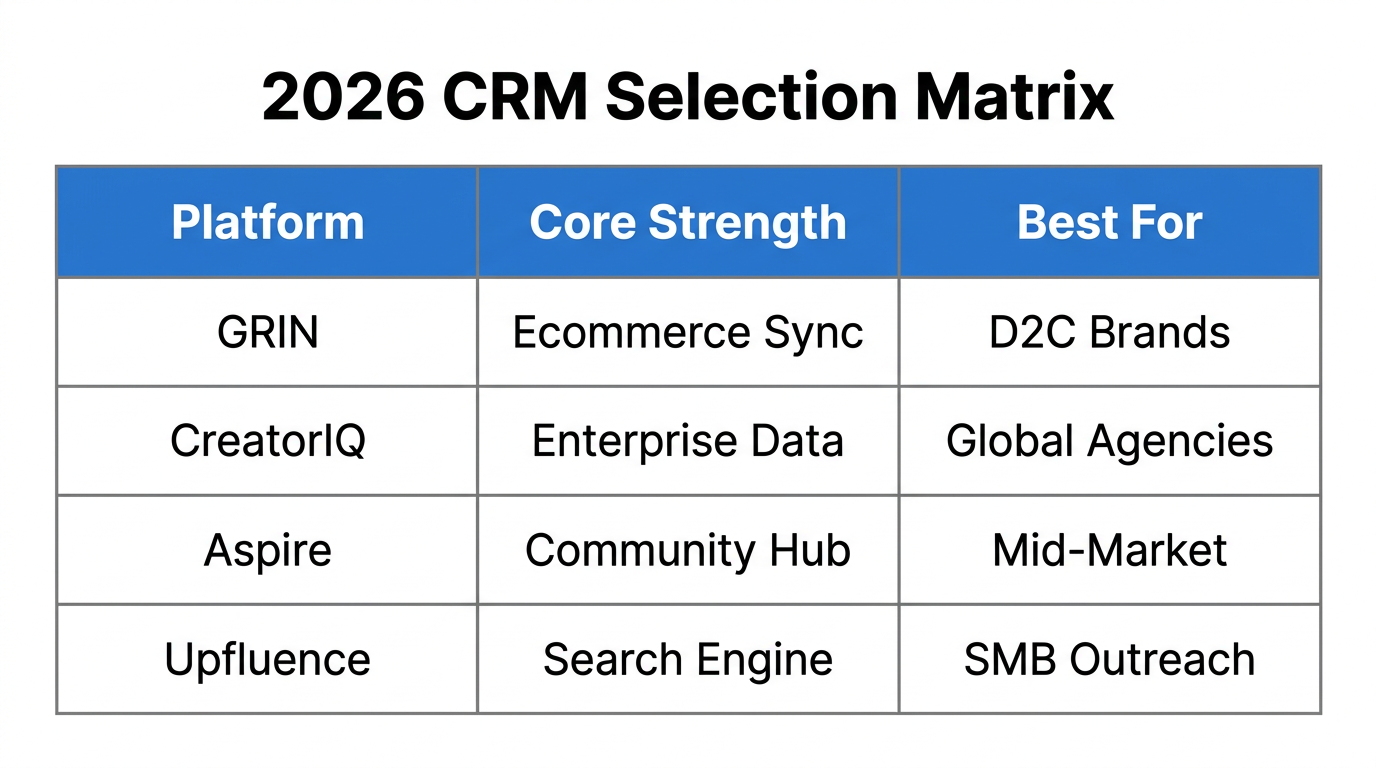
To choose the right influencer marketing ROI platform, you must align the tool's specific strengths with your business model. Here is how the top players stack up in the current market.
1. GRIN: The "Performance Engine" for DTC
GRIN remains the gold standard for high-growth e-commerce brands, particularly those utilizing Shopify. It functions as a private CRM that treats influencers like a dedicated sales force. Its 2026 standout is the Predictive ROI Engine, which uses historical data to forecast specific sales outcomes before you even send a contract. Brands like City Beauty have used GRIN to manage 3,000+ pieces of content annually, achieving a 200% ROI.
2. CreatorIQ: The "Enterprise Operating System"
For global giants like Nestlé or Sephora, CreatorIQ is the go-to for enterprise governance. Their SafeIQ 2.0 feature uses AI sentiment analysis to flag compliance risks in real-time across multiple markets. This level of oversight helped brands like Fabletics see a 30% reduction in Customer Acquisition Cost (CAC) through smarter, data-driven creator selection.
3. Aspire: The "Community Hub"
Aspire has pioneered the "inbound" influencer model. It focuses on turning existing fans into brand ambassadors. Their most powerful 2026 workflow is the AI UGC-to-Ad Pipeline, which allows marketers to instantly whitelist high-performing organic content and push it into Meta Ads Manager or TikTok Ads Manager.
4. Upfluence: The "Ecommerce Specialist"
What sets Upfluence apart is its ability to scan your own customer database to find "influential customers." This allows brands to build an affiliate force from people who already love their products. Their "Live Capture" tool even identifies influencers as they browse your BigCommerce or Shopify site in real-time.
5. Favikon: The "B2B & LinkedIn Powerhouse"
While most platforms focus on Instagram and TikTok, Favikon has dominated the B2B sector. Their Authority Scoring algorithm ranks B2B creators on LinkedIn by niche expertise rather than just follower counts, making it essential for SaaS brands targeting decision-makers.
| Platform | Primary Strength | Ideal User | Winning Feature 2026 |
|---|---|---|---|
| GRIN | Sales/DTC Focus | E-commerce Scaling | Predictive ROI Forecasting |
| CreatorIQ | Global Governance | Enterprise/Fortune 500 | SafeIQ Risk Mitigation |
| Aspire | UGC to Paid Ads | Lifestyle Brands | Automated Ad Whitelisting |
| Favikon | B2B LinkedIn Authority | SaaS & Tech | Expertise Ranking Scores |
Maximizing Influencer Marketing ROI in 2026
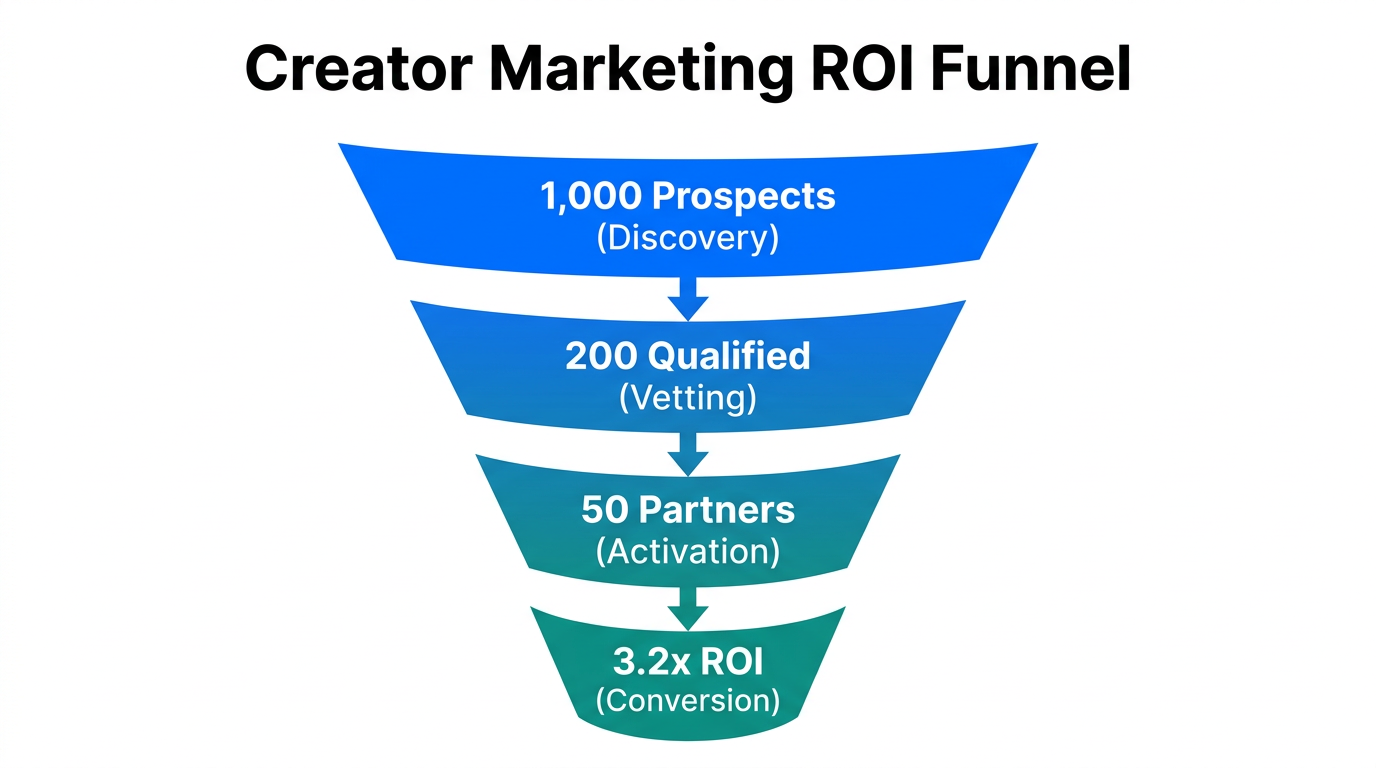
Buying the software is only half the battle; the strategy you deploy within your creator management software for brands dictates the final ROAS. Leading experts at Social Media Today now advocate for a Hybrid Compensation Model. This involves paying a base fee for content creation plus a 10-15% commission on sales. This aligns the creator’s incentives with the brand's growth goals, effectively lowering the overall CAC.
Another dominant strategy is the Creator-Led Paid Ad approach. Instead of creating high-production brand ads, marketers use their CRM to identify which organic creator posts are gaining the most traction. By boosting these posts via TikTok Ads Manager, brands have reported increasing ROAS by up to 5x compared to traditional creative.
"Modern growth is built on authenticity. In 2026, a creator's raw testimonial outperforms a $100k studio commercial every single time."
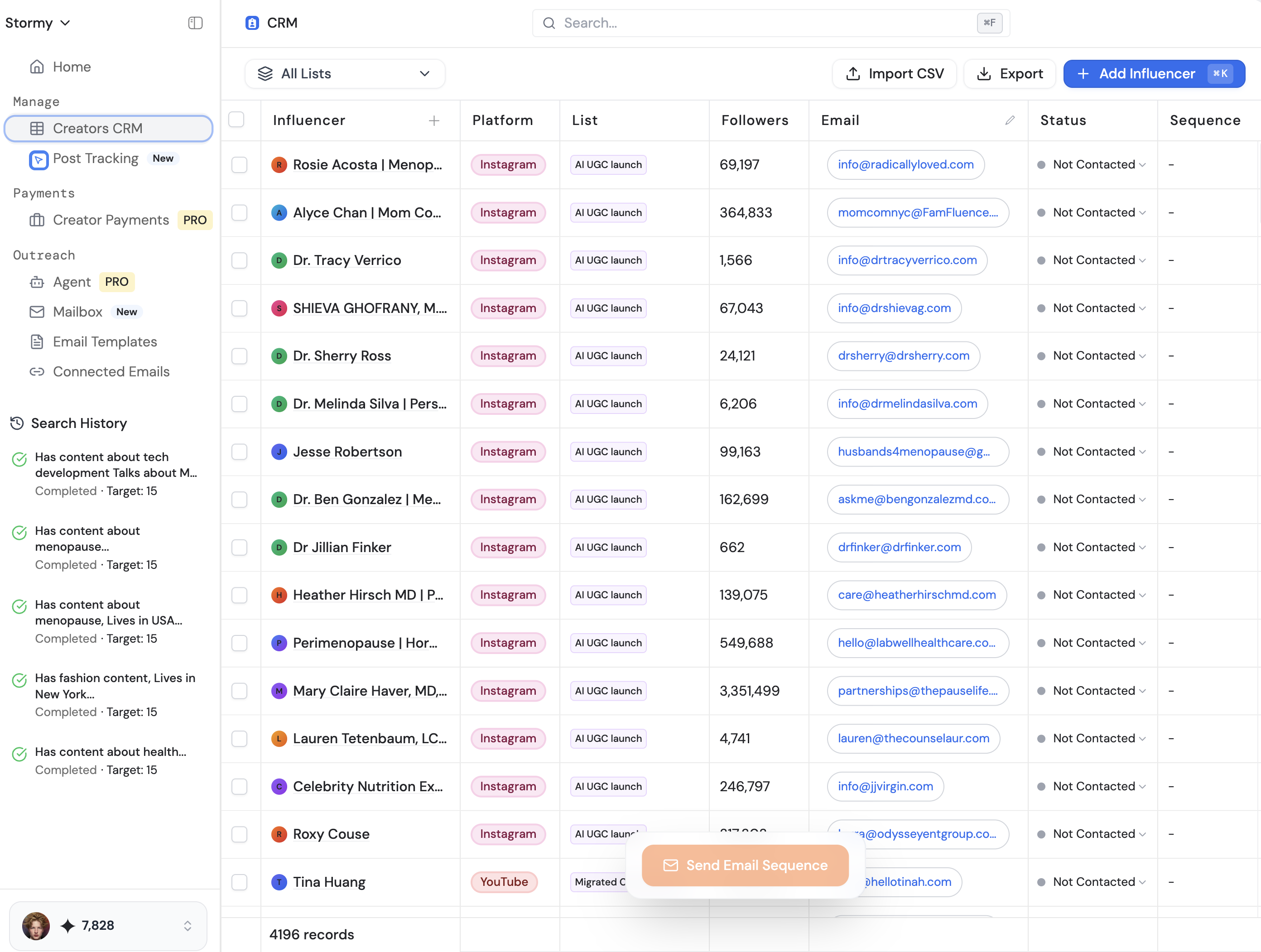
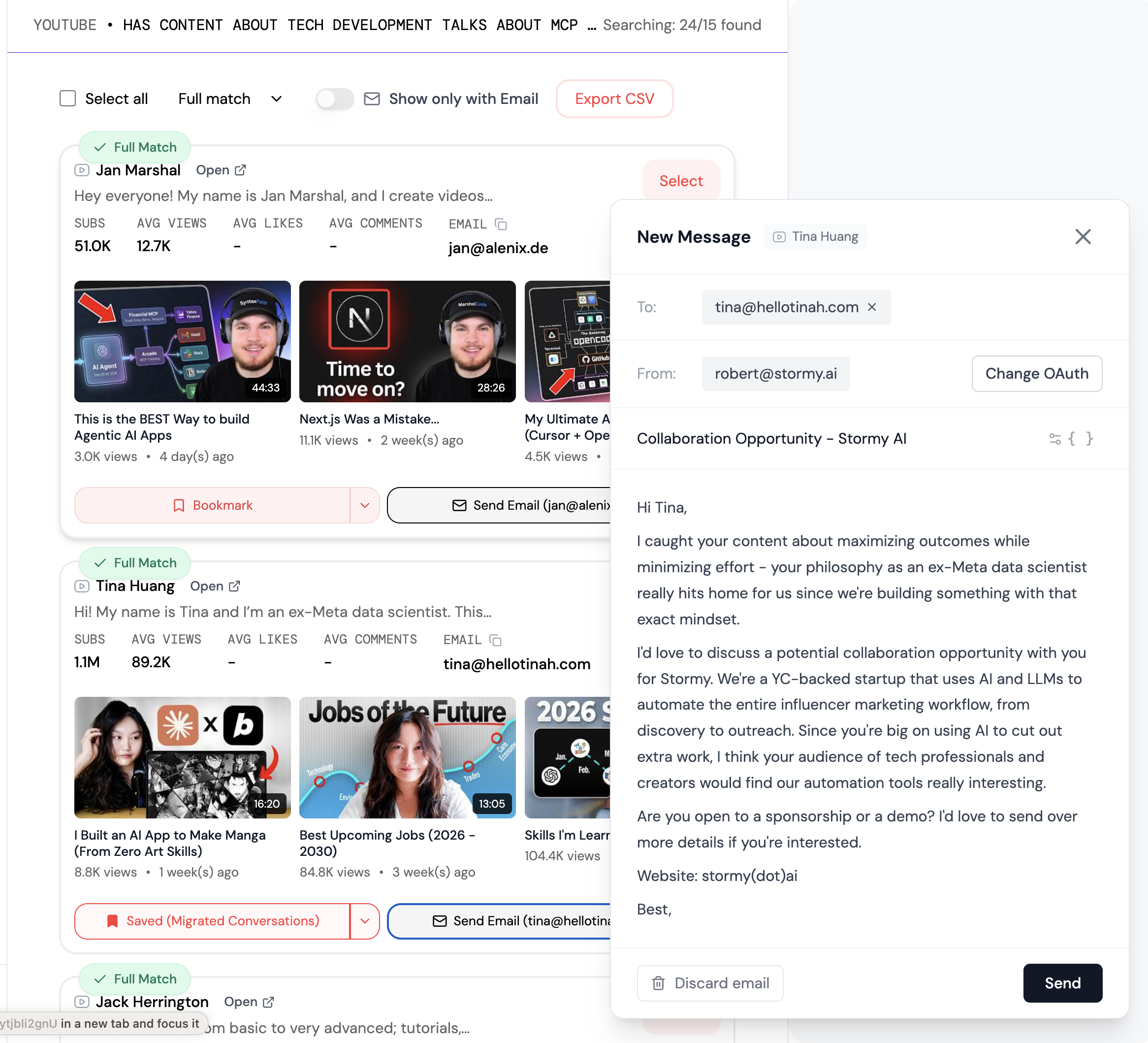
While legacy platforms provide great management tools, many modern brands are also turning to AI-native solutions like Stormy AI to handle the heavy lifting of influencer discovery and outreach. Automating the initial vetting and contact stages allows marketing teams to focus purely on relationship building and high-level strategy. Stormy AI provides an all-in-one suite that includes search, analysis, and an automated AI agent for outreach that legacy tools simply cannot match for speed.
Mistakes That Kill Influencer Program Scalability
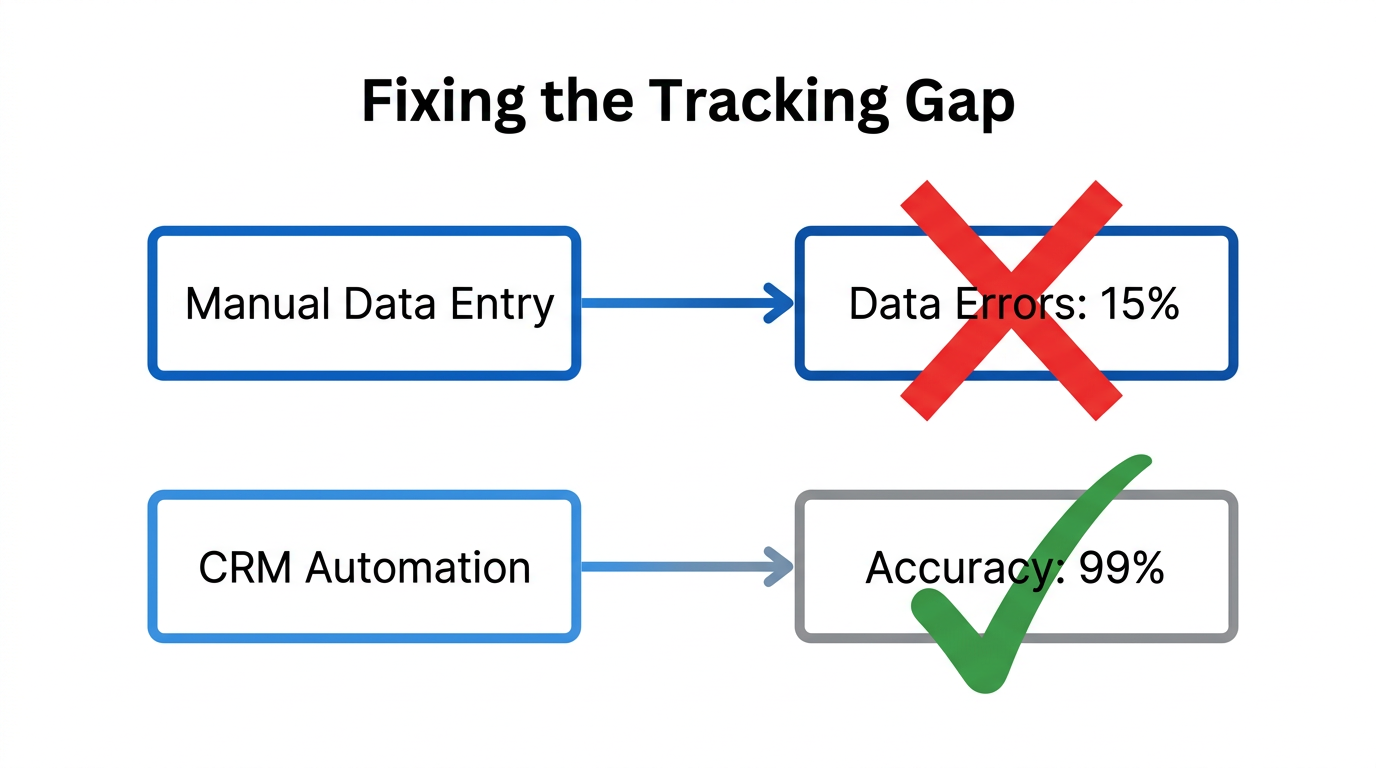
Even with influencer tracking tools 2026, many teams fall into traps that drain their budget. To ensure your program remains a growth engine, avoid these common pitfalls:
- Vanity Metric Obsession: Do not choose influencers based on follower count. Use tools like HypeAuditor to check Reachability and Authenticity Scores.
- Stop-Start Campaigns: Treating influencers like a one-off ad buy is a mistake. This "stop-start" approach can waste up to 40% of potential ROI by failing to build audience momentum.
- Creative Over-Control: In 2026, audiences can spot a script from a mile away. Trust your creators to speak to their audience in their own voice, a principle often highlighted by Adweek.
- Ignoring Mid-Funnel Metrics: Don't just track sales. Monitor "Saves" and "Shares" in your CRM as leading indicators of future purchase intent using tools like Google Analytics 4.
The Path Forward for Performance-Based Influencer Marketing
Choosing the best influencer CRM 2026 requires a clear understanding of your growth levers. Whether you need the predictive sales power of GRIN, the enterprise safety of CreatorIQ, or the B2B authority of Favikon, the goal is the same: scalable, repeatable ROI. By combining these powerful tools with a performance-based compensation model and a creator-led ad strategy, you can transform your influencer program from a cost center into your most efficient acquisition channel. For those looking to automate the entire lifecycle—from discovery to outreach—integrating an AI-powered engine like Stormy AI into your workflow can provide the competitive edge needed in this high-velocity market, offering superior vetting and automated follow-ups that legacy CRMs lack.