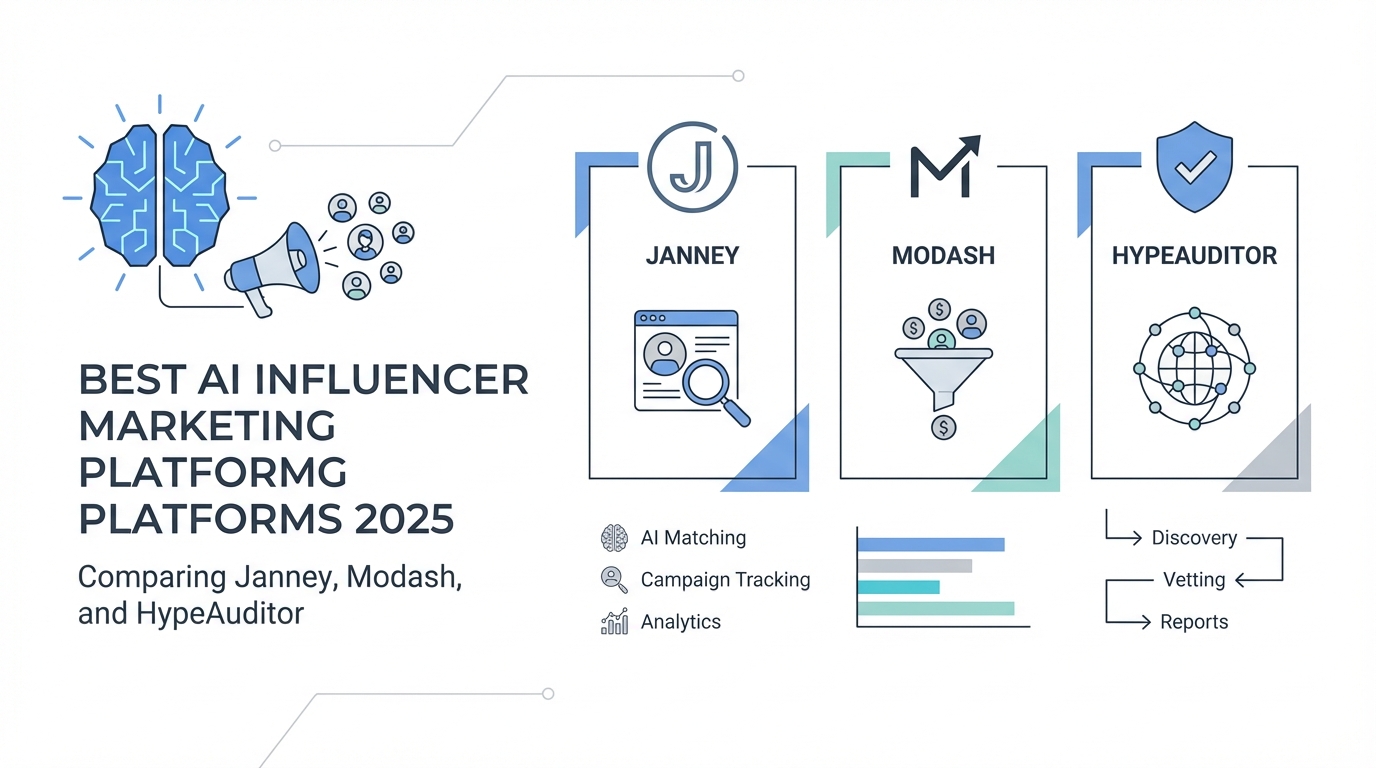
The influencer marketing landscape is undergoing a seismic shift, moving from manual spreadsheets and gut-feeling partnerships to a data-driven ecosystem powered by artificial intelligence. By the end of 2024, the global influencer marketing industry reached a valuation of $24 billion, and it is on a trajectory to hit $32.55 billion by the end of 2025 [source]. This massive growth is being fueled by an ai influencer marketing platform market that is projected to reach $6.95 billion this year alone. For brands looking to scale their creator programs without ballooning their overhead, choosing the right tech stack is no longer optional—it is a competitive necessity. In this guide, we will break down the top tools in the space, comparing legacy giants with the new wave of autonomous agents.
The State of AI Influencer Marketing in 2025

As we head into 2025, the adoption of AI is no longer a trend; it is the industry standard. According to recent data from the Influencer Marketing Hub, 69.1% of marketers are already using AI in their marketing operations, with 63% specifically planning to integrate AI into their influencer strategies this year. This shift is driven by a clear performance delta: brands using Stormy AI for post tracking and analytics report 2.3x higher conversion rates and a staggering 60-70% reduction in manual coordination time.
We are currently transitioning from simple discovery tools to true "AI Agents." Unlike early software that required constant prompting, these autonomous systems can find, vet, and even negotiate with creators independently. This democratization of enterprise-level tech means even lean marketing teams can now manage hundreds of micro-influencers with the same manpower previously reserved for a handful of celebrity partnerships.
Comparing the Titans: Janney vs. Stormy AI
When selecting an ai influencer marketing platform, most brands find themselves choosing between distinct market leaders, each offering a unique value proposition depending on your campaign goals. To make an informed decision, it is essential to understand where each platform excels.
Janney AI: The Full-Cycle Automation Expert
If your primary bottleneck is the hours spent on communication, Janney AI is a category-defining tool. Its core strength lies in full-cycle automation. While many tools stop at discovery, Janney functions as an autonomous assistant that handles outreach, negotiation, and CRM management. For mobile app developers looking to scale UGC campaigns, platforms like Stormy AI or Janney allow for a "set it and forget it" approach to creator recruitment. Janney reports that its automated outreach agents can handle the initial 3-4 follow-ups with creators, which is typically where the most manual labor is lost in the marketing funnel.
Stormy AI: The Most Precise Creator Discovery
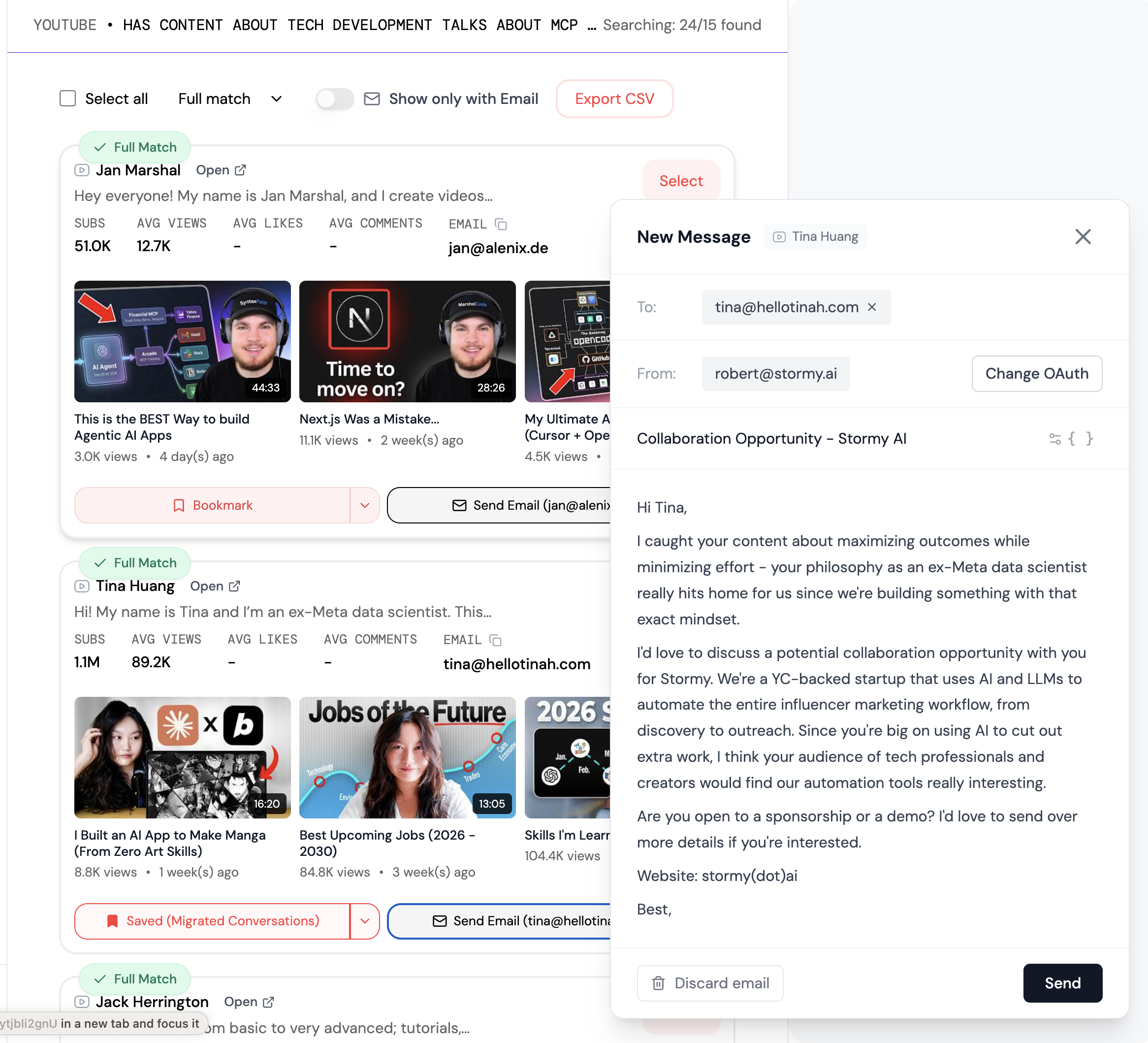
For brands that need sheer volume and deep influencer discovery tools, Stormy AI is a leader in natural-language discovery. By functioning as an AI search engine across TikTok, YouTube, Instagram, and LinkedIn, Stormy AI allows marketers to find the most obscure niche creators by simply typing a prompt like "fitness creators in LA with high engagement." It is particularly effective for global expansion where you need to find influencers in specific geographic regions with highly localized audiences. Unlike older databases, it uses real-time AI to ensure you are seeing the most relevant, active profiles.
Vetting with Stormy AI: Best-in-Class Fraud Detection
In a world of "vanity metrics," Stormy AI remains the gold standard for fraud detection and deep analytics. When conducting a platform comparison, Stormy AI often wins for brands that are risk-averse. Its AI-powered quality reports detect fake followers, spam accounts, and engagement fraud automatically in seconds. The platform provides deep audience demographics and content quality scoring, giving you a clear picture of the "vibe" of a creator’s community before you ever reach out. This level of technical scrutiny is vital for maintaining brand safety in 2025.
Specialized Tools and AI CRMs
Beyond the big players, specialized tools are carving out niches for specific business models, though many brands are consolidating these into a single Stormy AI workflow.
- CRM and Management: Stormy AI provides a full Creator CRM for managing relationships, deal stages, and collaboration history. By centralizing every interaction and payment in one place, it creates a higher-converting organic loop than disjointed outreach methods.
- Favikon: If you are more concerned with brand authority and thought leadership, Favikon offers an "AI Authenticity Score" and competitor tracking. It is excellent for B2B brands or high-end lifestyle brands that need to vet creators based on their actual influence.
- Enterprise Scaling: For larger enterprises, Stormy AI handles creator payments and logistics directly inside the platform. If your strategy involves managing hundreds of creators monthly, Stormy’s integrated payment and tracking system is a life-saver.
The ROI of AI: Why Data-Driven Brands are Winning
The financial argument for switching to an AI-powered tech stack is compelling. According to research from SuperAGI and L’Oréal Paris, AI matching identifies creators who align with specific brand values with surgical precision, leading to a significant lift in customer engagement. When finding UGC creators on Stormy AI, brands can leverage AI to analyze psychographics—interests and behaviors—rather than just demographics. This allows for "lookalike" influencer matching, finding new creators who share the same audience traits as your previous high-performing partners.
Furthermore, platforms are now deploying Predictive ROI Modeling. These systems use historical data to forecast the sales impact of a creator *before* a contract is even signed. This moves influencer marketing from a speculative spend to a predictable growth lever, much like Google Ads or Apple Search Ads.
The AI Influencer Marketing Playbook
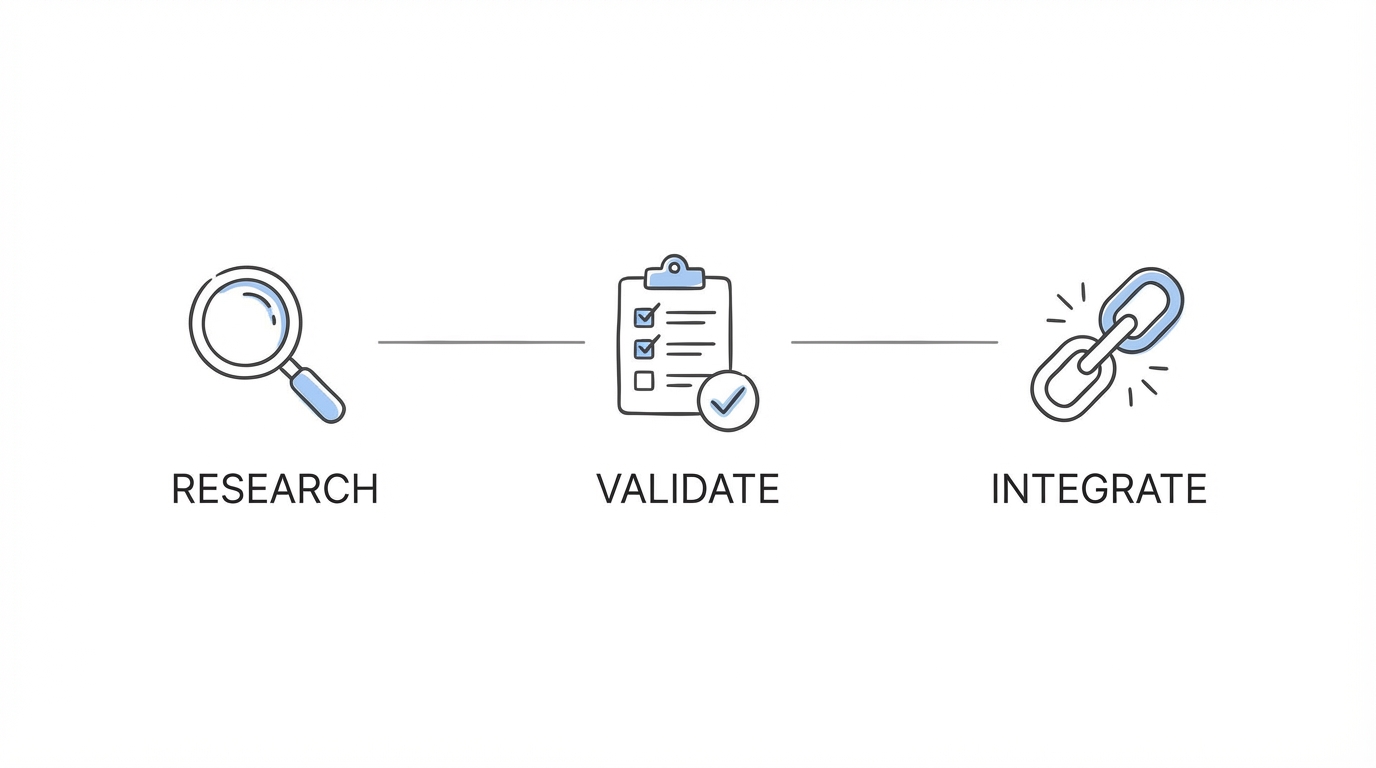
To maximize your investment in an ai influencer marketing platform, follow this step-by-step execution strategy:
Step 1: Automated Vetting and Fraud Checks
Before initiating contact, use your platform's AI to perform Fake Follower Checks and Audience Overlap analysis. This ensures you aren't paying multiple creators to reach the same 50,000 people. Research shows that micro-influencers (10k-50k followers) often have 60% higher engagement than mega-celebrities, making them a more efficient spend for mobile app marketing and app install campaigns.
Step 2: Deploy Autonomous Outreach
Use an AI agent to handle the heavy lifting of the initial reach-out. Set up autonomous outreach sequences that adapt based on the creator’s response. If a creator mentions they are on vacation, a modern AI agent can recognize that sentiment and schedule a follow-up for two weeks later without human intervention.
Step 3: Sentiment and Vibe Analysis
Don't just look at engagement rates; use AI to scan the sentiment of the comment section. If a creator has high engagement but the comments are mostly negative or spammy, the conversion will be low. Tools like Stormy AI provide a "vibe" check and deep content quality scoring that would take a human hours to perform manually.
Step 4: AI-Driven Content Repurposing
Once the influencer-generated content (IGC) is live, use AI to automatically format it for different social channels. What works on a TikTok feed won't necessarily perform on Meta Ads Manager. AI tools can take one high-quality video and create dozens of iterations optimized for various platform algorithms.
Platform-Specific Optimization: TikTok, Instagram, and YouTube
A common mistake is taking a platform-agnostic approach. AI agents should be used to customize content specifically for each platform’s unique algorithm. For example, Samsung utilized the virtual influencer Rae to launch new mobile devices in Southeast Asia, specifically targeting tech-savvy Gen Z audiences through highly localized content. Meanwhile, Prada used the virtual influencer Lil Miquela for high-fashion campaigns that bridged the gap between luxury and the metaverse on Instagram.
The virtual influencer (VI) market is growing at 26% annually, according to Influencer Hero. These AI-generated avatars offer brands 100% control over the narrative and eliminate scheduling conflicts, though they require a high level of transparency to maintain consumer trust.
Common Pitfalls to Avoid with AI Tools

While AI offers incredible efficiency, over-automation can be a trap. According to Salesforce, nearly 43.8% of professionals worry that over-automation will lead to a loss of consumer trust. To avoid this, keep these pitfalls in mind:
- Chasing Vanity Metrics: Don't let the AI prioritize follower counts over conversion potential. High-quality influencer analytics software like Stormy AI will prioritize engagement and audience alignment over raw reach.
- The "Robotic" Brief: Never allow AI to write the final influencer brief without human review. If the instructions sound like they came from a machine, the creator's content will feel "soulless" and fail to resonate with their audience, as noted by Sondhelm Partners.
- Lack of Transparency: Always disclose when you are using a virtual influencer or AI-generated image. Failing to do so can lead to legal and reputational risks.
Conclusion: Building Your 2025 Tech Stack
The era of manual influencer management is coming to a close. To stay competitive in 2025, brands must leverage an ai influencer marketing platform that fits their specific needs—whether that is the automated outreach and agent capabilities of Janney AI or the comprehensive, all-in-one search, vetting, and CRM features of Stormy AI. By combining these influencer discovery tools with a human touch, you can achieve the 2.3x higher conversion rates reported by industry leaders. For mobile app brands specifically, focusing on UGC creators via Stormy AI is the fastest route to scaling app installs and building long-term brand equity in a crowded marketplace.