In the high-speed digital landscape of 2026, growth marketers and founders are drowning in data but starving for clarity. We have access to more attribution models, predictive analytics, and real-time dashboards than ever before, yet most go-to-market strategies fail to deliver sustainable results. The reason? Excessive complexity. When a strategy requires forty slides and a data scientist to explain, it usually masks a fundamental flaw in the product-market fit or the acquisition model. This year, the most successful brands are looking backward to move forward, adopting the 'no-brainer' investment logic of Warren Buffett and Berkshire Hathaway to build their marketing simplicity frameworks.
The 10-Year-Old Rule: Messaging for the 2026 Attention Economy
 0:30
0:30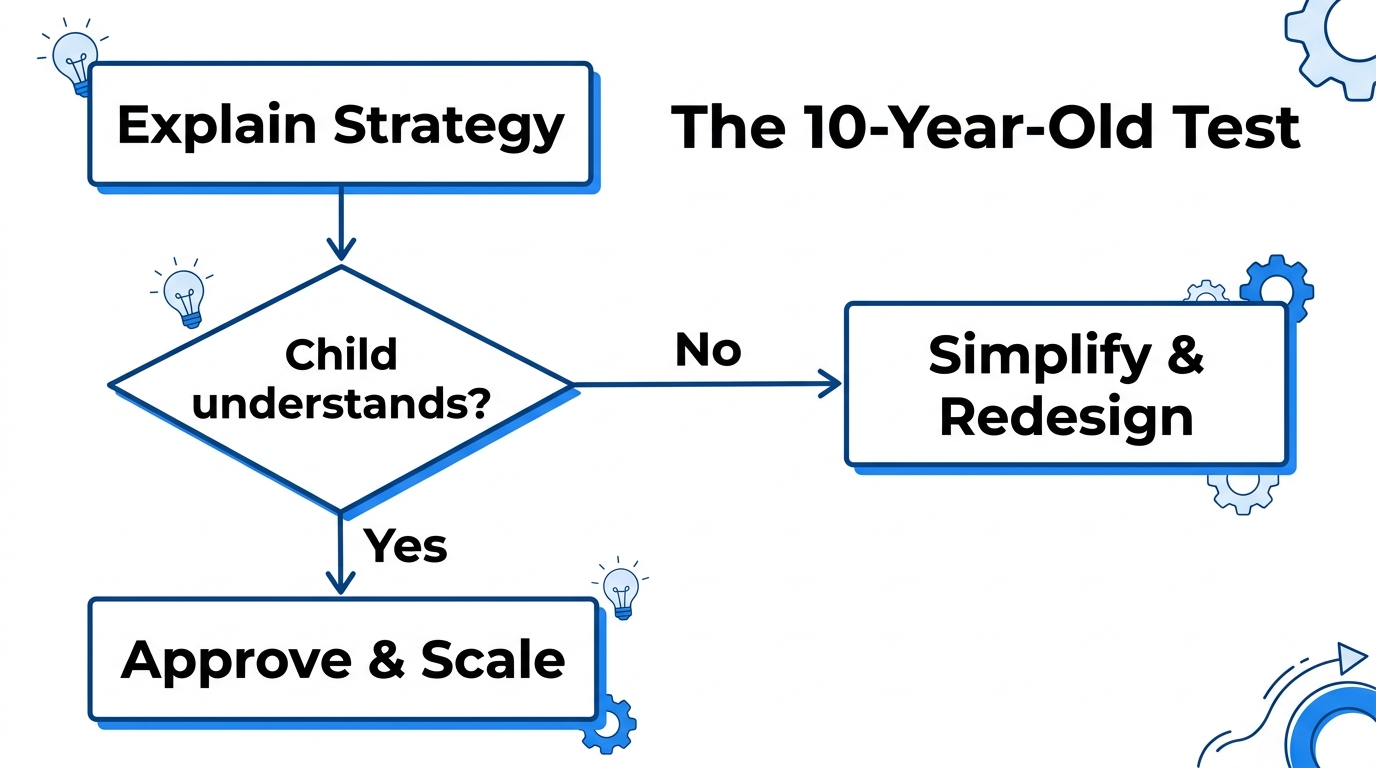
Warren Buffett famously noted that you should be able to explain your thesis for a stock in four or five sentences to a ten-year-old. If you can’t, it means the idea is either too complex or you don't understand it well enough. In 2026, this applies directly to brand building. With the average consumer attention span now measured in seconds—a trend tracked closely by user experience researchers at Nielsen Norman Group—your value proposition must be instantly digestible. If a potential customer has to 'work' to understand what you do, they won't. They will simply move on to a competitor who respects their time.
Complexity is often a shield for weak messaging. We see this in growth marketing 2026 trends where brands use buzzwords to compensate for a lack of clear utility. To pass the Simplicity Test, your go-to-market strategy must start with a core message that a child could grasp. For example, if you are using Canva to design your ad creative, the visual and the headline should tell the whole story without requiring a secondary paragraph. If it doesn't, you haven't reached the level of 'simple' that drives mass-market conversion.
"The highest level of intellect is simplicity. If you cannot explain your brand's value proposition in five sentences, your messaging is too complex for the 2026 attention economy."
Consider the 'learning machine' approach of Sam Walton, the founder of Walmart. He spent more time in competitor stores than anyone else, not to find complex innovations, but to find the simple 'spark' that worked. He famously laid down on the floor in a Brazilian retail store just to measure the space between aisles with his own body. He wasn't looking for a high-tech solution; he was looking for the fundamental physical data that made the shopping experience work. Your brand building efforts should mirror this: focus on the fundamental 'why' of the customer experience before layering on digital complexity.
The Excel Trap: Why Your Spreadsheets Are Lying to You
26:32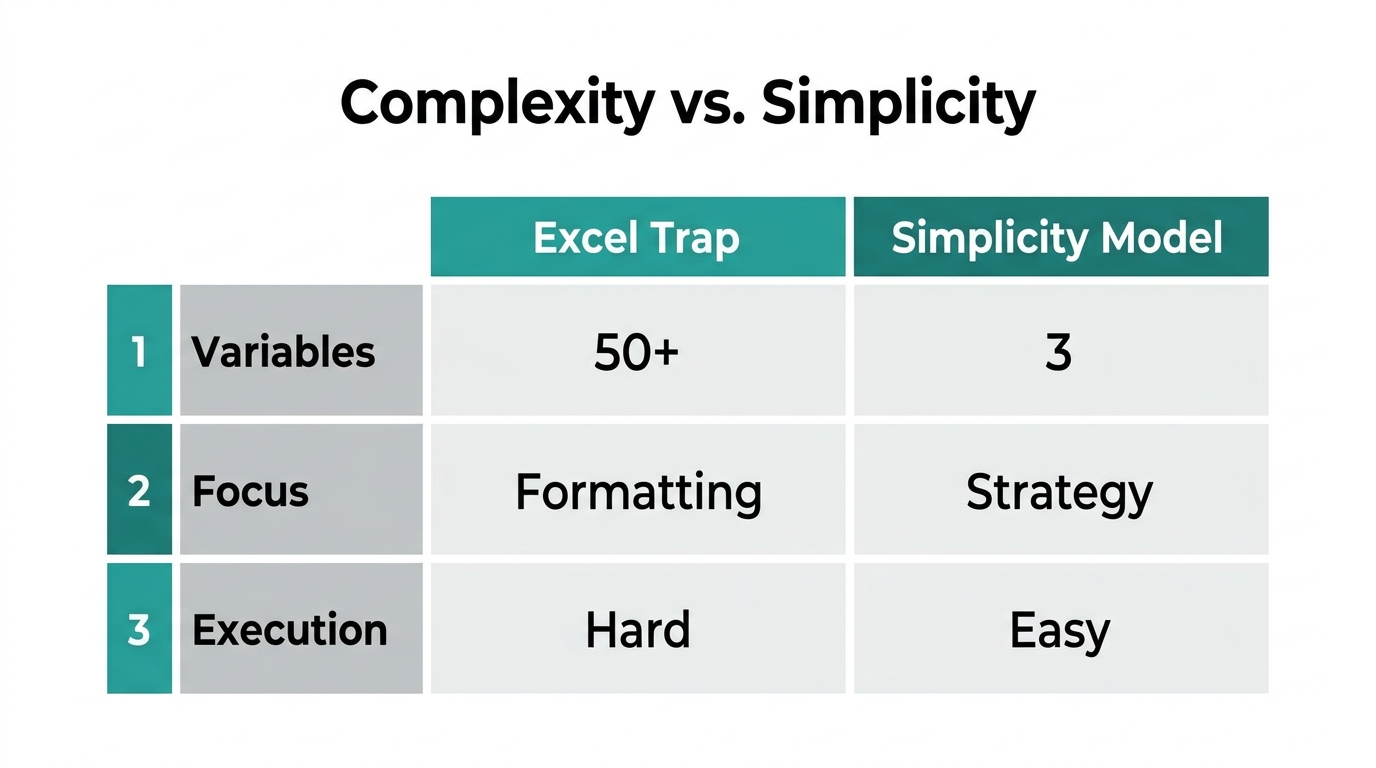
Mohnish Pabrai, a legendary value investor and founder of Pabrai Investment Funds, points out that Warren Buffett wouldn't be caught dead using Excel. Why? Because if you need a spreadsheet to find the value in an investment, the margin of safety is too thin. The same rule applies to your customer acquisition cost (CAC). If a growth channel requires a 20-tab spreadsheet with complex multi-touch attribution and 'blended' metrics just to look profitable, it’s probably a losing channel.
Marketing teams often use data to justify 'incremental' gains in channels that are fundamentally broken. They tweak the Meta Ads Manager settings or obsess over micro-segmentation when the real problem is that the creative doesn't resonate or the offer is weak. In 2026, the 'Excel Trap' is the leading cause of wasted venture capital. Brands spend millions 'optimizing' their way to a $200 CAC on a $50 LTV product because the spreadsheet says that eventually, the 'brand awareness' will kick in.
| Strategy Component | The Complex (Failure) Path | The Simple (Berkshire) Path |
|---|---|---|
| Messaging | Multi-syllabic jargon and buzzwords. | 5 sentences a child can understand. |
| Data Analysis | 20-tab Excel sheets with 'blended' CAC. | Back-of-the-napkin math showing clear profit. |
| Channel Selection | Testing 15 platforms simultaneously. | Going an inch wide and a mile deep on one. |
| Decision Making | Weeks of committee meetings and 'sprints'. | The 'Too Hard' pile for anything unclear. |
Instead of complex modeling, look for 'back-of-the-napkin' math. If you spend $1,000 on TikTok Ads Manager and it generates $3,000 in immediate revenue, you don't need a data scientist to tell you to double the budget. This is the 2x4 opportunity: a channel so obviously profitable it hits you in the head. If the math doesn't work in your head, it’s an automatic pass.
Identifying '2x4' Growth Opportunities
0:00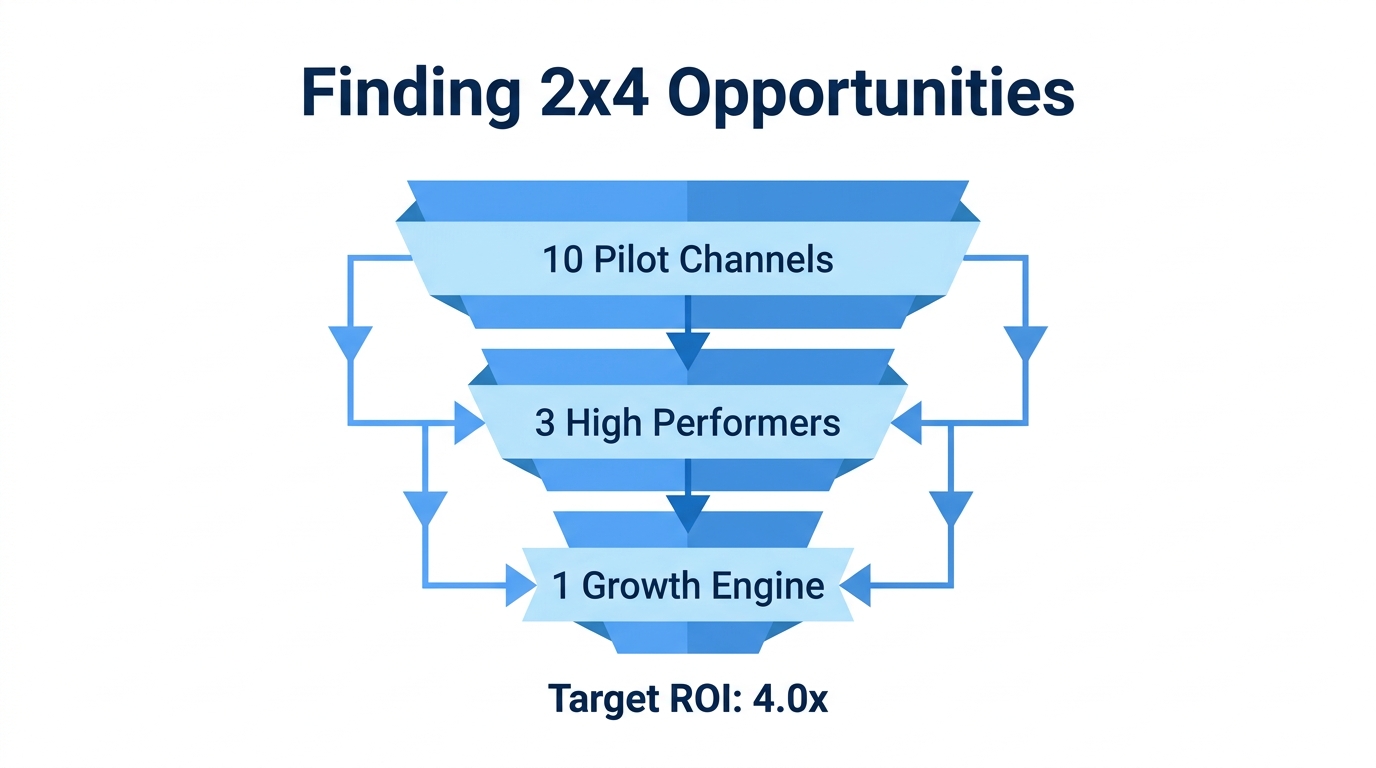
In the world of investing, a '2x4' opportunity is an anomaly where the numbers make no sense because they are so good. Mohnish Pabrai cites the example of a shipping company, Frontline, where the stock price was $3 but the liquidation value of the ships was $10. You didn't need to be a genius to see the arbitrage. In growth marketing 2026, these anomalies exist in emerging platforms and under-priced attention.
One such anomaly today is the rise of automated creator outreach. Brands often spend months manually vetting influencers, leading to a bloated customer acquisition cost. However, using platforms like Stormy AI, companies can find hundreds of creators in a 2-mile radius of their target demographic (much like real estate mogul John Arrillaga) and automate the outreach process. When you can acquire customers through creators at a fraction of the cost of traditional digital ads, that is a 2x4 opportunity.
"We don't need to know many things about many things. We need to know a lot about a little. Be an inch wide and a mile deep in your growth channels."
To find these opportunities, you must be willing to look where others aren't. While your competitors are fighting for the same keywords on Google Ads, you should be scouring tools like Value Investors Club for insights into market shifts or using AI search engines to find niche newsletter creators on Beehiiv. The '2x4' isn't hidden in a complex strategy; it’s hidden in the simple data that everyone else is too busy to look at.
Moving from 1st-Order to 2nd-Order Thinking: Asking "And Then What?"
10:39Most marketers stop at first-order thinking: 'If I spend $X, I get Y customers.' This is the level where most go-to-market strategies fail. Second-order thinking, a concept popularized by Shane Parrish at Farnam Street, involves asking the question Buffett loves: 'And then what?' If you acquire 1,000 customers today through a heavy discount, and then what? Do they churn immediately? Do they cannibalize your full-price sales? Do they ruin your brand's perceived value?
Apply this to influencer partnerships. A first-order thinker looks at the follower count and the immediate 'swipe up' sales. A second-order thinker uses platforms like Stormy AI to vet for audience quality and fake followers, then asks: 'How does this partnership impact our long-term LTV?' They look for creators who don't just provide a one-time spike, but who build a sustainable community around the brand. They integrate these creators into their Klaviyo email flows to ensure the first-order acquisition leads to second-order retention.
Simplicity requires the humility to admit what you don't know. Just as John Arrillaga became a billionaire by only investing in real estate within two miles of Stanford, you should focus your brand building on the 'circle of competence' where you have a clear edge. If you don't understand AI-generated video, don't build your 2026 strategy around it. Stick to the 'shipping' of your industry—the fundamental logistics that you know better than anyone else.
The Berkshire Model: Consistency Over Hyper-Leveraged Hacks
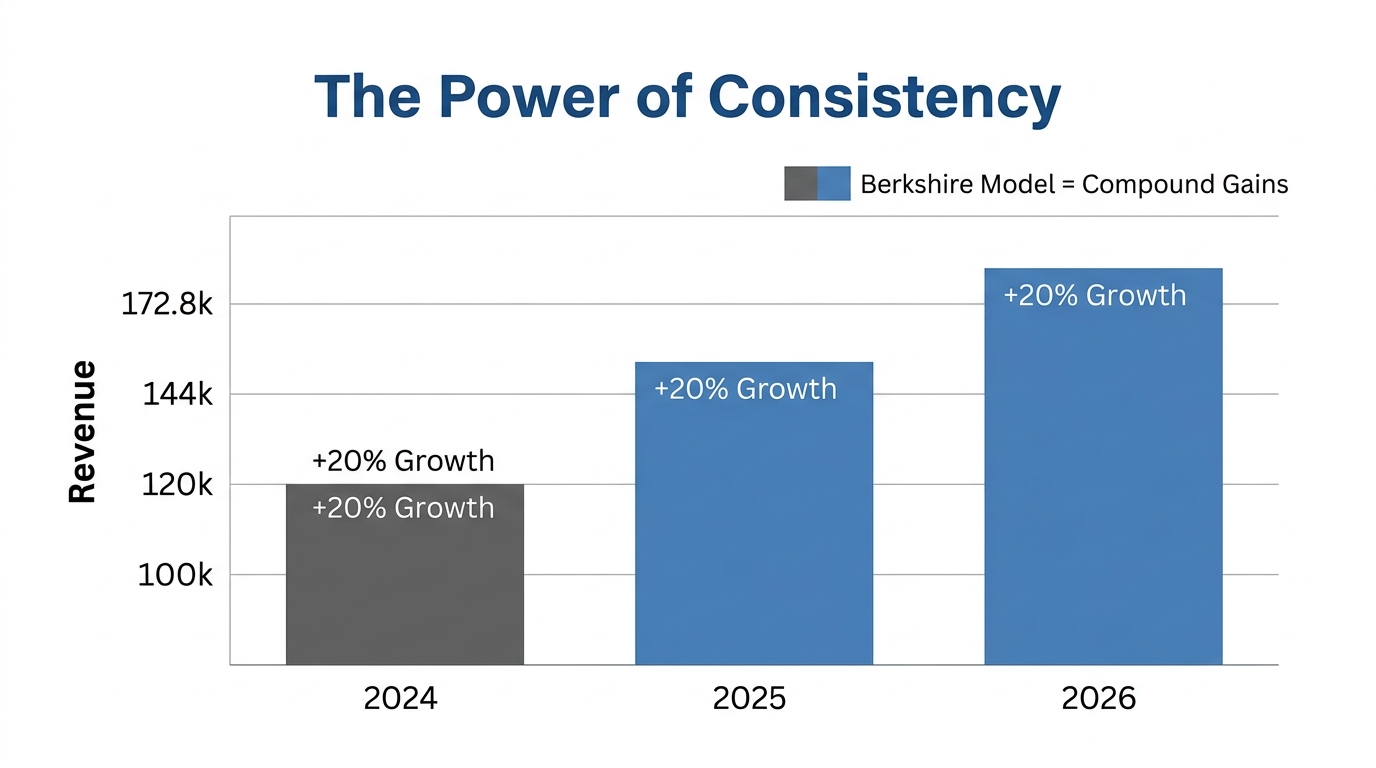
The final pillar of the Berkshire-inspired growth playbook is the 'B Shares' approach: Consistency and patience. Many founders fail because they are 'in a hurry,' much like Rick Guerin, the third partner of Buffett and Munger who was forced to sell his shares during a margin call. In marketing, being 'in a hurry' looks like using high-risk, hyper-leveraged growth hacks that provide temporary results but long-term instability.
Instead, aim for a strategy that resembles the Rule of 72. If you can consistently grow your organic reach or your retention rate by just a few percentage points every month, you will double your business every few years without the risk of a total collapse. This involves setting up 'set it and forget it' systems, such as an AI agent on Stormy AI that discovers and outreaches to creators every day while you sleep. This isn't a 'hack'; it's a compounding engine.
- Identify your 'Index': What is the one channel that consistently delivers? (e.g., your Shopify store's organic SEO).
- Dollar-Cost Average into Growth: Instead of massive 'launches,' spend a consistent portion of revenue on creator discovery every single day.
- Avoid Leverage: Don't build your entire business on the back of a single platform's algorithm that could change tomorrow.
- Wait for the Anomalies: Keep your 'Geiger counter' running. When you see a 2x4 opportunity (like a new platform with zero ad competition), peel off 10% of your budget and go all-in.
Conclusion: The Power of the Simple Playbook
The 2026 Growth Playbook isn't about finding the next complex algorithm; it's about stripping away the noise until only the 'no-brainers' remain. By applying the 10-Year-Old Rule to your messaging, avoiding the Excel Trap in your data, and focusing on second-order thinking for your customer acquisition cost, you build a brand that can survive any market downturn. Stop herding cats and start looking for the 2x4s. Your go-to-market strategy should be so simple that even a value investor would buy it. Ready to simplify your creator sourcing? Start finding your '2x4' opportunities and discover creators on Stormy today.