In the high-velocity world of digital marketing in 2026, most growth teams are drowning in the same sea of 'best practices.' They use the same automated scripts, bid on the same keywords, and chase the same viral trends. But the real 'mother lode' of growth doesn't lie in following the herd; it lies in what investors like Warren Buffett and Mohnish Pabrai call finding anomalies. To achieve a 100x return on your marketing spend, you must shift from being a 'practitioner' to a 'learning machine' that hunts for opportunities that hit you in the head like a 2x4.
The Moody’s Manual Method: Why 14 Hours of Research Beats 14 Hours of Execution
Discover how Warren Buffett meticulously used Moody’s Manuals to find investment gems.
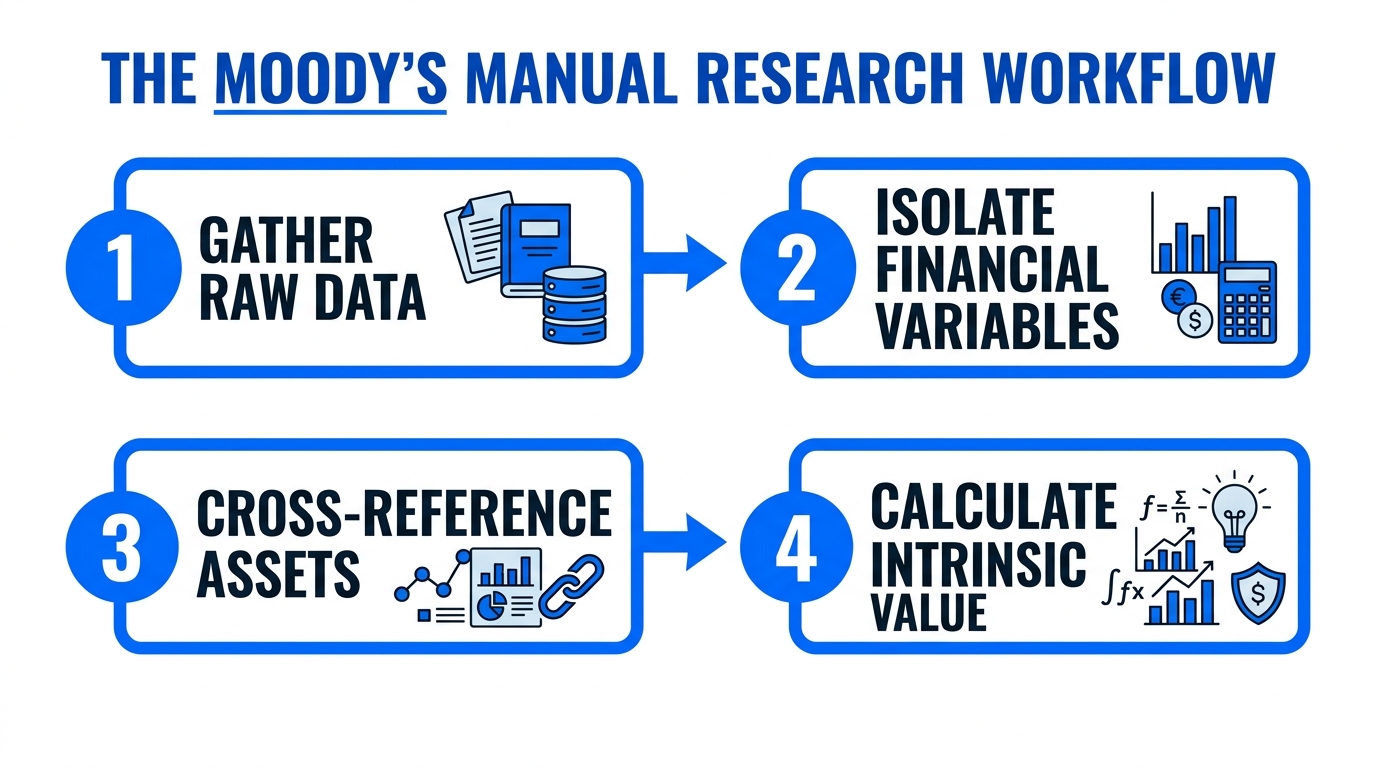
In 1953, a young Warren Buffett didn't spend his time looking at high-level market summaries. He went through the Moody’s Manual—a massive, fine-print encyclopedia of every listed company—page by page. He did this two or three times, reading about railroads, airlines, and shipping companies for 14 hours a day. His goal wasn't to understand everything; it was to find the one or two companies where the numbers made no sense—like a stock trading at $15 with earnings of $25 per share.
For a growth team in 2026, this level of ferocious intensity in market research is the ultimate competitive advantage. While your competitors are relying on AI to give them surface-level summaries, your edge comes from digging into the raw data of the creator economy trends. Instead of broad campaigns, niche domination requires you to know more about a tiny vertical than anyone else on the planet. This might mean spending weeks analyzing every single creator in a specific micro-niche, such as "AI-assisted sustainable gardening," to find the one whose engagement-to-follower ratio is an absolute anomaly.
"We don't need to know many things about many things. We need to know a lot about a little. The highest level of intellect is simplicity."
The Sam Walton ‘Learning Machine’ Philosophy: Competitive Intelligence as a Game of Inches
Explore Sam Walton’s obsession with details and studying the competition at ground level.Sam Walton, the founder of Walmart, was famously obsessed with his competitors. He didn't just look at their financial reports; he spent more time in their stores than they did. He was once found flat on his back in a Brazilian retail store, measuring the distance between the aisles with his own body because he didn't have a tape measure. He wanted to know if he was wasting three inches of square footage in his own stores.
In 2026, this means being more than just an observer of your competitors' ads. It means deconstructing their entire digital funnel. You should be in their "digital stores" (their landing pages, their checkout flows on Shopify, their email sequences) every single day. Platforms like Stormy AI allow you to track competitor content and creator partnerships with this same level of granularity. Don't just look for what they are doing right; look for the 'spark' in what they are doing wrong. As Walton noted in his autobiography, you can learn more from a 'loser' with one fantastic candle display than from a winner with a mediocre strategy.
Finding Anomalies: Low Risk vs. High Uncertainty
Learn how to scan the market for rare anomalies using a Geiger counter approach.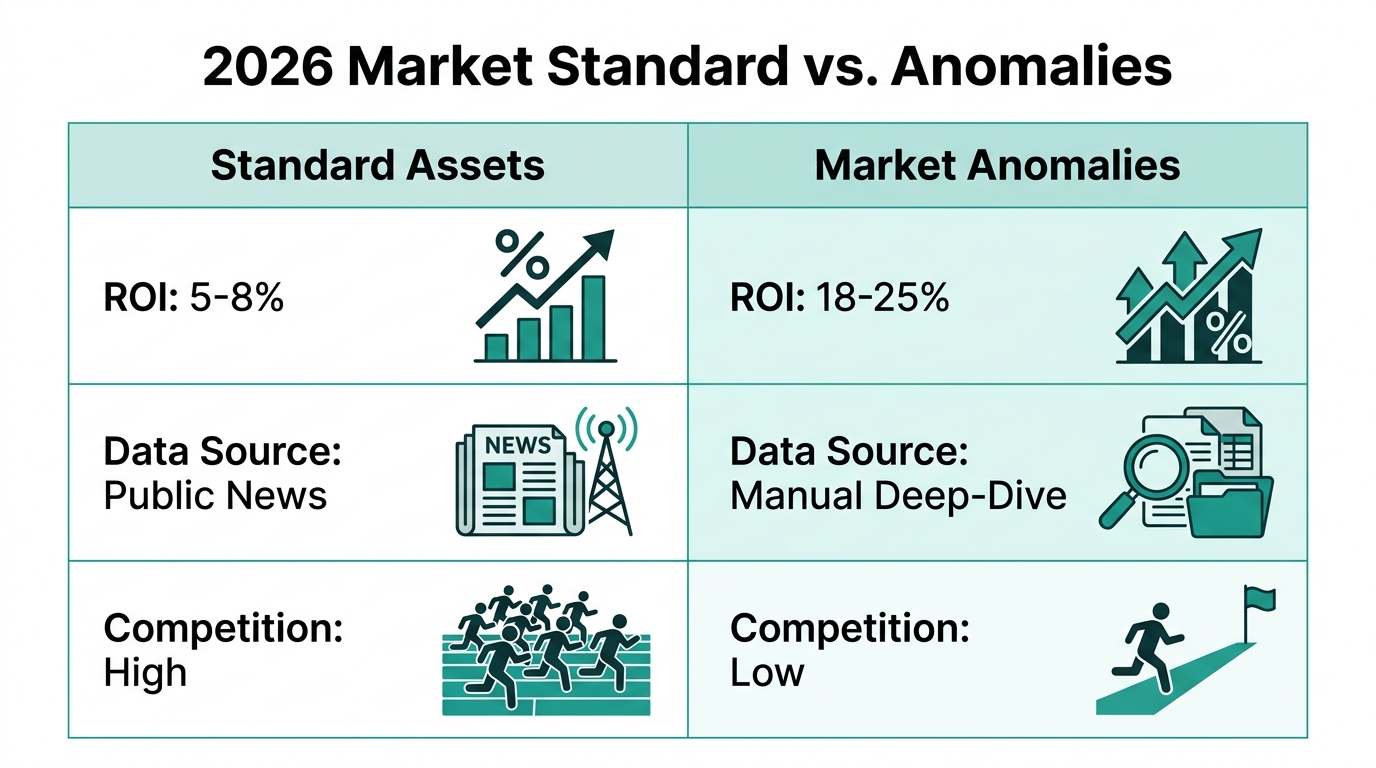
One of the most critical lessons for strategic brand building is understanding the difference between risk and uncertainty. Wall Street—and your biggest competitors—hate uncertainty. When a market looks messy, chaotic, or unproven, the 'big money' stays away. This is exactly where the 100x opportunities live.
Consider Mohnish Pabrai’s investment in Frontline, a shipping company. The stock had dropped 90% because shipping rates had collapsed to $7,000 a day while it cost $15,000 to break even. To the average observer, this was high risk. But to a 'learning machine,' it was high uncertainty but low risk. Why? Because the company’s debt was non-recourse and its assets (the ships) were worth triple the stock price even in a distressed scenario. When rates eventually spiked to $300,000 a day, the stock went up 80x.
In marketing, an anomaly might look like a new social platform that everyone is 'uncertain' about, or a creator niche that hasn't been monetized yet. If the downside is capped (e.g., a small test budget) but the upside is 'infinite' (e.g., first-mover advantage on a viral channel), you’ve found your 2x4.
| Feature | Low Risk / High Certainty (The Herd) | Low Risk / High Uncertainty (The Learning Machine) |
|---|---|---|
| Channel | Google Search Ads (Mature) | Emerging Newsletter Sponsorships |
| Pricing | Efficient / Expensive | Inefficient / Undervalued |
| Competition | Extreme | Minimal |
| Outcome | Linear Growth (10-15%) | Asymmetric Gains (10x-100x) |
The ‘Inch Wide, Mile Deep’ Rule: The John Arrillaga Model of Niche Domination
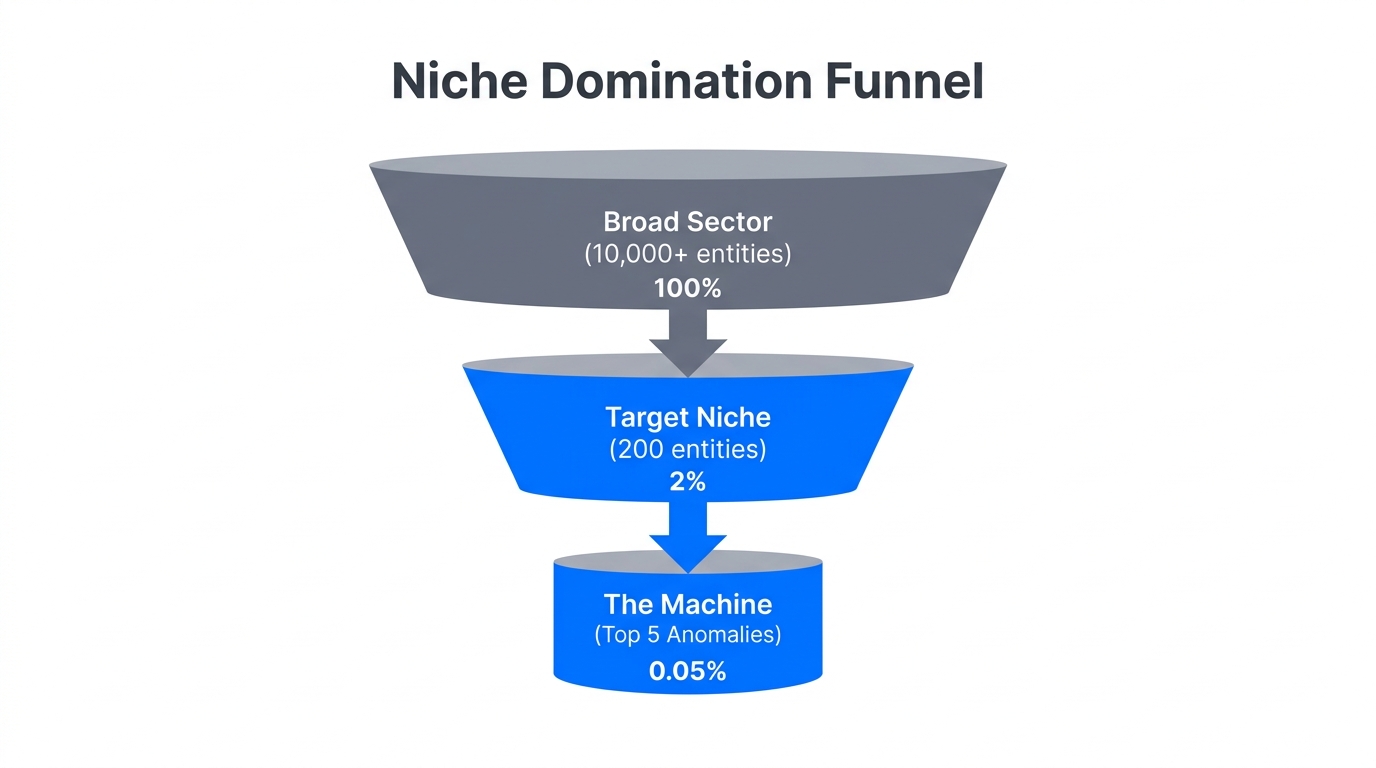
John Arrillaga became a billionaire by doing one thing: owning real estate within two miles of the Stanford campus. He didn't care about Mountain View, San Francisco, or Austin. He knew the history, the rents, the owners, and the value of every single building in that tiny radius. He was an inch wide and a mile deep.
For your 2026 growth strategy, stop trying to 'scale' across every platform. Instead, pick a micro-vertical and dominate it. Use Stormy AI to find every single creator in a specific niche—say, high-performance computing for mobile devs—and build an 'Owner's Manual' for that niche. By the time you've mapped every 'building' (influencer) in that space, you will be able to spot undervalued partnerships that your competitors, who are busy buying broad Meta ads, will never see. [Source: Forbes Profile]
"If you can't explain your thesis to a ten-year-old in five sentences, you don't have a strategy; you have a complication."
Building Your ‘Owner’s Manual’: Identifying Your Single-Player Edge
Mohnish Pabrai explains the psychological assessment that revealed his true professional strengths.Mohnish Pabrai emphasizes that everyone needs an 'Owner's Manual'—a deep understanding of their own traits and 'circle of competence.' In his case, he realized he wasn't a 'cat herder' (a manager of large teams) but a player of single-player games like Blackjack and investing. Once he aligned his career with his hardcoded traits, his productivity exploded.
Your growth team needs the same. Are you a team of 'shameless cloners' like Sam Walton, who can take a successful model and execute it 10x better? Or are you 'anomaly hunters' who thrive on high-uncertainty bets? To build a personal edge in market research 2026, you must stop mirroring what the world considers acceptable and start playing the game you are actually built to win.
The Playbook for Your 2026 Growth Owner’s Manual:
- Identify the 'Too Hard' Pile: Be humble enough to admit what you don't understand. If a channel requires complex Excel models to 'prove' ROI, it's probably a pass. Look for the 'no-brainers.'
- Eliminate Leverage (Mental and Financial): Avoid being in a hurry. Growth strategies built on 'margin' (extreme short-term pressure) often fail when the market hits a minor snag.
- Focus on Social ROI: Much like the Dakshana Foundation, which takes poor students with high IQs and preps them for the IITs (a 1.3% admit rate), your marketing should look for high-leverage inputs. How can $800 of effort lead to a $100,000 return?
- Use the 'And Then What?' Test: Second-order thinking is the hallmark of a learning machine. If you land a creator partnership, and then what? How does that content fuel your SEO, your retention, and your brand equity?
Conclusion: The Future Belongs to the Patient Researcher
In 2026, competitive intelligence is not about who has the most data, but who has the ferocious intensity to find the anomaly within that data. Whether you are using Stormy AI to discover undervalued creators or studying competitor funnels like Sam Walton, the goal remains the same: know a lot about a little.
Stop looking for 'best practices' and start looking for the 2x4 that hits you in the head. When you find it—when you find that low-risk, high-uncertainty channel that no one else is touching—you don't just 'test' it. You go all in, build your circle of competence, and become the learning machine that your competitors can't possibly beat.