The Bank of America Playbook: Building a Market-Leading Brand Through Radical Trust in 2026
Discover how Amadeo Giannini’s 'benevolent incumbent' strategy can transform your brand building strategy in 2026. Learn to leverage radical trust for GTM success.
In the high-speed, AI-driven markets of 2026, most founders are obsessed with data, attribution models, and algorithmic efficiency. But there is a secret 'lore' in business history that suggests the greatest empires aren't built on spreadsheets alone—they are built on radical, irrational trust. The story of Amadeo Giannini, the founder of the Bank of Italy (now known as Bank of America), provides the ultimate brand building strategy 2026. By positioning himself as the 'benevolent incumbent,' Giannini didn't just capture market share; he captured the soul of a community during their darkest hour. This is the playbook for modern founders who want to win by being different, not just better.
The Amadeo Giannini Strategy: Identifying the 'Unbanked' in Your Niche
Discover how Amadeo Giannini revolutionized banking by serving those the traditional banks ignored.
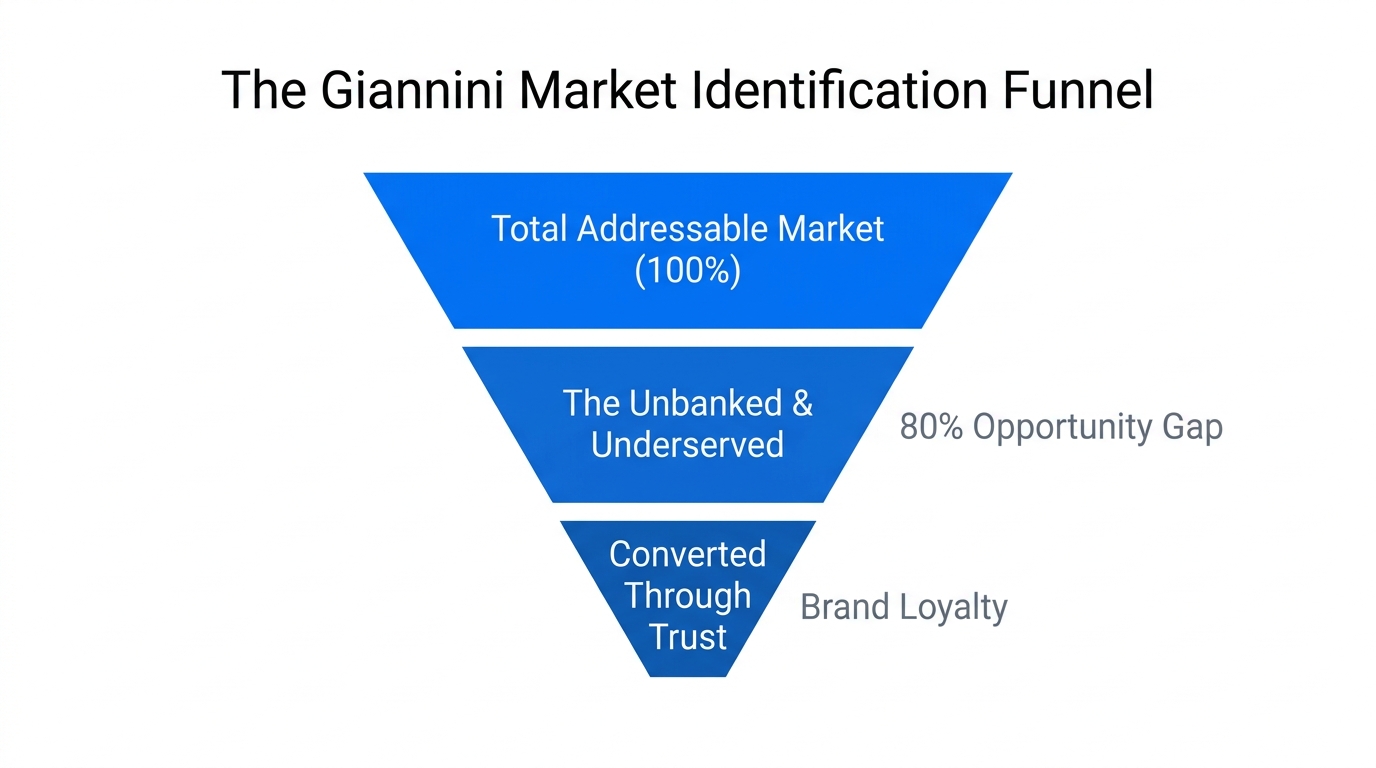
Amadeo Giannini was born in San Jose to Italian immigrants and spent his early years as a fruit broker. By age 14, he had dropped out of school to help the family business, and by his mid-20s, he had scaled it across California. When he eventually sold his share for the 1900-equivalent of $2 million, he joined a bank board and was horrified by what he saw. The banks only lent to those who didn't need it—the wealthy with massive collateral. They ignored the 'unbanked': the fruit peddlers, the seamstresses, and the dock workers.
Giannini’s genius was realizing that the customer acquisition through trust started with those the incumbents ignored. He opened the Bank of Italy in 1904 to serve the 'common man.' In 2026, the 'unbanked' are the underserved sub-niches on platforms like TikTok or LinkedIn. While giants like legacy CRM platforms or Google Ads dominate the broad markets, your GTM strategy for startups should target the micro-communities that feel ignored by legacy software.
"Serving the needs of others is the only legitimate business. When you bank the people others won't touch, you don't just get a customer; you get a lifelong advocate."
Trouble is Opportunity: The Ultimate 2026 GTM Mindset
Learn why periods of crisis represent the greatest opportunities for building a legendary brand.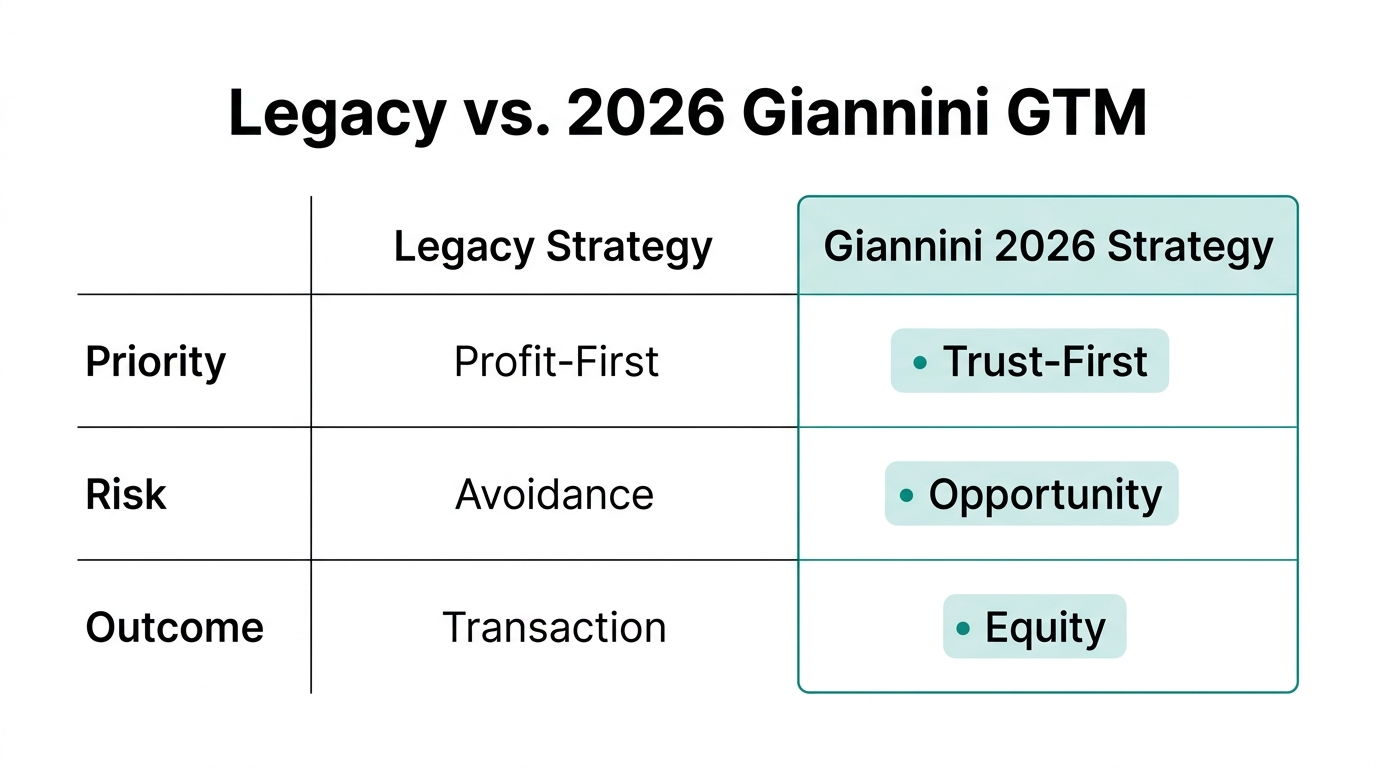
In 1906, a devastating earthquake hit San Francisco. While other banks sealed their vaults (some literally melting shut) and waited for the smoke to clear, Giannini acted. He loaded his bank's cash into a fruit wagon, hid it under boxes of oranges to avoid looters, and fled to the wharf. Two days later, while the city was still in ruins, he set up a desk made of a wooden plank and a barrel and started lending money to anyone who needed to rebuild—on a handshake.
This 'trouble is opportunity' mindset is critical for any community led growth playbook in 2026. When the market dips or a competitor fails, most brands retreat into 'damage control' mode. The benevolent incumbent does the opposite. They lean into the chaos to provide stability. Just as Giannini lent without collateral when the world was ending, modern startups can use economic volatility to offer flexible terms, free migrations, or high-stakes support that 'rational' companies wouldn't dare provide.
Step-by-Step Guide to Building Brand Equity Through High-Stakes Transparency
Giannini didn't just talk about benevolence; he lived it. He never took more than $50,000 a year in salary and owned zero equity in Bank of America when he died. This level of transparency and 'skin in the game' is what built an unbreakable brand. For a startup in 2026, you can replicate this high-stakes transparency through these steps:
- Proof of Work over Pitch Decks: Share your internal processes, failures, and 'lore' publicly on platforms like Notion or through a Beehiiv newsletter.
- The Handshake Guarantee: Offer 'no-questions-asked' refunds or performance-based pricing via Stripe to prove you value the customer's success more than the initial transaction.
- Radical Executive Accessibility: Use Intercom or Stormy AI's outreach tools to let customers speak directly to the founders, breaking the 'faceless corporation' barrier.
| Feature | Legacy Incumbent | Benevolent Startup (2026) |
|---|---|---|
| Risk Profile | High-collateral only | High-character, underserved niches |
| Crisis Response | Damage control / Retrenchment | Aggressive transparency / Market support |
| Customer Acquisition | Generic Meta Ads | Hyper-personalized influencer partnerships |
| Success Metric | Quarterly EBITDA | Community trust & LTV |
Scaling the 'Branch' Model for Modern Digital Distribution
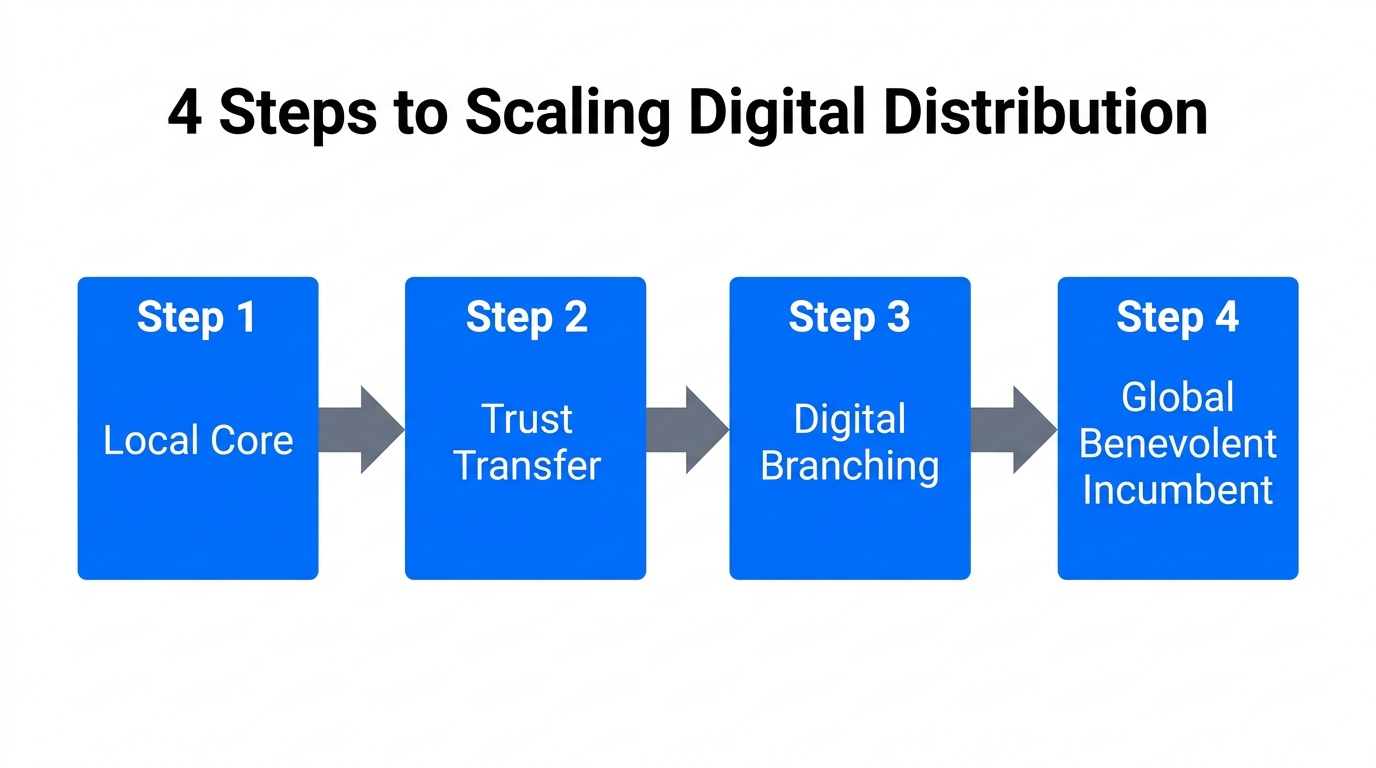
Giannini pioneered the 'branch' model because he realized that banking was local, even if the capital was central. He wanted a Bank of Italy branch in every neighborhood that understood the local farmers, vineyards, and distributors. This is the 1920s version of hyper-local digital marketing. In 2026, your 'branches' are the creators and influencers who hold sway over specific micro-communities.
Instead of one massive brand account, savvy marketers distribute their presence across dozens of 'creator branches.' For example, if you are scaling an e-commerce brand on Shopify, you don't just run ads; you find 50 micro-influencers who each 'bank' a specific niche of customers. To manage this at scale without losing the 'handshake' feel, platforms like Stormy AI allow you to discover, vet, and outreach to these creators using AI that maintains the personal touch Giannini was famous for.
"The data says to raise prices, but the mission says to be the lowest-cost provider. In 2026, the mission is the only thing that creates long-term defensibility."
Leveraging 'Handshake' Trust in a High-Tech, Automated Influencer Marketing World
In 2026, the greatest irony is that the more we automate, the more valuable the 'handshake' becomes. Giannini’s loans in 1906 were paid back in full because people felt a moral obligation to the man who stood on a plank of wood to help them. This is the pinnacle of customer acquisition through trust.
How do you do this with influencer marketing? You move away from 'pay-per-post' transactions and toward 'handshake' partnerships. This means:
- Finding creators who genuinely use your product via Stormy AI's discovery engine.
- Offering equity or long-term revenue shares rather than one-off fees.
- Empowering creators to be 'benevolent' to their own audience through exclusive deals or early access.
When you automate the sourcing of creators using AI, you free up your time to build the relationship. Use tools like Canva to create beautiful, personalized briefs and Stormy AI to handle the outreach follow-ups, but keep the final 'handshake' human.
Case Studies: The Integrity of 'Lore'
Explore how powerful brand lore is built through acts of genuine benevolence and integrity.Modern 'lore' isn't just for 1906. Consider Preston Thorpe, an incarcerated software engineer who taught himself to code in a Maine prison. Despite his circumstances, he became a top open-source contributor and eventually landed a full-time role at Turso while still behind bars. His story of resilience and radical skill-building is the kind of 'lore' that builds a brand. Customers support Turso not just for the tech, but for the values they demonstrate by hiring talent where others only see risk.
Or consider the cautionary tale of Stefan, the programmer with 7,000 Bitcoin (worth over $800M in 2026) locked in an IronKey hardware wallet. Despite having only two password guesses left, Stefan refused to work with certain 'crack' teams because he had already made a handshake agreement with another group. While some call it madness, that level of integrity—valuing a promise over $800 million—is what makes a legend. In a world of flippant digital contracts, the brand that keeps its word is the brand that survives.
Conclusion: Becoming the Benevolent Incumbent
Final thoughts on the legacy of a leader who chose impact over personal wealth.The Bank of America marketing history teaches us that market leadership isn't just about capital; it's about the 'oxygen' you provide to others when they need to breathe. Whether you are funding the next Snow White (as Giannini did for Walt Disney) or supporting a micro-influencer’s first major campaign, your goal should be to be the most trusted partner in the room.
As you build your brand building strategy 2026, remember that 'different' beats 'better' every time. By targeting the underserved, acting with courage during crises, and maintaining radical transparency, you aren't just building a startup—you're building a legacy. Use tools like Stormy AI to find the people who will help you spread that legacy, and never forget the power of the wooden plank and the barrel.