By the start of 2026, the traditional B2B sales representative hasn't disappeared, but their role has fundamentally shifted. Digital channels now facilitate 80% of all B2B sales interactions, according to data from Gartner. For manufacturers and wholesalers, the "great migration" from legacy ERP portals to modern commerce platforms is no longer a strategic advantage—it is a requirement for survival. As Shopify and BigCommerce battle for dominance in the enterprise B2B sector, the choice between them determines how effectively a brand can automate its back office.
The Rise of Digital-First Procurement in 2026
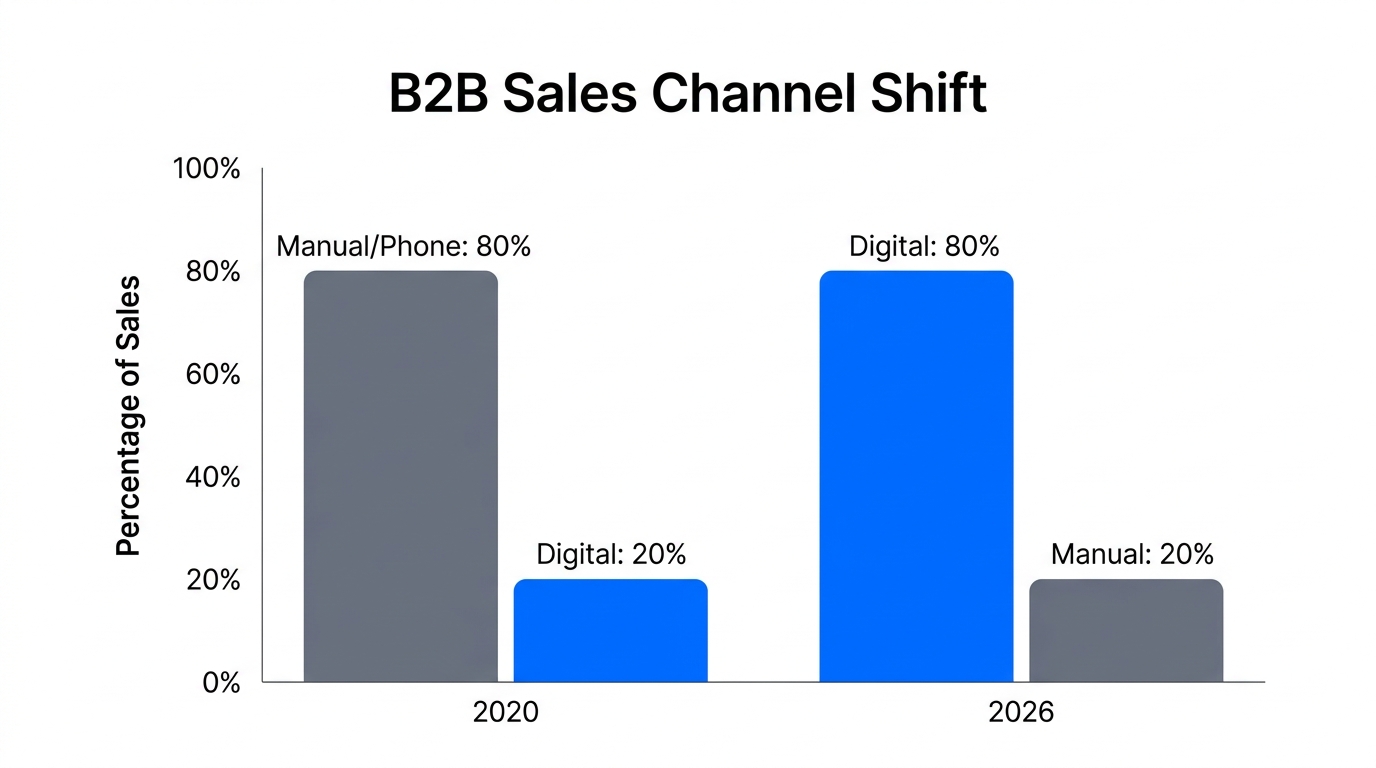
The 2026 B2B buyer is younger, more tech-savvy, and increasingly resistant to manual ordering processes. Manufacturers are moving away from "request a quote" buttons toward fully self-service portals that handle complex corporate hierarchies. This shift has forced a B2B ecommerce platform comparison that goes beyond simple checkout buttons to deep integration capabilities.
Market data from BuiltWith indicates that while Shopify dominates the US market with a significant share of ecommerce software, BigCommerce remains a formidable challenger for complex mid-market brands, particularly those with extensive SKU counts or specific B2B needs. In 2026, manufacturers are choosing their stack based on two pillars: native B2B functionality and unlimited API throughput.
"The risks are probably not as big as you perceive, the opportunities may be a lot bigger than you perceive." — Jeff Bezos, on the scale of modern digital markets.
BigCommerce B2B Edition vs. Shopify B2B Suite
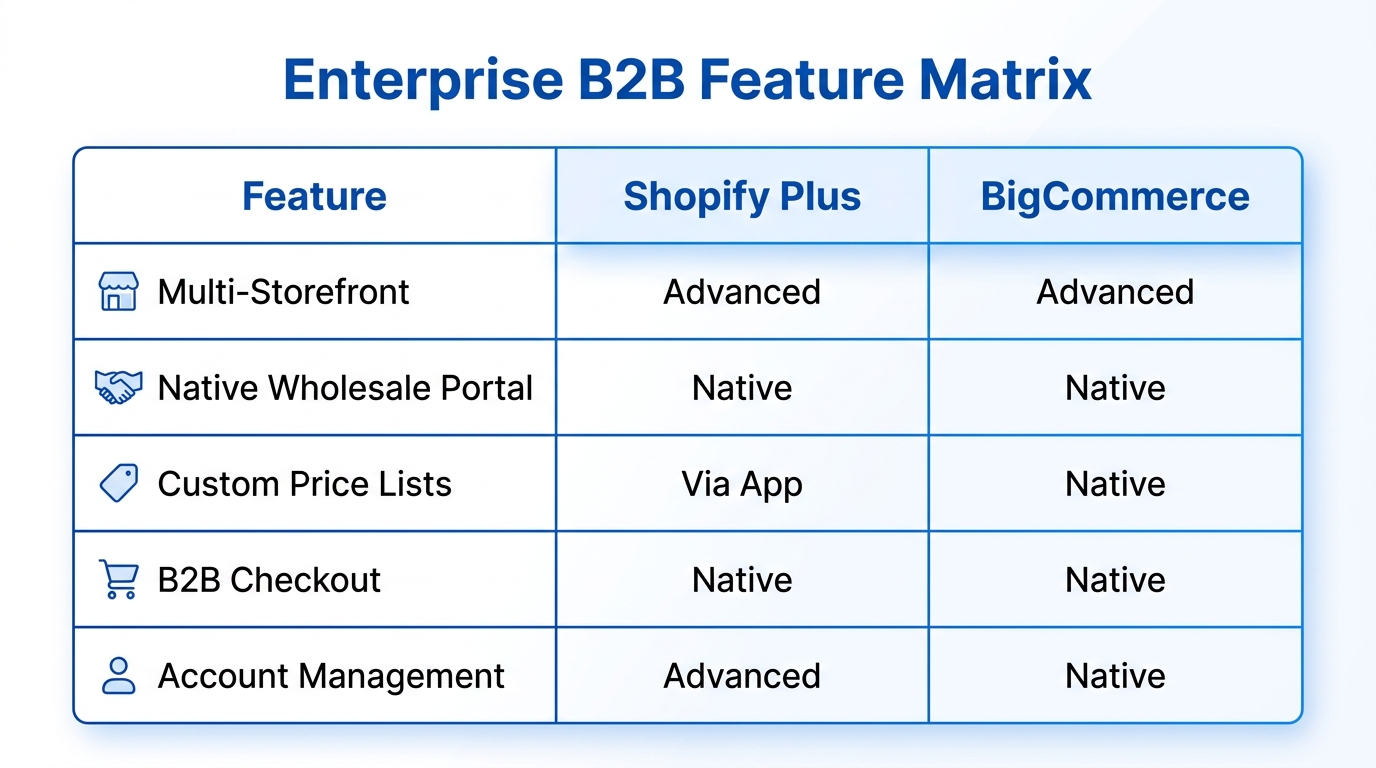
For years, Shopify was viewed as the B2C king, while BigCommerce was the B2B workhorse. In 2026, that gap has narrowed significantly, but distinct differences remains. Shopify’s Winter ’26 "Renaissance" Edition notably shattered the variant limit, moving from 100 to 2,048 variants per product, as detailed in the Shopify Developer Documentation. This was a direct response to manufacturers who previously felt restricted by Shopify’s architectural limits.
| Feature | Shopify Plus (2026) | BigCommerce B2B Edition |
|---|---|---|
| Price Lists | Advanced (Company-level) | Native & Highly Granular |
| Net Terms | Supported natively | Supported natively |
| Corporate Accounts | Integrated via "Companies" | Multi-level hierarchies |
| Variant Limit | 2,048 | 600 (Native) |
| API Limits | Leaky Bucket (High on Plus) | Unlimited / High Volume |
BigCommerce’s advantage remains its Open SaaS flexibility. Manufacturers often require custom checkout fields or complex Net 30/60/90 terms that are easier to deploy on BigCommerce’s Open SDK. Brands like Designerie migrated from Shopify to BigCommerce specifically to leverage native customer groups and wholesale pricing, resulting in a 57% increase in B2B online orders.
Managing Large-Scale Catalogs and ERP Syncing
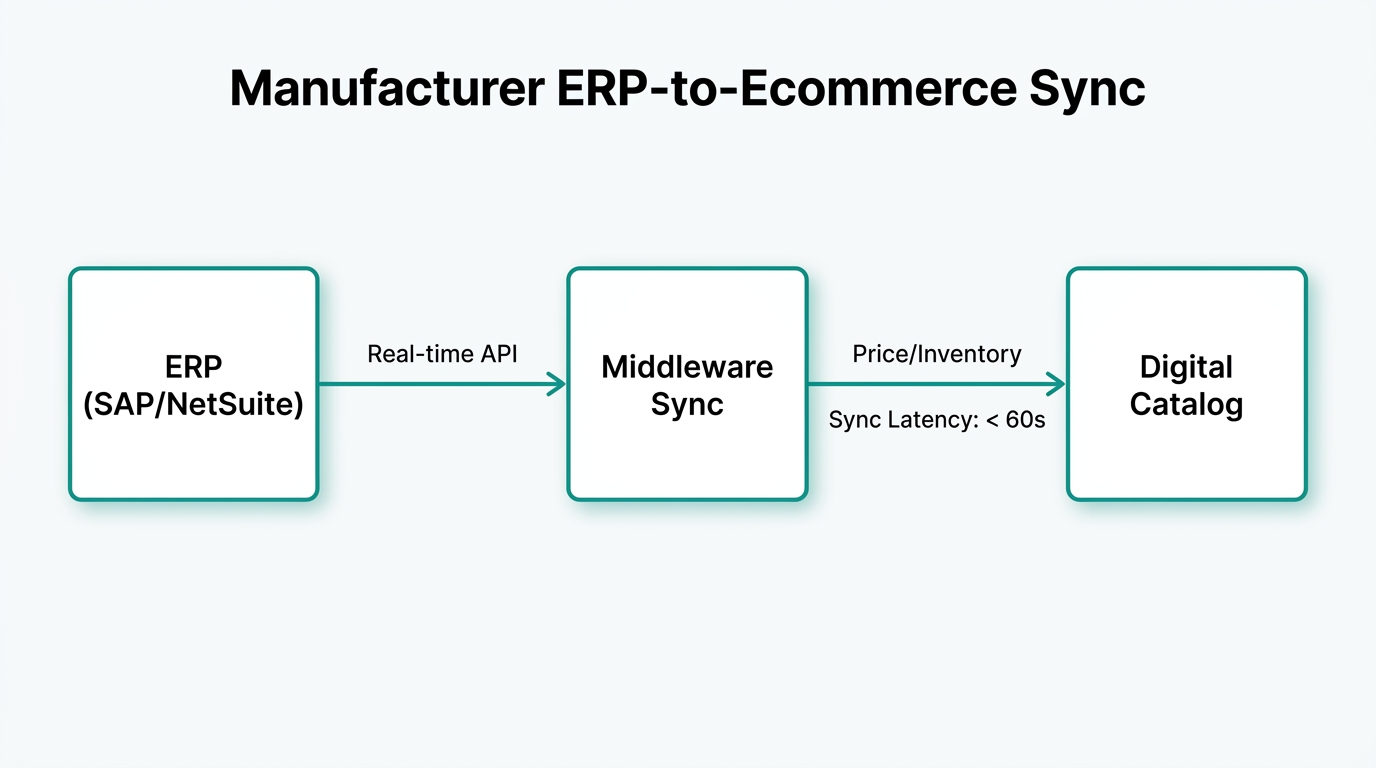
For manufacturers, the website is only the tip of the iceberg. The real work happens in the ERP (Enterprise Resource Planning) and CRM systems. Wholesale ecommerce automation 2026 requires a platform that can handle thousands of API calls per minute without "throttling" the connection. BigCommerce is often cited as superior for these heavy data syncs due to its more generous API rate limits on non-enterprise tiers.
However, Shopify Plus has countered with its own automation suite. By using Shopify Scripts and their advanced simulation tools, manufacturers can stress-test their storefront changes before going live. This is critical for high-volume brands like Gymshark, which processes massive transaction volumes globally.
Automating the B2B Back Office with Stormy AI
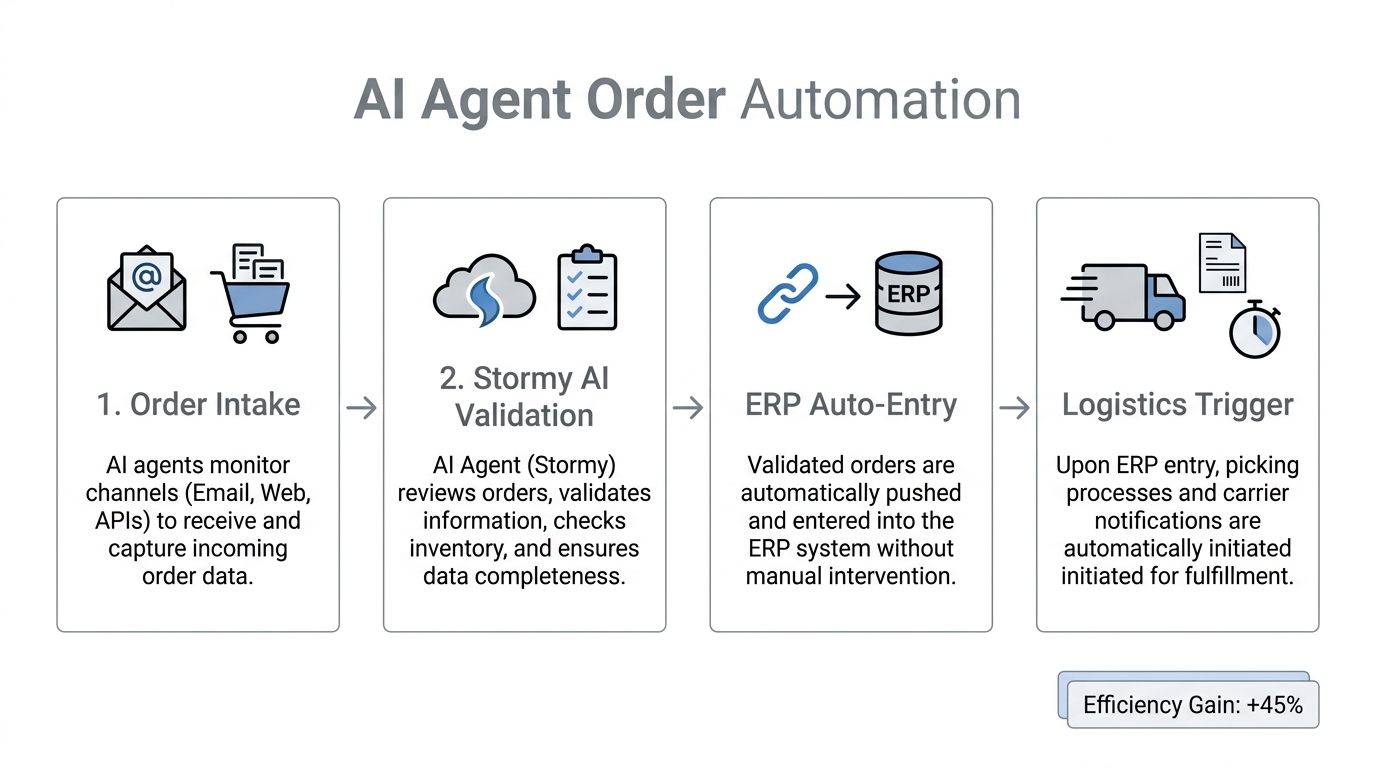
Whether you choose Shopify or BigCommerce, the challenge of 2026 is managing the "messy back office." Even with a great platform, somebody still needs to follow up with suppliers about late shipments, monitor wholesale inventory levels, and manage the creator partnerships that drive modern B2B awareness. This is where Stormy AI, an AI ecommerce employee, changes the game.
Unlike a standard dashboard, Stormy AI can use a browser, a spreadsheet, and an email inbox to run your operations. For a manufacturer, Stormy can wake up every morning, check inventory levels in your Shopify or BigCommerce store, and draft polite follow-up emails to suppliers if a shipment is overdue.

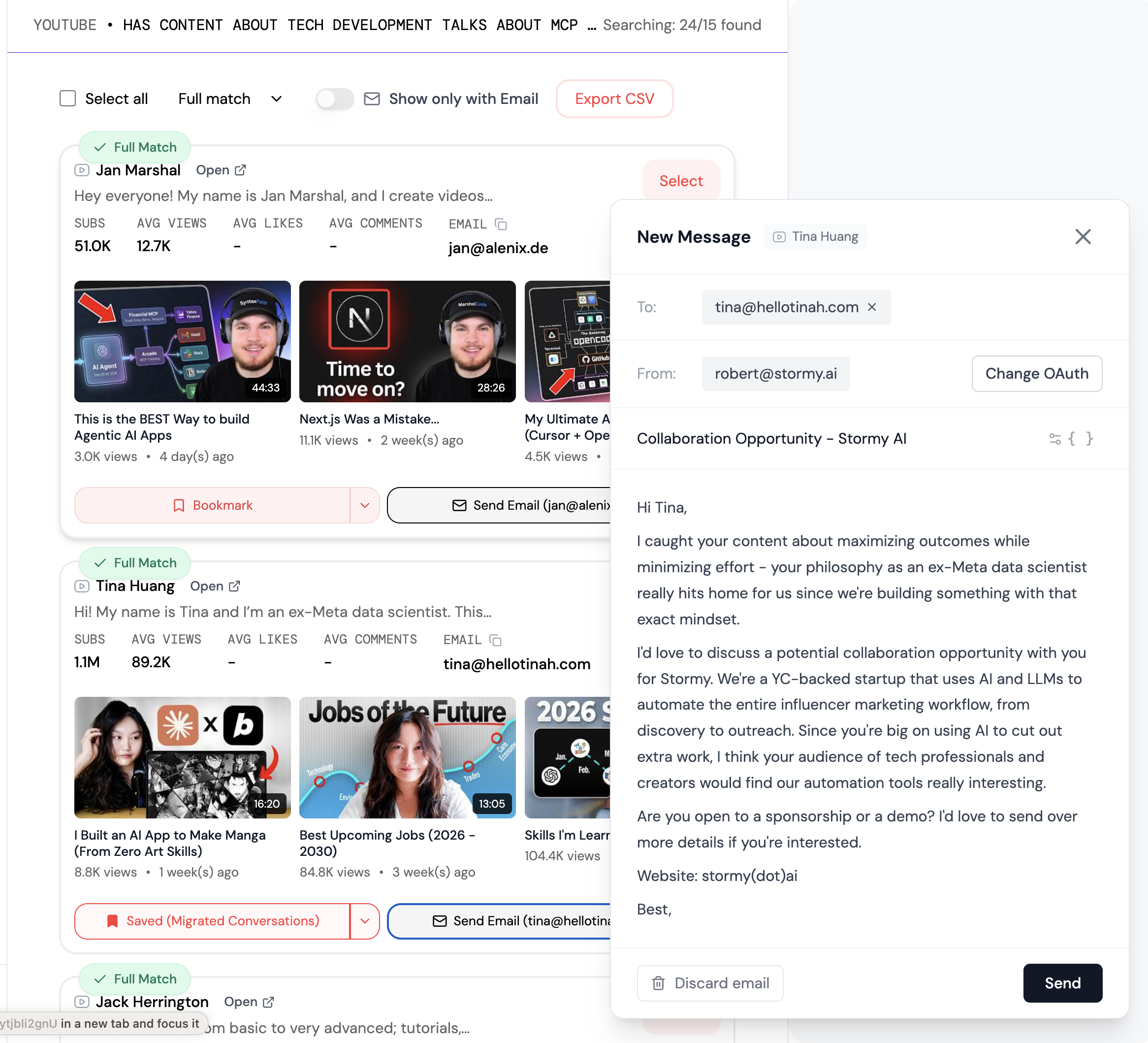
Beyond inventory, Stormy AI handles the outreach required to grow a B2B business. If you are looking for new distributors or industry-specific influencers to promote your wholesale line, Stormy uses natural-language search to discover partners and manages the entire CRM process autonomously.
Case Studies: The Hybrid B2B/DTC Model
In 2026, the most successful manufacturers don't just sell to wholesalers; they run a hybrid model with a direct-to-consumer (DTC) storefront. This requires a platform that can handle Multi-Storefront (MSF) logic without creating separate inventory silos.
- MKM Building Supplies: Adopted a headless architecture on BigCommerce. The result was an 82% growth in revenue, as documented in their official case study, by creating a more responsive, app-like experience for contractors.
- Lovall: Leveraged AI-powered personalization via Bloomreach on Shopify to achieve a 310.5% increase in automated email revenue. This shows that even B2B-heavy brands can benefit from Shopify's high-conversion DTC features.
Ecommerce for Manufacturers 2026: The Verdict
Choosing your B2B ecommerce platform in 2026 comes down to your operational complexity vs. your need for conversion speed. If your priority is conversion-rate optimization (CRO) and leveraging the world's most advanced AI commerce ecosystem, Shopify is the leader. Its high average checkout conversion rate remains a massive draw for brands with a heavy DTC component.
However, for manufacturers with deeply complex B2B catalogs, specific regional pricing needs, or a requirement for 0% transaction fees across third-party gateways, BigCommerce is the superior technical choice. Their 211% ROI found in Forrester's Total Economic Impact study proves their value for enterprise-level wholesalers.
Ultimately, the platform is just the foundation. To truly scale in 2026, you need an AI agent that bridges the gap between your store, your suppliers, and your customers. Stormy AI acts as that bridge, automating the wholesale ecommerce workflows that used to require a full-time operations team.