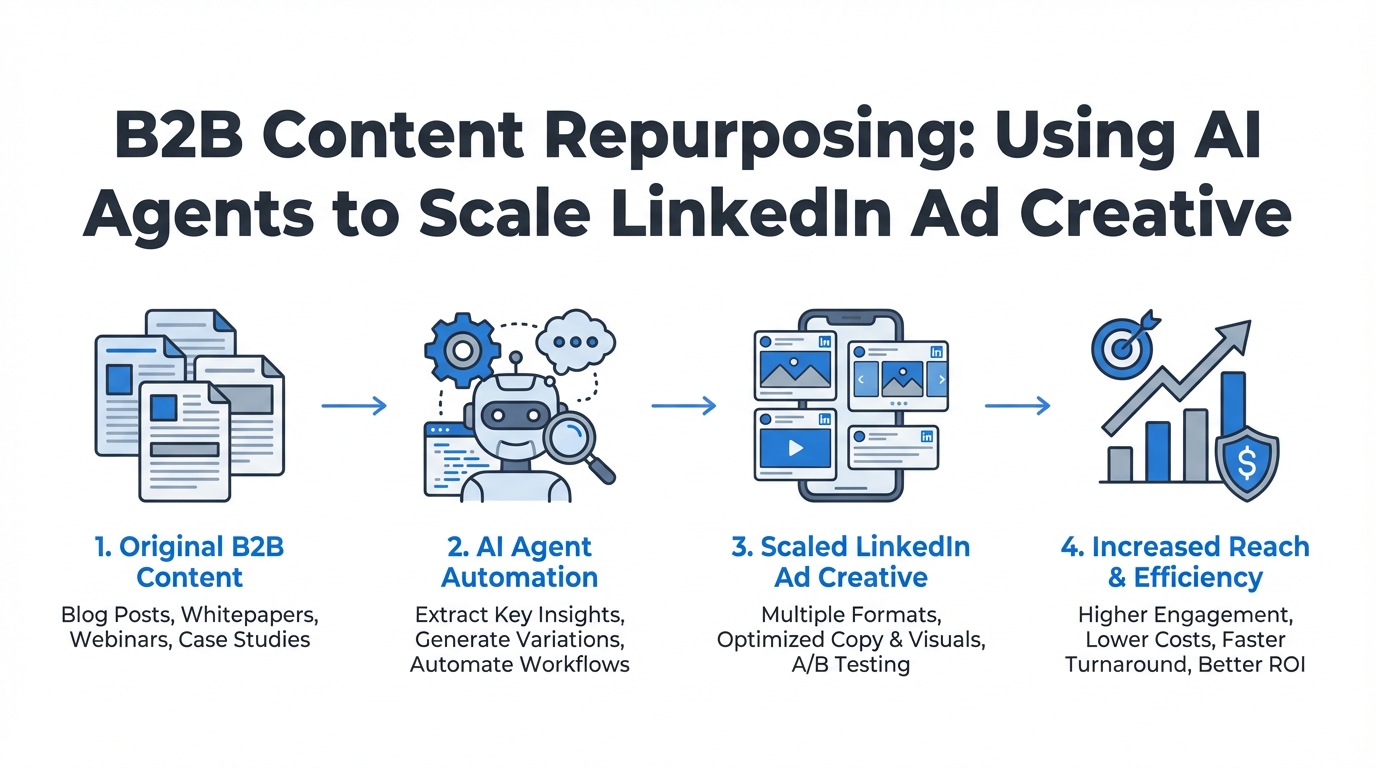
In the high-stakes world of enterprise marketing, the battle for attention isn't won with more content—it's won with better resonance. As LinkedIn continues to dominate the landscape, generating 80% of all B2B social media leads according to LinkedIn’s own marketing data, the pressure to maintain a constant stream of high-quality ad creative has never been higher. Yet, most teams find themselves trapped in a bottleneck: they have hours of valuable webinar footage and technical whitepapers, but lack the bandwidth to translate that expertise into the short, punchy formats that thrive on social feeds. The manual effort required to repurpose long-form assets often results in 'generic AI' outputs that lack the founder's unique perspective, leading to what many call the 'AI reach penalty.'
The paradigm is shifting from simple automation to Agentic Marketing Orchestration. Instead of just using a chatbot to write a post, sophisticated marketers are now leveraging tools like Claude Code to build autonomous engines that manage, audit, and optimize campaigns directly from the terminal. This approach allows for 'Long-Context Reasoning,' a capability highlighted in Anthropic’s Claude 3 research, analyzing years of historical performance data in seconds—something standard SaaS filters struggle with. By integrating these agents into your B2B content strategy, you can scale your creative output while ensuring every word feels like it came from your best subject matter expert.
The Generic AI Problem and the Importance of Voice DNA
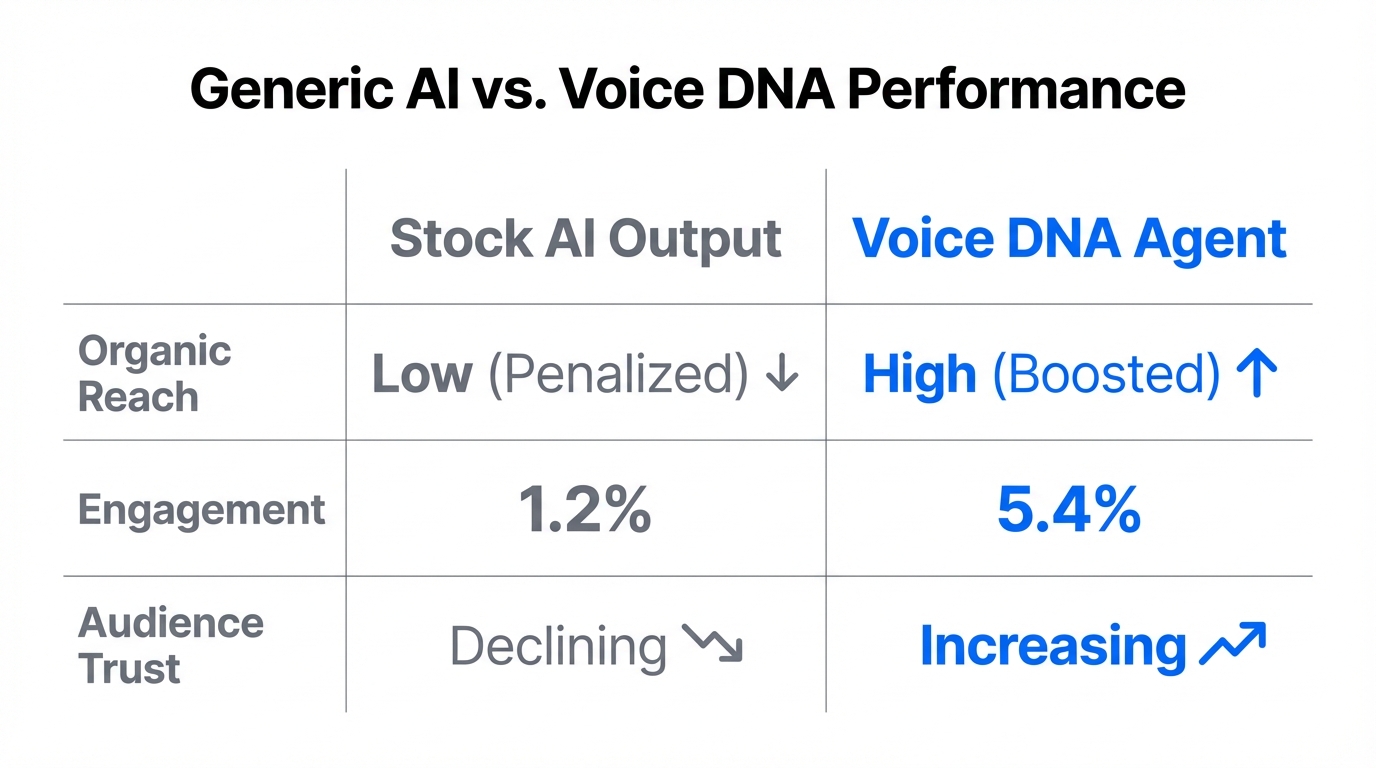
The biggest risk in modern social media distribution is sounding like everyone else. According to community insights on Reddit, generic AI content faces a 94% detection rate by LinkedIn’s algorithms, which can result in a 30% reach penalty. When your ad copy sounds like a template, the algorithm deprioritizes it, and your audience tunes it out. This is where 'Voice DNA' becomes critical.
Voice DNA is the unique combination of syntax, vocabulary, and perspective that defines a brand or founder. To scale effectively, you must train your AI agent on your historical high-performers. By using a command-line tool like Claude Code to scrape your own best-performing posts via tools like PhantomBuster, you can create a local style reference. This ensures that when the AI generates LinkedIn ad copy, it uses your specific 'vibe' rather than a generic corporate tone.
"Automation should scale the journey, not replace the human. It helps turn prospects into partners by freeing up your experts to focus on strategy while the AI handles the mechanical translation of ideas."The PAS Framework: Converting Webinar Transcripts into Ad Copy
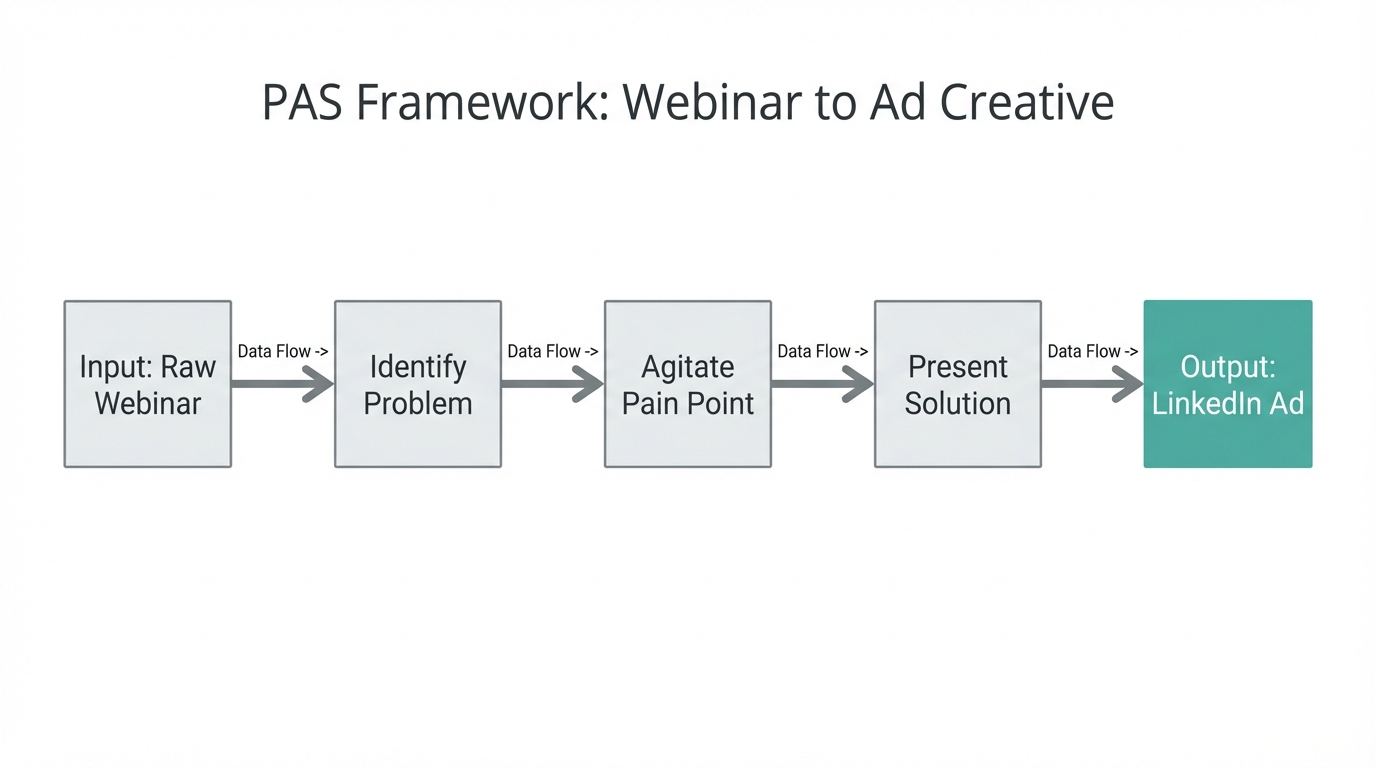
One of the most effective ways to fuel your content repurposing workflow is to leverage the PAS (Problem-Agitation-Solution) framework. This framework is a staple in direct-response marketing, often discussed by experts at Copyblogger, because it mirrors the natural human psychology of problem-solving. When you feed a transcript from a technical webinar into an AI agent, you aren't just asking for a summary; you are asking the agent to identify the 'bleeding neck' problem discussed by your speaker.
For example, if you have a 45-minute video of your CTO explaining cloud security, a standard AI might give you a list of features. An agentic workflow, however, will extract the specific technical pain points mentioned (Problem), highlight the risks of ignoring those vulnerabilities (Agitation), and then present your software as the bridge to safety (Solution). This structured approach turns dense technical information into high-converting LinkedIn ad copy that speaks directly to the user's pain.
The Agentic Workflow: Integrating Tella API and Claude Code
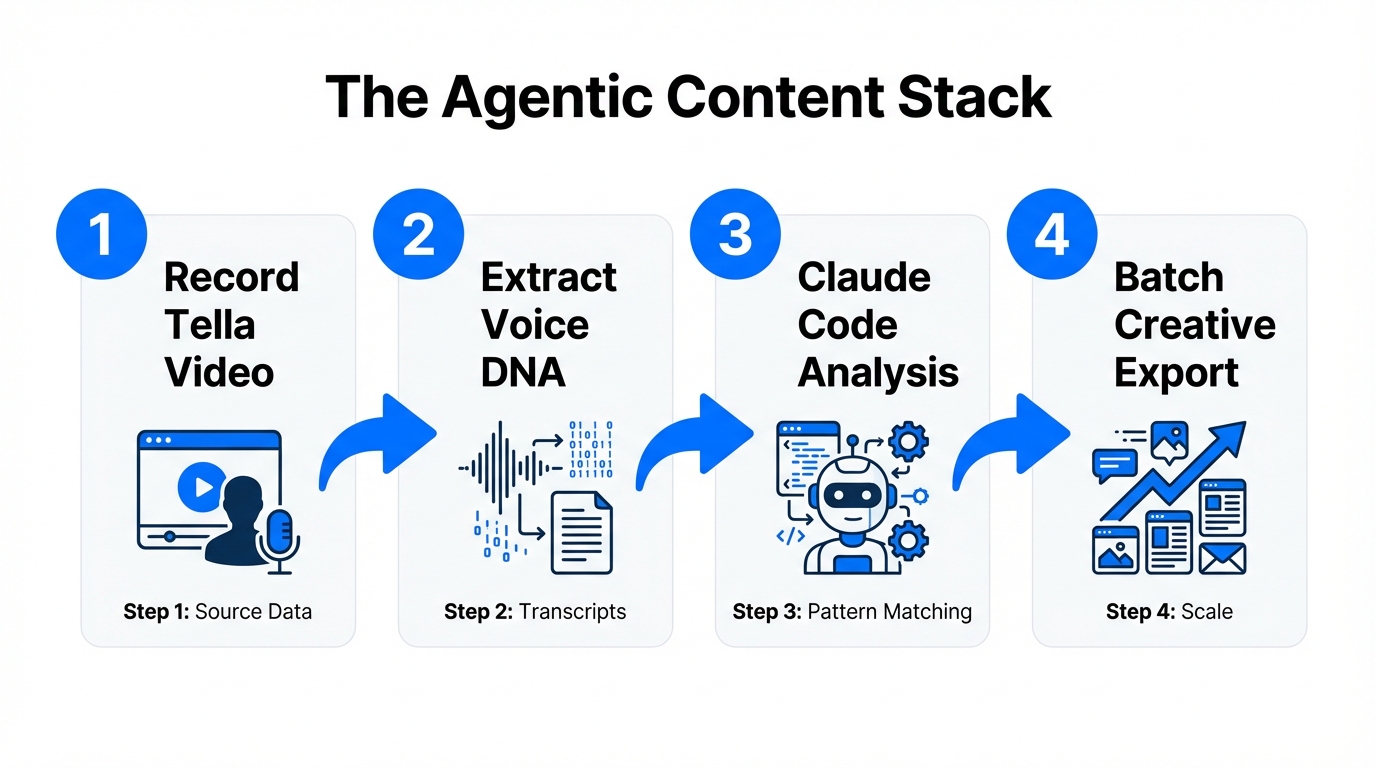
To build a truly scalable content repurposing engine, you need to move away from browser-based copy-pasting. The modern stack uses APIs to move data between platforms at lightspeed. Here is a playbook for setting up an autonomous creative pipeline:
Step 1: Asset Capture
Use the Tella API to automatically fetch transcripts from your team's latest video updates or customer case studies. These transcripts serve as the 'raw material' for your creative engine. Because Tella captures both screen and face, the transcripts often contain rich, anecdotal evidence that is perfect for 'Voice DNA' extraction.
Step 2: Terminal-Based Processing
Instead of a GUI, use Claude Code in your terminal to process these transcripts. By running a custom skill, you can tell the agent: 'Analyze this transcript, compare it against our top 10 performing LinkedIn ads from Q3, and generate 5 variations using the PAS framework.'
Step 3: Quality Vetting
Run a parallel audit. One of the most powerful features of agentic tools is their ability to run self-checks. You can use a tool like Cloudy Ads (an open-source skill available on GitHub) to run your generated copy against 190+ checkpoints, ensuring compliance with both brand guidelines and platform best practices.
| Workflow Phase | Manual Approach | Agentic Approach |
|---|---|---|
| Discovery | Scrolling through old docs | AI-driven search across transcripts |
| Creative | Writing from scratch | PAS framework auto-generation |
| Optimization | A/B testing over weeks | Predictive auditing via Claude Code |
| Scaling | Hiring more writers | Increasing API calls |
The MCP Advantage: Connecting Directly to Performance Data
The real 'secret sauce' of 2026 marketing is the Model Context Protocol (MCP). MCP allows your AI agent to talk directly to your data sources without you having to export CSVs manually. By using an MCP server for LinkedIn Ads, you can prompt Claude directly from your terminal: 'Which ad headlines had the lowest CPC for CTOs last month? Rewrite our new webinar clips to match that style.'
This level of integration allows for real-time creative pivoting. If the data shows that your audience is responding more to 'how-to' content than 'thought leadership,' the agent can instantly re-process your entire content library to favor that angle. Companies like Snowflake and Smartsheet are already using these 'Action-First' tasks to manage complex data sets with over 90% accuracy.
"The transition from no-code SaaS to low-code agentic tools allows marketers to act as architects rather than just operators, building systems that learn from every click."Scaling Human Elements with Stormy AI
While AI agents are incredible at restructuring data, B2B content strategy still requires a human face to build trust. This is where user-generated content (UGC) and creator partnerships become invaluable. To find the right voices to front your brand, tools like Stormy AI can help source and manage UGC creators who can take your AI-generated scripts and perform them with genuine emotion. By using Stormy AI for creator discovery, you ensure that your scaled creative engine still feels authentically human, combining the efficiency of AI with the credibility of real influencers.
Risks, Limits, and Compliance in Automation
Scaling too fast can lead to technical and platform risks. LinkedIn is notoriously protective of its ecosystem. To avoid shadow-banning, you must adhere to strict activity limits. For instance, PhantomBuster recommends staying under 20 requests per day for new connections and 100 per day for messages. Furthermore, when building your own AI content automation scripts, always implement Exponential Backoff logic to handle 429 'Too Many Requests' errors gracefully, as outlined in the LinkedIn Developer Documentation.
The Future: Building Your 2026 Marketing Command Center
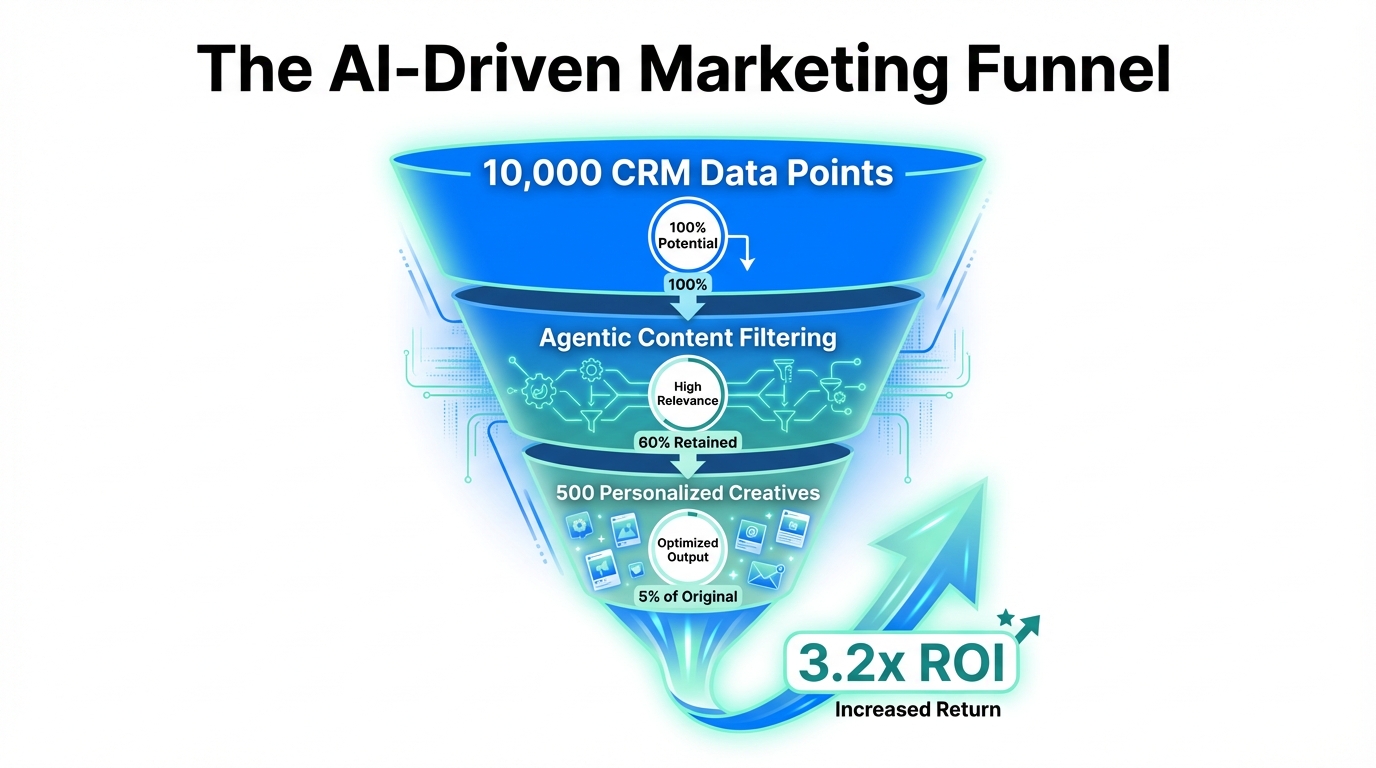
The content repurposing engine of the future isn't a single app; it’s a connected ecosystem. You might pair n8n for trigger-based workflows with Salesforce or ActiveCampaign for CRM data, all orchestrated by a central AI agent. As Gartner predicts that 40% of enterprise applications will embed AI agents by 2026, the competitive advantage will go to those who can build 'Voice DNA' into their systems today.
By moving your creative process into a terminal-based environment like Claude Code, you gain the speed of a developer and the insight of a data scientist. You stop being a 'content creator' and start being a 'content architect,' building machines that turn every webinar, meeting, and whitepaper into a high-performing lead generation asset on LinkedIn. The era of generic, manual marketing is over—the era of the Agentic Marketing Orchestrator has begun.