In the rapidly evolving landscape of digital marketing, we have officially moved past the era of "AI as an assistant." By 2026, the industry has shifted toward the deployment of autonomous social employees—intelligent agents capable of not just drafting posts, but managing entire growth cycles, monitoring sentiment, and adjusting strategy in real-time. According to recent market analysis, the AI social media market is projected to surge from $2.12 billion in 2024 to $7.87 billion by 2029, as highlighted by AdMove. For growth marketers and founders, the goal is no longer to write better prompts, but to build a self-sustaining engine that operates while the team focuses on high-level creative direction.
The Shift to Agentic Growth: From Assistants to Employees
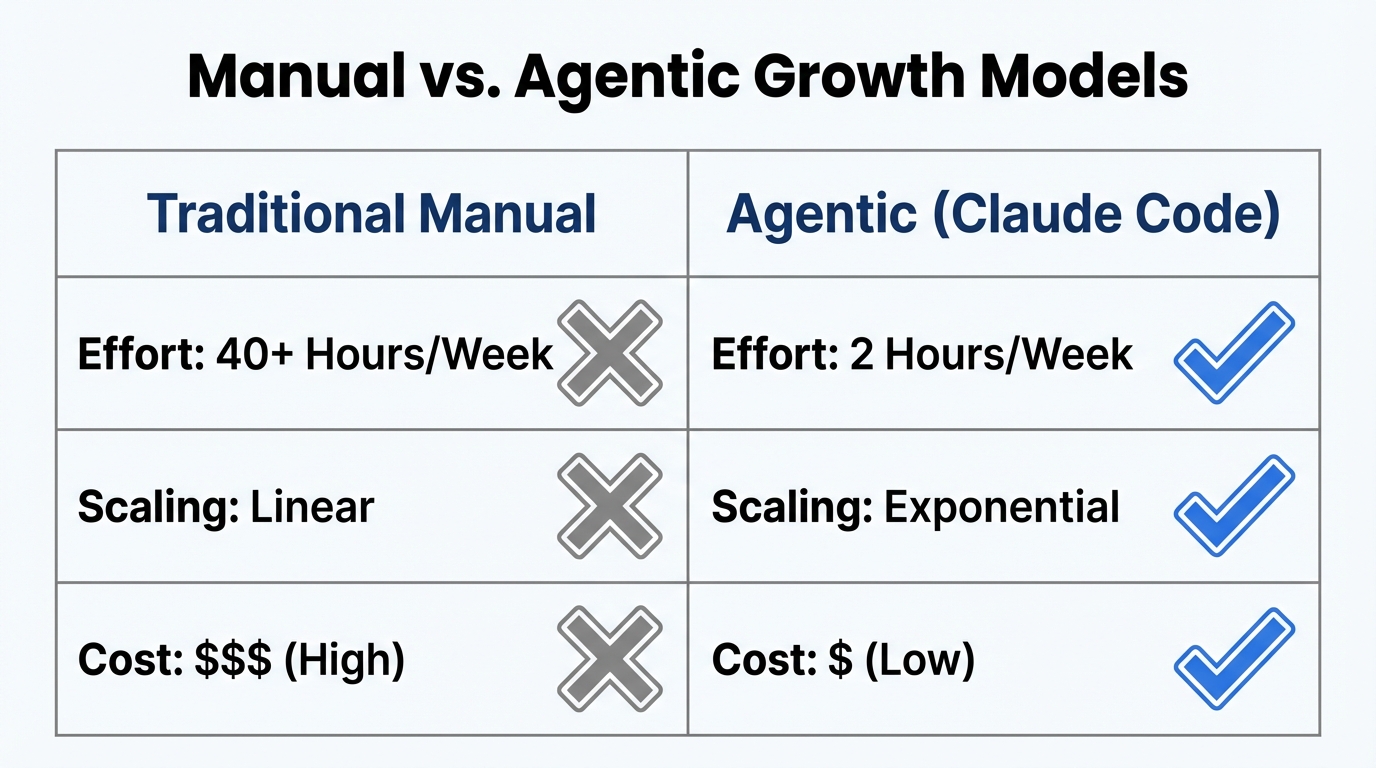
The transition from passive tools to active agents is driven by the emergence of the Claude Agent SDK. Unlike standard LLM integrations that wait for a user prompt, an agentic system operates in a "stateful" loop. It observes the environment (e.g., X/Twitter trends), thinks about a goal (e.g., increasing brand authority), and executes actions (e.g., drafting and publishing a thread). This shift is already yielding massive results; teams automating their social distribution report a 20-30% lift in engagement and a 30% reduction in manual content creation time, according to data from Templated.
As Gmelius reports, 79% of companies have already begun adopting these agents, with two-thirds seeing a measurable ROI in the first quarter of deployment. This playbook outlines how to utilize Claude Code to build your own growth engine.
Building the Brain: Claude Code and the Agent SDK
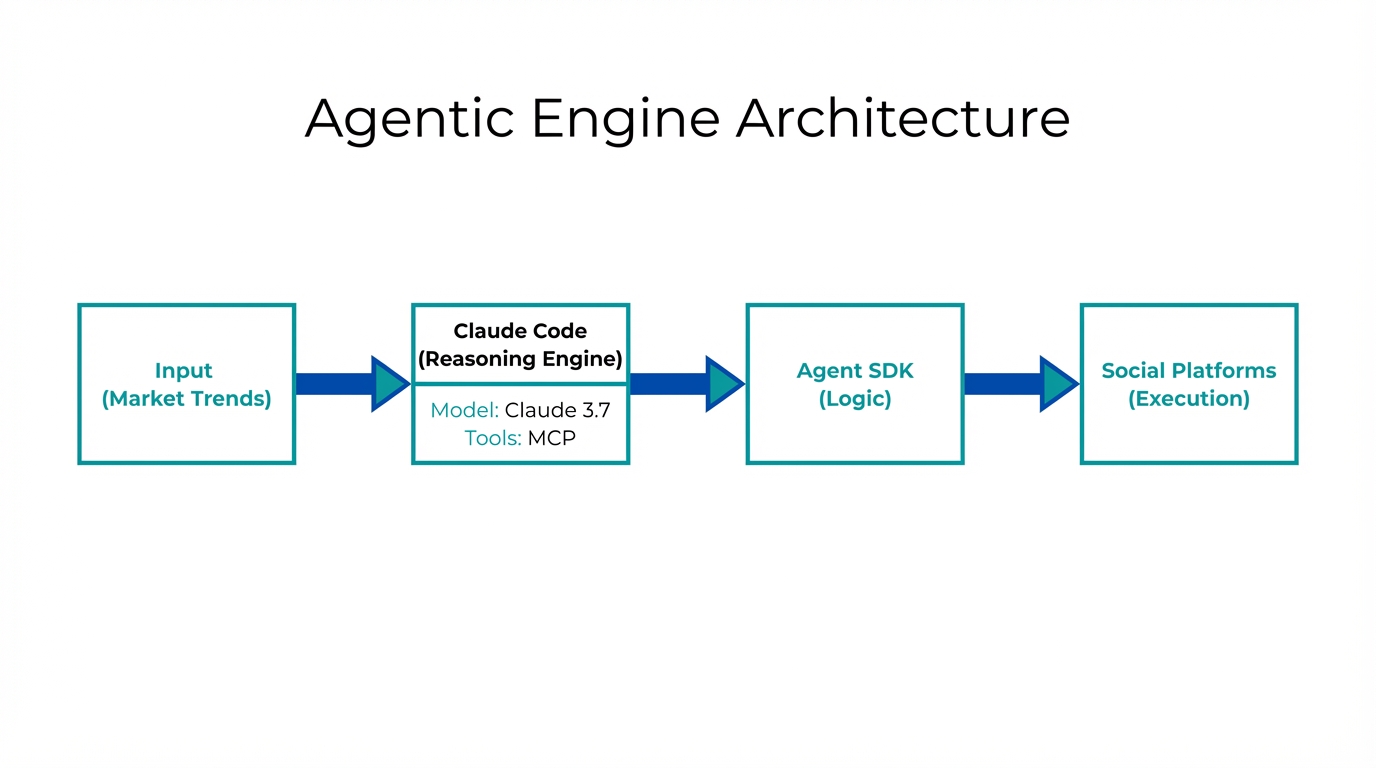
The foundation of an autonomous growth engine is the environment in which it lives. Claude Code is Anthropic’s agentic coding tool that operates directly in your terminal, allowing you to scaffold and deploy these "social employees" with minimal friction. By combining it with the Claude Agent SDK, you create a system that can manage its own workflow, execute shell commands, and even edit its own strategy files based on performance data.
"The future of growth isn't human-assisted AI—it's AI-managed systems where humans act as the creative directors and ultimate arbiters of strategy."To understand why this is a revolutionary step for autonomous social media marketing, let's compare the traditional approach to the agentic model:
| Feature | Legacy Automation | Autonomous Social Employees |
|---|---|---|
| Trigger | Time-based or Manual | Event-driven (Trends/Sentiment) |
| Content | Static Templates | Dynamic Reasoning & Context |
| Optimization | Manual A/B Testing | Autonomous Performance Loops |
| Integration | Hard-coded APIs | Model Context Protocol (MCP) |
The Playbook: Setting Up Your Growth Environment
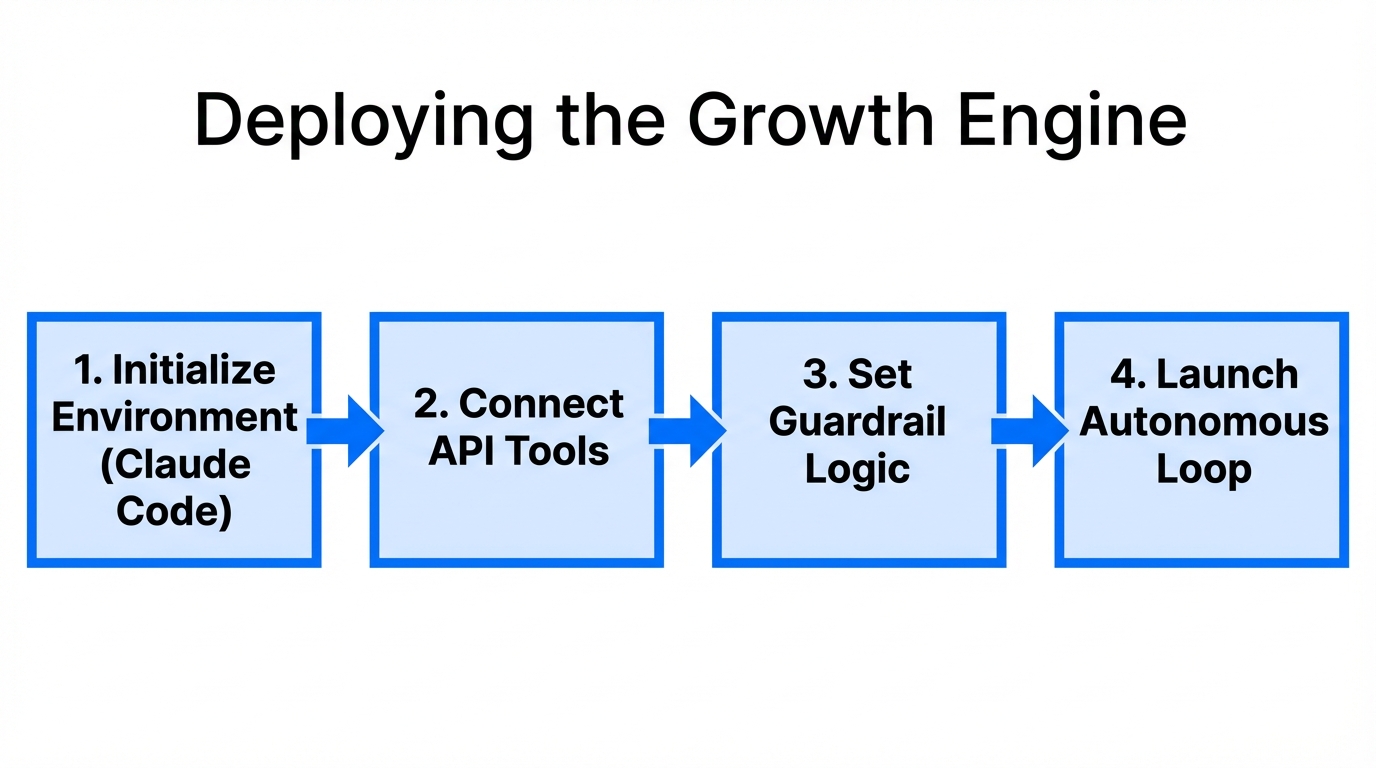
Building an agent requires a modular architecture: the Brain (Claude), the Tools (APIs), and the Memory (Configuration). Here is how to execute the setup.
Step 1: Initialize the Agent Environment
First, you must set up your project using the Anthropic Developer Console. This is where you obtain your API keys and monitor token usage. In your terminal, initialize a new Node project and install the SDK:
npm init -y && npm install @anthropic-ai/claude-agent-sdk
This allows your agent to maintain a stateful session, essential for multi-step tasks like researching a topic on Google and then drafting a tailored post for LinkedIn.
Step 2: Connect to Social Platforms via MCP
The "USB-C for AI" is the Model Context Protocol (MCP). Instead of writing custom OAuth wrappers for every platform, use an MCP Server that supports X, LinkedIn, and Mastodon. You can find pre-built servers on the MCP Marketplace or use the Postman AI Tool Builder to turn any social API into an AI-ready tool in minutes.
For example, you can connect your agent to the X Developer Portal to monitor mentions or the LinkedIn Developer Portal to automate professional networking posts. This architecture allows the agent to "see" the social world through these standardized connections.
Step 3: Implement Strategic Memory with CLAUDE.md
One of the most powerful features of Claude Code is its ability to read a CLAUDE.md file at the start of every session. Use this file to define your Strategic Memory. It should contain your brand voice, posting frequency, and compliance rules. A robust growth strategy often involves sourcing high-quality user-generated content (UGC); platforms like Stormy AI streamline creator sourcing and outreach, and your agent can be instructed in CLAUDE.md to prioritize content from these verified creators.
High-Stakes Strategy: Leveraging Claude 3.7 Thinking Mode
For complex tasks like crisis management or viral thread planning, the standard model response isn't enough. Claude 3.7 Sonnet introduces a Thinking Mode that allows the agent to reason through multiple scenarios before acting. This is critical for AI agent marketing strategy where one wrong post can damage a brand's reputation.
As seen in cases cited by Forbes, creators are using these reasoning capabilities to analyze YouTube comments and autonomously generate engagement polls that drive community growth. This level of nuance allows an agent to act as a true autonomous social employee.
Risk Management: Kill Switches and ROI Protection
While autonomy is the goal, unmonitored agents can lead to runaway costs or "infinite loops" of spam. Risk management is the most overlooked part of any social media automation 2026 strategy. To protect your ROI, you must implement strict boundaries:
- Kill Switches: Implement a
maxIterationslimit in your SDK configuration to prevent the agent from looping indefinitely. - Token Caps: Monitor your usage on the Anthropic Console to ensure the growth engine stays within budget.
- Sandboxing: Run your agent in Docker containers to ensure it only has access to the files and APIs it absolutely needs.
By pairing Stormy AI for creator discovery and vetting with Claude Code for distribution, you create a robust ecosystem that balances high-quality human creativity with autonomous AI efficiency. This dual-layered approach ensures your social presence remains authentic while scaling at a pace impossible for human teams alone.
Conclusion: The Future is Autonomous
Building an autonomous social media growth engine with Claude Code is not just about saving time; it's about scaling impact. By leveraging the Claude Agent SDK and the Model Context Protocol, you can build a system that understands your brand, engages your audience, and optimizes your strategy in real-time. Start by defining your goals, setting up your environment, and implementing the strategic memory needed to keep your agent on track. In the world of 2026, the brands that win will be the ones managed by the smartest agents.