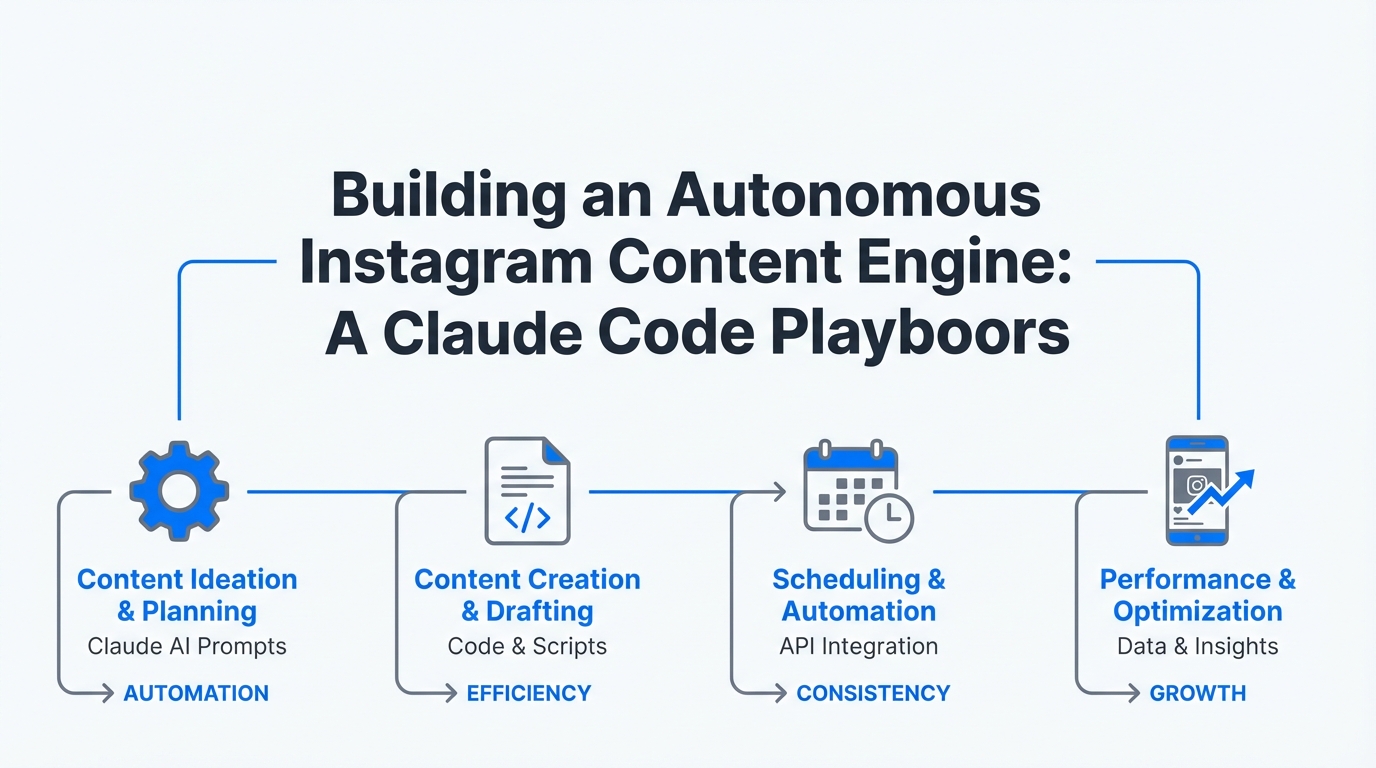
The era of manually drafting social media posts is coming to a close. In its place, a new paradigm of agentic automation is rising, where influencers and brands no longer just "chat" with AI, but deploy autonomous agents to run entire content lifecycles. For creators aiming to scale in the 2025-2026 market, the focus has shifted from simple scheduling to building a Social Media Orchestrator—a terminal-based engine that researches, validates, creates, and deploys content while you sleep.
By leveraging Anthropic's latest tool, Claude Code, creators can move beyond the limitations of browser-based interfaces. This playbook provides the technical blueprint for building a social media automation workflow that treats content creation as a software engineering problem, resulting in higher consistency, lower overhead, and a massive competitive advantage in the AI creator economy.
The Shift to Agentic Social Media: 2025–2026 Trends
Why the move to terminal agents? According to the Digital Marketing Institute, a staggering 89.7% of social media marketers are now using AI daily. However, the true winners are those moving toward "Goal-Only" campaigns. As noted by Reboot IQ, Meta is increasingly prioritizing high-quality creative assets over manual audience targeting, meaning your ability to produce high-volume, high-quality creative is now the primary lever for growth.
This shift means that automated instagram content is no longer about "set and forget" queues. It is about building "Skills" that can browse the web via the Model Context Protocol (MCP), analyze competitors, and adjust strategies in real-time. Teams adopting these agentic workflows report a 20-30% lift in engagement and a 30% reduction in total production time (Templated.io).
The Tech Stack: Anatomy of a Social Media Orchestrator
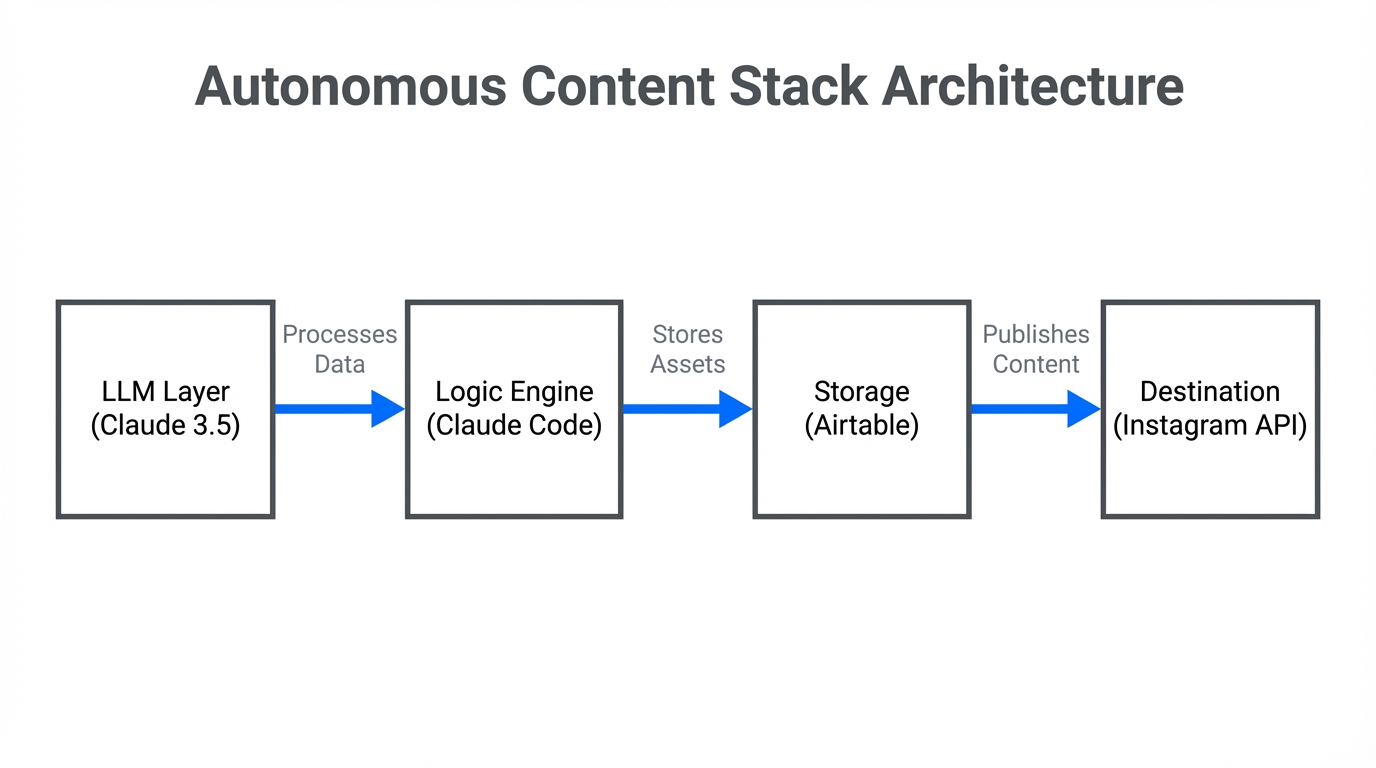
Building an autonomous engine requires a "bridge" between Claude's reasoning capabilities and the social platforms' APIs. You cannot simply ask Claude to "post to Instagram"; you must provide it with the tools to execute that command. Below is the modern AI creator economy tool stack recommended for this playbook.
| Layer | Tool | Function |
|---|---|---|
| Engine | Claude Code | Reasoning, coding, and workflow execution. |
| Connection | MCP (Model Context Protocol) | Connecting Claude to local files and the web. |
| Distribution | Late (GetLate) | Developer-first API for Instagram and TikTok. |
| Logic Bridge | Zapier MCP | Triggering 1,000+ automations via natural language. |
| Visuals | DALL-E 3 / Canva | Asset generation and template application. |
For those managing complex brand accounts, integrating these with a Stormy AI Creator CRM or Notion database ensures that your automated instagram content remains aligned with broader marketing goals.
"The future of the creator economy isn't more people posting; it's fewer people managing more intelligent agents."Step-by-Step Playbook: Building the Content Skill
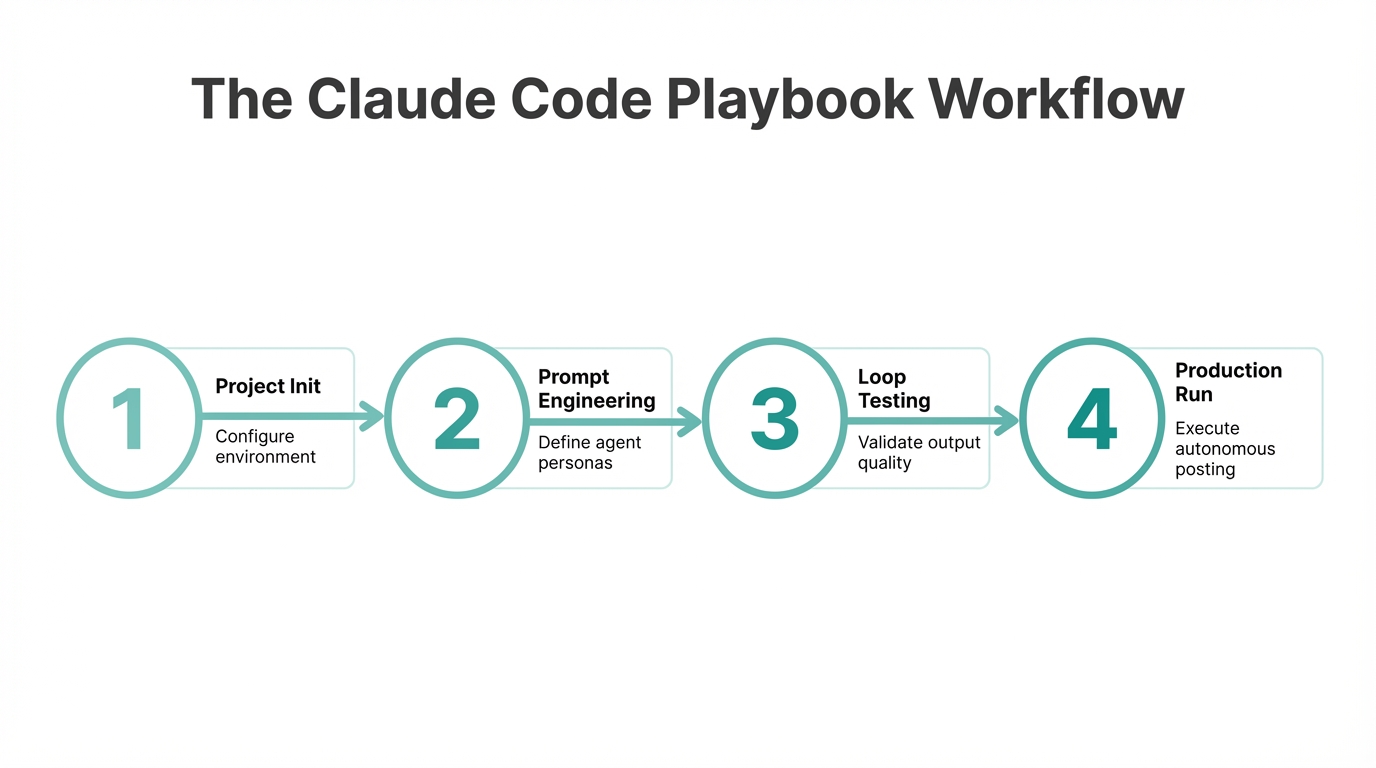
This workflow transforms Claude Code from a coding assistant into a content manager. Follow these steps to build your custom "Social Media Orchestrator" skill.
Step 1: Install and Initialize Claude Code
First, ensure you have the environment ready. Open your terminal and install the CLI via npm: npm install -g @anthropic-ai/claude-code. Initialize it in a folder where you will store your brand voice files and local scripts. This allows Claude to "read" your preferences before generating content.
Step 2: Define Your Brand "Voice" Files
Claude Code performs best when it has a local knowledge base. Create a file named INSTAGRAM_VOICE.md. In this file, detail your tone, banned keywords, and emoji preferences. Instruct Claude to always reference this file before drafting. This prevents the "generic AI" feel that Sociality.io warns makes users "AI-blind."
Step 3: Connect to the Web via Brave Search MCP
To automate research, you need to give Claude eyes. Use the Composio MCP server to link Brave Search. Now, you can give a command like: "Research the top 5 trending topics in AI photography today and summarize why they are viral." This replaces hours of manual scrolling with seconds of agentic scanning.
Step 4: Script the Generation Pipeline
Ask Claude Code to write a Python script using the instagrapi library. This script should take a caption from a Markdown file, generate a matching image via the OpenAI API, and prep it for upload. Never hardcode your credentials; instead, have Claude read them from a .env file to ensure security, as recommended by experts at Spurnow.
Step 5: Deploy to the "Late" API
Instead of manual uploads, which risk account bans, use an official developer bridge like Late. Command Claude: "Send the generated post to my Late.dev queue for tomorrow at 10 AM EST." This ensures your social media automation workflow follows platform guidelines and maintains account health.
Case Study: From 12 Hours to 10 Minutes
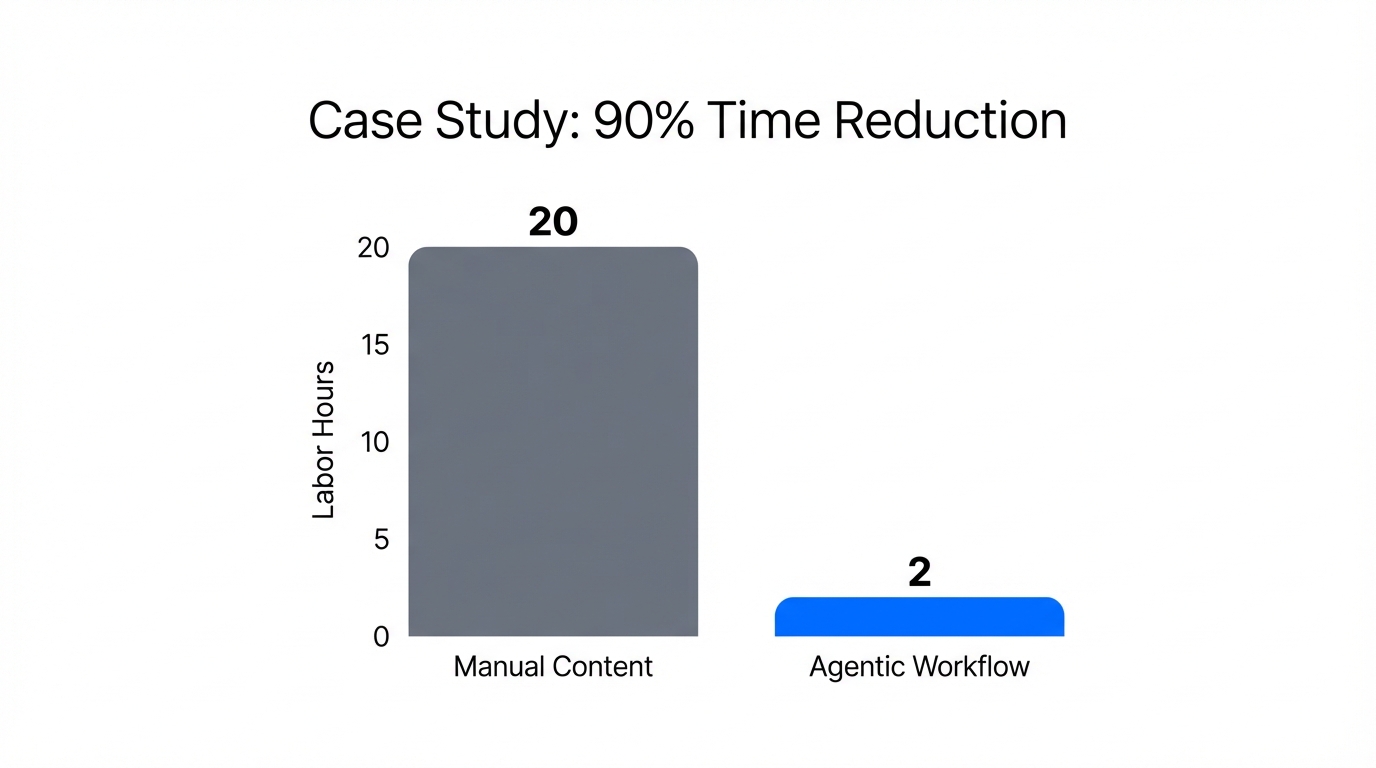
Consider the impact of this setup on a real-world scenario. A developer recently shared a workflow on Reddit for a "Local Newsletter" agent. Previously, the creator spent 12 hours a week scraping local event accounts, summarizing the details, and re-designing them for Instagram.
By building a custom skill in Claude Code, they automated the process: the agent uses vision capabilities to parse text from local flyers, checks a cooldown.json file to avoid repeating events, and generates a carousel post. The result? The entire process was compressed into a 10-minute terminal command. This level of efficiency is what separates the new class of "AI-native" creators from the rest.
Multi-Platform Distribution: The /social Command
The true power of a Claude Code playbook lies in multi-platform scaling. Rather than having separate workflows for TikTok, Instagram, and YouTube, you can create a single master command. Using the Late MCP server, as demonstrated by tech creators on YouTube, you can trigger a /social command that performs the following:
- Research: Finds a viral hook on X or Reddit.
- Adaptation: Rewrites the hook into a TikTok script, an Instagram caption, and a YouTube Short description.
- Generation: Uses CapCut or similar APIs to assemble the video.
- Deployment: Pushes to all three platforms simultaneously.
By using Stormy AI to vet the quality of the creators you are benchmarking against, you can ensure your automated instagram content stays competitive with the highest-performing accounts in your niche.
"If you're still clicking 'Upload' manually, you're not a creator; you're a data entry clerk for a social media platform."Common Mistakes & Strategic Safeguards
While automation offers massive scale, it also carries risks. To avoid the dreaded shadowban, keep these 2026 best practices in mind:
- Avoid Over-Automation: Posting more than twice a day via API can trigger spam filters. Storrito suggests that high-frequency automated posting without human oversight often leads to reduced reach.
- Platform-Specific Nuance: Do not use the same caption for LinkedIn and Instagram. Claude Code should be prompted to adjust the "voice" for each destination.
- Engagement vs. Publishing: Only automate content publishing. Automating "likes" and "follows" is heavily penalized in 2026 and should be avoided at all costs (PlugDialog).
- Human-in-the-Loop: Always have the agent output a draft to a Slack or Discord channel for a final "thumbs up" before it goes live.
Conclusion: From Chat to Agency
Building an autonomous Instagram content engine is the ultimate leverage for modern creators. By moving your workflow into Claude Code and utilizing the Model Context Protocol, you transform AI from a writing assistant into a full-scale digital agency. You are no longer fighting the algorithm; you are building the infrastructure to dominate it.
Ready to scale further? Once your content engine is running, use discover creators on Stormy to find the right partners for UGC collaborations that add the essential human element to your automated empire. The future of social media isn't just about being creative—it's about being architecturally superior. Start building your orchestrator today.