In 2026, the definition of "high-performance marketing" has shifted from the ability to write a clever headline to the ability to orchestrate complex technical systems. With the global AI in marketing market projected to hit $45.8 billion this year, according to MarketsandMarkets, the barrier between creative strategy and technical execution has effectively vanished. We are no longer just optimizing for blue links on a search page; we are optimizing for the large language models (LLMs) that synthesize those links into direct answers. This is the era of Generative Engine Optimization (GEO), and the primary tool for winning this race is Claude Code.
Claude Code, the agentic command-line interface (CLI) from Anthropic, represents a fundamental shift in how marketing teams operate. Instead of opening a chat window to ask for advice, 64% of high-growth marketing teams are now using CLI-based agents to take direct action on their site infrastructure, as reported by Salesforce. Whether it is refactoring broken metadata or deploying complex schema across thousands of pages, Claude Code is the "agentic colleague" that handles the technical drudgery of modern SEO.
Moving from SEO to GEO: Why Claude Code is the Engine of 2026
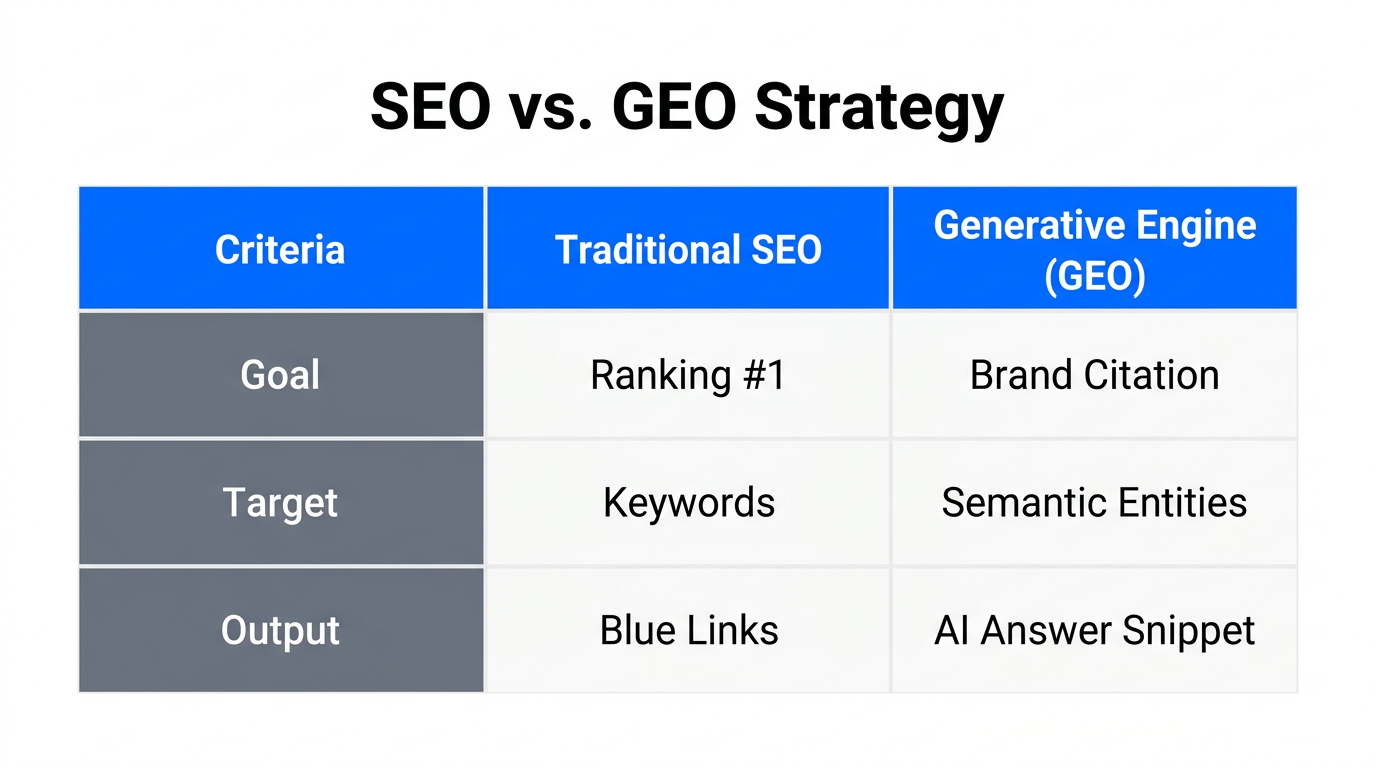
Traditional SEO was about keywords and backlinks. Generative Engine Optimization (GEO) is about information density, structured data, and context. Search engines like Google and Perplexity now prioritize websites that can be easily parsed by AI agents to provide authoritative answers. If your site structure is messy, you don't just lose a ranking; you disappear from the AI-generated summary entirely.
Using GEO with Claude Code allows marketers to perform site-wide "contextual updates" that ensure AI models understand the relationship between your products and user intent. Companies implementing these agentic workflows have seen a 35% reduction in technical debt, according to Gartner. This efficiency is critical because, in 2026, the speed of content deployment is often more important than the volume of content.
"Claude Code is about moving from AI as an assistant to AI as a colleague that can actually execute the technical drudgery that slows down creative teams." — Dario Amodei, CEO of Anthropic.
The Real-Time SEO Audit: Using CLI Commands for Site-Wide Remediation
The days of waiting weeks for a developer to fix meta-descriptions are over. With a Claude Code SEO audit, you can scan entire directories and perform automated SEO remediation in seconds. By running commands directly against your local file system, Claude can identify gaps and fix them without the need for manual tickets.
Example: Automated Metadata Generation
Imagine you have a /blog directory with 500 legacy articles. Many are missing meta-descriptions or have outdated H1 tags that don't align with your 2026 GEO strategy. You can simply command Claude:
claude "Scan my /blog directory, identify pages missing meta-descriptions, and write them based on the current H1 tags and primary keyword intent."
Claude doesn't just suggest the text; it opens the files, writes the code, and prepares a git commit. For marketers who find the standard terminal intimidating, tools like Warp Terminal are making these workflows more visual and accessible. This approach has led to a 127% faster content-to-code pipeline for teams managing complex marketing sites, as highlighted in a recent Stanford GSB Study on AI implementation.
Automating Schema at Scale: A Case Study in Efficiency
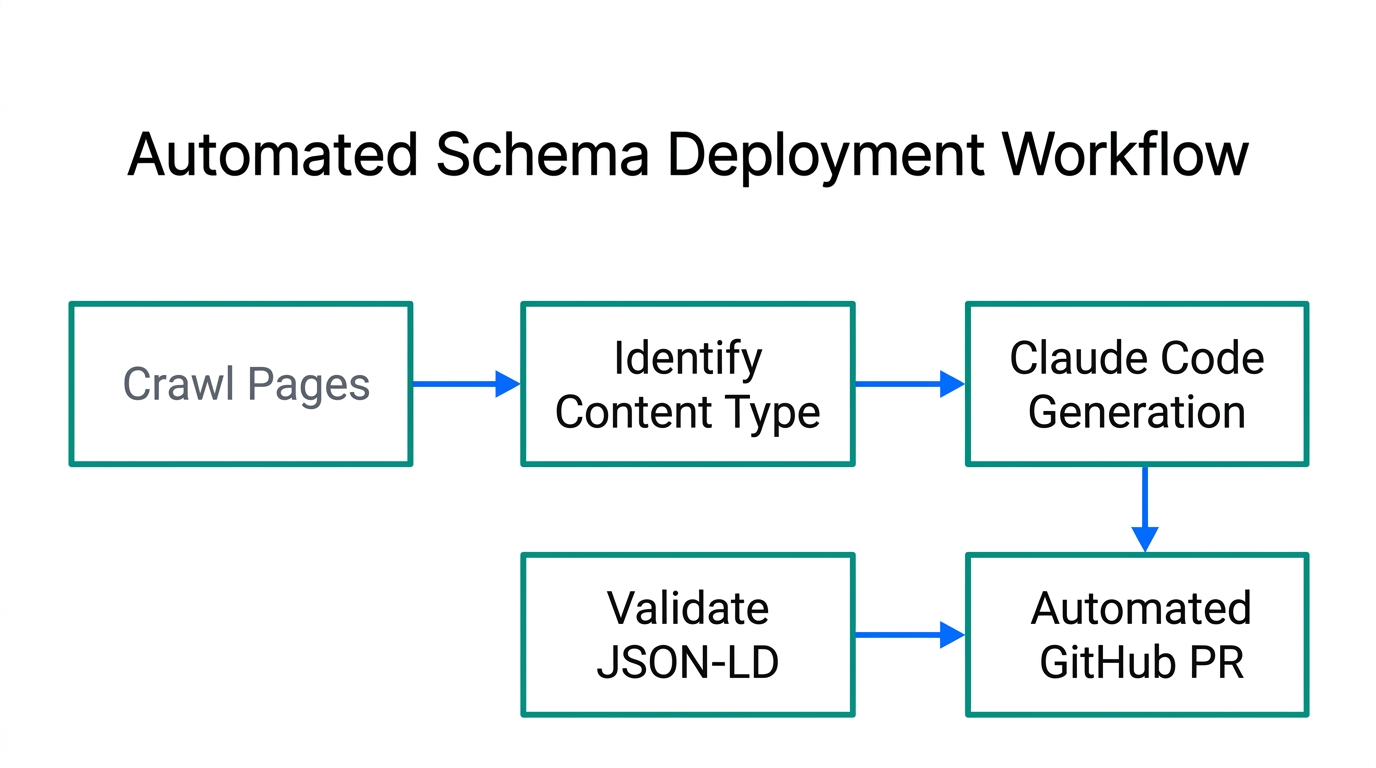
One of the most powerful applications of agentic SEO in 2026 is the automated deployment of structured data. Schema markup is the primary language of GEO; it tells AI engines exactly what your content represents. However, deploying unique schema across 10,000+ SKUs is a nightmare for manual teams.
Consider the case of RetailFlow, an e-commerce giant that used Claude Code to integrate Product Schema across their entire Shopify backend. By leveraging Claude's ability to read JSON files and product databases simultaneously, they automated a process that would have cost over $120,000 in manual SEO consulting fees.
| Strategy | Manual Workflow (2025) | Agentic Workflow (2026) |
|---|---|---|
| Time to Deploy | 4-6 Weeks | 2-3 Days |
| Accuracy | High Risk of Human Error | 99% Schema Validation |
| Cost | $$$$ (Consultants) | $ (API Tokens) |
| Scalability | Limited by Headcount | Infinite (CLI-Driven) |
As organic search traffic grew by 14% for RetailFlow in Q1 2026, it became clear that scaling schema with AI is the new baseline for e-commerce success. For brands also working with influencers, platforms like Stormy AI can help source the UGC creators whose content can then be linked within this rich schema to further boost authority.
Google Search Console Integration: The Model Context Protocol (MCP)
One of the biggest breakthroughs in 2026 is the Model Context Protocol (MCP) for marketing. MCP allows Claude Code to securely connect to external data sources like Google Search Console (GSC) or your analytics stack. This means Claude isn't just looking at your code; it's looking at your performance data.
By setting up an MCP server, you can automate indexation fixes. For example, if GSC reports 404 errors or "indexed though blocked by robots.txt" warnings, you can command Claude: claude "Check my latest GSC crawl errors via MCP and refactor the robots.txt or redirect map to fix them."
This level of automated SEO remediation ensures your site remains perfectly healthy without a human ever having to export a CSV or file a Jira ticket. According to McKinsey, high-maturity AI marketing teams are achieving 1.5x higher revenue growth by automating these "stable infrastructure" tasks.
"In 2026, the best marketers are those who can speak 'Agent.' It’s not about coding; it’s about orchestrating the code." — Ann Handley, MarketingProfs.
Improving Lighthouse Scores with the /fix Command
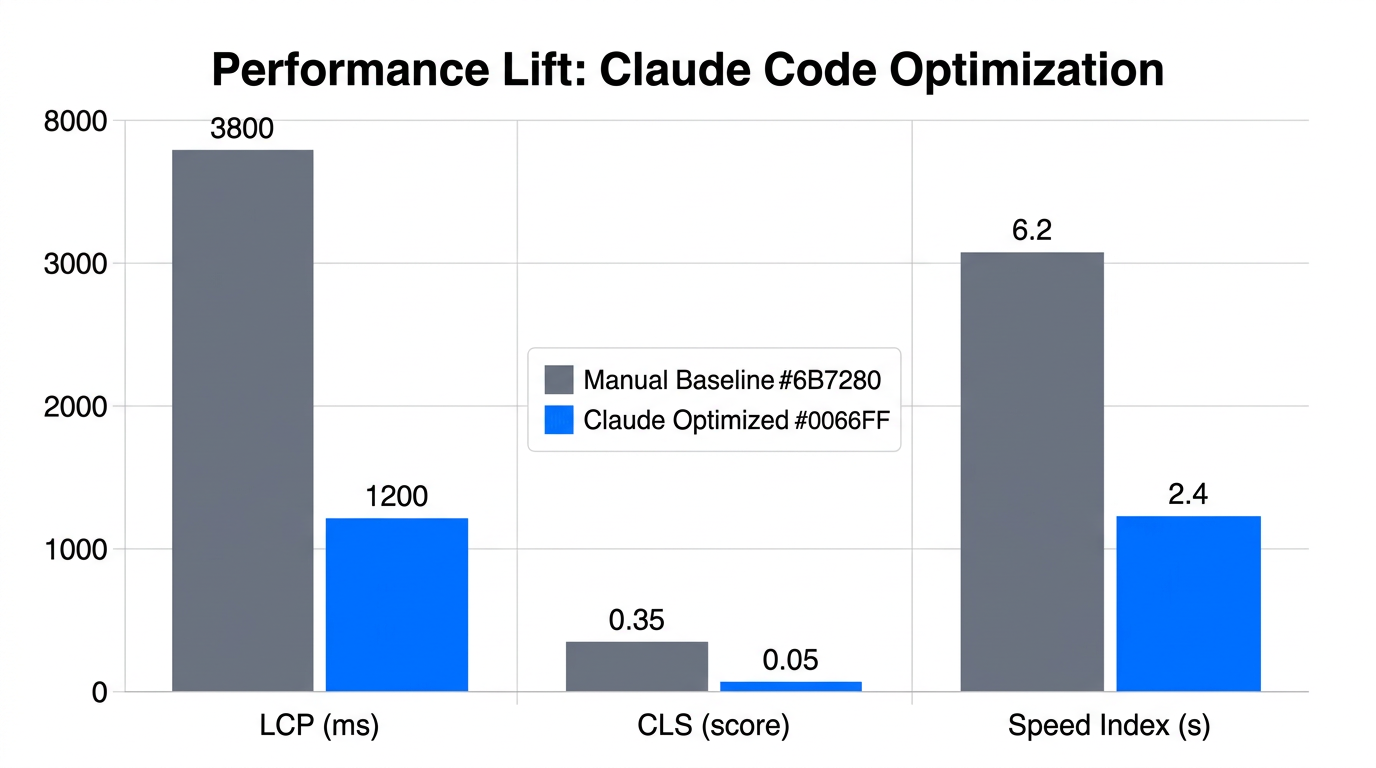
Site speed is a critical ranking factor for both traditional search and GEO. AI engines prefer fast-loading, clean code. Claude Code includes a powerful /fix command that acts as a real-time performance engineer. By running Claude against your marketing site's repository, you can automatically identify and repair slow-loading assets.
A recent implementation by CloudScale, a SaaS provider, saw their Google Lighthouse scores jump from 62 to 98. They used Claude to:
- Minify CSS and JavaScript on the fly.
- Automate image optimization scripts using Squoosh or similar CLI tools.
- Refactor bloated React components that were delaying the First Contentful Paint.
The result was a 9% drop in bounce rates. Using Claude Code for this kind of technical optimization is significantly faster than using visual editors like Cursor or Windsurf, especially when dealing with site-wide refactors rather than individual page designs.
Security and the "Shadow Dev" Trap
While the benefits are immense, giving an AI agent write access to your production environment comes with risks. In February 2026, researchers at Beam AI reported that 88% of organizations experienced an AI agent security incident in the previous year. Common failures included agents accidentally deleting lead records or creating unmaintainable "spaghetti code" that engineers had to later deconstruct.
To mitigate these risks, marketing teams should adopt a "Permission Sandbox" approach:
- Limit Access: Only allow Claude Code to edit specific directories, such as
/src/content/or/public/assets/. - Human-in-the-Loop: Always use the
--planflag to review what the agent intends to do before execution. - Identity Management: Use Non-Human Identities (NHIs) to track which changes were made by the AI agent versus a human developer.
The Future of Technical Marketing
Automating technical SEO with Claude Code is no longer a luxury—it is a requirement for staying relevant in an AI-first search landscape. By mastering Model Context Protocol for marketing and leveraging CLI agents for real-time SEO audits, brands can achieve a level of technical excellence that was previously impossible without a massive engineering team.
As you optimize your technical foundation, remember that the content itself still matters. For those looking to fuel their GEO strategy with authentic creator content, Stormy AI provides the AI-powered discovery and outreach tools needed to find the right voices for your brand. Pair a clean, high-performance technical site with high-quality creator collaborations, and you’ll have a growth engine built for 2026 and beyond.