Automating 90% of Shopify Customer Support: The 2026 Guide to AI Resolutions and Gorgias
Learn how to automate 90% of Shopify customer support in 2026 using Gorgias AI automation and agentic workflows for autonomous resolution and return management.
By 2026, the traditional customer support model of 'hiring for seats' has officially collapsed. In its place is the Resolution-Based Economy, where the most successful brands prioritize outcomes over headcount. We have moved beyond simple chatbots; today, we deploy autonomous AI employees that reason, execute multi-step tasks, and manage the entire customer lifecycle with minimal human oversight. For Shopify merchants, the goal is no longer 'ticket deflection'—it is 'autonomous resolution.' This means your support stack, led by Gorgias and integrated with an AI ecommerce employee, handles everything from inventory reconciliation to refund processing without a human ever touching the keyboard.
The Resolution-Based Economy: Outcomes Over Seats
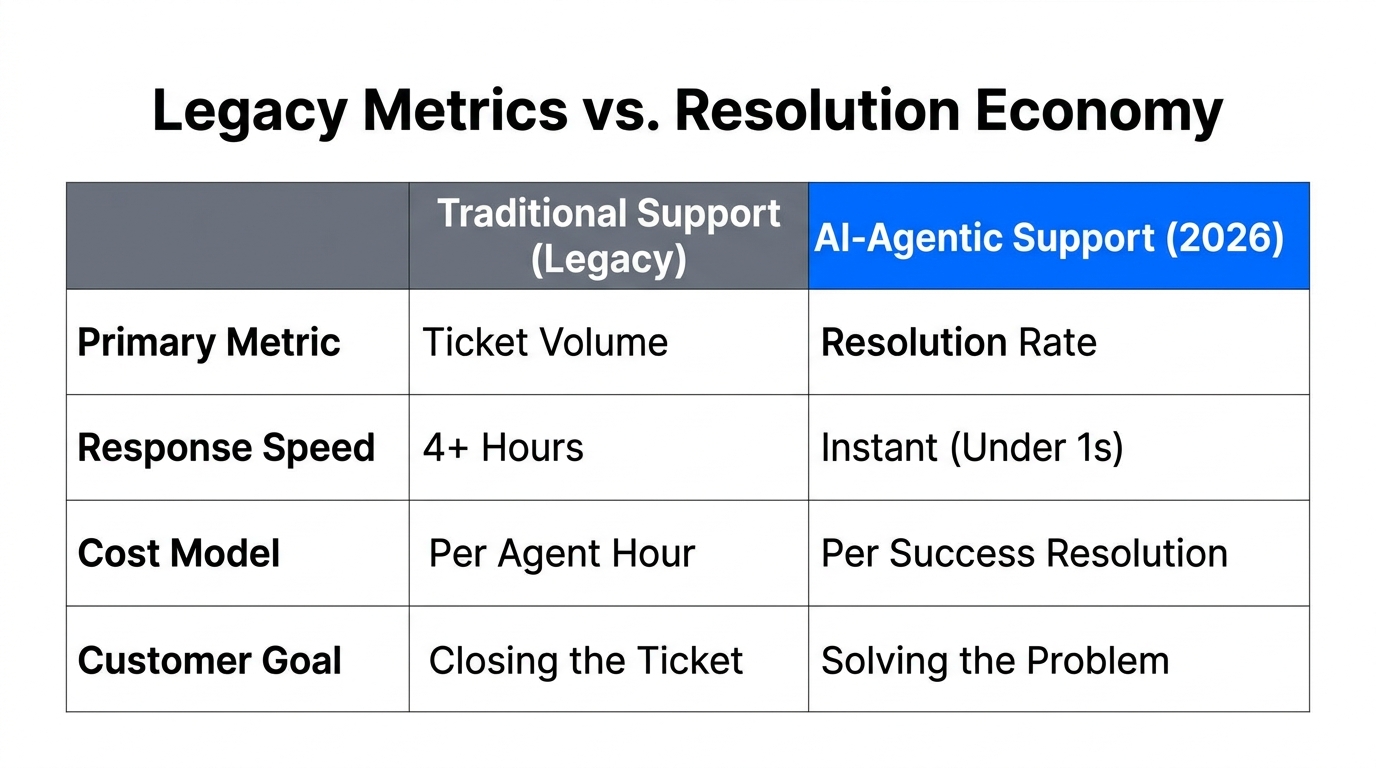
In 2026, the standard for measuring AI success has shifted from productivity gains to Direct Resolution ROI. Top-tier agents now resolve 93% of customer inquiries without human intervention, a massive leap from the 60% rates seen only two years ago, according to research on autonomous agents by Cubeo AI. This shift is driven by a new pricing paradigm: instead of paying for software seats, brands are paying for results. For instance, the Gorgias AI Agent now charges approximately $0.90 per resolution, making it significantly more cost-effective than the traditional hourly wage of a mid-level support representative.
The financial impact of this transition is staggering. Companies implementing AI sales and support agents report revenue increases of 7% to 25%. This is because shoppers who engage with an AI agent convert at 12.3%, compared to just 3.1% for unassisted shoppers—a 4x increase in conversion efficiency according to data analysis from TripleWhale.
"The era of the 'ticket' is over. In 2026, we manage resolutions. If your AI isn't closing the loop in the backend, it's just a fancy FAQ page."
Eliminating AI Hallucinations with Real-Time Grounding
One of the biggest hurdles in early ecommerce AI was the 'hallucination era'—where bots would confidently promise delivery dates or stock levels that didn't exist. In 2026, this has been solved through Real-Time Data Grounding. Modern Alhena AI and Stormy AI agents are directly connected to your Shopify ERP and inventory management systems via protocols like Anthropic's MCP (Model Context Protocol).
This technical integration ensures that when a customer asks about a specific SKU, the AI checks the actual shelf count before responding. Hallucination-free commerce is now the baseline expectation. If there is a lag of even a few minutes between inventory updates and AI memory, brand trust is damaged. This is where an AI employee excels—it doesn't just 'read' the data; it monitors it in the background and flags stockout risks to the support team before the customer even submits a ticket.
| Metric | AI Employee (Digital Worker) | Human Employee (Mid-Level) |
|---|---|---|
| Annual Cost | $3,000 – $10,000 | $120,000 – $150,000 |
| Availability | 24/7/365 | 40 hours/week |
| Scalability | Infinite (1,000+ chats at once) | Linear (1:1 interaction) |
| Onboarding | Instant (Data Ingestion) | 3–6 months |
Automating WISMO, Returns, and Refunds
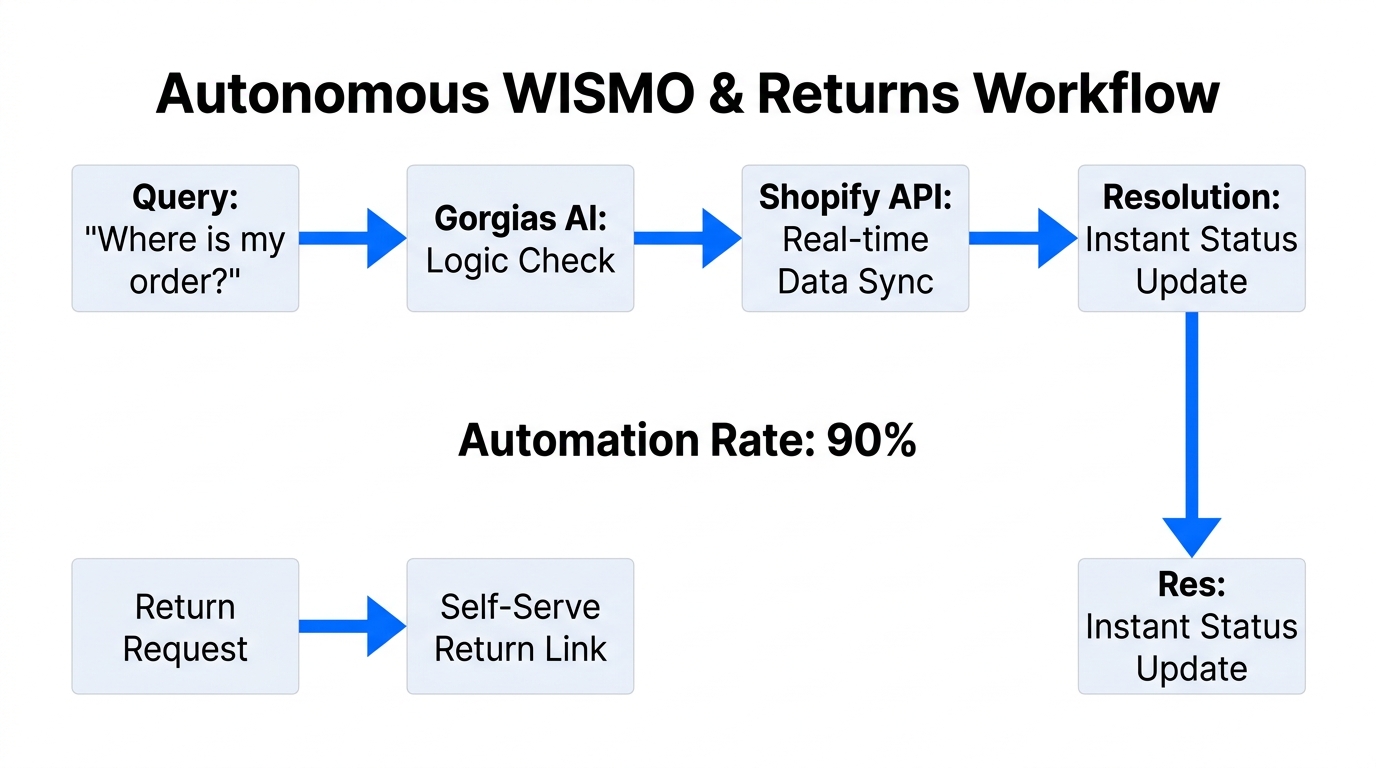
The 'messy back office' of ecommerce is where resolutions often go to die. Tasks like WISMO (Where Is My Order), returns processing, and refund approvals have traditionally required manual labor. However, agentic workflows now allow these to be fully autonomous. For example, an AI agent can wake up on a schedule to check shipping statuses, identify late shipments, and automatically send a proactive update via your Klaviyo or Gorgias threads.
Step 1: Ground Your Agent in Backend Data
Start by ensuring your Shopify metadata is pristine. In 2026, 95% data fill rates on product attributes are the 'SEO of the era.' Use an AI ecommerce employee like Stormy AI to audit your SKUs and fill in missing GTINs or shipping weights that AI agents need to calculate return costs accurately.
Step 2: Deploy Agentic Back-Office Workflows
Configure your customer support AI to handle return labels. When a customer requests a return, the AI should verify the order date against your policy, generate a label via ShipStation, and update the ticket status in Gorgias—all without human input.
"Efficiency isn't just about answering faster; it's about the AI having the 'fingers' to click buttons in your warehouse and banking software."
Managing the 'Frustration Gap' and the Deflection Wall
While efficiency is the goal, 2026 has seen a consumer backlash against 'The Deflection Wall'—the experience where an AI agent prevents a customer from reaching a human at all costs. 75% of consumers report frustration when AI prioritizes speed over actual resolution. To avoid this, successful CS leads implement Human-in-the-Loop (HITL) escalation triggers.
If a customer mentions keywords like "sue," "legal," or "health hazard," your workflow must instantly hand off the thread to a human 'Director.' The 2026 operating model follows a 1:10 ratio: 1 human Director managing 10 AI Employees. The human is there for empathy, strategy, and complex ethics, while the AI handles the 80% of repetitive, data-driven volume.
Case Studies: IKEA and Klarna
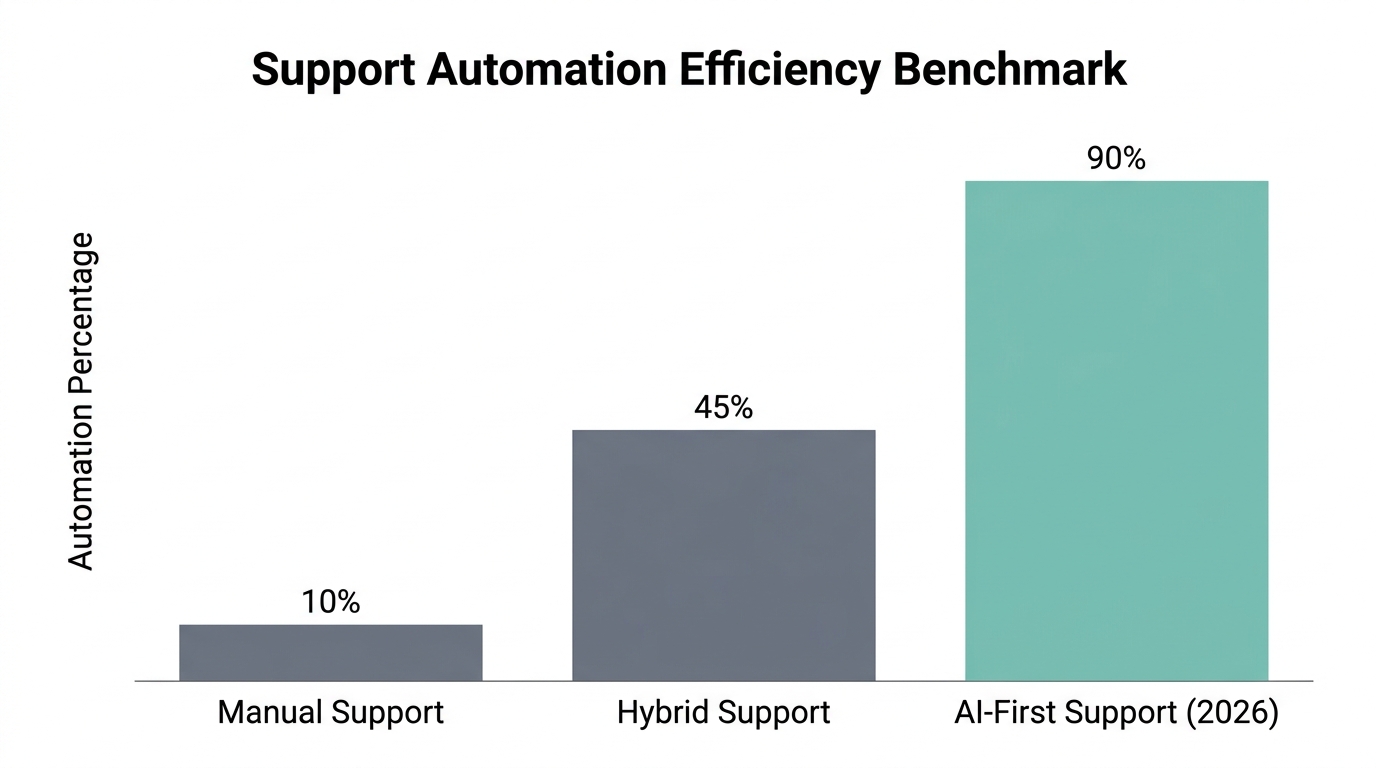
The results of this 'Agentic' shift are already visible in major retail giants. Klarna famously used its AI assistant to handle 2.3 million chats in a single month—the workload of 700 full-time agents. They reduced resolution times from 11 minutes to 2 minutes, driving $40 million in annual profit improvement.
Similarly, IKEA launched 'Billie,' an AI assistant that handles 47% of all inquiries. This didn't lead to mass layoffs; instead, it freed up 8,500 staff members to be retrained as interior design consultants, who subsequently generated €1.3 billion in new revenue through high-value sales roles.
"IKEA didn't just automate support; they upgraded their humans from 'ticket-takers' to 'revenue-generators.'"
The 2026 CS Playbook: Moving to Autonomous Resolution
- Connect the Stack: Integrate Gorgias with Shopify and your shipping providers. Use a tool like Stormy AI as the 'connective tissue' that monitors these tools and creates spreadsheet-based audits of resolution accuracy.
- Set 'Agentic' Permissions: Move the 'Allow AI agents to shop' and 'Allow AI agents to refund' toggles in your Shopify settings. Ensure your data is grounded in real-time inventory.
- Audit for 'AI Slop': High-performance teams spend 13 hours a week 'prompt wrangling'—fixing the subtle errors AI makes. Use reasoning-capable LLMs to summarize recurring support problems so your human team can fix the root cause.
- Monitor the 1:10 Ratio: As your AI handles more volume, move your human agents into 'Director' roles. They should focus on VIP relations and complex problem-solving that AI still struggles with.
By 2026, running a lean ecommerce operation is impossible without an AI employee. Whether it is Shopify Magic handling content or Stormy AI managing the back-office inventory and supplier follow-ups, the future belongs to those who automate the boring parts. Stop focusing on how many tickets you can 'deflect' and start focusing on how many resolutions your AI can 'complete.' This is the only way to scale to the next level in the 2026 ecommerce landscape.