Imagine scaling a business that requires hundreds of phone calls per day—negotiating with vendors, vetting leads, or gathering market intelligence—without ever picking up the phone. This isn't a futuristic concept; it is the reality of the autonomous voice economy. By leveraging Vapi tool calling and structured databases like Airtable, companies are now building end-to-end data pipelines that extract high-signal insights from voice transcripts in real-time. Whether you are running a high-frequency arbitrage desk or managing a feedback loop for a growing community, the ability to turn raw conversation into actionable data is the ultimate unfair advantage.
The Voice AI Paradigm Shift


Most businesses treat phone calls as ephemeral events. A conversation happens, a few notes are scribbled in a CRM, and the nuance of the interaction is lost forever. However, when you integrate AI tool calling into your stack, the phone call becomes a structured data source. As Tony from Startup Empire recently demonstrated with his "Lowballer 9000" agent, voice AI can be programmed to handle specific tasks—like negotiating the price of a $35,000 Rolex Daytona—while simultaneously updating a central database with the dealer's lowest price, watch condition, and box-and-paper status.
The goal is no longer just to "record" the call, but to automate the analytics that follow. By the time the AI hangs up, the data should already be categorized, scored, and pushed to your team's communication channels. This level of automation allows a single founder or a small marketing team to perform the work of a 50-person call center, focusing only on the high-value opportunities that the AI flags as "ready for close."
Configuring Vapi for Structured Data Extraction
To build a robust pipeline, you must first configure your voice agent to be more than just a chatbot with a voice. Vapi (Voice API) acts as the orchestration layer, connecting the Large Language Model (LLM) to the telecommunications infrastructure. The first step in a technical workflow is choosing the right model and setting the "temperature" of the AI. For deterministic tasks like data extraction and negotiation, a temperature closer to 0 is often preferred to ensure consistent behavior, though a temperature of 1.0 can provide the creative flexibility needed to sound human in a fluid conversation.
One of the key "sauce" ingredients shared by industry experts is the sixth-grade English rule. Research into human-to-human phone interactions suggests that most successful calls happen at a sixth-grade reading level. When configuring your Vapi system prompt, instructing the agent to keep responses concise (1-2 sentences) and language simple results in significantly higher engagement rates and longer call durations. This prevents the AI from "ramming" too much information down the prospect's throat, which is a common hallmark of poorly configured bots.
The Airtable Integration: Building the Best Offer Tracker
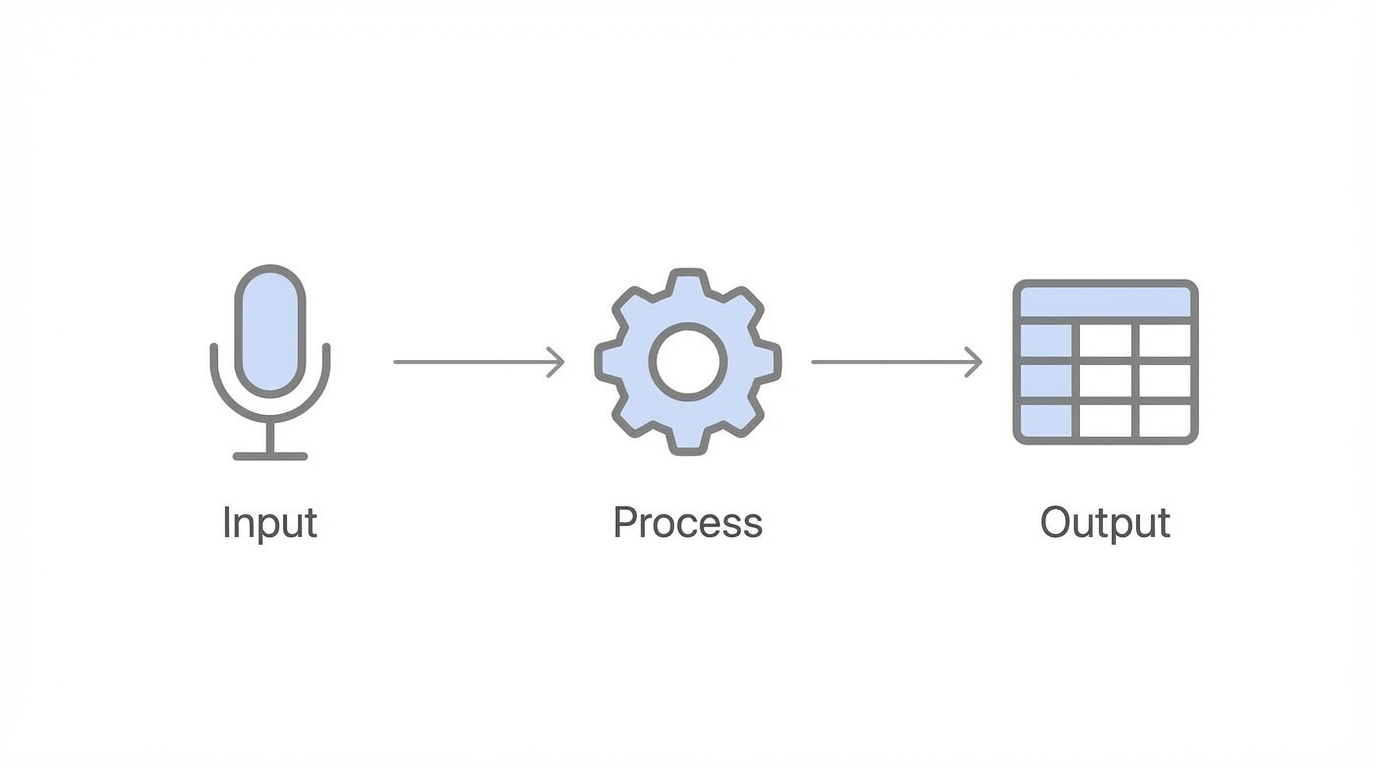
The real magic happens in the Vapi Airtable integration. Instead of manually reviewing 800+ transcripts to see who accepted a deal, you can use tool calling to trigger database updates mid-call or immediately after termination. In the Airtable workflow, you create specific columns for the data points you need: Final Price Offered, Condition Score, and Negotiation Status.
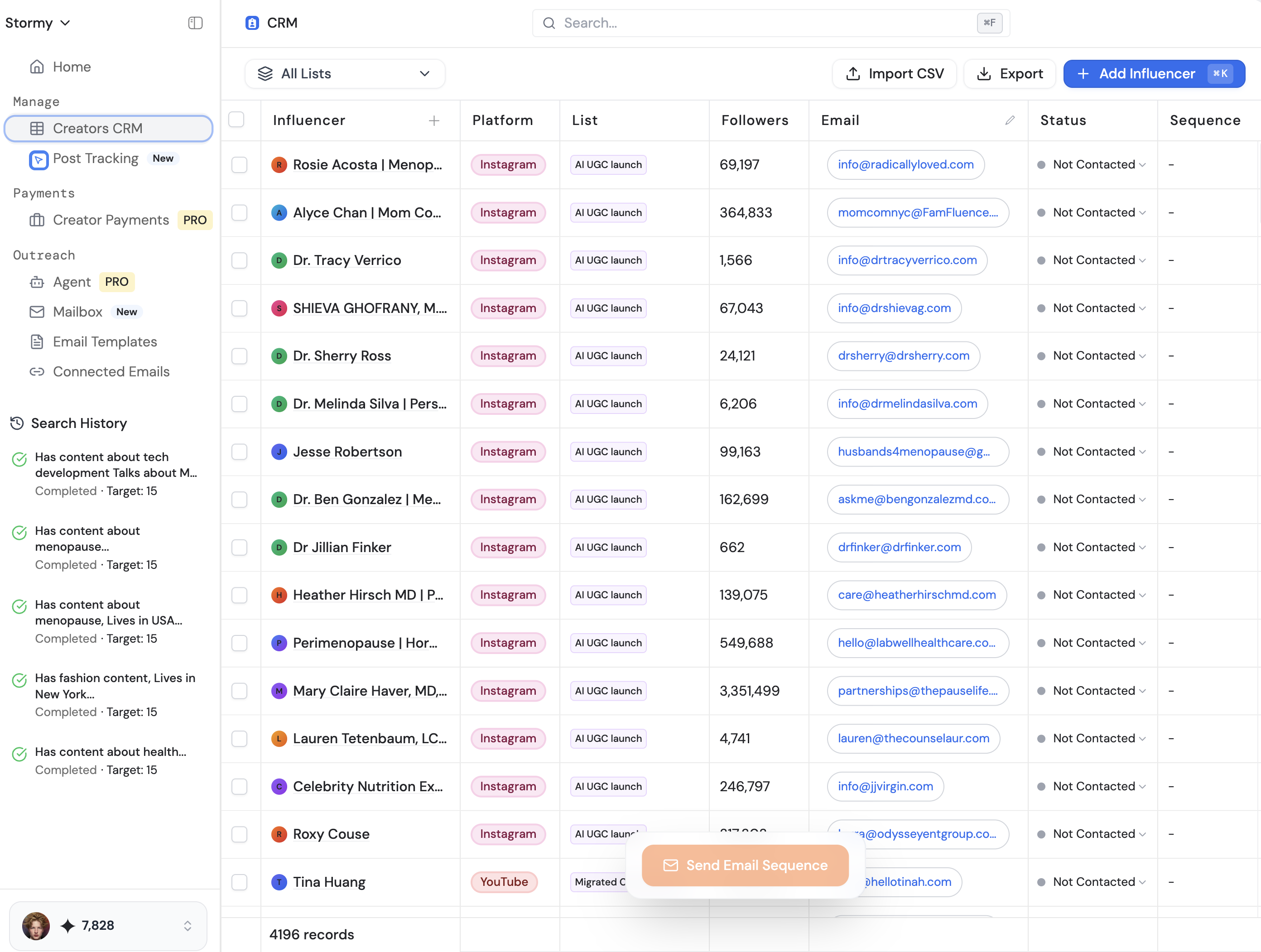
When the Vapi agent identifies a successful negotiation, it triggers a function—often called GetBestOffer or UpdateCRM—that sends a JSON payload to Airtable. This creates a Best Offer tracker that visualizes market data in real-time. For a brand or an arbitrageur, this means you can see a dashboard of 20 dealers who agreed to a specific price point without listening to a single minute of audio. For those managing complex creator relationships or high-volume outreach, using a Creator CRM within a platform like Stormy AI can similarly automate the tracking of collaboration terms and engagement metrics, ensuring no deal falls through the cracks.
Categorizing Transcripts with Lindy and Make.com
While Airtable handles the structured numbers, tools like Lindy or Make.com are essential for handling the qualitative data. Lindy is particularly powerful because of its ability to dynamically interpret columns. For example, if you add a "Vegan Friendly" column to a restaurant lead list, Lindy can read the transcript and check that box based on the context of the conversation without you needing to write a new line of code.
By connecting Vapi to Lindy, you can automate the following steps:
- Sentiment Analysis: Categorize the dealer or lead as "Friendly," "Aggressive," or "Uninterested" using natural language processing.
- Summarization: Generate a 2-sentence summary of the call and post it directly to a Slack channel.
- Action Items: Automatically extract follow-up dates and sync them with your calendar.
Automated Feedback Loops for Service Quality
Beyond sales and arbitrage, voice AI workflow automation is revolutionizing customer service and community management. For instance, Startup Empire uses a feedback bot that allows members to "brain dump" their thoughts over the phone rather than filling out tedious forms. People are much more likely to provide honest, detailed feedback when they can talk naturally.
The AI agent listens, categorizes the feedback (e.g., "Product Suggestion," "UI Bug," "Positive Praise"), and summarizes it for the core team. This automated call transcription pipeline ensures that the team sees the most important feedback in their internal Slack notifications alongside their subscription data. This is a "free business idea" for many: setting up these automated feedback systems for other companies can be a high-margin service, as it replaces the need for manual sentiment analysis and manual CRM entry.
Overcoming Technical Hurdles: KYC and Deliverability
One of the biggest bottlenecks in AI tool calling is not the AI itself, but the telecommunications infrastructure. The FCC has implemented rules known as SHAKEN/STIR to combat spam. If you do not perform proper "Know Your Customer" (KYC) registration for your phone numbers via providers like Twilio, your automated calls will go straight to voicemail.
To ensure high deliverability, you must:
- Register your brand: Complete the A2P 10DLC registration process.
- Use "Bring Your Own Number": Don't rely on generic, unverified VoIP numbers.
- Monitor Call Ratios: Ensure your AI isn't hanging up too abruptly, which can flag the number as a robocall.
Building an Arbitrage Dashboard for Market Data
The ultimate goal of this technical stack is to build an arbitrage dashboard. When knowledge is an unfair advantage, the person with the most data wins. By using Vapi to call thousands of numbers and Airtable to visualize the responses, you can identify market inefficiencies instantly. Whether it's finding underpriced luxury goods, real estate leads where a property is likely to hit the market soon, or finding high-quality UGC creators, automation is the key to scale.
For those in the marketing space, this same logic applies to influencer discovery. While voice AI handles the phones, tools like Stormy AI act as an AI agent for digital discovery, searching across TikTok and Instagram to find and outreach to creators who fit your specific niche. By combining voice AI for vendor negotiation and platforms like Stormy for creator management, brands can build a truly autonomous growth engine.
Conclusion: The Future of Automated Insights
Automating post-call analytics is no longer a luxury reserved for enterprise corporations with massive R&D budgets. By chaining Vapi, Airtable, and Lindy together, any founder can build a system that hears, understands, and organizes the world's voice data. The "Lowballer 9000" experiment proves that the technology is ready for prime time—the only variable left is how creatively you apply it to your industry. Start by identifying the phone-based bottlenecks in your business today, and begin building the pipeline that will let you scale while you sleep.