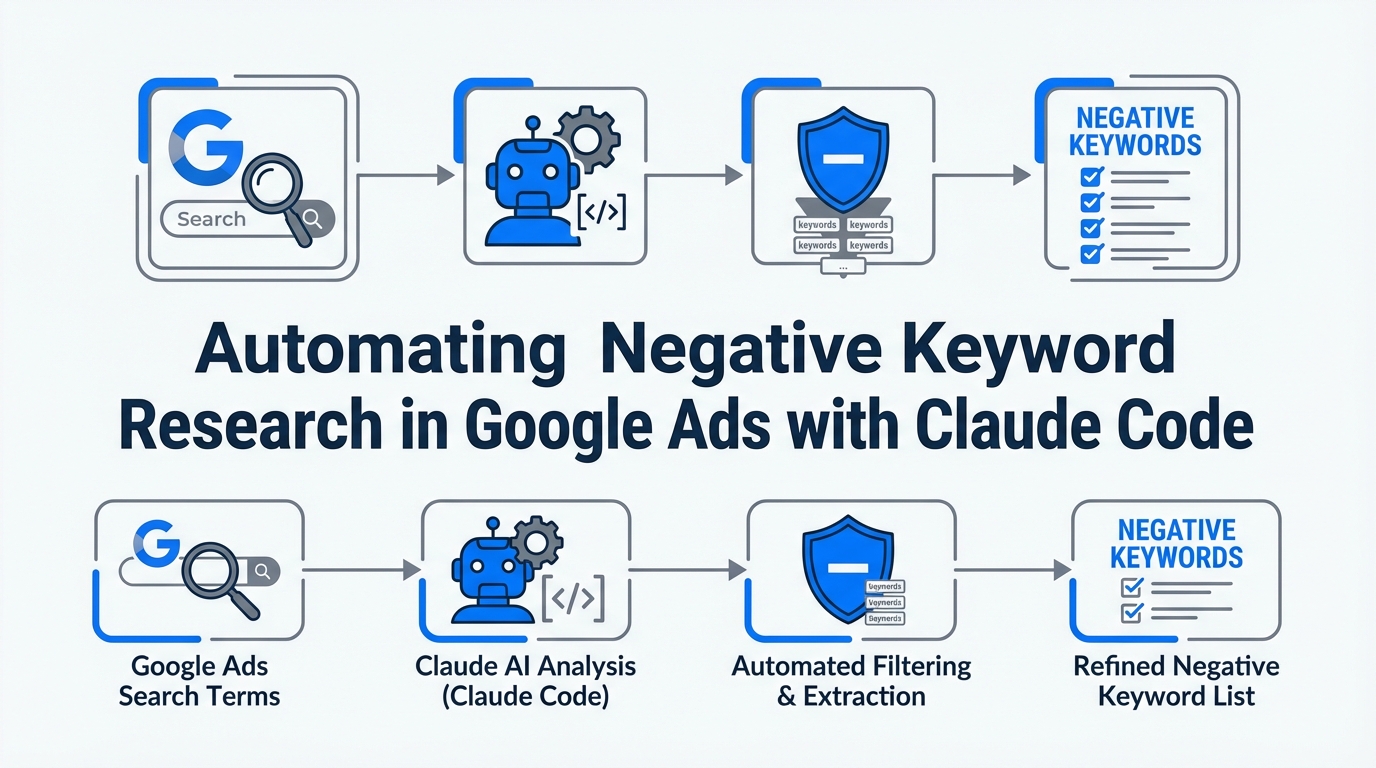
For the modern PPC manager, the search terms report is both a goldmine and a graveyard. It contains the raw intent of your customers, but it also hides the thousands of dollars leaking out of your budget every month. Research into 347 Google Ads accounts found that the average brand wastes 34% of its budget—roughly $17,000 for a $50,000 monthly spend—on inefficient settings and poor keyword matching. Historically, fixing this required 5 to 10 hours of manual labor per week, painstakingly combing through spreadsheets to build a negative keyword list google ads can actually respect. But in 2025, the paradigm is shifting toward agentic automation, where marketers treat their ad accounts like codebases using tools like Claude Code.
The Rising Cost of Manual Auditing
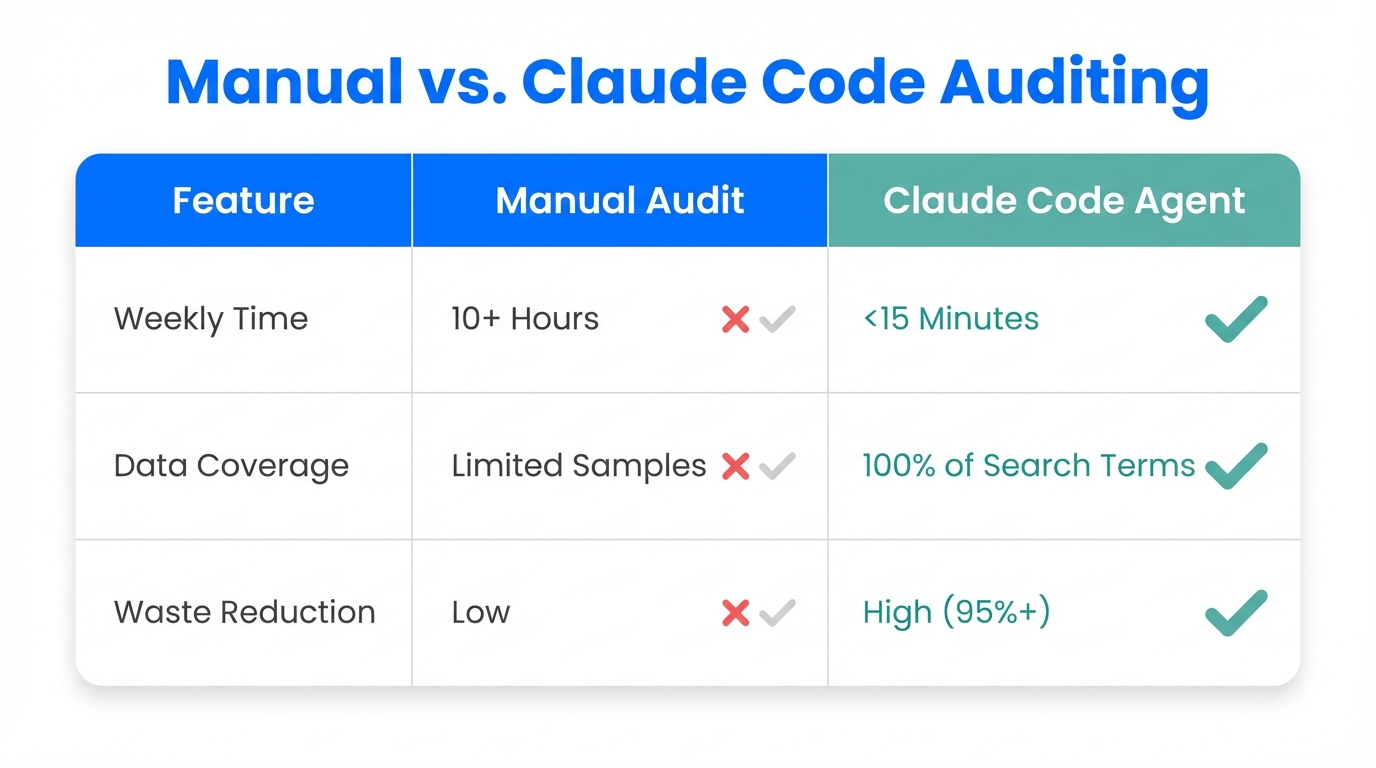
The stakes for Google Ads efficiency have never been higher. In 2024, approximately 5.1% of all ad clicks were fraudulent, resulting in nearly $38 billion in global losses. Simultaneously, CPCs increased by an average of 10% across 86% of industries, making every irrelevant click a direct hit to your bottom line. If you are still manually auditing search terms, you aren't just losing time; you're losing the ability to compete against brands using AI-driven agents to prune their accounts in real-time.
"The average brand wastes 34% of its budget on fixable issues, making automated auditing with Claude Code a high-ROI strategy for 2025." [Source: Search Engine Journal]
To stay ahead, performance marketers are moving away from the "manager" role and becoming "architects." By using terminal-based AI agents like Claude Code, you can automate ppc tasks that used to take all morning. Claude Code isn't a chatbot; it is a terminal-based agent that can access your local files, connect to the Google Ads API, and execute workflows autonomously.
The Agentic Negative Keyword Playbook
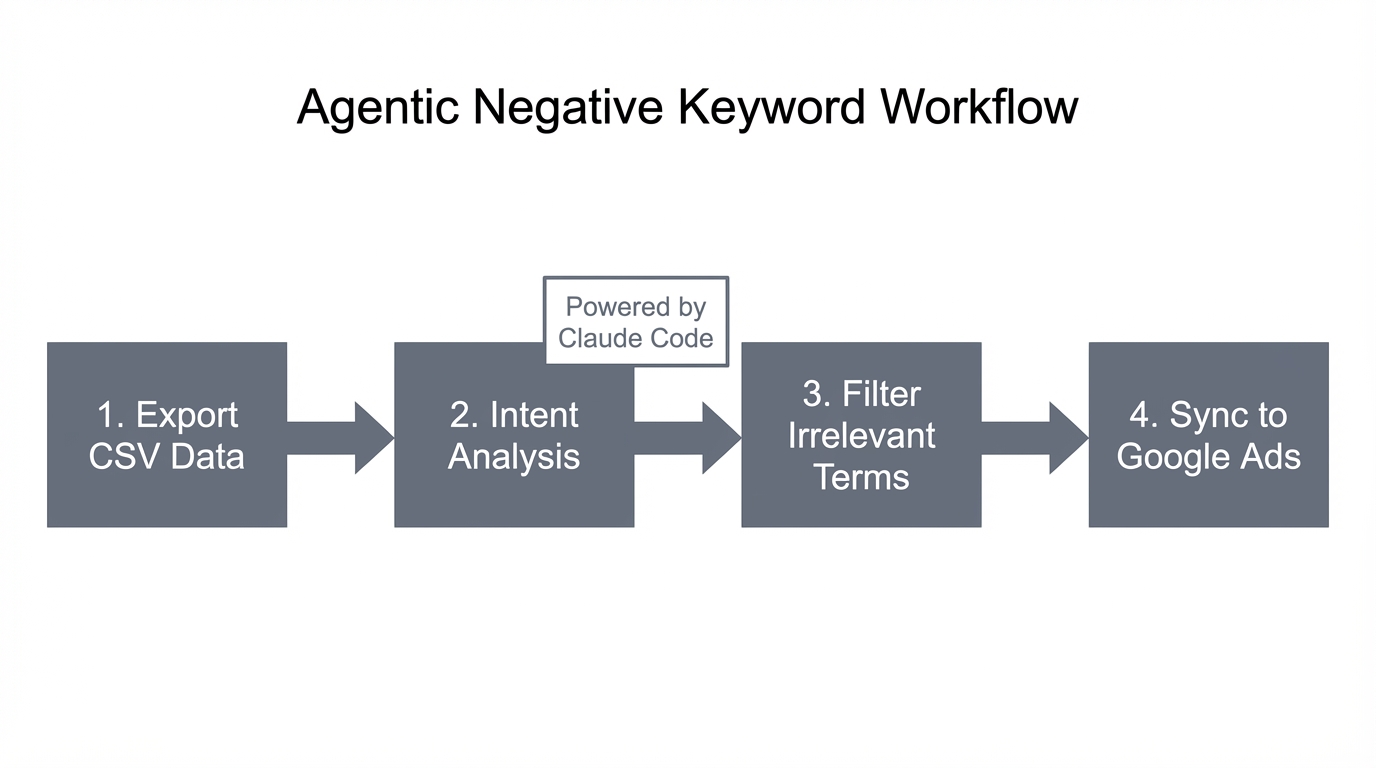
Building a robust negative keyword list google ads strategy requires more than just reactive blocking. You need a system that categorizes intent, identifies patterns, and scales across multiple campaigns. Here is how to build that system using Claude Code.
Step 1: Using the /audit-negatives Custom Command
One of the most powerful features of Claude Code is the ability to create custom slash commands. Instead of manually downloading a CSV from the Google Ads UI, marketers are now using the /audit-negatives command to instantly identify high-spend, zero-conversion terms. This command triggers a script that pulls the search terms report automation data and passes it through Claude’s reasoning engine to categorize terms by intent and relevance.
Step 2: Pulling Search Terms via the Google Ads API
Using the Model Context Protocol (MCP), Claude Code can connect directly to your Google Ads environment. By setting up an MCP server, you allow Claude to pull live data from the Search Terms Report. This eliminates the "stale data" problem found in manual exports. Claude can then use its internal knowledge to flag terms that are technically "broad match" but logically irrelevant to your landing page content, which is a major cause of budget drain in the Broad Match Trap.
| Feature | Manual Audit | Claude Code Audit |
|---|---|---|
| Speed | 5-10 hours/week | < 5 minutes |
| Data Freshness | Static CSV exports | Live API Connection |
| Intent Analysis | Human intuition | LLM-powered reasoning |
| Scalability | Difficult across 10+ accounts | Infinite via terminal scripts |
Step 3: Building a Global Negative Keyword List
To ensure consistency, you should maintain a .claude/rules file in your marketing repository. This file acts as the "brain" for your agent, defining your brand’s safety standards and target ROAS benchmarks. Within this file, you can specify a Global Negative Keyword List that includes competitor names, low-intent terms (like "free" or "cheap"), and irrelevant geographies. When Claude runs an audit, it references these rules to ensure every recommendation aligns with your long-term brand strategy.
Advanced Workflows for Google Ads Efficiency
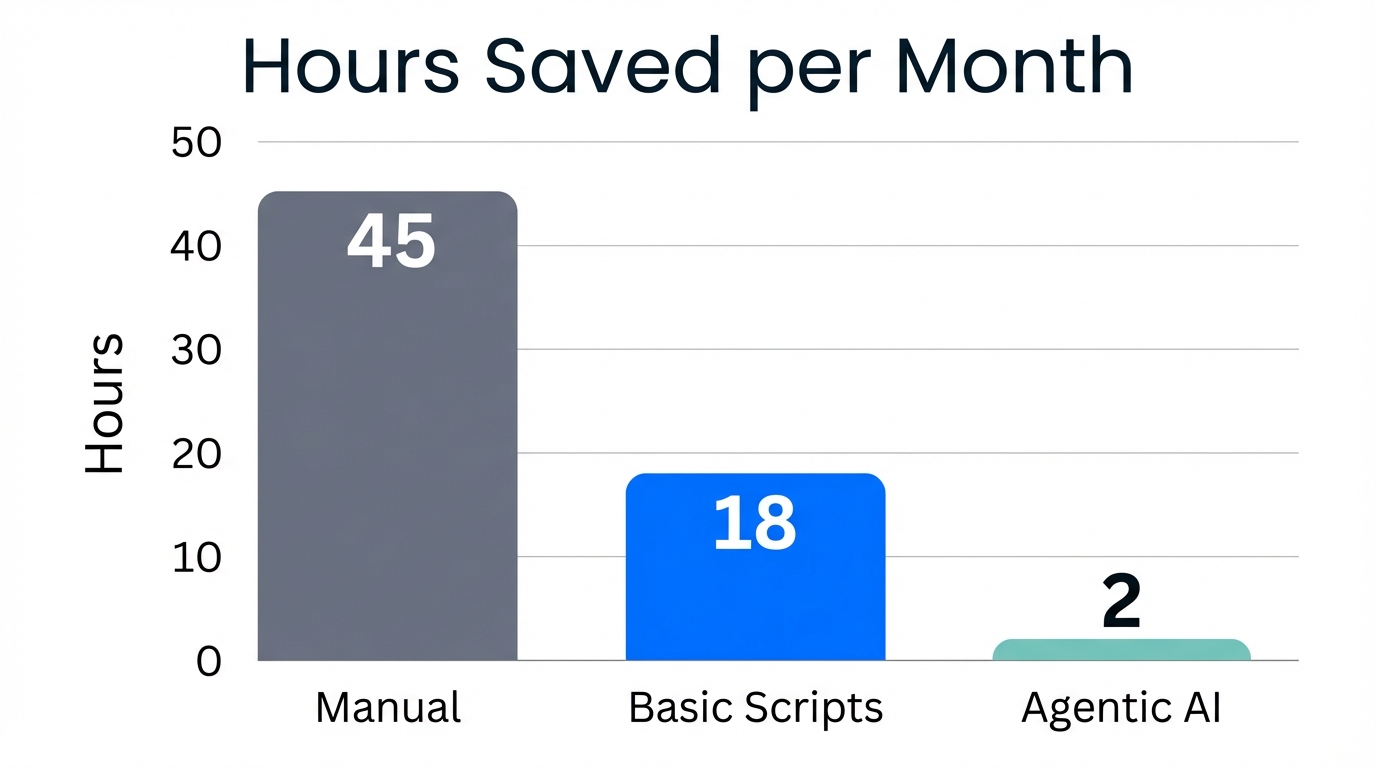
Once you have mastered the basic search term audit, you can expand your google ads scripts to handle more complex scenarios. Automated agents are particularly effective at catching the "silent killers" that most human managers miss.
The CPA Spike Alert Workflow
By integrating Claude Code with automation platforms like Make or n8n, you can create a real-time defense system. If a campaign’s Cost Per Acquisition (CPA) exceeds a specific threshold (e.g., a 20% spike for 4+ hours), the system sends a payload to Claude. Claude then audits the specific keywords and landing page to find the "leak"—often a specific device or geography causing the spike—and proposes an immediate fix.
Landing Page & Ad Relevance Audit
One of the top causes of low Quality Scores is a mismatch between your ad copy and your landing page. Using the Puppeteer MCP Server, Claude Code can literally "visit" your landing pages. It cross-references the live content with your search terms report automation data to identify Message Mismatch. This allows you to pause keywords that are driving traffic to pages that don't answer the user's query, significantly improving google ads efficiency.
"Using AI to manage broad match without a robust, AI-generated negative keyword list is the fastest way to drain a budget in 2025."
For brands scaling their creator presence, platforms like Stormy AI streamline creator sourcing and outreach, providing the creative assets needed to fuel these high-efficiency campaigns. Pairing automated keyword management with fresh, high-performing UGC creates a powerful growth engine that most competitors can't match.
Common Mistakes to Avoid in AI Automation
While Claude Code is incredibly powerful, it is not a "set it and forget it" solution. To get the best results, you must avoid the common pitfalls of google ads scripts and agentic workflows.
- Jumping to "Edit Mode": Never allow an AI agent to change your scripts without a thorough Plan -> Review -> Execute loop. Always review the logic before deployment.
- The Broad Match Trap: Many marketers rely on Google’s automated bidding without a negative keyword list google ads can use to filter garbage traffic. AI must be used to prune, not just to spend.
- Ignoring Branded Search: Between 20-30% of branded search ads run in uncontested auctions where brands pay for clicks they would have received organically. Program Claude to detect these scenarios and adjust bids accordingly.
- Conversion Tracking Errors: Double-counting conversions is the #1 "silent killer" of ad spend. Always audit your data layer before letting AI optimize your bidding via Google Analytics.
Conclusion: The Future of PPC Management
The era of the manual PPC manager is ending. As we move further into 2025, the most successful marketers will be those who embrace the role of the automation architect. By using Claude Code to handle the "boilerplate" tasks—like search terms report automation and bulk negative keyword uploads—you free yourself to focus on high-level strategy and creative testing.
Whether you are using google ads scripts to catch CPA spikes or leveraging platforms like Stormy AI to discover and vet creators for your next UGC campaign, the goal is the same: maximizing the efficiency of every dollar spent. Start small by automating your weekly negative keyword audit, and you’ll quickly find that you have more time to build the strategies that truly move the needle.