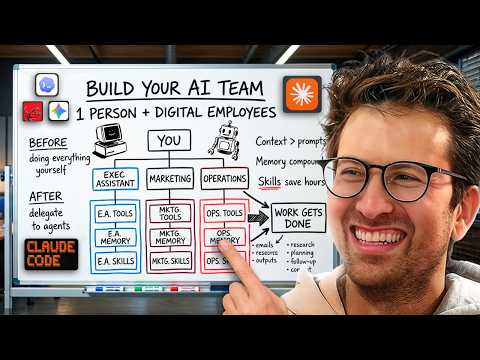
In 2026, the marketing landscape has shifted from the 'chat' era to the 'agent' era. If you are still manually entering prompts into a chat box and waiting for a response, you are playing ping-pong while your competitors are running an automated engine. The transition from question-to-answer (chat) to goal-to-result (agents) is the defining competitive advantage for growth leads this year. By utilizing autonomous frameworks like Open Claw and Claude Code, performance marketers are now managing multi-million dollar budgets with 10x to 20x more productivity.
This guide provides a comprehensive playbook for setting up an autonomous media buying system. We will move beyond basic automation and into the world of AI operating systems, where your agents observe, think, and act on your behalf across Meta Ads Manager, landing page builders like Shopify, and creative databases.
The Agent Loop Philosophy: Observe, Think, Act
 4:44
4:44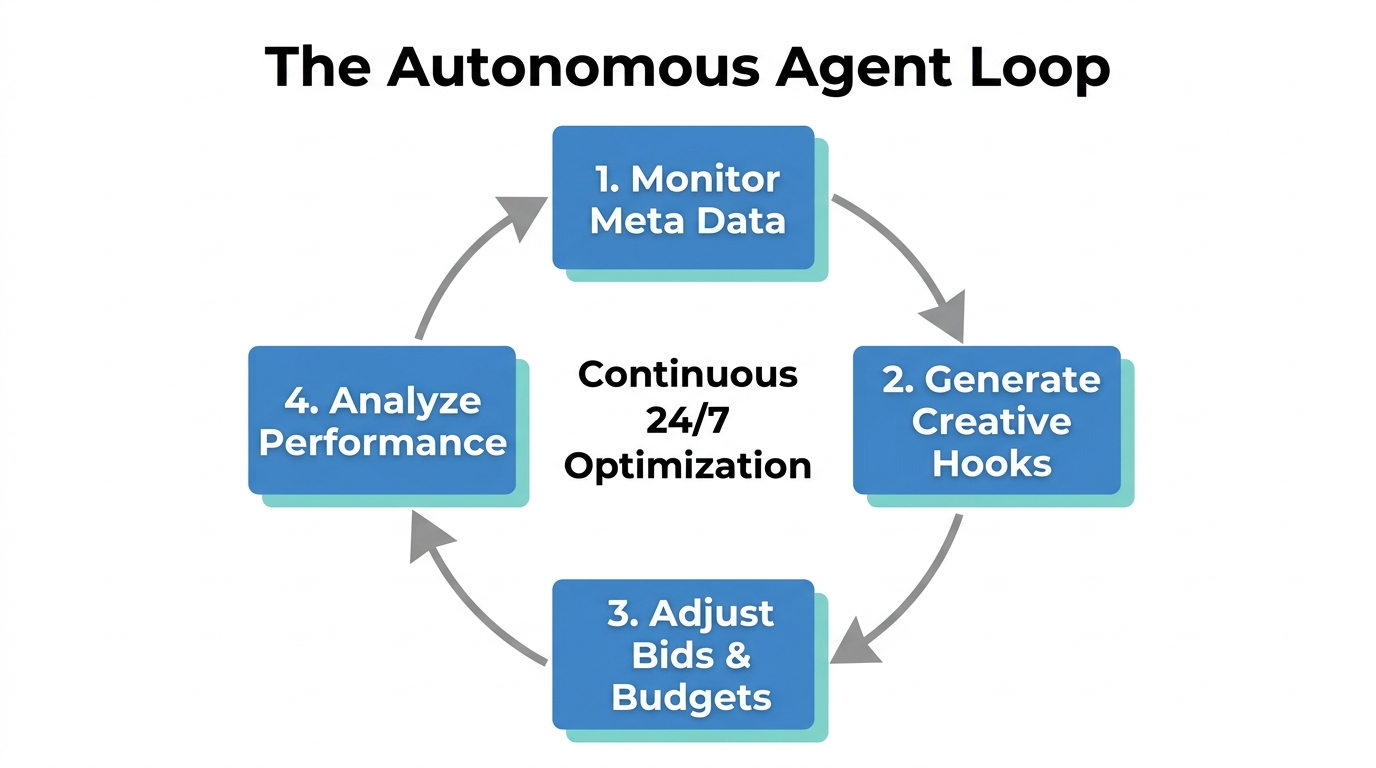
To automate your Meta ads automation 2026 strategy, you must first understand the Agent Loop. Unlike a standard LLM that stops after one response, an agent continues to iterate until a specific goal is achieved. This loop consists of three distinct phases:
- Observe: The agent checks its environment, reads files, and gathers data (e.g., checking current ROAS in Meta).
- Think: The agent analyzes the data against your goals (e.g., "CTR is down by 20%, I need new hooks").
- Act: The agent executes a tool call or creates a new file (e.g., drafting a new ad in the folder).
- Repeat: The agent feeds the result back into the observation phase and continues until the task is complete.
"Chat is question to answer, but an agent is goal to result. You move from babysitting a chatbot to giving an agent a mission and letting it plan the execution."
In 2026, we utilize agent harnesses—applications like Claude Code, Open Claw, and Codex—to facilitate this loop. These harnesses connect the "brain" (the LLM) to your local files and your marketing tools via the Model Context Protocol (MCP).
Setting Up Open Claw as an Autonomous Media Buyer
81:44For growth leads, Open Claw represents the "Wild West" of autonomous agency. It is a powerful harness that allows you to set up persistent marketing agents that live in your local directories. To build a Open Claw marketing agent for Meta Ads, you must structure your workspace using the "AI OS" (Operating System) methodology pioneered by researchers at OpenAI and Anthropic.
Start by creating a folder titled Meta_Media_Buyer. Inside this folder, you will host two critical markdown files: agents.md and memory.md. These act as the onboarding documents for your digital employee.
Your agents.md file should define the agent's role, its access to Meta Ads Manager, and its decision-making framework. For example, tell the agent: "You are a senior media buyer. Your goal is to maintain a 3.0 ROAS. If ROAS drops below 2.5 on any creative for 48 hours, pause the ad and alert the creative team."
Developing the 'Ads Analyst' Skill: Automated Competitor Scrapes
69:19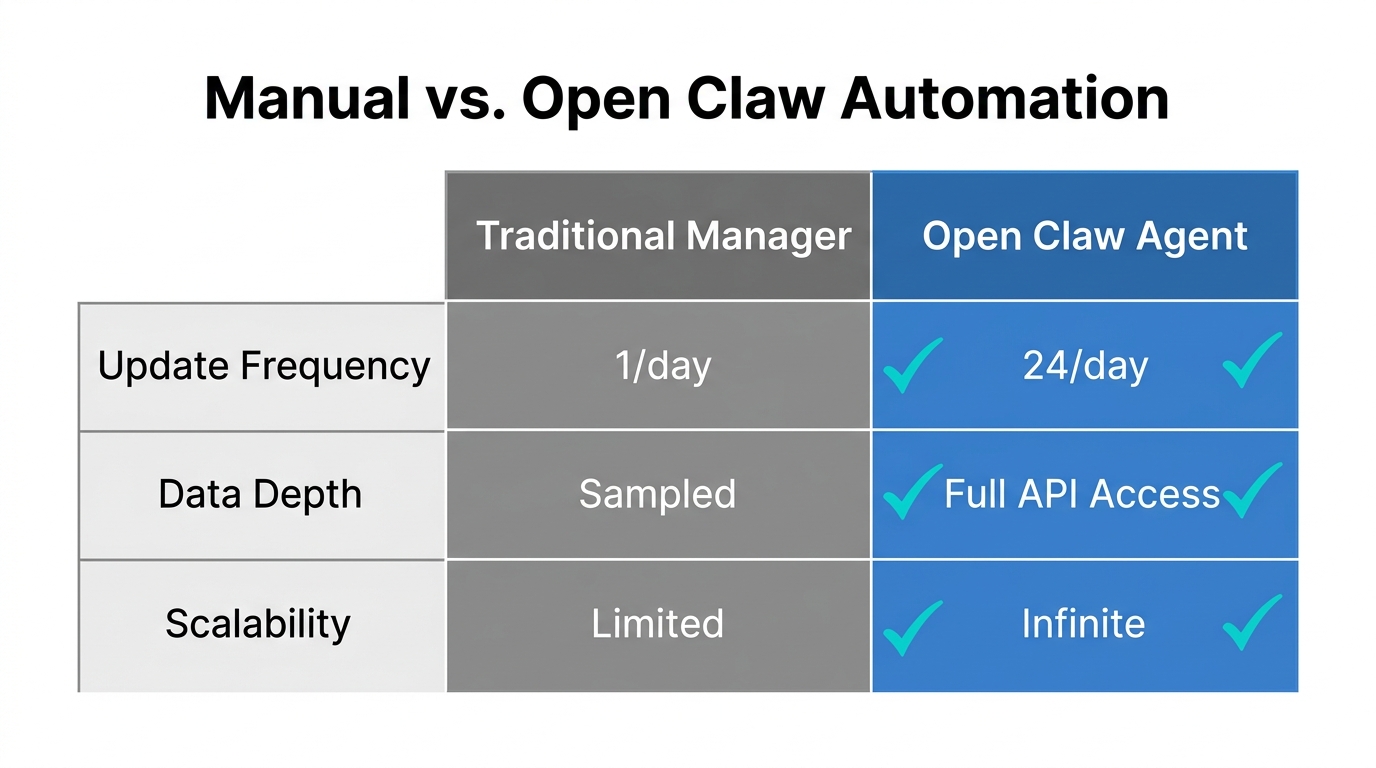
One of the most powerful features of Claude Code for growth marketing is the ability to create Skills. Think of a skill as an SOP (Standard Operating Procedure) for AI. Once you teach an agent how to do something once, it is packaged into a .skill file and never forgotten.
To build an AI competitor ad analysis skill, you program the agent to perform the following sequential steps:
- Access the Meta Ad Library URL for a specific competitor.
- Scrape all active ad creatives and their respective landing pages.
- Take screenshots of the landing pages and perform a visual analysis using vision models like GPT-4o.
- Break down the 'hook', 'body', and 'CTA' of the top-performing ads.
- Compile a master report in your Notion workspace.
By automating this, you save hours of manual research. Tools like Stormy AI can then be used to find high-quality UGC creators that match the aesthetic of the winning competitor ads your agent has just identified.
| Feature | Manual Workflow | Autonomous Agent (2026) |
|---|---|---|
| Competitor Research | 4 hours / week | 5 minutes (Automated) |
| Ad Hook Creation | Manual Brainstorming | Viral Data-Driven Generation |
| Budget Management | Reactive Checking | Proactive/Autonomous Scaling |
| Reporting | Weekly Spreadsheets | Real-time Slack Notifications |
Using Claude Code to Generate High-Converting Ad Hooks
61:12In 2026, successful automated media buying requires a constant influx of fresh creative. According to recent Nielsen research, creator-led content remains the highest trust format. Using Claude Code, you can create a "Viral Hook Skill" by feeding the agent transcripts from your best-performing video ads and historical viral data from platforms like TikTok and YouTube.
Instead of asking for a "good ad hook," you invoke your skill: run viral_hook_generator --competitor-data --brand-voice. The agent pulls from its references/ folder, where it stores hook formulas (e.g., "The 'Unpopular Opinion' Hook" or "The 'System Hack' Hook"). It then outputs 10 variations ready for testing. This ensures that your creative testing pipeline is never empty.
"You can chain skills together. Your morning brief skill can trigger your ad research skill, which then triggers your hook generation skill, delivering a full campaign plan to your inbox before you wake up."
To maximize the impact of these hooks, performance teams often use Stormy AI to source creators who can film these AI-generated scripts. This creates a full-circle loop from data scraping to final content production.
Risk Management: Tool Permissions and Security
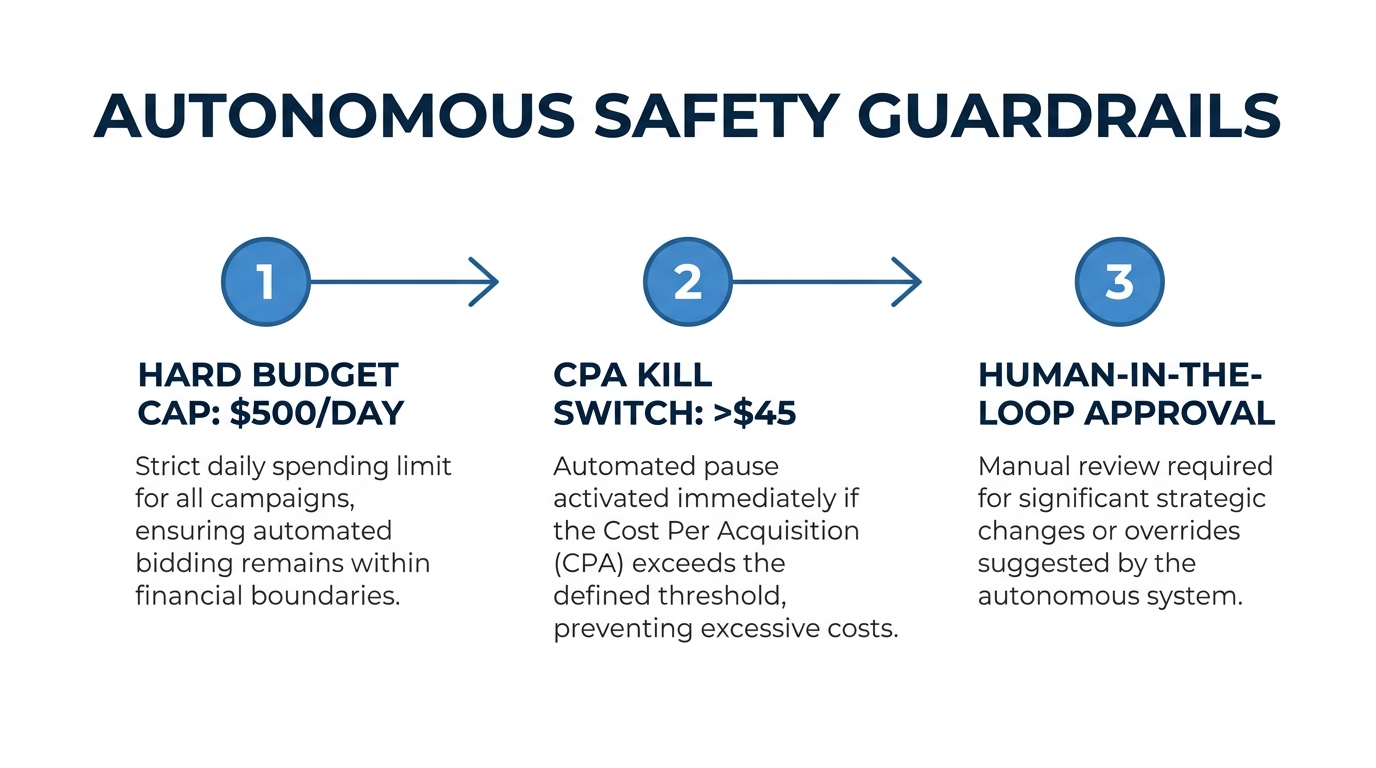
Giving an autonomous agent access to your Meta Ads Manager or Stripe account requires a strict security protocol. You must manage tool permissions to prevent the "Wild West" nature of Open Claw from causing budget overruns.
- Read-Only Access: For high-stakes platforms, start with read-only access. Allow the agent to pull data and draft reports, but require manual approval for budget changes or ad launches.
- Scoping Permissions: Only give the agent access to the specific local folders it needs. Use
.claudeignoreor similar files to prevent the agent from reading sensitive personal data. - Budget Caps: Always set hard daily limits within Meta Ads Manager directly, rather than relying solely on the agent's logic.
Building a Reporting Loop with Stripe and Meta
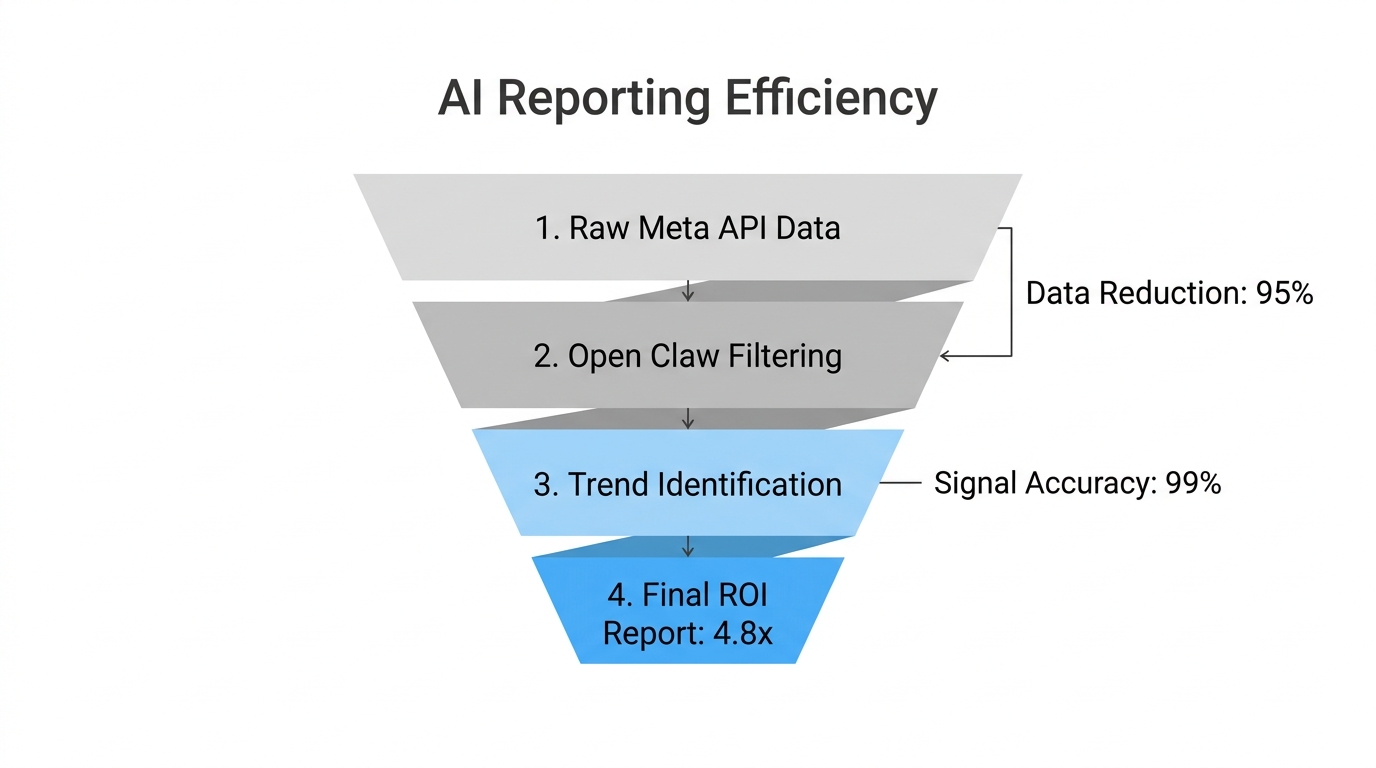
The final piece of the 2026 automation stack is the Self-Improving Loop. By connecting your agent to Stripe via MCP, you can feed actual revenue data back into the agent's memory. This allows the agent to distinguish between an ad that gets 'cheap clicks' and an ad that generates actual profit.
Your agent should maintain a memory.md file where it records what it has learned. If the agent notices that "ads featuring UGC creators with 10k-50k followers convert 30% better than studio shots," it will update its memory. Next time you ask it to plan a campaign, it will automatically prioritize those creator demographics. It is no longer just a tool; it is a compounding asset that gets smarter the more you use it.
Conclusion: The Future of the 100x Employee
The shift to Meta ads automation 2026 isn't just about saving time; it's about shifting your role from a 'doer' to an 'architect.' By building an AI OS comprised of Open Claw agents, Claude Code skills, and robust context files, you are effectively hiring a 100x employee that works 24/7 without fatigue.
Start small. Build an executive assistant agent to summarize your marketing inbox. Then, build an ads analyst skill to track your competitors. Before long, you will have a fully autonomous marketing department that allows you to focus on high-level strategy and brand vision. The technology is here—it's time to stop chatting and start building.