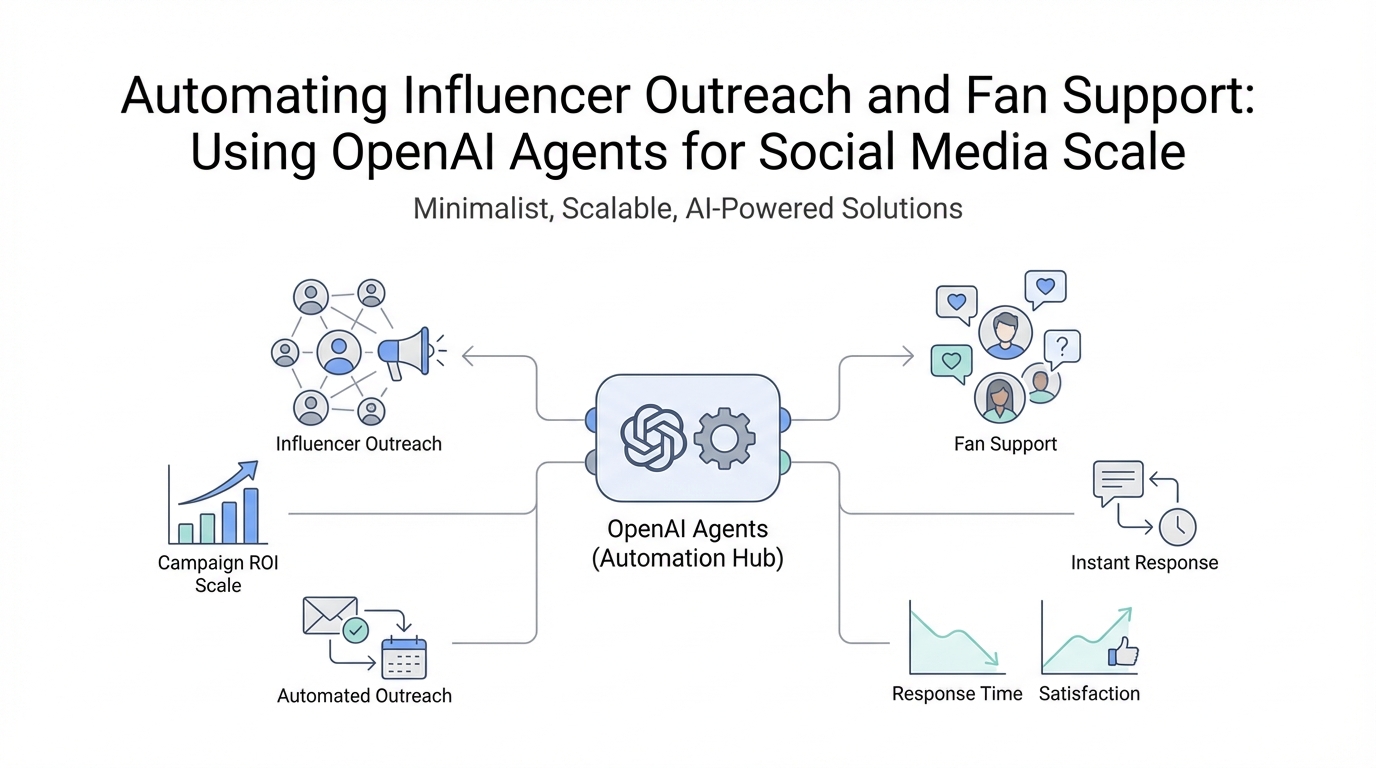
For modern influencer agencies and high-growth creators, the direct message (DM) inbox is both a goldmine and a graveyard. Somewhere between the hundreds of fan messages and spam accounts lie five-figure brand deals and high-value collaboration requests. The challenge has always been the manual labor required to filter, vet, and respond to these inquiries before the lead goes cold. However, the release of OpenAI's Agent Builder has introduced a paradigm shift. By leveraging influencer marketing automation, agencies can now move beyond manual triaging to a fully autonomous system that handles fan support and brand outreach at scale.
The New Toolkit: Agent Builder, Chat Kit, and Widgets
To understand how to automate brand outreach, we first need to look at the three pillars OpenAI recently introduced: the Agent Builder, Chat Kit, and Widgets. Previously, building a multi-agent workflow—where one AI identifies a lead and another pulls data—required complex custom code. Now, OpenAI provides a visual interface where you can connect different "nodes" to create a logic flow. This reduces the barrier to entry for non-technical agency owners who want to build automated creator workflows without hiring a full engineering team.
The Chat Kit SDK allows you to take these workflows and embed them anywhere—a talent agency website, a creator's link-in-bio, or a private brand portal. When combined with Widgets—dynamic components that display real-time data—the chat interface becomes more than just text; it becomes a functional dashboard where brands can see creator stats or book meetings directly via tools like Calendly.
Building a Social Media Triage Agent: The Classifier Node
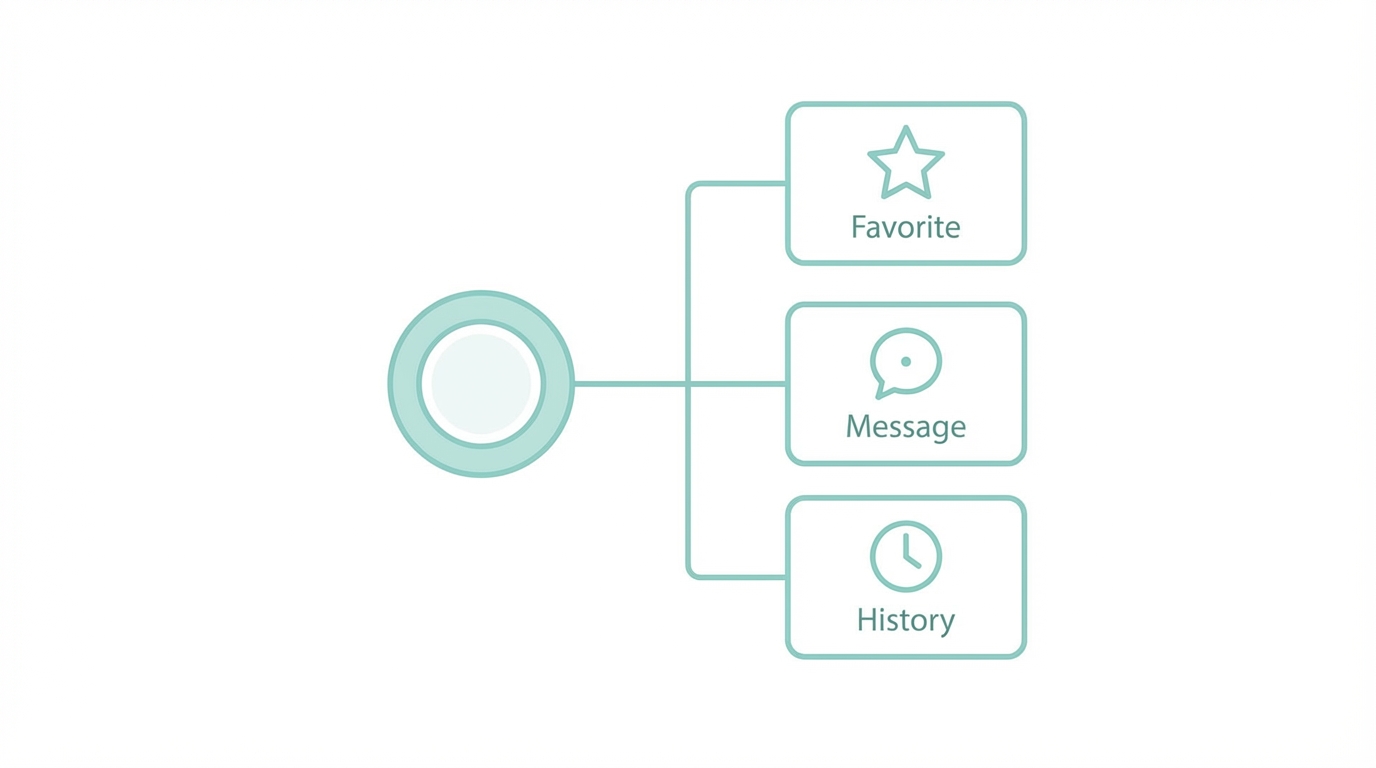

The first step in any influencer marketing automation strategy is "triage." You need a system that can distinguish between a fan saying "I love your content!" and a marketing manager asking for a rate card. In the OpenAI Agent Builder, this is handled by a Classifier node. This node acts as the traffic controller for your entire inbox.
Step 1: Define the Input
The system begins with a start node that accepts text input from your social media DMs or website contact form. Agencies often use tools like Zapier or n8n to funnel these messages into the agent.
Step 2: Train the Classifier
You provide the Classifier with specific examples of different inquiry types. For instance, you might label a message as a "New Lead" if it mentions words like "partnership," "collaboration," or "rates." You label it as "Fan Support" if it’s a general compliment or a question about a specific post. By using minimal reasoning for this step, you keep the response time fast and the token cost low, as the AI doesn't need to solve complex problems yet—it just needs to sort the mail according to standard CRM principles.
Step 3: Route the Logic
Once classified, the logic node sends the "New Lead" to a specialized sales agent and the "Fan Support" to a community management agent. This ensures that every person gets a response in the appropriate brand voice without an agent ever having to touch the keyboard.
Connecting Agents to Influencer Analytics via MCP

A major friction point in brand outreach is the back-and-forth of sending media kits. Brands want to see engagement rates, audience demographics, and recent performance. By using the Model Context Protocol (MCP), your AI agents can pull this data in real-time. For agencies managing dozens of creators, platforms like Stormy AI provide the perfect data backbone for vetting and analysis.
When a lead is identified, the agent can call an MCP server to pull the creator's latest stats directly from a platform like Stormy AI. This allows the agent to respond to a brand with: "Thanks for reaching out! In the last 30 days, [Creator Name] has averaged 50k views on TikTok with a 4.2% engagement rate. Would you like to see our latest campaign results?" This level of social media AI agents integration transforms a generic auto-reply into a high-converting sales pitch.
Agencies can also connect these agents to their Shopify stores or Google Ads accounts via MCP to provide brands with specific ROI data from previous affiliate runs. This data-backed approach is what separates professional AI for influencer agencies from basic chatbots.
Creating Custom 'Widgets' for Dynamic Media Kits
One of the most impressive features of the new OpenAI update is the ability to display dynamic UI components. Instead of sending a static PDF media kit that is outdated the moment it's exported, your agent can trigger a Widget within the chat.
Imagine a brand manager chatting with your agency's bot. Instead of just reading text, a widget pops up showing a live chart of the creator's follower growth or a carousel of their top-performing TikTok videos or Instagram Reels. These widgets can be configured to pull live data from your Creator CRM or analytics tools. This not only looks professional but significantly speeds up the vetting process for the brand, making them more likely to close the deal quickly.
Implementing Guardrails: Ensuring Brand Safety and Accuracy

A common fear when using automated creator workflows is the risk of the AI "hallucinating" or making promises the creator can't keep—such as agreeing to a price that is too low or a deadline that is impossible. This is where Guardrails come in. OpenAI's Agent Builder allows you to set strict parameters on what the agent can and cannot say.
- Pricing Guardrails: You can program the agent to never quote a price but instead say, "Our partnerships typically start at $X, but I'll have our manager send over a custom quote for your specific needs."
- Voice Consistency: By uploading a Vector Store using Pinecone or Weaviate (a digital library) of the creator’s past captions, emails, and scripts, the agent can adopt the specific brand voice of that influencer, making the interaction feel authentic rather than robotic.
- Personal Information: Guardrails can automatically redact sensitive information like the creator's personal phone number or home address if a user tries to "jailbreak" the bot with clever prompts.
Scaling Outreach: Moving to an Agent-Led CRM System
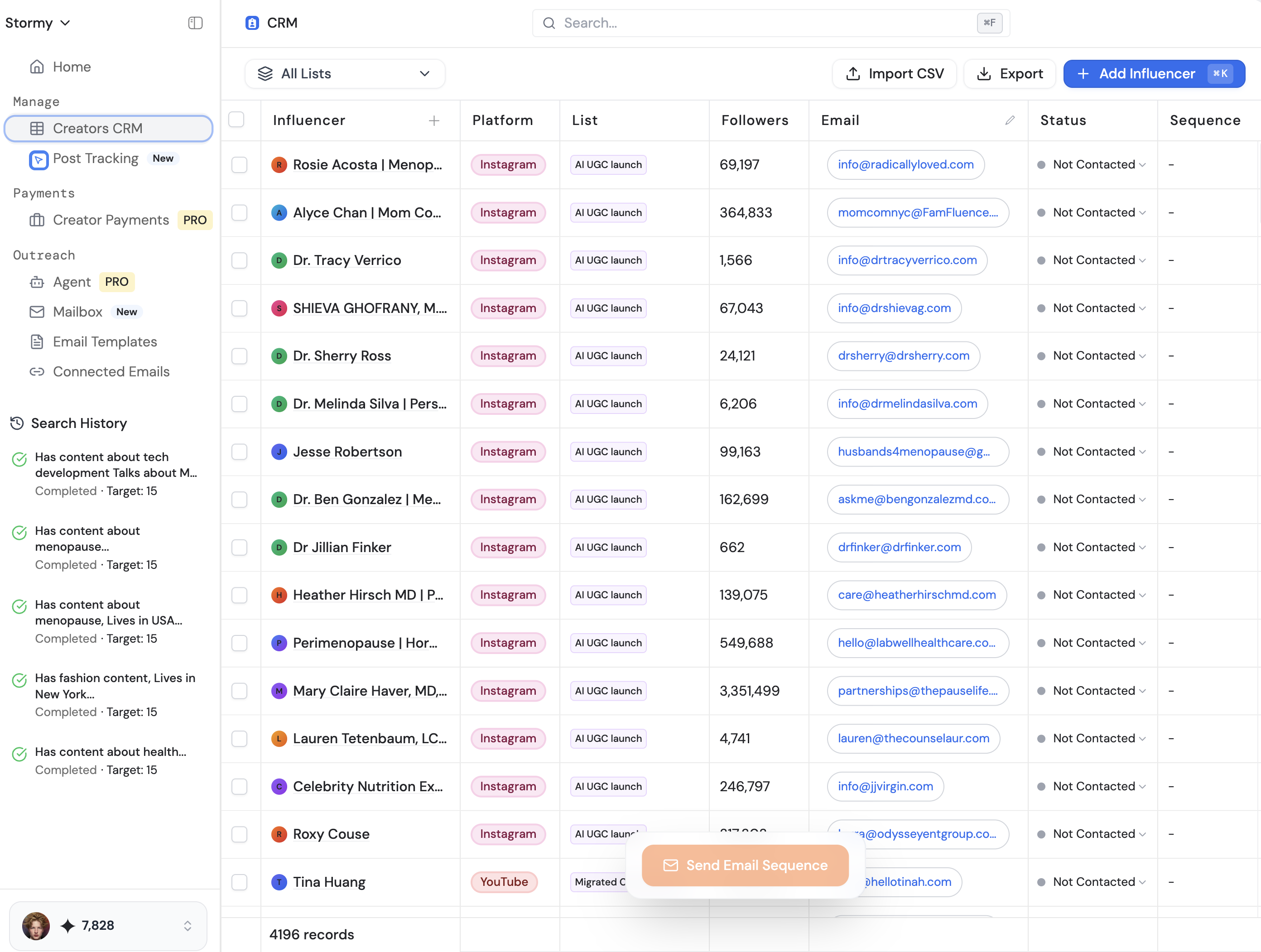
The ultimate goal of influencer marketing automation is to move leads through a funnel without human intervention until the final negotiation. Once the agent has captured the brand manager's email, budget, and campaign goals, it shouldn't just sit in a chat log. It should be pushed directly to your Creator CRM.
Using an MCP for HubSpot or Notion, the agent can create a new lead entry, attach the chat transcript, and set a task for the talent manager to follow up. If you are using an all-in-one platform like Stormy AI, you can even automate the outreach side. An AI agent can be set to discover new brands on a schedule and send hyper-personalized emails, effectively acting as a 24/7 sales department that works while you sleep.
This agent-led CRM update system ensures that no lead falls through the cracks and that the agency team only spends time on "high-reasoning" tasks—like closing the actual deal and managing the creative direction—while the AI handles the repetitive data entry and initial vetting.
Conclusion: The Future of Creator Operations
The barrier between being a "content creator" and a "media company" is the ability to scale operations. By implementing social media AI agents, agencies and creators can handle a volume of inquiries that would otherwise require a dozen full-time employees. From using the Classifier node for triage to leveraging Stormy AI for data-backed pitches and outreach, the tools to automate your growth are finally accessible to non-technical users. The future of the industry isn't just about who has the best content—it's about who has the most efficient systems to monetize it.