Automating Creator Negotiations with OpenClaw Influencer CRM and SOUL.md in 2026
Maximize marketing efficiency 2026 with OpenClaw Influencer CRM and SOUL.md. Automate influencer price negotiation and contract vetting to boost ROI.
In the high-stakes world of digital commerce in 2026, the bottleneck for brand growth is no longer finding creators—it is the friction of influencer price negotiation and manual administrative hurdles. With the influencer marketing industry projected to reach a staggering $34.1 billion by 2026, brands can no longer afford to spend days haggling over deliverables and rates. The emergence of agentic marketing has shifted the paradigm from "AI as a tool" to "AI as a workforce," where autonomous agents handle the heavy lifting of creator management workflows. By leveraging the OpenClaw Influencer CRM and the SOUL.md protocol, forward-thinking growth teams are automating the first 90% of the negotiation funnel, leaving human managers to focus exclusively on high-level creative strategy and final approvals.
The Shift to Agentic Marketing and "Digital Employees"
By early 2026, the transition to "Agentic Marketing" has become the defining trend for global brands. Unlike the generative AI tools of 2024, the current generation of agents doesn't just write emails; they execute tasks within a complex marketing efficiency 2026 framework. Platforms like OpenClaw Influencer CRM (formerly known as Clawdbot) have reached over 214,000 GitHub stars, becoming the gold standard for self-hosted creator management. These agents function as digital employees that can browse social profiles, interact with APIs, and communicate across Telegram, Slack, and Discord to move deals forward.
"Manual influencer outreach is mathematically impossible at the scale required for 2026 commerce; agentic pipelines are now a fundamental requirement for survival."
This shift is driven by the sheer volume of the creator economy. With brands earning an average of $5.78 for every $1 spent on influencer marketing, the incentive to scale is massive. However, scaling requires automated contract vetting and real-time response capabilities that human teams simply cannot match without ballooning their headcount. The solution lies in standardized communication protocols that allow AI agents to talk to creators (or the creators' own agents) with precision.
Understanding the SOUL.md Protocol for Price Vetting
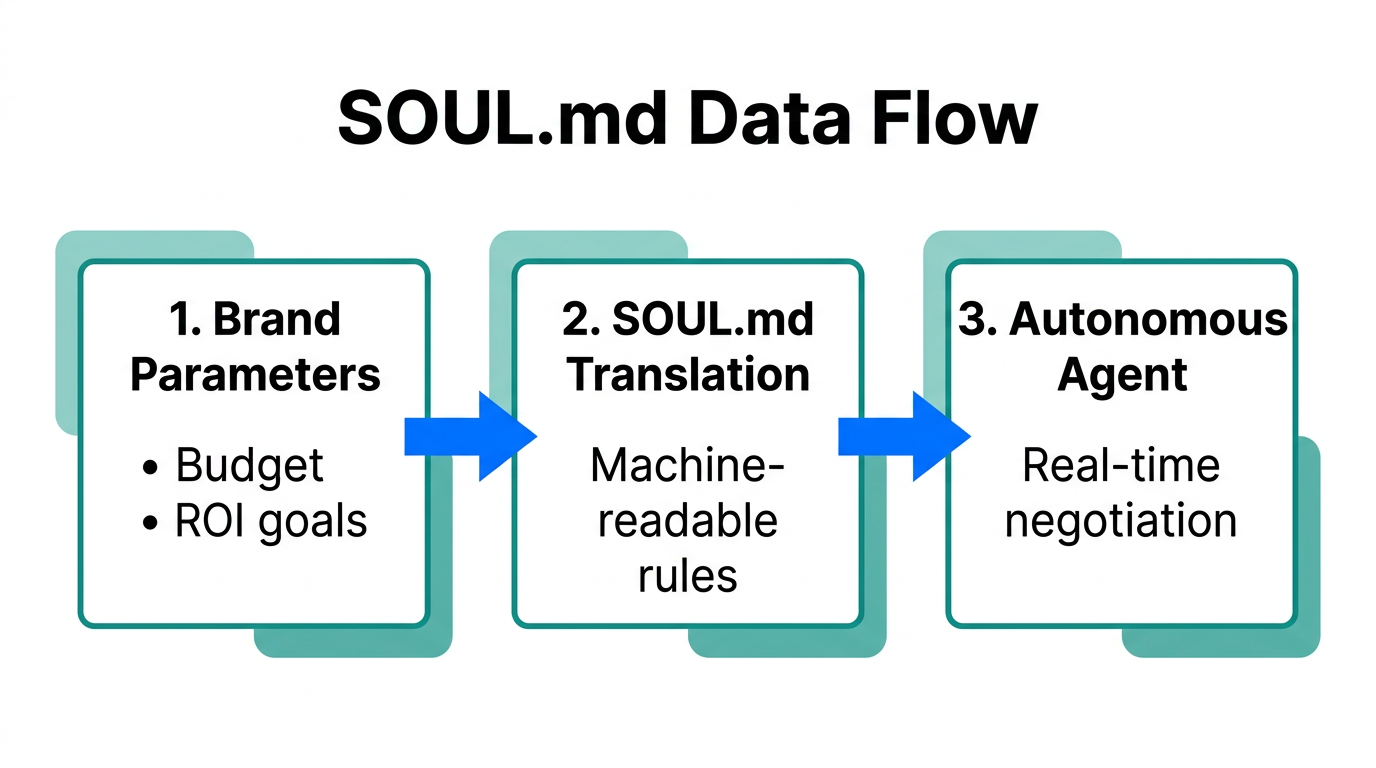
At the heart of modern influencer price negotiation is the SOUL.md protocol. This standardized format allows brands to define their "Source of Truth" for agentic behavior. When an agent powered by OpenClaw interacts with a creator, it references a SOUL.md file that contains explicit budget guardrails, content requirements, and legal constraints. This ensures that the agent never overpromises or violates brand safety guidelines during the initial vetting phase.
The SOUL.md protocol facilitates agent-to-human price vetting by providing a machine-readable template of the brand's offering. If a creator’s rates fall within the pre-defined budget guardrails, the agent can immediately proceed to the next stage of the creator management workflows. If the rates are outside the range, the agent can either counter-offer based on data-backed performance metrics from advanced vetting platforms or flag the conversation for a human manager if the creator’s engagement quality is exceptionally high.
Setting Budget Guardrails: Programming Agents for Rate Inquiries
One of the most critical aspects of marketing efficiency 2026 is the ability to handle the "rate inquiry" phase instantly. Traditionally, an influencer would DM a brand, and a manager might respond 24 hours later, by which time the creator has moved on to a competitor. With OpenClaw Influencer CRM, agents are programmed to handle these inquiries in seconds. By setting clear budget guardrails within the CRM, brands can ensure that their AI agents are negotiating fairly while protecting the bottom line.
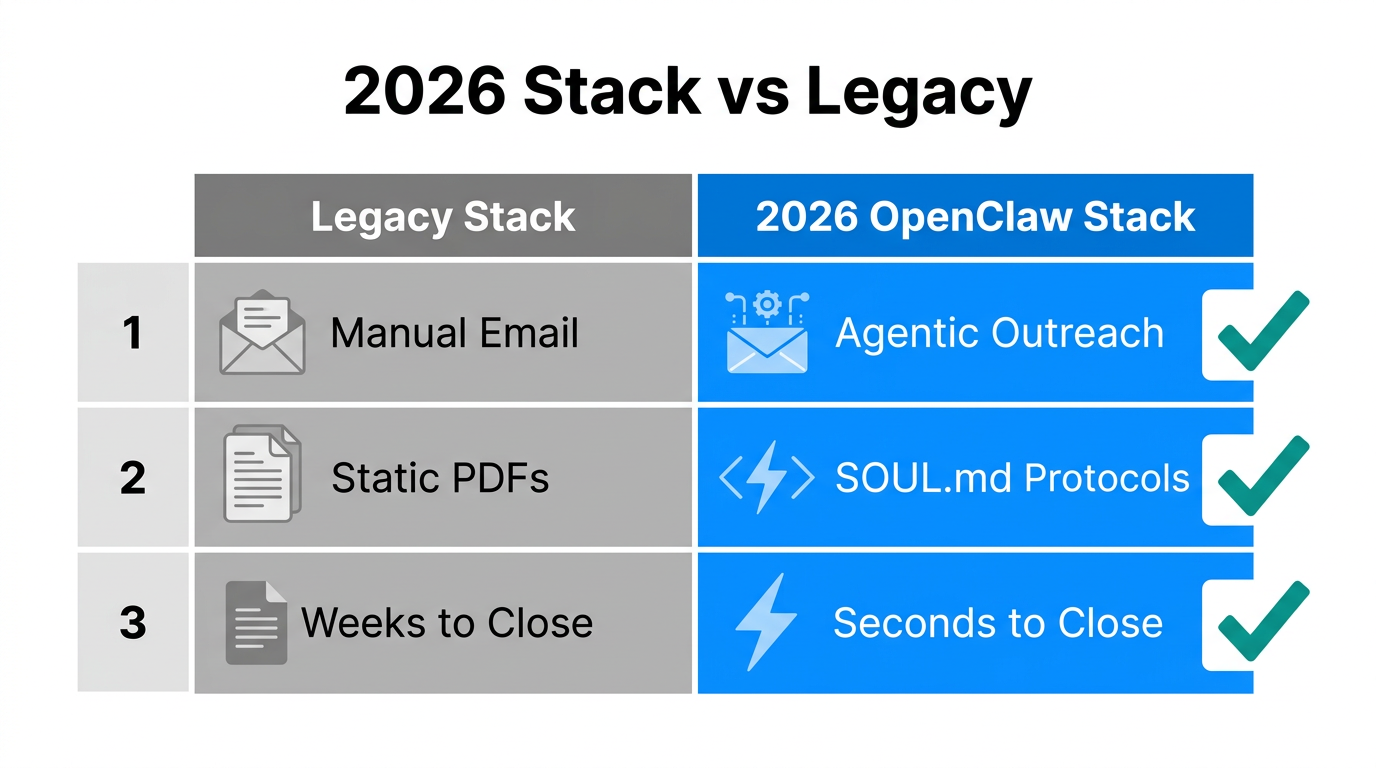
| Feature | Manual Workflow (2024) | Agentic Workflow (2026) |
|---|---|---|
| Initial Response Time | 45 Minutes - 24 Hours | 8 Seconds |
| Price Vetting | Manual Spreadsheet Check | Automated SOUL.md Check |
| Contract Vetting | Legal Review (Days) | AI Guardrails (Instant) |
| Scalability | Limited by Headcount | Infinite via API |
The automated contract vetting process uses these guardrails to verify that the creator agrees to essential terms—such as usage rights, whitelisting permissions, and exclusivity periods—before a human even looks at the deal. This eliminates the back-and-forth that typically kills campaign momentum. Brands like Blueland have used these micro-influencer strategies to boost their Amazon seller rank by 6.3x through Stack Influence, proving that efficiency directly translates to revenue.
The 8-Second Advantage: Boosting Inquiry Conversion
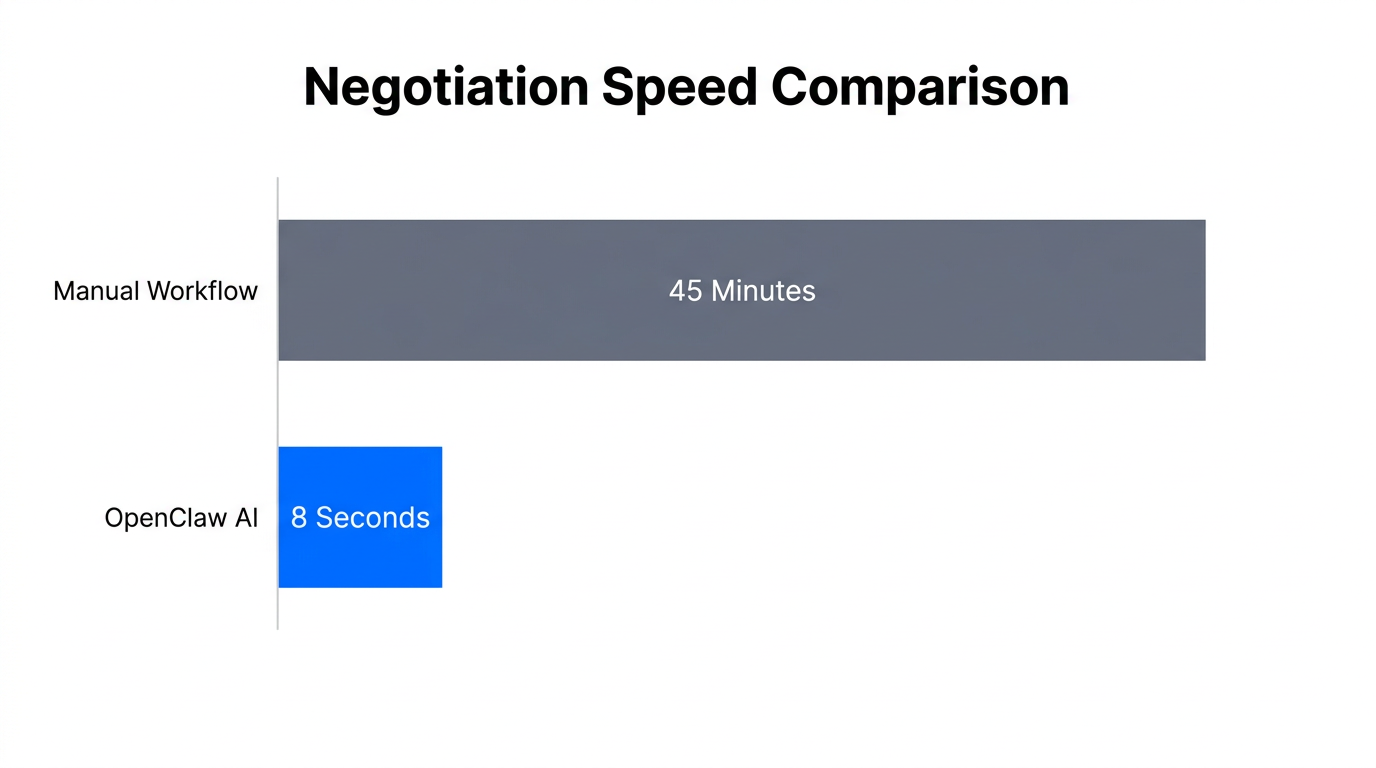
The most shocking statistic in the 2026 influencer landscape is the correlation between response time and conversion. Data from sellers using Tencent Cloud integrations shows that reducing response times from 45 minutes to 8 seconds increases inquiry conversion rates from 22% to 41%. In the creator economy, attention is the scarcest resource; if your brand is the first to respond with a professional, data-backed offer, you win the creator's loyalty.
"In 2026, the speed of your CRM is the speed of your growth. An 8-second response isn't just a feature; it's a competitive moat."
This rapid response is made possible by the omnichannel inbox management capabilities of OpenClaw. By merging Telegram, WhatsApp, and Email into a single command center, the agent ensures that no message falls into the "email graveyard." This prevents communication decay, which remains the leading reason influencers drop out of brand collaborations. By meeting creators where they live—often in messaging apps rather than email—brands significantly improve their creator management workflows.
The 'Human-in-the-Loop' (HITL) Model
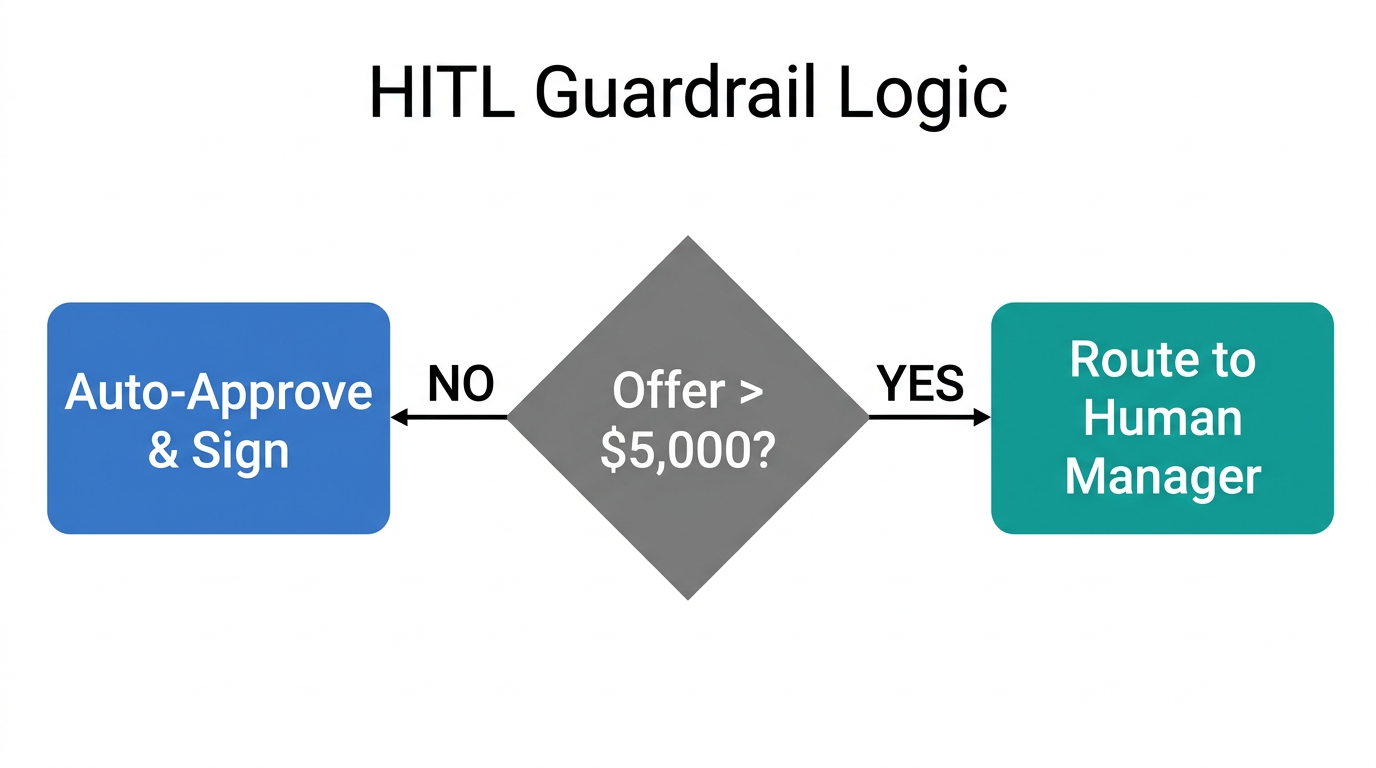
While automation is powerful, the 2026 consensus among industry leaders like Peter Steinberger is that the future is Human-in-the-Loop (HITL). The AI agents should handle the first 90% of the funnel: discovery, initial outreach, price vetting, and contract logistics. This leaves the final 10%—the creative strategy and final relationship building—to human managers. This model ensures that while the process is efficient, the content remains authentic and aligned with the brand's unique voice.
Over-automating can lead to a 30% drop in engagement if creators feel they are working with a nameless robot. The HITL model allows humans to step in when the negotiation reaches a creative nuance that an agent might miss. For example, if a creator suggests a unique UGC (User-Generated Content) angle for a mobile app install campaign, a human manager can approve the creative pivot while the agent handles the adjusted payment terms in the background. This synergy is what allows agencies like Alchemy London to scale their networks 10x without adding headcount.
Transitioning from Transactional One-Offs to Communities
One of the biggest mistakes brands made in the mid-2020s was treating influencers as transactional vendors. In 2026, the most successful companies are using their CRMs to build long-term creator communities. Automated tools can track "discovery-to-purchase" metrics in real-time across TikTok Shop and Instagram Shopping, but the relationship requires a human touch to thrive.
A sophisticated OpenClaw Influencer CRM setup allows for "always-on" seeding. Instead of sporadic campaigns, agents can identify new micro-influencers daily (using discovery engines like Stormy AI), send out product gifts automatically, and track the resulting organic posts. This continuous loop builds a base of nano-influencers (1k–10k followers) who often boast engagement rates of 10.3% on TikTok, far outperforming their mega-influencer counterparts. Over time, these transactional interactions evolve into a loyal community that advocates for the brand year-round.
Building Your 2026 Growth Tech Stack
To implement these strategies, growth teams need an integrated ecosystem of tools. While OpenClaw handles the agentic execution and CRM functions, sourcing high-quality creators remains the first step. For this, teams rely on AI-powered search engines. Using platforms like Stormy AI allows brands to find creators using natural language prompts, ensuring the discovery phase is as fast as the negotiation phase.
- Discovery & Outreach: Use Stormy AI to identify niche creators and initiate hyper-personalized contact.
- CRM & Execution: Deploy OpenClaw on your own hardware for privacy-first, autonomous management.
- Vetting & Fraud: Integrate AI-driven quality scoring to ensure engagement is genuine and followers are real.
- Payments & Logistics: Use platforms like Stripe or built-in CRM payment modules to handle global creator payouts instantly.
By combining these tools, brands can move from a reactive marketing posture to a proactive, agentic one. The goal is to create a system where the influencer price negotiation is a background process, and automated contract vetting is a standard operating procedure, not a legal hurdle.
Conclusion: The Future of Creator Negotiation
The era of manual spreadsheets and 24-hour response delays is over. In 2026, marketing efficiency is defined by how well a brand can leverage agentic workflows like those found in OpenClaw Influencer CRM. By adopting the SOUL.md protocol and maintaining a Human-in-the-Loop model, brands can scale their creator programs to thousands of partners while maintaining the creative integrity that drives ROI.
Whether you are a solo e-commerce seller or a global enterprise, the path to $34B market success lies in automation. Start by automating your creator management workflows, setting your budget guardrails, and letting AI agents handle the noise so your team can focus on the signal. The brands that respond in 8 seconds today are the ones that will own the market tomorrow.