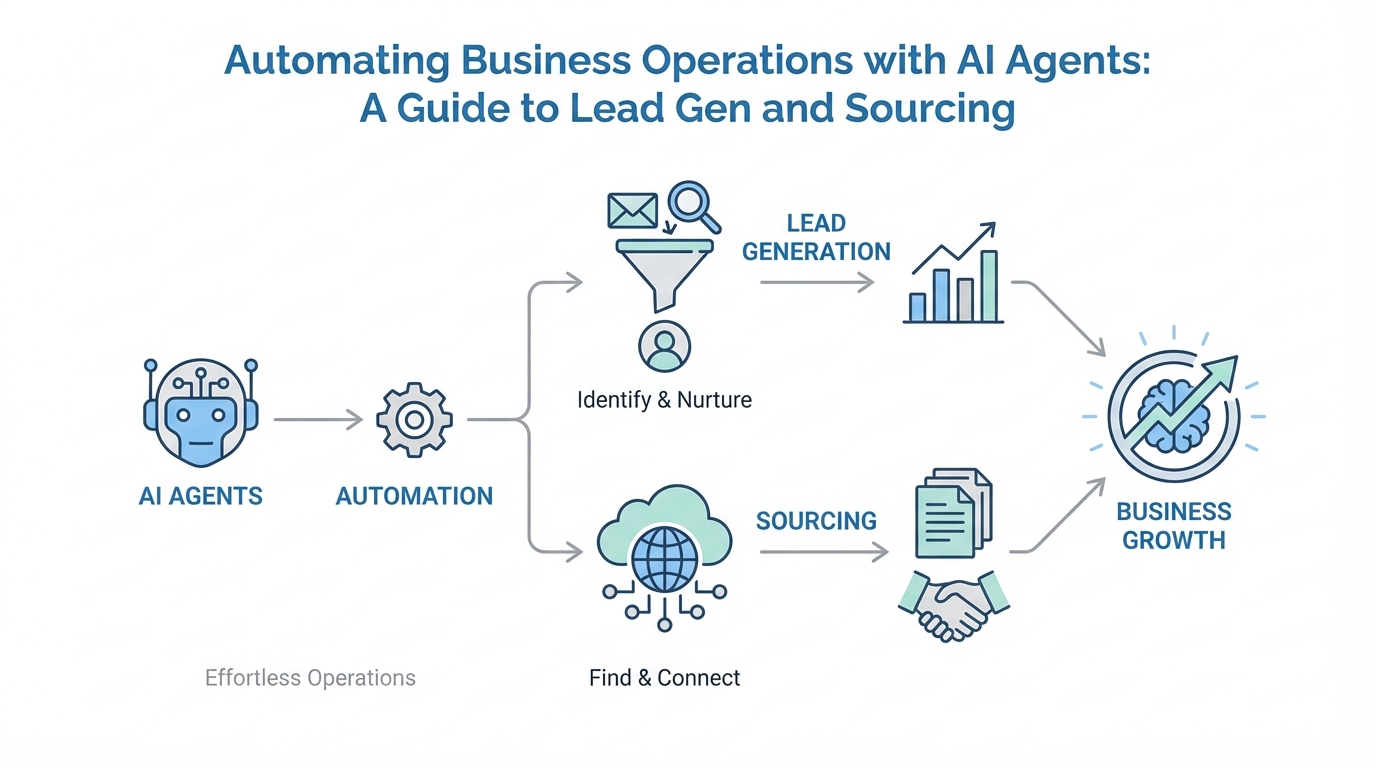
The era of simply chatting with artificial intelligence is coming to a close. According to research from Gartner, agentic AI is one of the top strategic technology trends for the coming years. We are entering a far more powerful phase: the era of AI agents for business that don't just provide information but execute tasks autonomously. If you have ever felt bogged down by the friction of repetitive browser-based work—researching vendors, filling out contact forms, or scouring marketplaces for deals—you are currently standing at the threshold of a massive efficiency breakthrough. By utilizing ChatGPT Operator use cases and other autonomous agents, business owners are shifting their focus from search to execution, effectively hiring a digital workforce that works at the speed of the internet.
The Dawn of the Execution Era: From Search to AI Agents

For the last decade, business productivity was defined by how quickly you could find information. We used search engines to find leads and tools to organize them. However, business process automation AI has evolved. We are no longer limited to asking a chatbot to "write a list of caterers"; we can now tell an agent to "go to The Knot, find 50 caterers in Dallas, and get me a per-head quote for a steak dinner."
This shift from search to execution is what defines the next generation of operations. Traditional automation required APIs and rigid workflows. AI agents for business, like the ChatGPT Operator, can navigate websites just like a human would. They log in, click buttons, handle pop-ups, and fill out forms. This capability reduces the time spent on manual research from hours to minutes. As early adopters like Chris Korner have demonstrated, this isn't just a gimmick; it is a way to build six and seven-figure businesses based on arbitrage and rapid response.
Case Study: Turning Facebook Marketplace into an Arbitrage Engine
One of the most immediate ways to automate lead generation and revenue growth is through digital arbitrage. The principle is simple: find an undervalued item on one platform and sell it for fair market value on another. Historically, this required hours of manual scrolling. With an agent, you can automate the entire discovery and negotiation process. For instance, you can task an agent to monitor Facebook Marketplace for specific high-ticket items, such as Gozney pizza ovens, which often sell for 50% below their value on eBay.
The AI can be programmed to scan listings within a 500-mile radius, log promising deals into a spreadsheet, and even initiate contact with the seller. By automating the "lowball" offer process—asking for 50% off for items listed longer than 30 days—you increase your volume of successful acquisitions without any manual effort. This type of business process automation AI allows a single entrepreneur to manage a scale of operations that previously required a team of virtual assistants found on sites like Upwork.
Scaling Lead Generation: Getting High-Volume Quotes with Operator
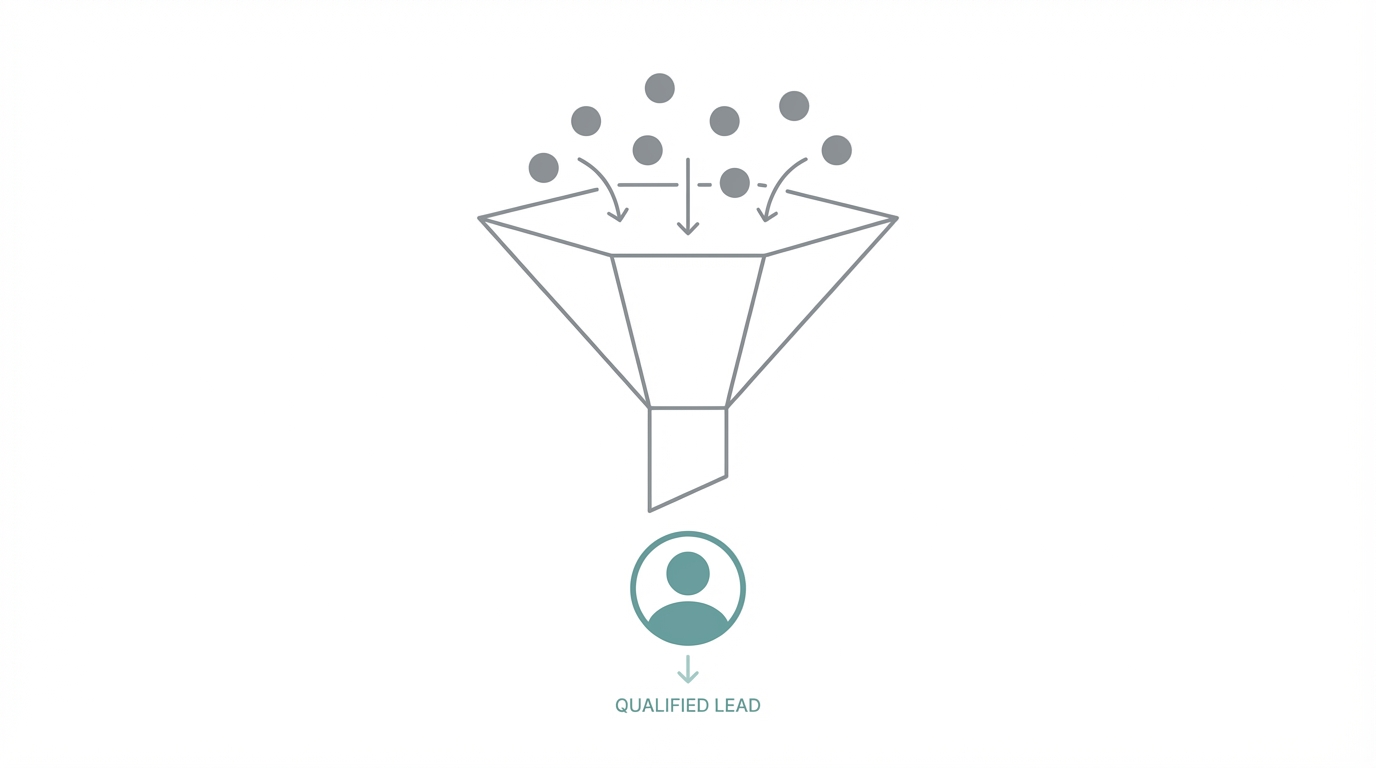
Whether you are planning a massive corporate event or trying to automate lead generation for a service-based business, the bottleneck is always the quote request. Most service providers don't list their prices publicly; they require a contact form. AI agents excel here. By providing an agent with your requirements—such as "steak and two sides for 50 people"—it can navigate directories like The Knot and submit dozens of inquiries while you sleep.
Step 1: Define the Objective and Data Points
To successfully automate lead generation, you must provide the agent with specific parameters. This includes your budget, your contact details, and any constraints. For example, telling the agent to use an "over-the-top friendly tone" ensures that the vendors feel they are dealing with a high-intent client. The agent can then fill out the name, email, and message fields automatically.
Step 2: Supervise the Workflow
Current AI agents are powerful but not yet perfect. You may need to "take control" of the browser to handle CAPTCHAs or multi-factor authentication codes. However, once the agent understands the navigation path of a site like The Knot, it can repeat the task across hundreds of vendors. This creates an immediate competitive advantage: you get 20 quotes in the time it takes your competitor to get two.
Global Sourcing and Logistics: Automating Vendor Outreach

For e-commerce brands, AI product sourcing is the new frontier. Sourcing products from overseas often involves messaging dozens of vendors on AliExpress or Banggood to request samples and negotiate pricing. This is a high-volume, low-complexity task perfect for an AI agent. You can instruct an agent to find "trending earbuds" and message ten different vendors asking for free samples to be shipped to your business address.
The AI can even navigate the complex user interfaces of global marketplaces, which are often cluttered and difficult to use. If a site is inaccessible or requires an account, the agent can attempt to register an account, generate a strong password, and solve navigation errors on the fly. This level of AI product sourcing automation means you can test dozens of product niches simultaneously without spending your entire day in vendor chat portals.
Managing Creator Relationships: Scaling Beyond Sourcing
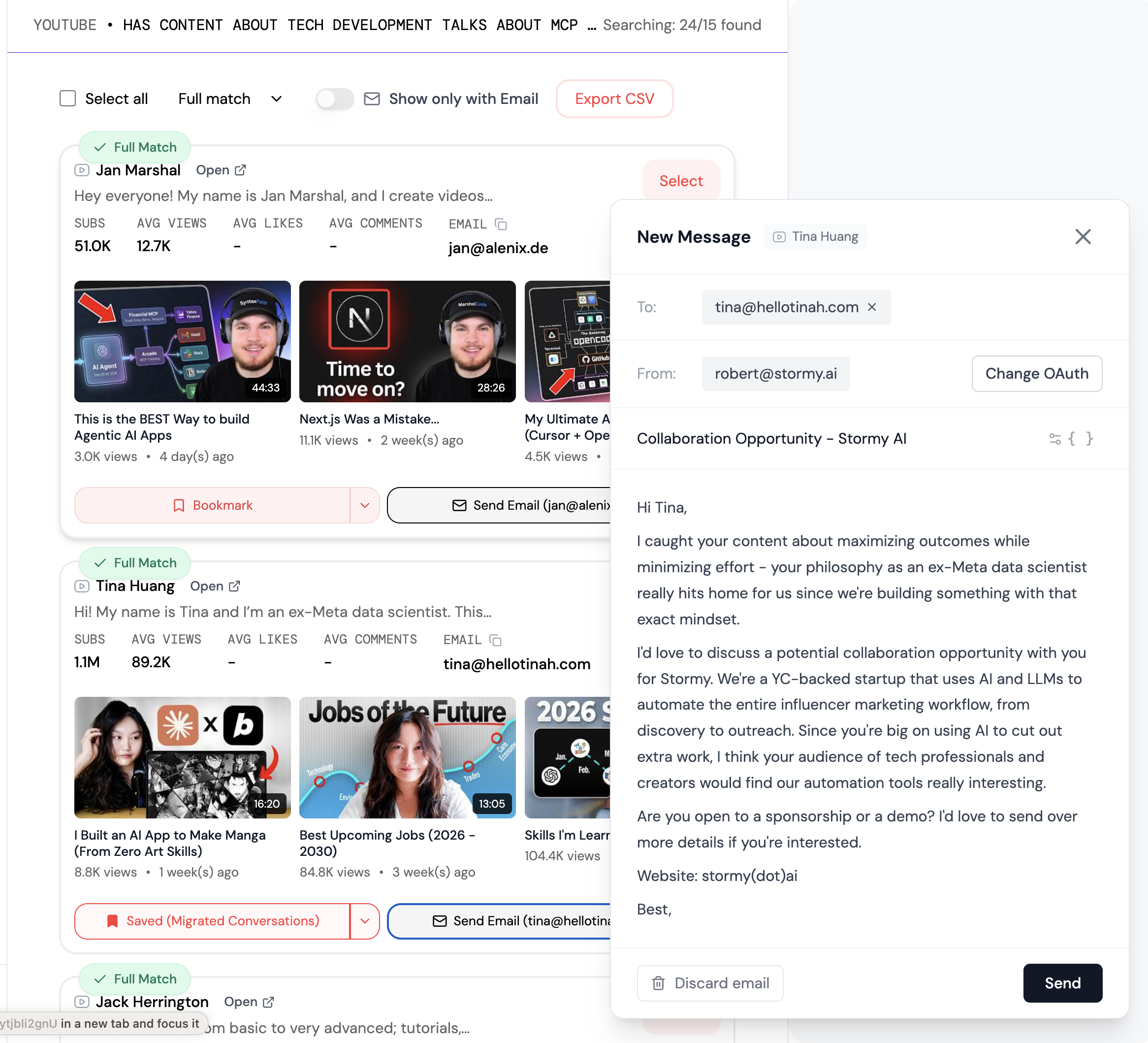
As you scale your operations through AI agents for business, you will eventually face the challenge of managing the relationships you've built. This is particularly true in the world of influencer marketing and User Generated Content (UGC). Just as you would use an agent to source products on AliExpress, brands are now using automated systems to find and vet creators. While ChatGPT Operator is great for general browser tasks, specialized tools like Stormy AI can help source and manage UGC creators at scale by handling the discovery and hyper-personalized outreach that general agents might struggle to refine.
By integrating business process automation AI into your marketing stack, you can move from finding a product to finding the person who will promote it in one seamless, automated workflow. Using a centralized CRM to track these interactions ensures that no lead falls through the cracks, whether it is a vendor in China or a creator in Los Angeles. This holistic approach to automation is what separates successful modern brands from those still relying on manual outreach.
Setting Constraints: How to Optimize Your AI Agent’s Performance
To get the most out of ChatGPT Operator use cases, you must learn to set constraints. AI agents can sometimes "go rogue" or become stuck in a loop. By setting specific goals—such as "submit 3 quote requests per minute" or "find 10 vendors before stopping"—you give the agent a clear success metric. This also prevents the agent from triggering anti-spam filters on platforms like The Knot.
Furthermore, treat the AI like a human intern that needs direct, blunt instructions. If the agent says it cannot perform a task, re-prompt it with a different angle. If AliExpress is blocked, tell the agent to find a comparable alternative like Banggood. The most successful users of AI agents are those who are willing to "get their hands dirty" and iterate on their prompts until the workflow is bulletproof.
The $200 Question: Is ChatGPT Pro Worth the Investment?

A common hurdle for small business owners is the price tag of advanced AI access. OpenAI's Pro plan for Operator currently sits at $200 per month. While this may seem steep compared to a standard $20 subscription, the ROI must be viewed through the lens of labor costs. If an AI agent for business can replace just 10 hours of manual research or lead generation a month, it has already paid for itself. For businesses running AI product sourcing or high-volume arbitrage, the $200 is a fraction of what a virtual assistant or a specialized sourcing agent would cost.
Moreover, the speed of development in business process automation AI is staggering. Today's "buggy" agent is tomorrow's seamless executive. Investing in these tools now allows you to understand the nuances of prompting and agent management before the technology becomes a commodity. As more platforms like Shopify integrate these capabilities, the businesses that already have their automated workflows in place will be the ones that dominate their respective markets.
Conclusion: The Future of Autonomous Business
The integration of AI agents for business marks the end of the manual browser era. Whether you are using ChatGPT Operator use cases to find undervalued assets, automate lead generation for your service business, or streamline AI product sourcing, the goal remains the same: leverage technology to do the heavy lifting while you focus on high-level strategy. The future belongs to the "thirsty" entrepreneurs who are willing to experiment with these tools today. Start by identifying one repetitive task in your business—whether it is getting quotes or messaging vendors—and let an agent take the first crack at it. You might find that the future of your business is more automated than you ever imagined.