In the high-stakes world of performance marketing, the difference between a high-growth campaign and a budget-draining disaster often comes down to timing. Traditional automated PPC audit workflows typically rely on static data and manual CSV exports, leaving marketers chasing their own tails as market conditions shift. However, a structural shift is underway. According to the Smartly 2026 Trends Report, marketers estimate that 20% to 30% of their annual digital spend is currently wasted on non-performing impressions and bot traffic. To combat this, growth teams are moving from predictive AI to agentic AI marketing, where tools don't just suggest changes—they execute them. This playbook outlines how to use Claude Code and the Model Context Protocol (MCP) to transform your Google Ads and Meta Ads performance in real-time.
The Agentic Shift: Moving Beyond Dashboards
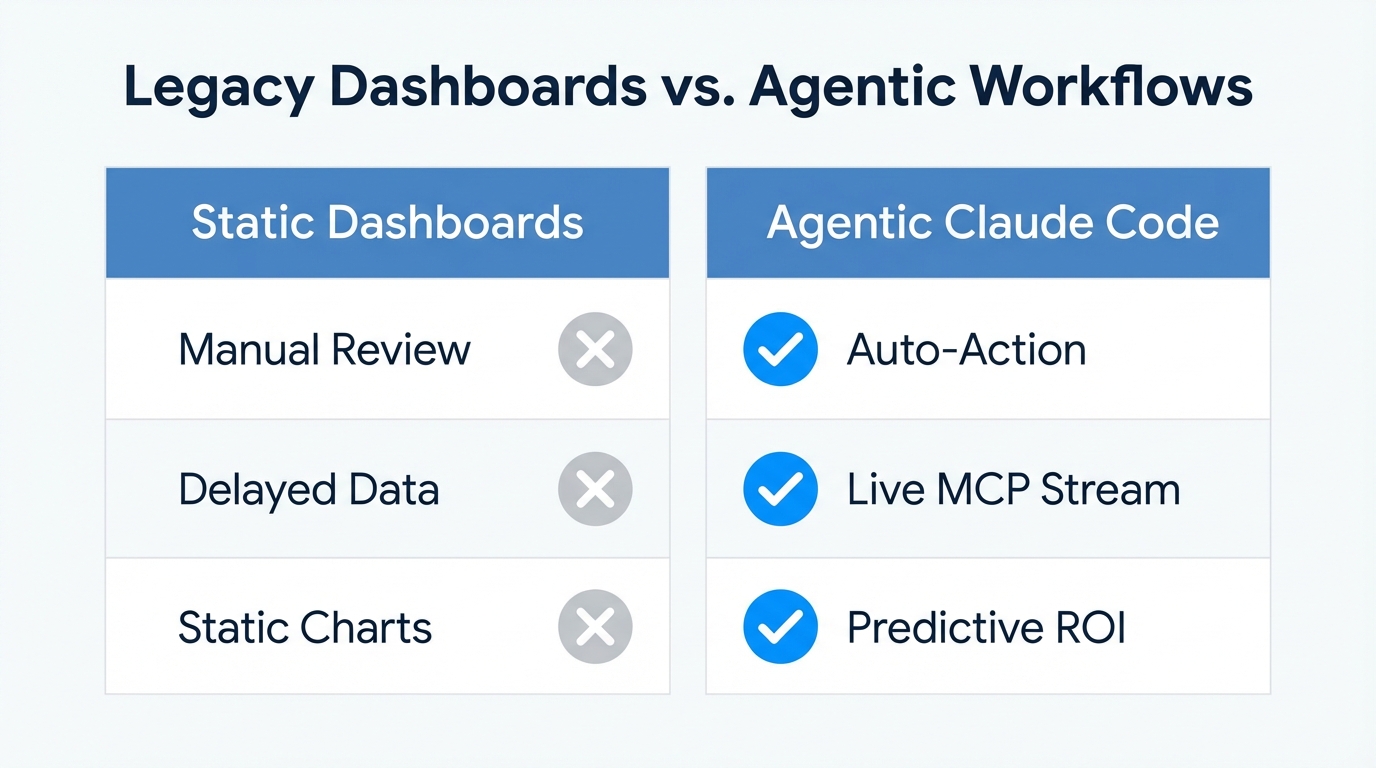
For years, PPC auditing was a retrospective exercise. You would pull a report, identify waste, and apply changes for the next cycle. In the era of real-time ad management, that delay is no longer acceptable. Expert voices like Erika Rollins, VP of Marketing at CallTrackingMetrics, note that agentic AI allows teams to communicate with "intention and clarity" by offloading the repetitive, data-heavy tasks that usually bog down senior strategists. By using Claude Code MCP, you allow the model to "see" your local project files and live data streams, avoiding the low-effort "AI slop" often found in web-based interfaces.
"The current era is defined by proactiveness—AI agents that suggest optimizations before a human even asks." — Tom Coshow, Gartner/Atera
The gap between top-performing brands and laggards is widening. "Precision-First Marketers" who embed agentic workflows are 27% more likely to keep ad waste below 10%, according to Smartly. This shift is not just about speed; it is about the orchestration of intent across thousands of keywords and creatives simultaneously.
Connecting the Pipes: Real-Time Data Integration via MCP
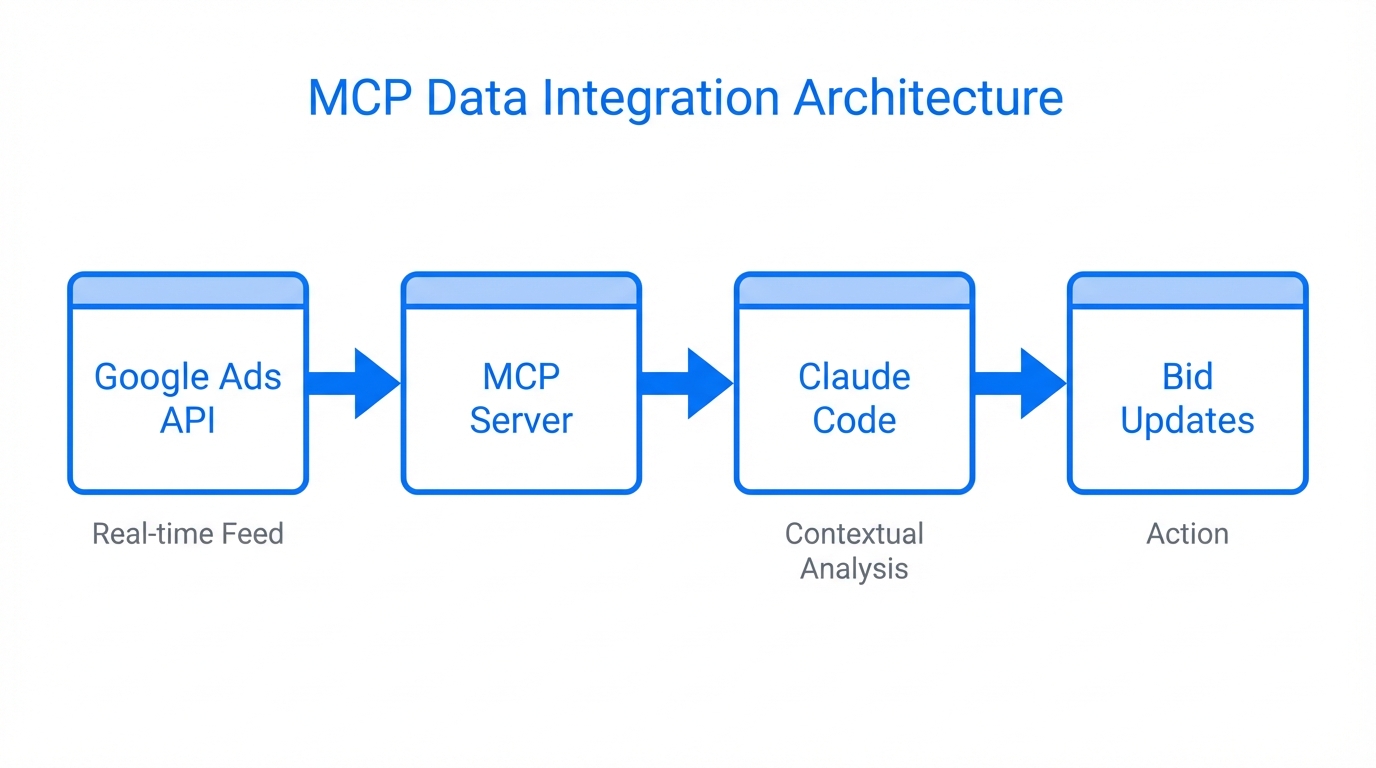
The Model Context Protocol (MCP) is the bridge that allows Claude Code to access live data. Instead of uploading a spreadsheet, you connect Claude directly to the Google Cloud Console. This enables what industry leaders call agentic orchestration, where the AI can query your account history, analyze current spend, and even check the status of your tracking tags. By 2026, iOPEX Technologies predicts that 60% of e-commerce transactions will involve these types of agentic interactions.
Essential MCP Resources
- Google Ads MCP Server: Use the Google Ads MCP Server to give Claude read/write access to your campaigns.
- Meta Ads MCP: Integrate your Facebook and Instagram data via Marble AI's Meta MCP.
- Marketing Skills Pack: Install the Marketing Skills Pack to give Claude specialized auditing commands.
Once your Node.js environment is configured and your MCP servers are running, you can ask Claude complex questions like: "Analyze my Google Ads spend from the last 48 hours. Identify which creative has the highest CPA and pause it." This level of Google Ads optimization was previously only possible for massive agencies with custom-built internal tools.
Step-by-Step: The Automated PPC Audit Playbook
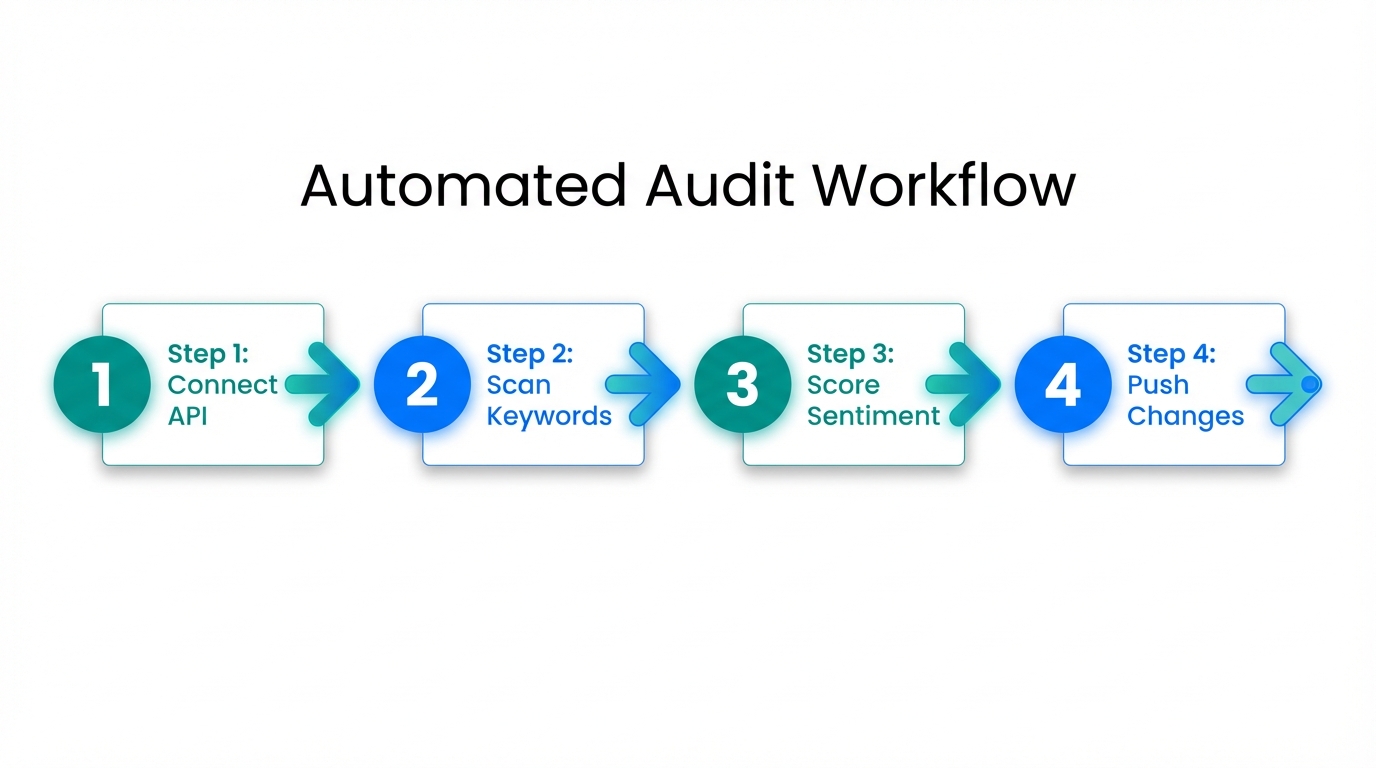
Follow this sequence to run a comprehensive, AI-driven audit of your advertising accounts. This goes beyond a simple checkup; it is a full realignment of your strategy based on pipeline value.
Step 1: Scrape and Analyze Landing Page Relevance
Before looking at the ads, Claude must understand the destination. Use the /ads plan skill within the Claude Ads repo. Claude will use Playwright or Firecrawl to scrape your landing pages, identify core value propositions, and map them against current competitor keywords.
Step 2: Compare Creative Performance Across 48 Hours
Command Claude to pull a rolling 48-hour window of performance data. This is critical for scaling winners and cutting losers early. For instance, the Anthropic Growth Team uses Claude Code to automate creative generation, reducing copy creation time from 2 hours to 15 minutes while increasing creative variants by 10x.
| Audit Phase | Manual Process | Claude Code + MCP |
|---|---|---|
| Data Collection | 3-5 Hours (CSV Exports) | Instant (Live API) |
| Creative Vetting | Subjective Review | Sentiment & CTR Analysis |
| Bid Adjustment | Delayed/Manual | Real-time Guardrail Scripts |
| Reporting | Static Slides | Dynamic Interactive Querying |
Step 3: Deploy Guardrail Scripts
To prevent overspending, have Claude generate "Guardrail Scripts" for the Google Ads Editor. These scripts, often sourced from the MCP Market, can automatically pause keywords if the Target Cost Per Acquisition (tCPA) exceeds the daily budget by a specific percentage. This ensures your real-time ad management remains within profitable boundaries.
Advanced Strategy: Connecting Social Sentiment to Ad Bids
One of the most powerful applications of agentic AI is the ability to adjust spend based on external signals. In a recent clean beauty launch, Unilever connected Claude Code with live social sentiment data. This allowed the AI to automatically adjust ad bids based on real-time influencer performance and audience reception. When a specific UGC (User Generated Content) video started trending, the system shifted budget to the corresponding Meta Ads campaign instantly.
For brands looking to replicate this success, platforms like Stormy AI are essential for sourcing and managing the creators who generate that high-performing sentiment data in the first place. By combining influencer discovery with AI-powered outreach, marketers can feed a constant stream of fresh creative into their automated PPC systems. Agencies like Digital Applied have used similar sub-agent orchestrations to complete client audits 81% faster, effectively reducing operational costs by 70%.
"The ability to connect live influencer performance to our bidding engine transformed our launch ROI from linear to exponential." — Unilever Case Study Summary
Optimizing for Pipeline Value vs. Vanity Metrics
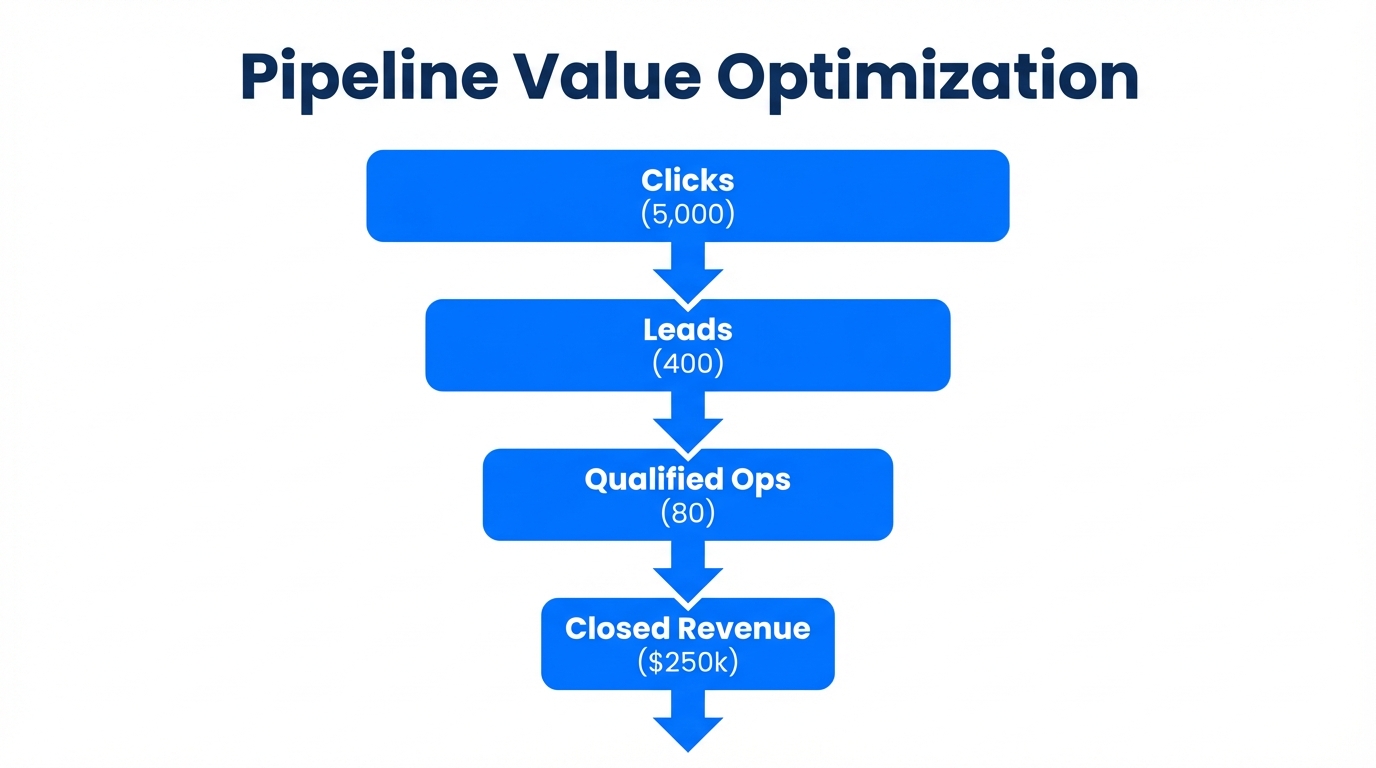
A common pitfall in automated PPC audit workflows is optimizing for the wrong signal. Platform-native AI, such as Meta Advantage+, often pushes for broader audiences to increase spend. However, as noted by Yotpo, niche B2B brands should be cautious of these "optimization scores" if they lead to lower-quality leads.
Your Claude Code prompts must prioritize Return on Ad Spend (ROAS) and Pipeline Value over Click-Through Rate (CTR). High CTR is a vanity metric if the resulting traffic doesn't convert. When using Claude Code, ensure you use a CLAUDE.md file to store your persistent brand guidelines and success definitions. This prevents the "context death spiral" where the AI loses sight of your actual business goals over multiple sessions.
Common Pitfalls in Agentic PPC Management
While the potential for 300% ROI is enticing, automation without oversight is a recipe for disaster. The 2025 McDonald's holiday ad backlash serves as a stark reminder that fully AI-generated ads can occasionally become tone-deaf or "creepy" without a human check. To avoid these traps, consider the following:
- Over-Automation: Never allow an AI to publish new creative without a final human review. Use Re-motion for programmatic video, but keep a creative director in the loop.
- Ignoring Negative Keywords: Platforms like Martech Edge emphasize that real-time management must include aggressive negative keyword mining to prevent spend on irrelevant search terms.
- Siloed Data: Ensure your PPC efforts are synced with your wider marketing stack, using Stormy AI for creator management and platforms like Salesforce for lead tracking to provide a full-funnel view.
Conclusion: The Future of Real-Time Ad Management
The era of manual PPC auditing is coming to a close. By leveraging Claude Code MCP, growth marketers can now build a self-correcting ad engine that identifies waste in minutes rather than months. Whether you are using TikTok Ads Manager to scale UGC or managing complex B2B search campaigns, the integration of live data is your greatest competitive advantage. Start by setting up your MCP servers, defining your pipeline goals in CLAUDE.md, and letting the AI handle the heavy lifting of real-time optimization. Your budget—and your ROAS—will thank you.