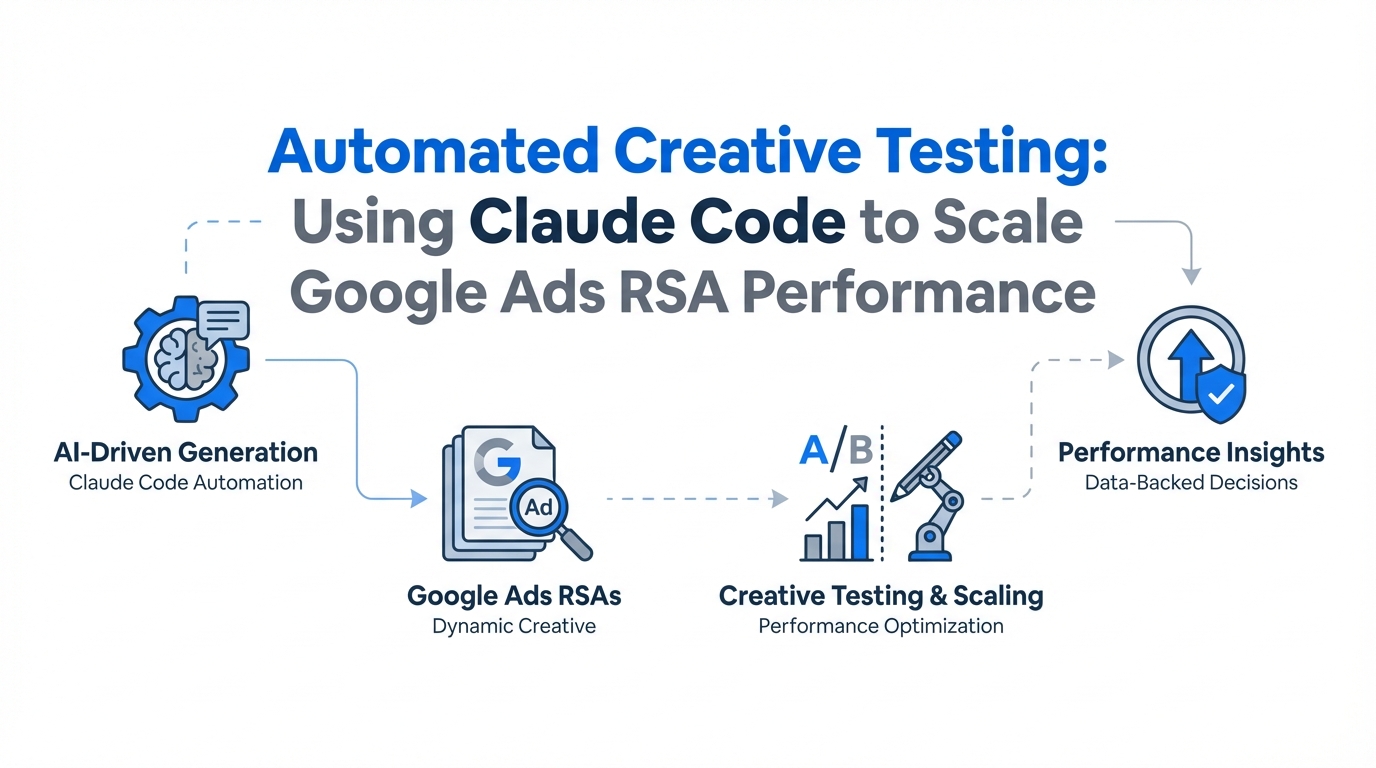
The digital marketing landscape is currently undergoing its most significant transformation since the invention of the tracking pixel. We are moving rapidly from the era of "Chat AI," where LLMs merely helped us draft emails, to the era of Action AI, where autonomous agents manage entire ecosystems. According to recent reports, 79% of companies have already adopted AI agents, with two-thirds reporting measurable value delivery. For growth teams, this means the end of manual copywriting and the birth of Automated Creative Testing (ACT).
Scaling Google Ads Responsive Search Ads (RSAs) has traditionally been a bottleneck of manual labor—writing headlines, mixing descriptions, and crossing fingers for a high-quality score. By leveraging Claude Code and the Model Context Protocol (MCP), marketers can now build agentic workflows that analyze performance data, generate high-intent creative, and deploy variations directly via the Google Ads API. This isn't just about efficiency; it's about a fundamental shift in how we achieve competitive CAC in an increasingly expensive auction environment.
The Shift from Manual Copywriting to Automated Creative Testing (ACT)
In the old model, a growth marketer would spend hours analyzing search term reports to identify winners and then manually update 15 headlines for a single RSA. This process is inherently unscalable. Today, the AI in marketing sector is projected to reach $190 billion by the end of 2025, driven by teams that treat their Google Ads RSA strategy as code rather than content. Strategic AI implementation is already showing its teeth, with some brands reporting 37% lower customer acquisition costs (CAC) and 25% higher conversion rates.
Automated Creative Testing (ACT) allows you to bypass the cumbersome Google Ads dashboard entirely. Instead, you interact with your account via the Command Line Interface (CLI). This move allows for a 10x increase in creative testing volume, turning what used to be a week-long optimization cycle into a 15-minute automated sprint.
"The era of 'Chat AI' is ending; the era of 'Action AI' has arrived. Marketers are now using the terminal to manage ecosystems in minutes." — Ralph Wiggum Technique, Marketing Strategist.The Tech Stack: Leveraging BigQuery and Claude Code
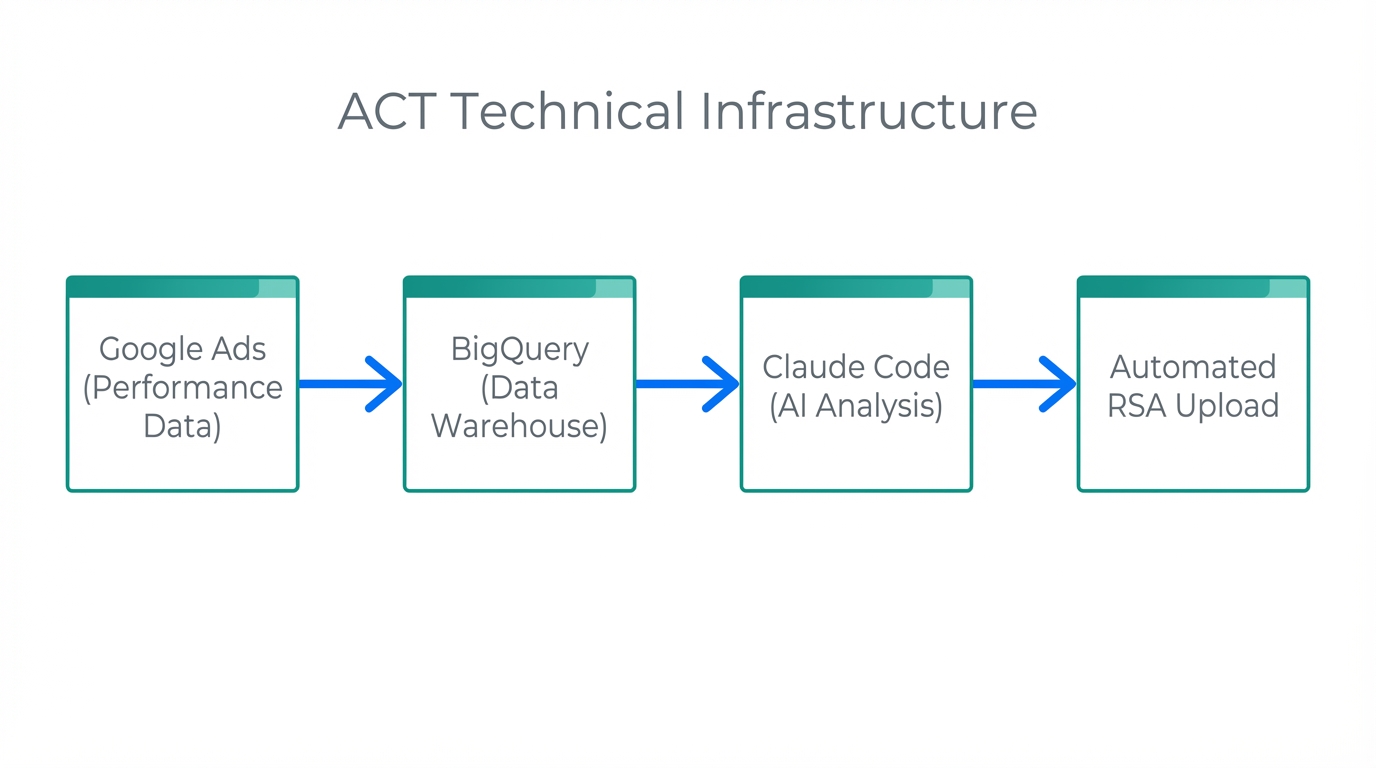
To automate your Google Ads creative testing, you need a stack that provides both "brains" and "hands." The brain lives in Google Cloud Platform (GCP), specifically within Google BigQuery, which acts as the grounding layer for your AI. By storing your historical ad performance and first-party data in BigQuery, you ensure that the AI isn't just guessing—it's learning from what actually converted.
The "hands" of the operation is Claude Code. This agentic CLI uses MCP to interact with live data sources. To make this work, you'll need to connect an Official Google Ads MCP Server. This experimental Python-based server allows Claude to execute GAQL (Google Ads Query Language) directly, retrieving performance metrics for headlines, descriptions, and sitelinks in real-time.
| Component | Tool Recommendation | Primary Function |
|---|---|---|
| The Brain | Vertex AI Agent Engine | Managed runtime for scaling marketing agents. |
| The Memory | BigQuery | Storing conversion data and "grounding" ad copy. |
| The Interface | Claude Code | Agentic execution and ad deployment via CLI. |
| The Connectivity | MCP Servers | Bypassing the dashboard to query the Google Ads API. |
The ACT Playbook: Deploying 50+ RSA Variations Programmatically
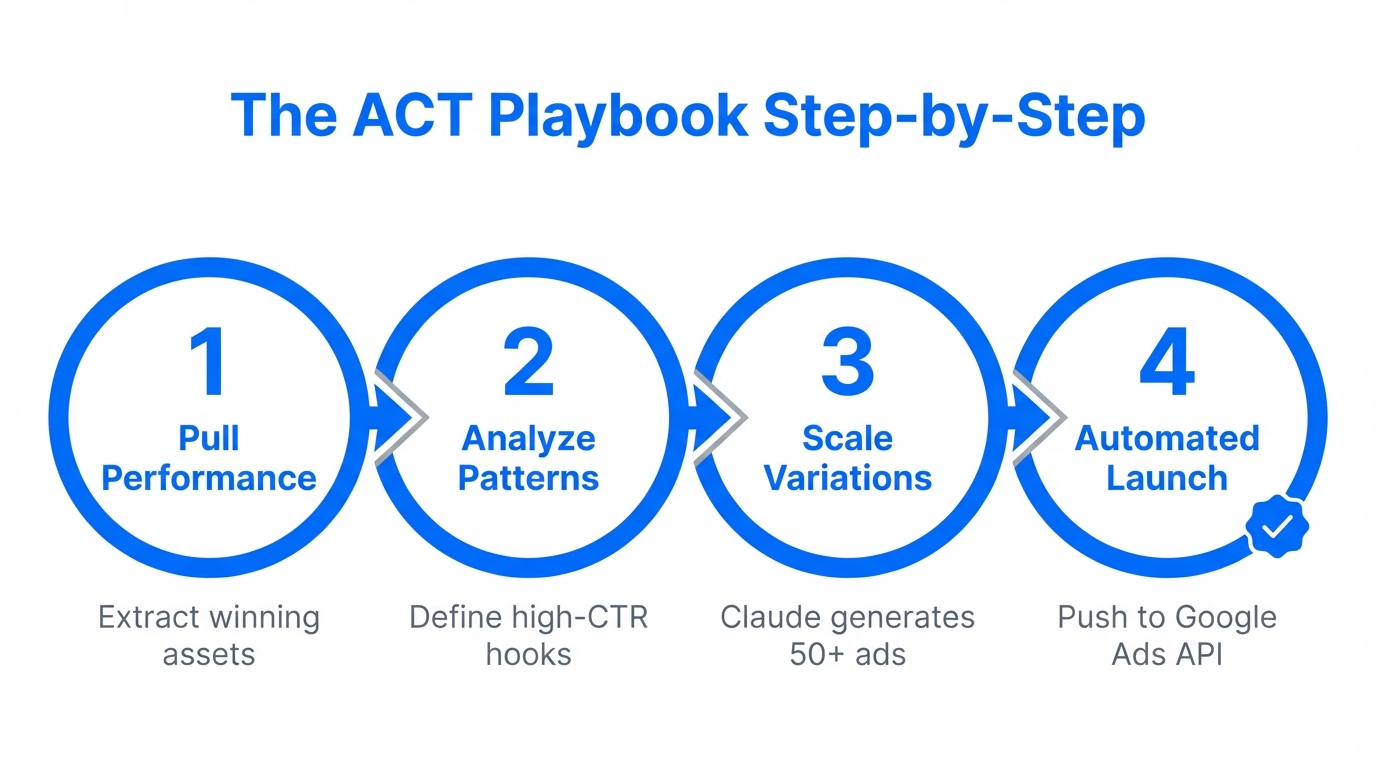
Scaling your automated ad copy isn't about generating random text; it's about identifying winning patterns and iterating at speed. Here is the step-by-step playbook for growth teams to deploy high-performing RSAs using Claude Code.
Step 1: Extract Winning Patterns
Start by using Claude Code to query BigQuery. Ask the agent to "Identify the top 5 headline patterns from the last 90 days that resulted in a CTR above 3% and a Conversion Rate above 5%." Because the agent is grounded in your data, it will identify specific linguistic patterns (e.g., "Benefit + Social Proof") rather than generic slogans.
Step 2: Generate Variations with AI
Once the patterns are identified, use a prompt to generate 50+ new RSA variations. You can orchestrate this using Make.com or Albato to bridge the gap between Claude's output and your Google Ads account. Ensure you are feeding the AI your brand voice guidelines to maintain consistency.
Step 3: Programmatic Deployment
Instead of manual entry, use Google Ads Scripts to push these variations into your campaigns. Claude Code can actually help you write the JavaScript required for these scripts, reducing the time from 2 hours to 15 minutes for campaign creation. This workflow has been used successfully by teams at companies like TELUS to ship code 30% faster and save hundreds of thousands of hours across the organization.
Implementing a 'Human-in-the-loop' (HITL) System
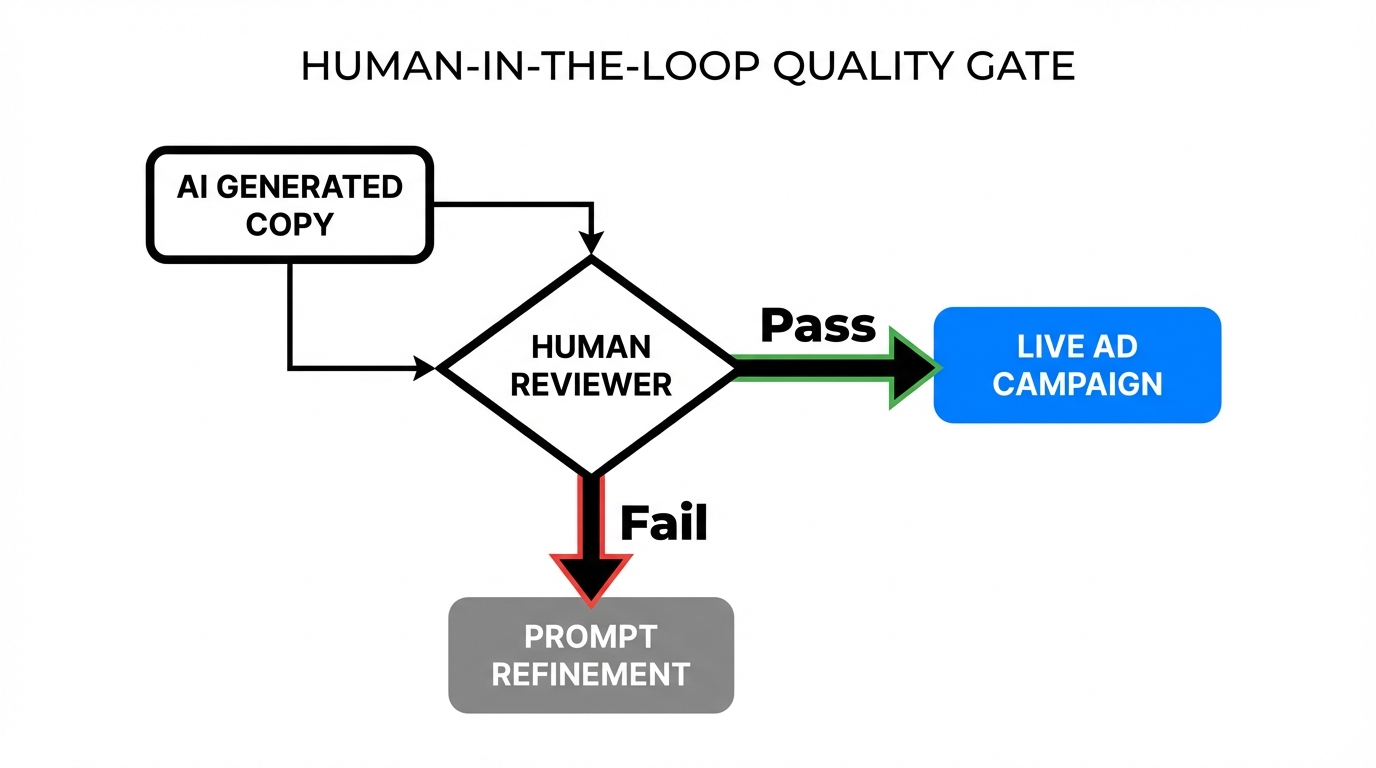
Over-automation is a trap. AI-generated ads can occasionally hallucinate fake promotions, violate brand safety, or misinterpret legal disclaimers. According to LinkNow Media, failing to gate your AI with a Human-in-the-loop (HITL) system can lead to significant brand damage.
To prevent this, build a verification layer. Before Claude pushes code to the Google Ads API, have it output the variations to a shared spreadsheet or a tool like Notion. A creative lead must "greenlight" the batch before the final deployment script runs. This ensures the AI marketing creative is both high-performing and brand-compliant.
"SEO and SEM success now hinges on whether your content can be confidently understood and extracted by AI systems, not just keyword matching." — One Click Marketing.Measuring the Impact of Automated Testing on CAC
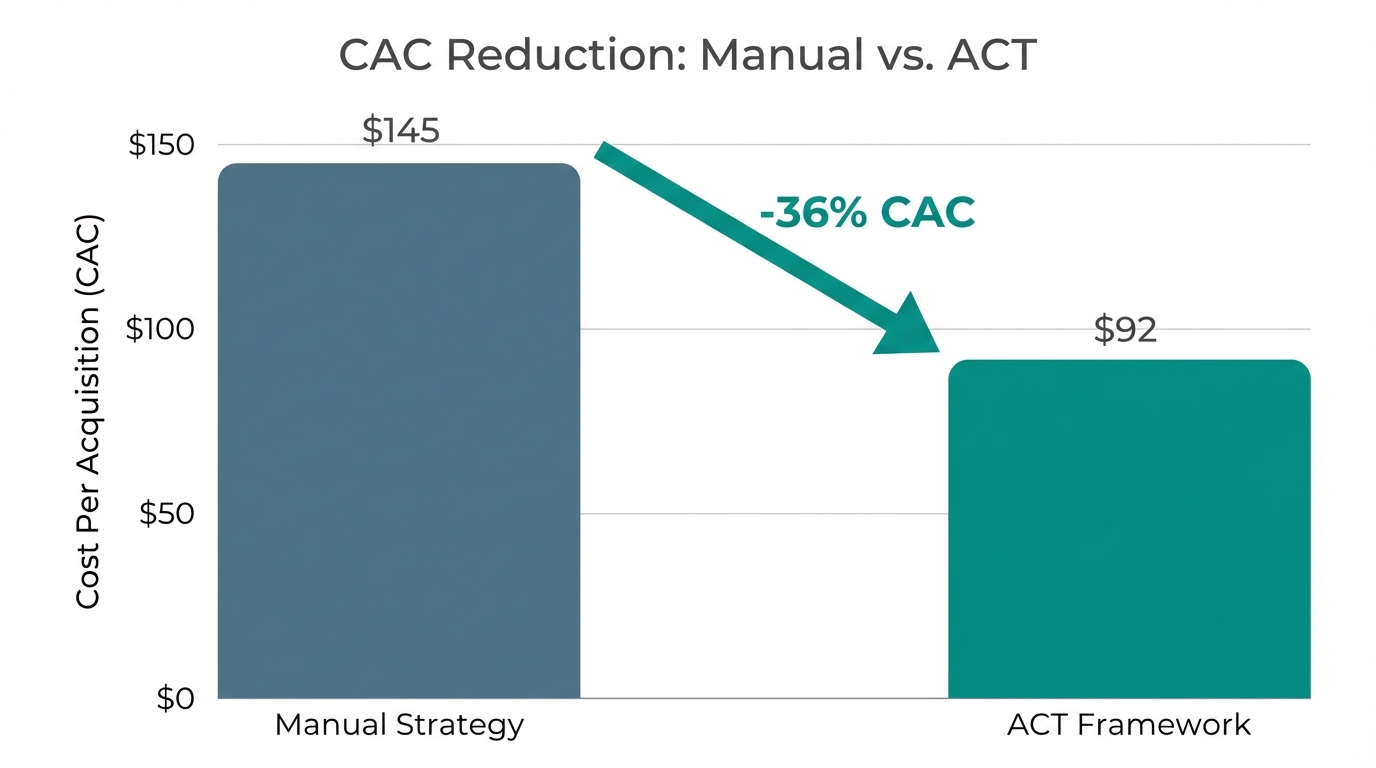
The ultimate goal of Claude Code automation is to lower your CAC and improve overall ROAS. By increasing the volume of tests, you find winning creatives faster, which improves your Quality Score and lowers your CPC.
However, many marketers make the mistake of looking at data in silos. Ensure you are connecting your CRM data (via tools like Salesforce) back to Google Ads. If you automate your creative based only on clicks but don't track which ads drive high-LTV customers, you risk optimizing for "cheap" traffic that doesn't convert. Use Claude to audit Google's own auto-applied recommendations; legacy platforms often prioritize spend over ROI, so use your own agentic workflows to vet these suggestions before they are applied.
For those also managing social channels, Stormy AI offers an AI-powered discovery engine to find influencers whose aesthetic matches your high-performing search copy, creating a unified brand experience across the funnel.
The Future: From Search Engines to Answer Engines
As we look toward 2026, the strategy shifts even further toward Answer Engine Optimization (AEO). Google Ads are increasingly appearing within "AI Overviews," meaning your automated copy needs to be "extractable" and clear enough for an LLM to cite. Growth teams are already using agents to find keyword gaps and launch "Search with AI" campaigns to fill them in real-time.
By mastering automated creative testing today, you aren't just saving time; you are building the infrastructure required to survive in an AI-first marketing world. Start small—automate one ad group, implement a HITL system, and watch your CAC drop as your creative volume scales. The terminal is the new dashboard; it's time to start typing.