For the modern marketing agency, the end of the month usually signals a frantic scramble. Account managers lose dozens of hours manually exporting CSVs from Meta Business Suite, LinkedIn, and TikTok, only to copy-paste them into slide decks that are outdated the moment they are sent. However, a seismic shift is occurring in how data is handled. By leveraging agentic AI, specifically through the new terminal-based Claude Code, growth teams are now achieving social media reporting automation that reduces manual workload by as much as 40%.
The Rise of Agentic Reporting: A $12 Billion Market Shift
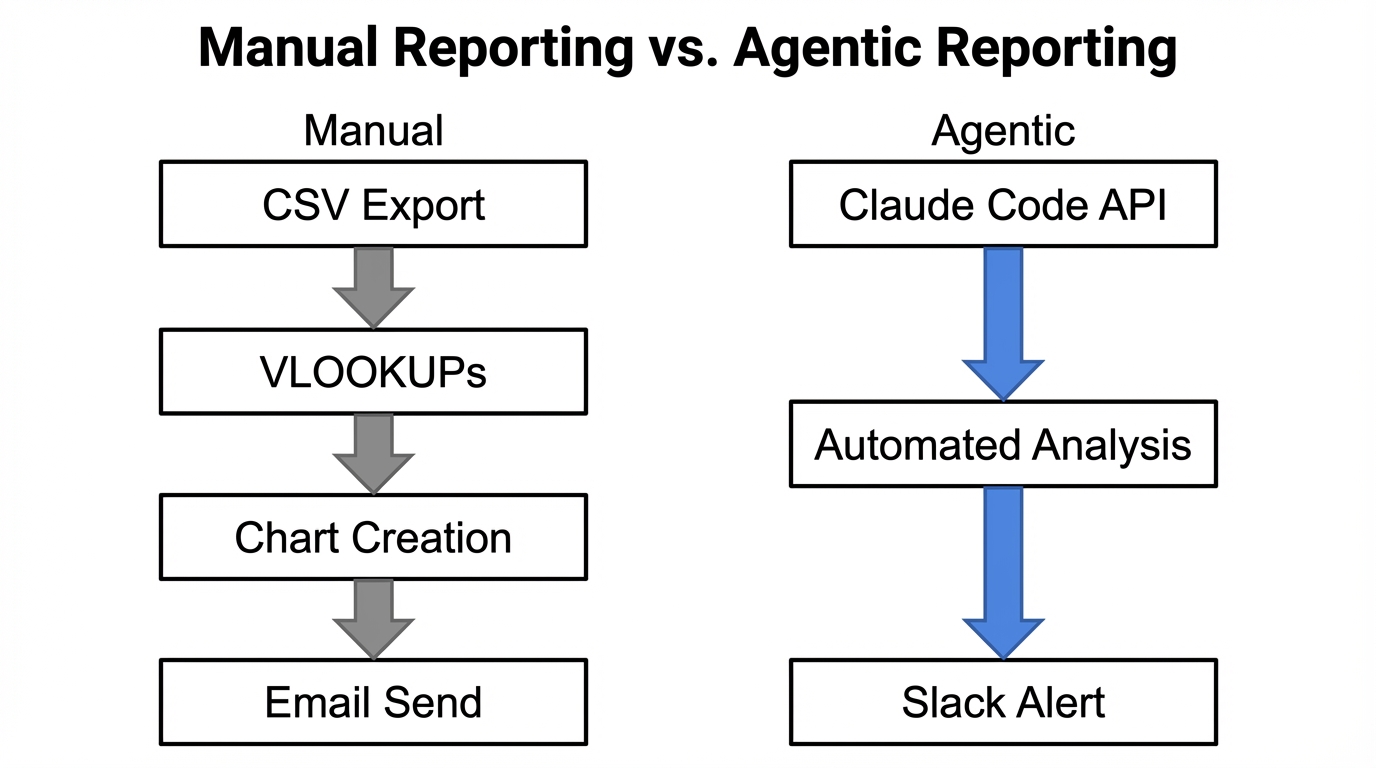
The landscape of marketing technology is moving away from simple "Chat AI" toward "Agentic AI"—tools that don't just talk about data but actively execute tasks. The AI-driven social media market is currently on a trajectory to reach $12 billion by 2031, a massive jump from the $2.1 billion valuation seen only a few years ago. In 2025 alone, the market hit a milestone of $3.34 billion, driven by agencies desperate to solve the efficiency gap.
According to research, 61% of organizations cite "reducing staff workload" as their primary motivator for AI adoption. Currently, 88% of marketers use AI daily, and 90% rely on it for fast decision-making. But the real winners aren't just using AI to write captions; they are using it to architect autonomous reporting engines that generate AI-driven social media analytics without human intervention.
The Claude Code Advantage: From Browser to Terminal
Most marketers are familiar with the Claude web interface, which recently reached 176 million monthly visitors. However, the real power for agencies lies in the command-line version: Claude Code. Unlike the web version, Claude Code can autonomously interact with your local files, execute terminal commands, and connect directly to APIs via the Model Context Protocol (MCP).
"The shift from browser-based chat to terminal-based agentic workflows allows AI to bridge the gap between data silos and polished client deliverables in real-time."
One of the "unfair advantages" of using Claude for analytics is its massive 200k+ token context window. As noted by experts at Anthropic, this allows the AI to ingest an entire year of engagement data or a 500-page brand bible in a single session. This eliminates the need for "chunking" data and ensures that the AI understands the long-term trends and nuances of a brand's performance history.
The Playbook: Architecting Your Reporting Workflow
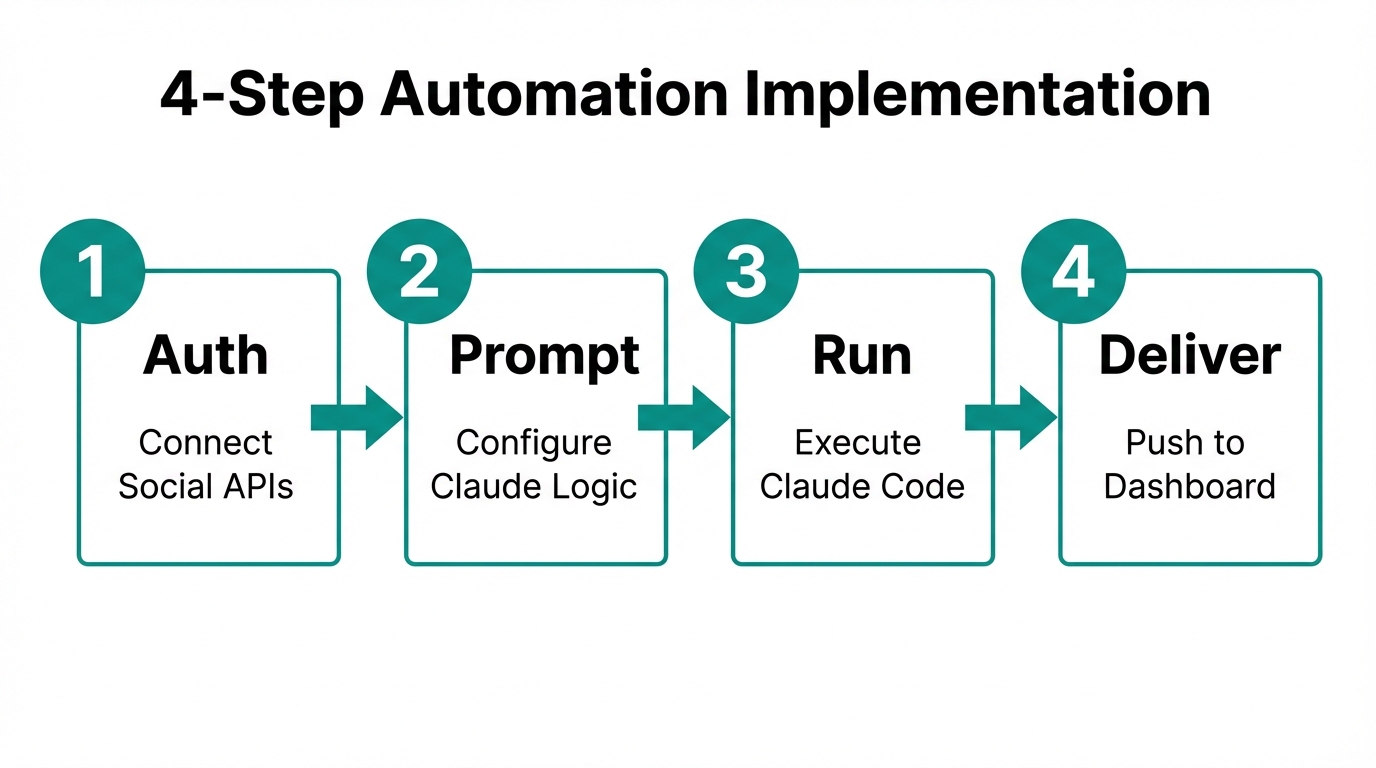
Implementing Claude Code for marketers requires a shift in mindset from prompting to orchestrating. Follow these steps to build your automated reporting engine.
Step 1: Activate 'Plan Mode'
Instead of giving Claude a single command, use Plan Mode. By hitting Shift + Tab in the CLI, you allow the agent to architect a multi-step workflow. For example, you can instruct it to: "Scrape LinkedIn engagement, compare it to last month's Excel sheet, and output a summary to Slack." Claude will then outline the logic before executing it, ensuring the steps align with your goals.
Step 2: Define Logic in a Skill File
To ensure consistency across multiple clients, create a skill.md file in your project repository. This file acts as the "source of truth" for the AI. It should document your specific KPIs, brand voice guidelines, and preferred reporting formats. This ensures that every report Claude generates follows the exact standards of your agency.
Step 3: Integrate MCP Servers
The Model Context Protocol (MCP) acts as the bridge between Claude and your data. You can connect to servers that pull real-time data from platforms like MCP servers for social listening or social APIs for direct posting and analytics. This bypasses the need for manual CSV exports entirely.
| Reporting Method | Manual Effort | Data Accuracy | Scalability |
|---|---|---|---|
| Manual Sheets | High (10+ hrs) | Prone to Error | Low |
| Legacy Dashboards | Medium | Static | Medium |
| Agentic (Claude Code) | Low (<1 hr) | Dynamic & Precise | Infinite |
Real-World Impact: Efficiency in Action
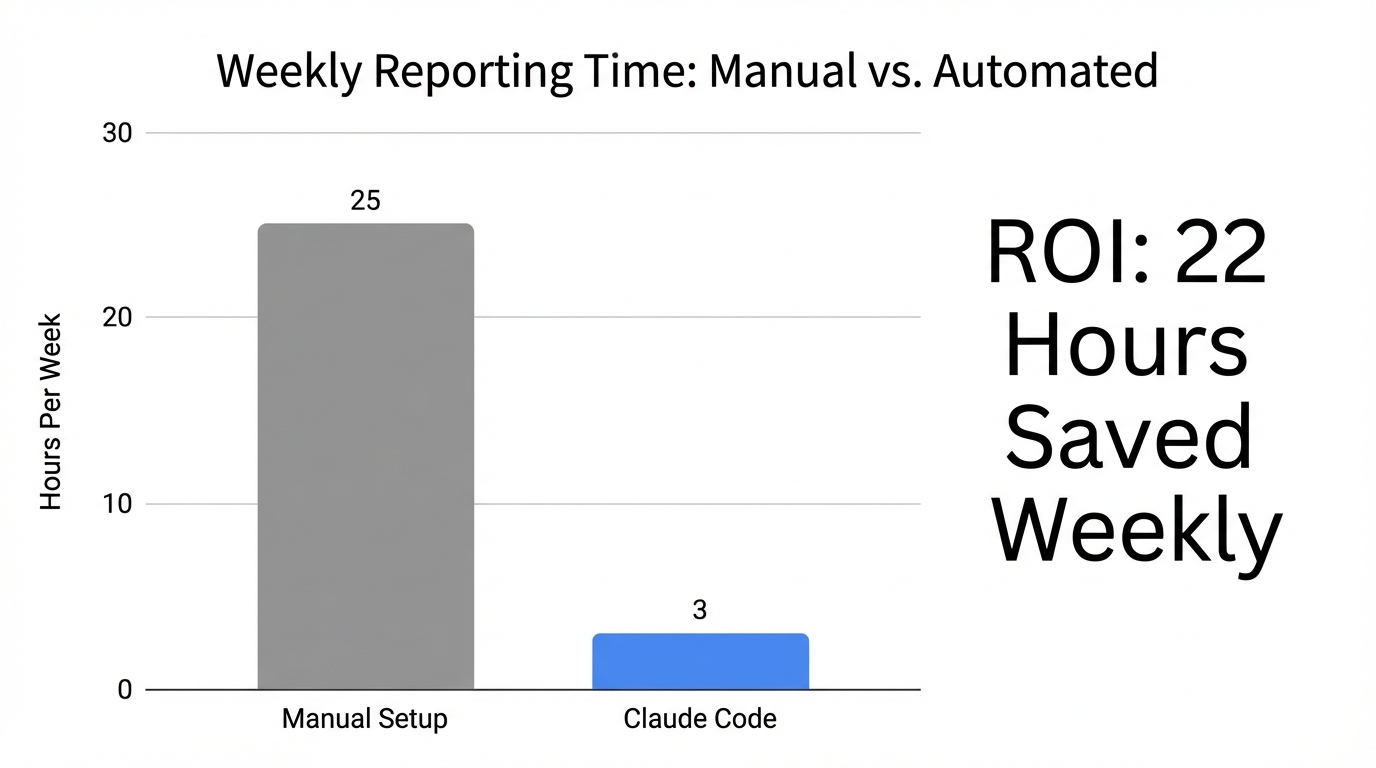
The theoretical benefits of marketing agency efficiency are best illustrated through actual implementation. Consider a 25-location restaurant chain that recently automated its content planning and reporting. By using Claude to analyze local trends and engagement metrics across all branches, they reduced their monthly planning time from 20 hours down to just 3 hours. More importantly, the localized insights led to a 35% increase in engagement.
Similarly, developers are building custom reporting solutions that allow users to ask questions in plain English—such as "Which ad had the lowest CPA last week?"—and receive a full dashboard built autonomously by Claude via MCP connections to Meta Ads Manager and GA4.
For teams focused on the creator economy, the synthesis phase is where the magic happens. After Claude identifies which content types are driving the most ROI, tools like Stormy AI can be used to instantly find and vet new influencers who fit that specific high-performing niche, creating a closed-loop system from analytics to execution.
"Automation isn't about replacing the marketer; it's about elevating the marketer from a data entry clerk to a high-level strategist."
Avoiding the "Robotic" Trap: Common Mistakes
While the allure of 100% automation is strong, total reliance on AI can lead to significant issues. "Robotic" content or reports that lack human nuance can often trigger algorithm penalties or alienate clients. The most successful agencies maintain a "human-in-the-loop" validation process for every AI-generated report.
Another major hurdle is data fragmentation. If your data is scattered across disparate sheets and legacy platforms, the AI will struggle to find a "source of truth." Centralizing your data using an automation hub like Latenode or n8n before pointing Claude Code at the directory is essential for accuracy.
CLAUDE.md file in your directory. This should outline your project structure and reporting standards to ensure the AI doesn't produce irrelevant insights.Integrating for Real-Time Stakeholder Updates
The final piece of the automation puzzle is delivery. Rather than waiting for a monthly PDF, agencies are now using Claude Code to push real-time updates to Slack or internal Webflow dashboards. By connecting Claude to an Apify scraper or a social API bridge, you can set up an autonomous AI agent that monitors performance 24/7.
When a post goes viral or a CPA spikes, the agent can synthesize the cause and alert the team via a notification. This level of responsiveness is what separates top-tier growth teams from those stuck in the traditional reporting cycle. To further streamline this, platforms like Stormy AI provide a centralized way to track campaign analytics and manage creator payments, which can be fed directly back into Claude's context for a holistic view of marketing ROI.
The Future of Marketing Efficiency
The goal of social media reporting automation is not just to save time—it is to unlock insights that are impossible to find manually. By utilizing the 200k context window and agentic capabilities of Claude Code, agencies can provide a level of data depth that was previously reserved for enterprise-level data science teams. Start small: automate one client's monthly report this week, and watch as your team regains the 20+ hours needed to focus on what actually drives growth: creativity and strategy.