Keyword research has traditionally been one of the most tedious tasks in digital marketing. For years, SEO professionals have spent 20, 30, or even 40 hours a month buried in spreadsheets, manually filtering through thousands of rows of data from tools like Ahrefs and SEMrush. The goal was always to find that "needle in the haystack"—the high-intent, long-tail keywords that actually drive conversions. But the era of manual data entry is ending. By leveraging automated keyword research through modern AI stacks, marketers can now replace weeks of manual labor with a 30-minute automated workflow.
The secret lies in a concept called "Vibe Marketing," a strategy that uses a lean stack of n8n marketing automation, the Model Context Protocol (MCP), and the analytical power of Claude 3.7. This isn't just about generating "AI slop" or generic lists; it's about building an intelligent SEO discovery engine that understands commercial intent and identifies the specific gaps your competitors are missing. In this playbook, we’ll show you exactly how to build this system to dominate your niche.
The New SEO Stack: Claude 3.7, MCP, and n8n
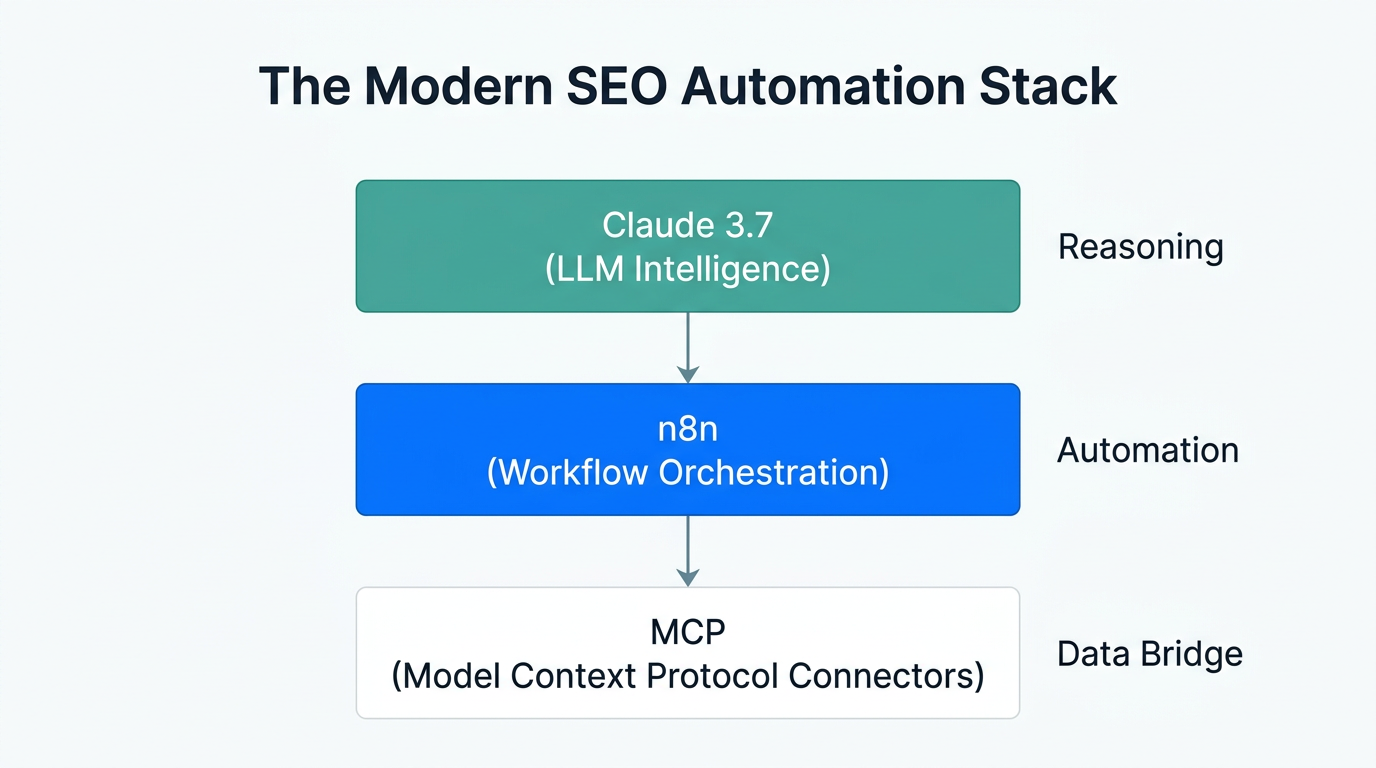
Before we dive into the steps, it’s important to understand the "bridge" that makes this possible. Traditionally, LLMs like Claude or ChatGPT were isolated from your live SEO data. You had to export a CSV from your SEO tool and then upload it to the AI. This broke the flow and limited the AI's context. Enter the MCP integration guide: The Model Context Protocol (MCP) acts as a "two-way radio" between your LLM and third-party software.
By using Claude 3.7 for SEO, you aren't just getting a chatbot; you're getting a strategic partner that can analyze live data. When paired with n8n—an advanced automation platform—you can build logic-heavy workflows that pull from SEO APIs and feed the results directly into Claude for high-level synthesis. This setup is the foundation of a modern growth stack, often used alongside tools like Meta Ads Manager or Google Ads to create a multi-channel acquisition strategy.
"The most powerful workflow you can build is often the simplest one. It’s about identifying existing demand and finding the entry point where competitors are falling short." [Source: Harvard Business Review]
Step 1: Setting Up Your n8n Keyword Engine
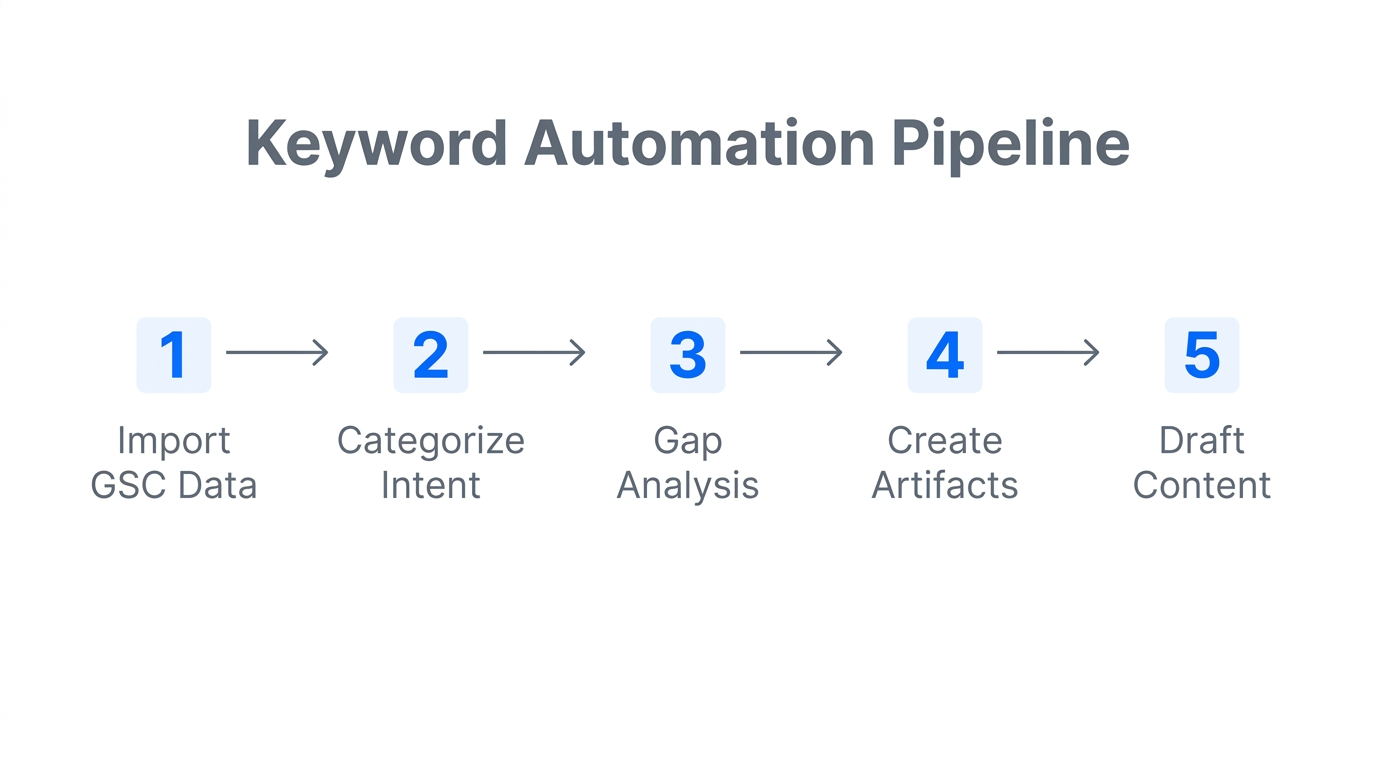
The first step in our automated keyword research playbook is building the engine in n8n. Instead of building a massive, 50-node workflow, we focus on a lean architecture that connects Claude to your SEO data provider. You’ll need an API key from a tool like Ahrefs API or a specialized keyword database.
In n8n, you create a simple workflow that:
- Receives a trigger from Claude (via MCP).
- Queries the SEO API for non-branded long-tail keywords based on a seed topic.
- Filters for keywords with high intent (e.g., keywords including "best," "how to," or "vs").
- Formats that data into a clean JSON object for Claude to digest.
This allows you to bypass the overwhelming UI of traditional SEO tools. As noted in recent marketing discussions, logging into these platforms can be a "sugarin" experience—full of buttons and metrics that distract from the goal. By automating the data retrieval, you focus only on the high-potential keywords that move the needle.
Step 2: Using Claude 3.7 to Categorize Commercial Intent
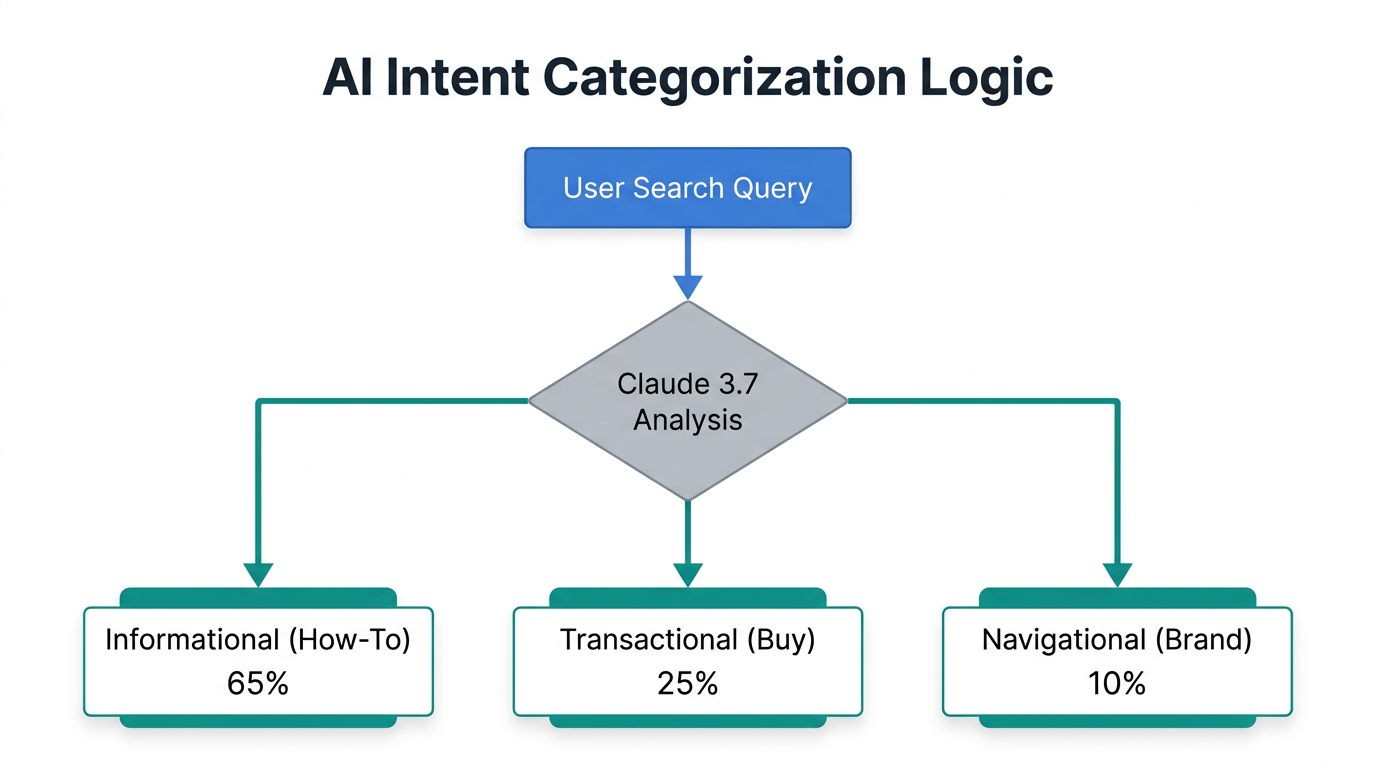
Not all traffic is created equal. A million visitors searching for general information are often less valuable than 10,000 visitors looking for a specific solution. This is where Claude 3.7 for SEO shines. Once the data flows into Claude, you prompt it to categorize keywords into clusters based on the buyer's journey.
| Keyword Category | Search Intent | Example for Beehiiv |
|---|---|---|
| Informational | Discovery & Learning | "How to start a newsletter" |
| Commercial | Product Comparison | "Best newsletter platform for writers" |
| Transactional | Ready to Buy | "Beehiiv pricing vs Substack" |
Claude can instantly group 40+ keywords into these buckets, identifying which terms have the highest commercial intent. For a platform like Beehiiv, focusing on keywords like "newsletter monetization tools" is a higher priority than generic terms because it attracts users who are serious about building a business. This level of SEO gap analysis tool capability is what allows small teams to out-compete massive agencies.
"I’d rather have 10,000 high-quality visitors than a million low-quality ones. Intent is the difference between a vanity metric and revenue."
Step 3: Executing a Real-Time Gap Analysis
Once you have your keywords, the next step is to find out what the current search results are missing. This is a critical component of our SEO gap analysis tool strategy. Using the same MCP connection, you can have Claude "scrape" the top two pages of Google for your target keyword clusters.
Claude analyzes the existing content to find thematic gaps. For example, if all your competitors are writing basic "how-to" guides, Claude might identify a gap in:
- Technical Guidance: Missing deep-dives into automation or API integrations.
- Data-Driven Benchmarks: A lack of real-world statistics or growth case studies.
- Retention Strategies: Most content focuses on acquisition but ignores how to keep users.
By identifying these gaps, you can create content that isn't just another copy of what's already on page one. You are providing the unique value that search engines (and users) crave. This strategy is highly effective for SaaS companies and mobile app developers who need to rank for specific niche problems. For those in the influencer space, platforms like Stormy AI streamline creator sourcing and outreach to help produce video content that fills these same gaps on social platforms like TikTok or YouTube.
Step 4: Building an Interactive Keyword Dashboard
One of the most impressive features of Claude 3.7 is Artifacts. Instead of just giving you a text list, Claude can code an interactive dashboard or a mini-website to visualize your SEO strategy. You can request a "30-Day Content Roadmap Dashboard" that maps out exactly what to publish and when.
This dashboard can include content briefs, primary audience definitions, and even the specific hooks needed for social distribution. By having your n8n marketing automation pull the volume and difficulty data, and Claude visualize it, you transform raw data into a strategic asset that your entire team can use in Notion or Asana.
Step 5: From Keywords to Multi-Channel Content
The final stage is turning these insights into content. Once you have a high-intent keyword and a clear gap to fill, you can use Claude to generate a search-optimized blog post that sounds like your brand, not like a robot. By feeding Claude your specific brand voice foundation, you ensure the output is high-quality and "human-aligned."
But in the modern landscape, a blog post isn't enough. You need to be multi-channel. You can ask Claude to take that blog post and instantly generate:
- An X (Twitter) thread with a high-engagement hook.
- A LinkedIn post tailored for professional audiences.
- Script outlines for short-form video on TikTok or YouTube.
- Prompts for image generation tools like DALL-E 3 or Midjourney to create hero images.
This "Vibe Marketing" approach allows you to dominate the search results and social feeds simultaneously. If your keyword research reveals a high demand for visual demonstrations, you might even use Stormy AI to discover creators who can turn your blog's key insights into viral UGC videos, further boosting your SEO through social signals.
"Google search is a great proxy for all other channels. If people are searching for it on Google, they want to see it on Reddit, LinkedIn, and YouTube too."
The Future of the One-Person Marketing Team
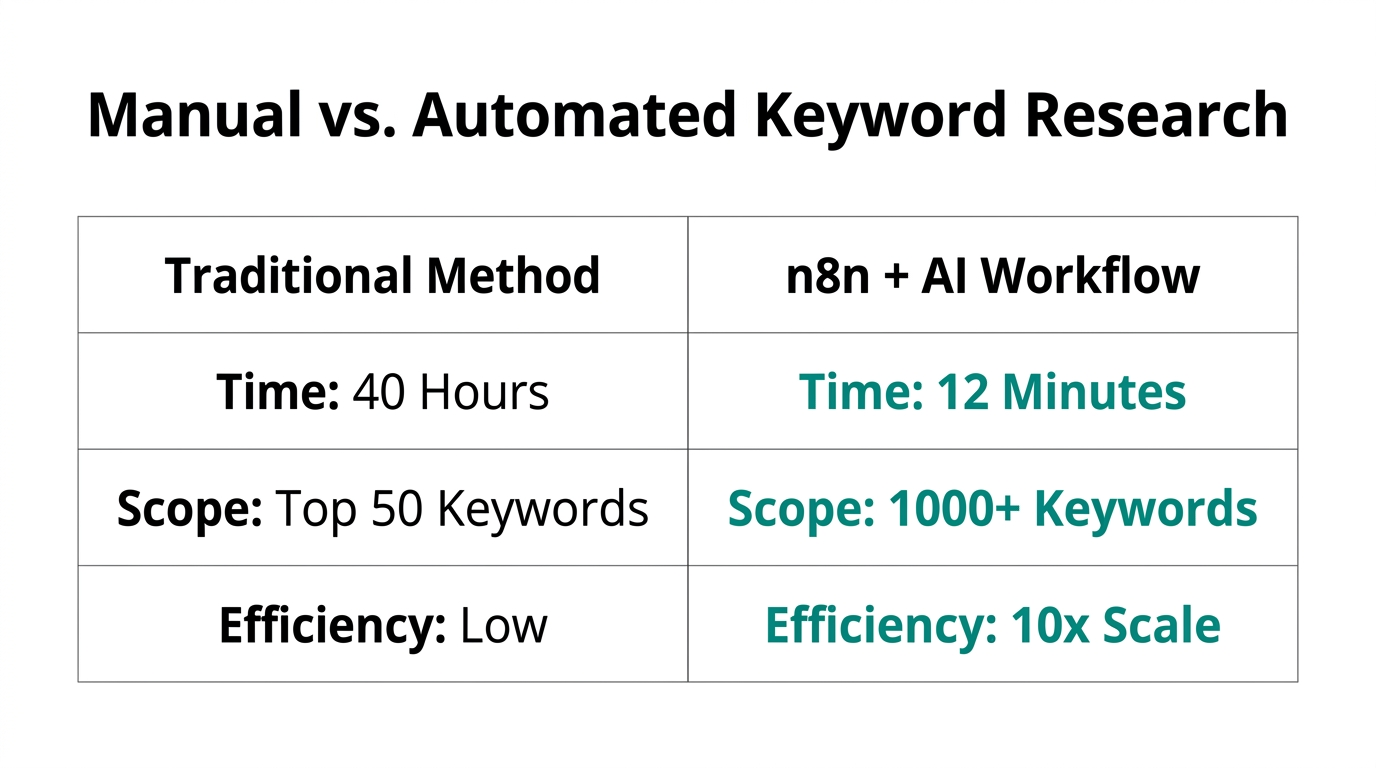
The integration of Claude 3.7 for SEO and n8n marketing automation is a glimpse into the future of digital growth. We are moving toward a world where the technical barriers of SEO are being stripped away, leaving room for marketers to focus on strategy, creativity, and human-in-the-loop editing.
By building your own MCP integration guide and automated workflows, you aren't just saving time—you're building a proprietary tool that gives you a massive competitive advantage. You can find the demand, identify the gaps, and produce the content faster than any traditional agency. Whether you are building an online directory, a SaaS platform like Shopify, or a newsletter on Beehiiv, this automated engine is your path to siphoning off high-intent traffic and turning it into revenue. Stop doing the manual work and start vibing.