In the high-velocity creator economy of 2026, the biggest threat to a creator’s growth isn’t the algorithm—it’s the inbox. As AI-generated spam reaches a fever pitch, influencers and talent managers are being flooded with thousands of sponsorship inquiries, half of which are sophisticated scams or low-value “performance-only” traps. In this landscape, manual vetting has become a terminal bottleneck. If you are spending hours cross-referencing LinkedIn profiles and checking fundraising data, you aren’t just losing time; you’re losing the race to the permanent underclass of creators who failed to leverage agents.
The era of "vibe-coding" has evolved into the era of "vibe-management." Just as developers now use tools like Claude to build billion-dollar apps with minimal teams, the most successful creators are using Claude Code to act as a dedicated research department. This playbook will show you how to move past generic prompting and build a recursive vetting agent that protects your brand and scales your revenue automatically.
Why Manual Sponsor Vetting is the Biggest Bottleneck in 2026
 9:23
9:23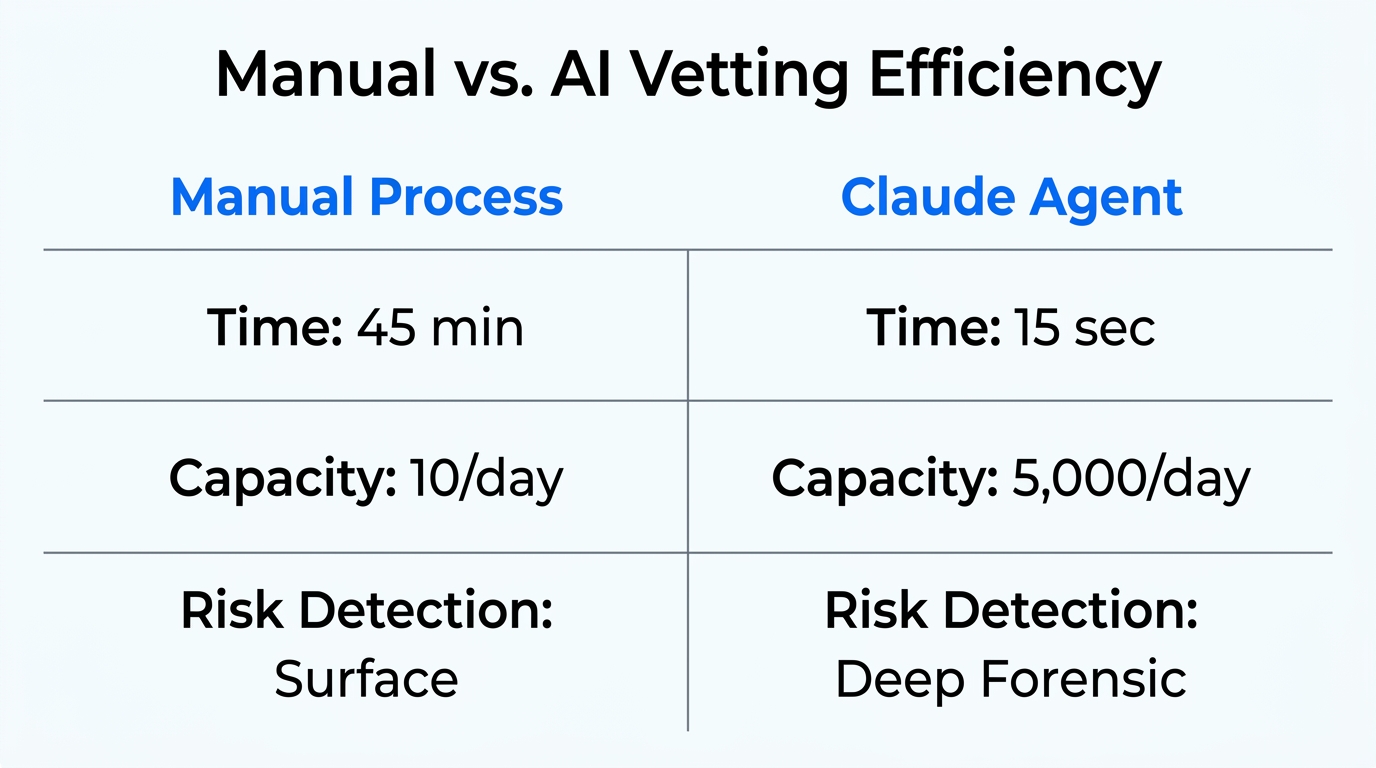
In 2026, the volume of inbound requests has scaled exponentially, but human attention remains a finite resource. Most creators still rely on a "sniff test"—looking at the email domain or the quality of the pitch. However, modern scams now use perfectly mimicked brand voices and fake company signatures that can fool even seasoned managers. Manual vetting is no longer just slow; it is dangerously prone to error.
When you spend 20 minutes researching a single brand only to find they have no venture backing or a 1.2-star rating on Trustpilot, you’ve wasted cognitive energy that should have gone into content creation. AI agents solve this by performing parallelized research at a speed no human can match. By the time you open your eyes in the morning, your agent should have already filtered out the noise, leaving only the high-signal opportunities in your pipeline.
"The models are exceptionally good now, but context still matters. You have the power to steer them toward quality or slop—the difference is how you build your agent's harness."
Setting Up a Dedicated Claude Code Agent
2:13Before you can automate, you need a safe environment. One of the biggest mistakes creators make is giving an AI agent direct, unfettered access to their primary business email. In 2026, attack vectors are real. Instead, you should set up a dedicated communication channel for your agent.
Create a secondary email address (e.g., agents@yourbrand.com) and set up a forwarding rule from your main business inbox for any email containing keywords like "partnership," "collaboration," or "sponsorship." This acts as a firebreak. You then connect your Claude Code agent to this secondary inbox via API or a simple automation tool like Zapier.
The "95% Rule" for Agent.md Files
Many people overcomplicate their agent setup by creating massive agent.md or claude.md files. In 2026, the models (like Opus 4.6) are so intelligent they already understand the basics of business. You don't need to tell it that "sponsors pay money." According to industry experts, 95% of people don't need a heavy system prompt. Overloading the context window with proprietary information at every turn is a waste of tokens and can actually make the agent "dumber" as the context window fills up.
Instead, focus on Skills. A skill is a specific markdown file that Claude only accesses when it realizes it needs to execute a particular task. This "progressive disclosure" of information keeps your agent lean and fast.
The Step-by-Step Vetting Workflow
11:03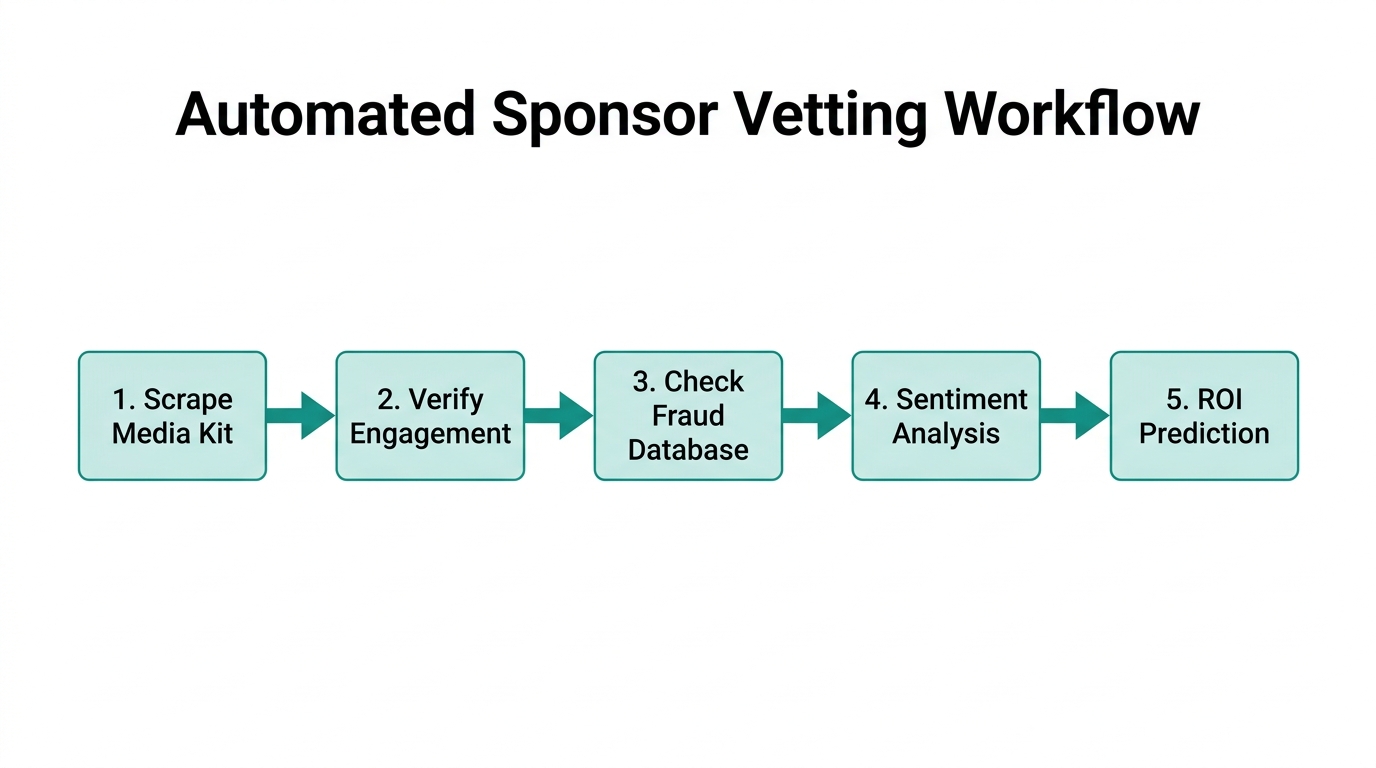
To train your agent to be as cynical as a top-tier talent agent, you must codify your research steps. Don't just tell it to "research the brand." Give it a specific hierarchy of truth. When an inquiry hits the inbox, your Claude agent should follow this exact sequence:
- Legitimacy Check: Search X (Twitter) and LinkedIn to see if the sender actually works at the company they claim.
- Reputation Audit: Scrape Trustpilot for recent customer complaints or "scam" keywords.
- Financial Health: Use a tool like Crunchbase or fundraising data to see if the brand has the capital to afford your rates. If they haven't raised money or have no revenue data, they are likely looking for a "free product for post" trade.
- Brand Alignment: Compare the sponsor's product against your previous content to ensure there isn't a conflict of interest.
| Feature | Manual Vetting | Claude Code Agent |
|---|---|---|
| Speed | 15-30 mins per lead | <1 minute per lead |
| Consistency | Varies by mood/fatigue | 100% consistent criteria |
| Data Depth | Surface level Google search | Cross-references 5+ APIs |
| Scam Detection | Prone to social engineering | Hard-coded security checks |
If you find that discovery is your main challenge before you even get to the vetting stage, platforms like Stormy AI can streamline the process by helping you identify brands that are already actively spending in your niche, providing a pre-vetted pool of leads to feed into your automation pipeline.
The Recursive Skill Loop: Improving Your Agent
24:18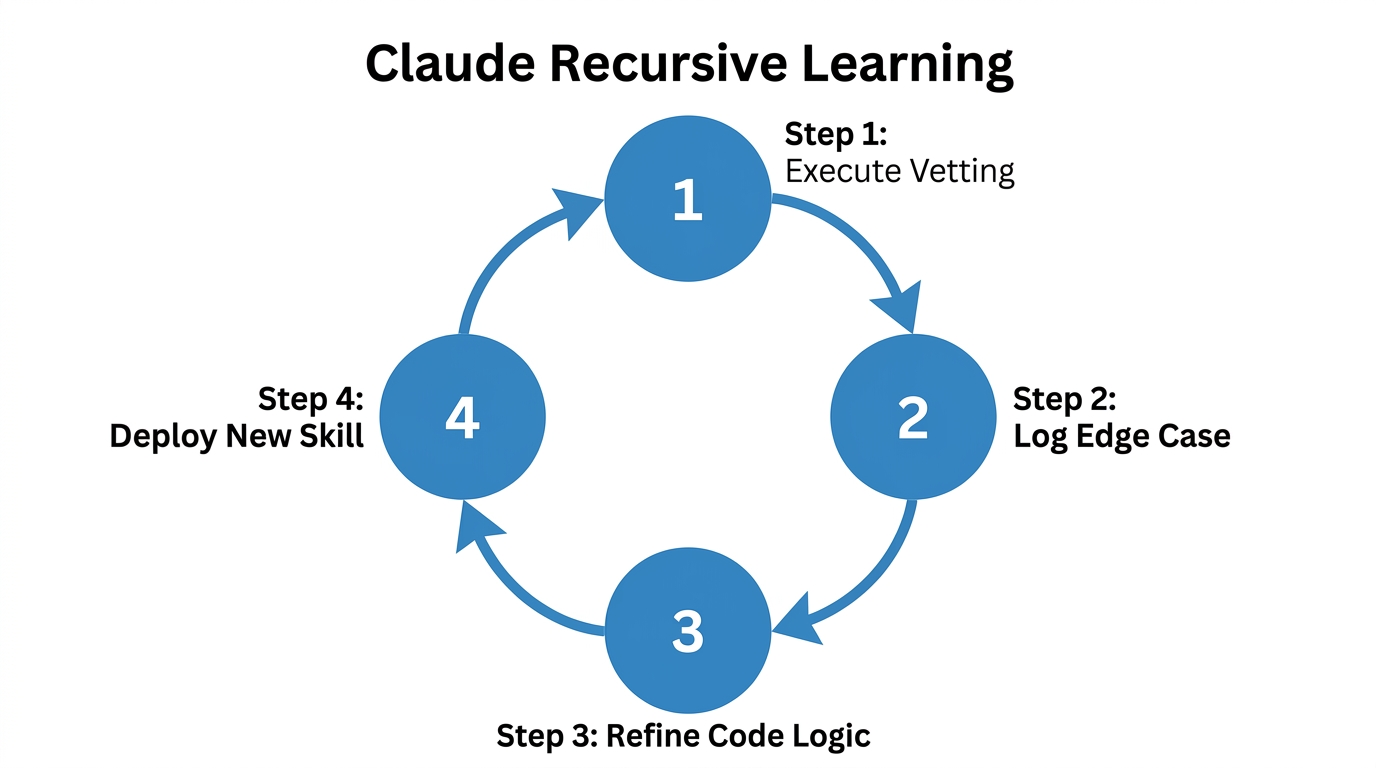
The secret to an elite agent is the Recursive Skill Loop. Models don't "think"; they predict tokens. If your agent misses a red flag—like a brand that has a high Trustpilot score but is known for late payments on Reddit—you don't just get angry. You iterate.
The Iteration Process:
- Identify the Failure: Note exactly where the agent missed the mark.
- The "Back-and-Forth": Talk to the agent. Ask, "Why did you think this was a good lead?" It might tell you it couldn't find the Reddit data.
- Fix the Logic: Instruct the agent to write a new piece of code or a new search parameter to include Reddit sentiment analysis.
- Update the Skill: Tell the AI to review its successful fix and permanently update its
vetting-skill.mdfile.
By going through 5-6 of these loops, you create a bespoke skill that is more valuable than any "off-the-shelf" prompt. This is how you build a "moat" around your business operations.
"Every time the agent messes up, don't complain. Thank God for the error, identify the fix, and update the skill so it never happens again. That is how you scale for productivity."
Integrating with Google Sheets for a Real-Time Pipeline
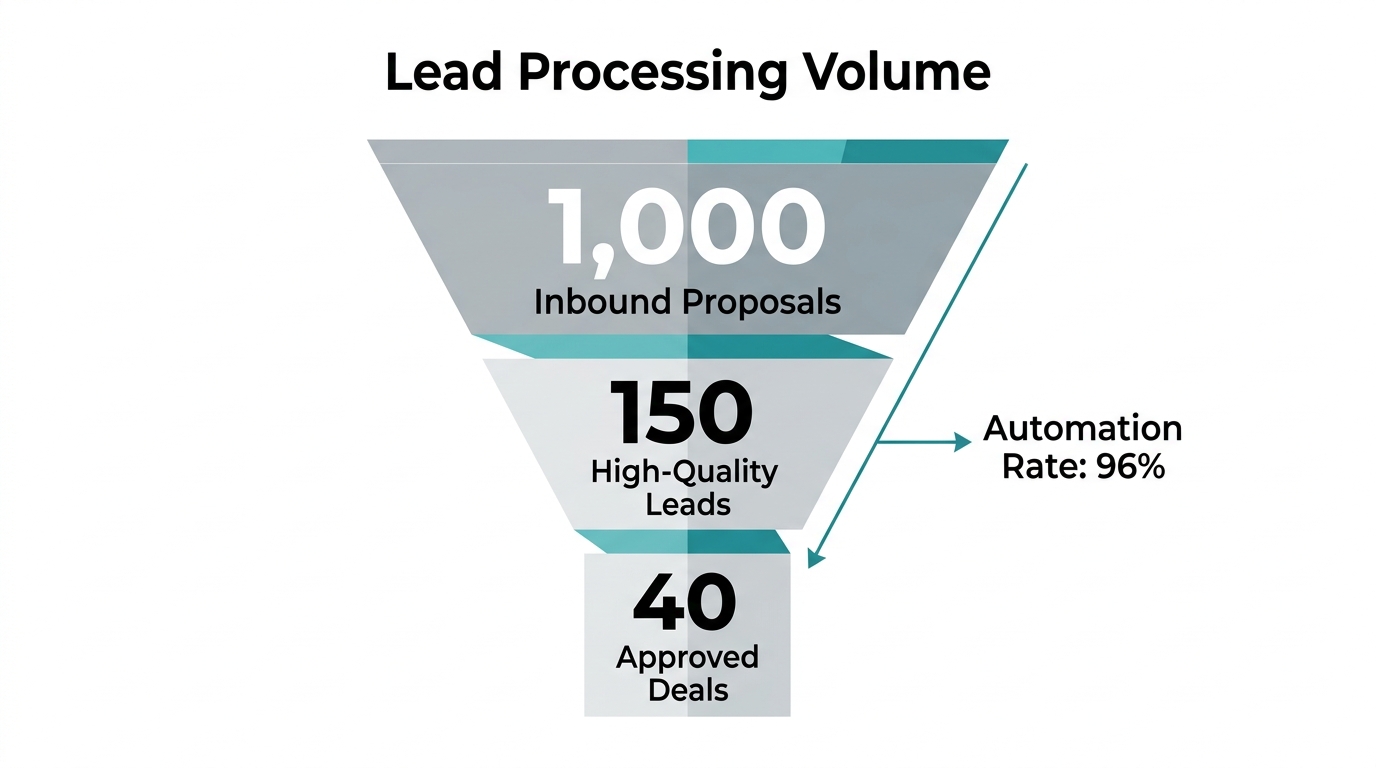
An agent that lives only in a terminal is useless to a busy creator. You need a visual dashboard. The final step of the playbook is to have your Claude agent write to a Google Sheets sponsorship pipeline. For every inquiry, the agent should populate rows for: Brand Name, Contact Email, Fundraising Status, Reputation Score (1-10), and a "Proceed?" recommendation.
You can use the Google Sheets API to let your agent manage this in real-time. This allows you to check your phone once a day, see a green-lit list of high-value deals, and ignore the rest. You are no longer an admin; you are a CEO reviewing a report.
The Future of the AI-Enhanced Creator
In 2026, the divide between the creators who thrive and those who burn out will come down to their technological harness. Knowledge that used to take 20 years to acquire is now available for $20 a month through tools like ChatGPT and Claude. But the knowledge alone isn't enough—you must codify your taste and your strategy into autonomous agents.
By building a recursive vetting system with Claude Code, you free yourself from the drudgery of the inbox. You stop joining the "permanent underclass" of the overworked and start operating like a modern media conglomerate. Start with one agent, build one skill, and let the recursion do the rest.