For years, performance marketers have lived within the high-walled gardens of ad managers. We’ve clicked through endless tabs, manually refreshed dashboards, and painstakingly adjusted bids across hundreds of campaigns. But the era of the manual PPC manager is ending. A new shift toward "vibe marketing" is emerging, where lean teams treat their marketing funnel as a codebase. At the heart of this revolution is Claude Code, Anthropic’s terminal-based AI coding agent, which is compressing 8-hour manual workflows into just 2 hours.
By transitioning from chat-based assistants to terminal-based agents, marketers are seeing a 75% reduction in time spent on repetitive tasks like content audits and keyword research, according to research from Digital Applied. This isn't just about efficiency; it's about scale. When you can generate 15 headlines and 4 descriptions in 30 seconds rather than 30 minutes, you aren't just saving time—you're changing the math of your entire growth engine.
The Shift from Chat to Agentic Automation
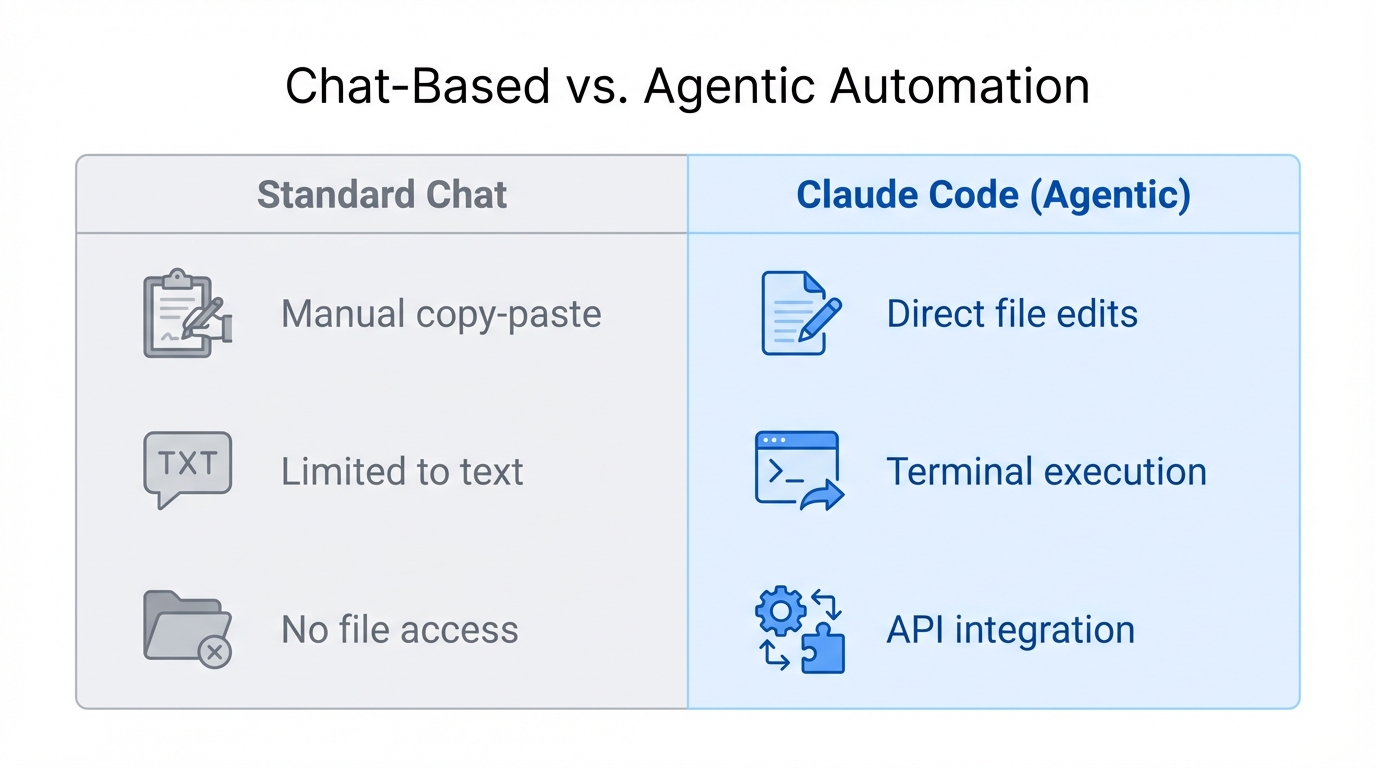
The biggest mistake most marketers make with AI is treating it like a search engine or a basic copywriter. To truly unlock Google Ads automation, you must move beyond the browser and into the terminal. Experts suggest treating AI agents as "junior developers" who handle the boilerplate and repetitive execution while you act as the architect. This strategic handoff is what differentiates modern performance teams from those still stuck in legacy workflows.
"Automation has leveled the tactical playing field; true differentiation now comes from strategic clarity rather than bid adjustments." — Digital NRG
By late 2025, over 50% of senior executives reported using AI agents for data reporting and insights, per Talkwalker. Those utilizing agentic systems vs. simple chat assistants report an ROI up to 98% higher due to autonomous budget management and real-time optimization, as noted by Yotpo.
| Workflow Metric | Manual Dashboard Management | Claude Code Automation |
|---|---|---|
| Ad Copy Generation | 30 Minutes / Ad | 30 Seconds / Ad |
| PPC Account Audit | 4-6 Hours | 15 Minutes |
| Campaign Deployment | High Manual Effort | Agent-Led (CLI) |
| Cross-Platform Sync | Manual CSV Exports | Live MCP Queries |
Setting Up Specialized Marketing Skills
Claude Code operates most effectively when it has persistent project rules. Without a .claude/rules file or a CLAUDE.md document, you risk "stateless workflows" that lead to inconsistent brand voice across campaigns. To start your Meta Ads AI management journey, you should integrate production-ready marketing skills that define your brand’s tone, ICP, and compliance requirements.
You can leverage open-source repositories like the Marketing Skills Repository to give Claude a head start. These skills allow the agent to perform complex tasks like CRO audits and SEO analysis without needing a new prompt every time. For PPC specifically, tools like the Claude Ads Audit Tool enable you to run 190+ automated PPC checks across your accounts instantly.
Mastering the Plan Mode vs. Edit Mode Workflow
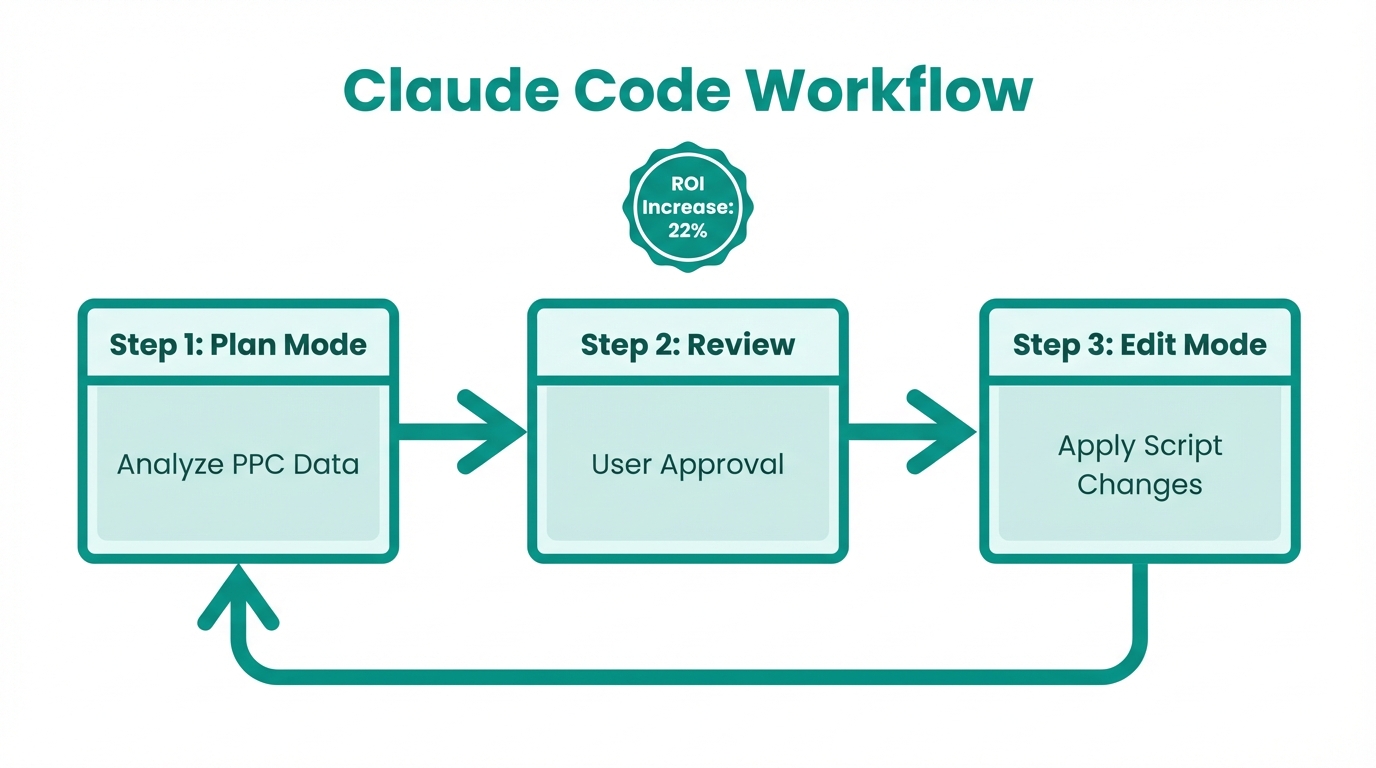
One of the most common mistakes when using automated PPC audits is jumping straight to execution. In Claude Code, there is a fundamental distinction between "Plan Mode" and "Edit Mode." Allowing the agent to change scripts or API calls without an outlined plan often results in broken validation logic.
A professional AI ad copy optimization workflow follows these steps:
- Enter Plan Mode: Ask Claude to analyze the existing campaign structure and propose changes.
- Validate Logic: Review the plan to ensure it adheres to platform-specific constraints (like character limits).
- Execute in Edit Mode: Let the agent apply the changes, whether that’s updating headlines or adjusting budgets via API.
This "think-before-you-act" approach prevents the agent from making hallucinations that could lead to account suspensions or budget waste. For those managing UGC-heavy campaigns, platforms like Stormy AI streamline creator sourcing and outreach to provide high-quality visual assets that these automated scripts then deploy across Meta Ads Manager.
RSA Optimization and Slash Commands
Responsive Search Ads (RSAs) are the backbone of Google Ads, but writing 15 unique headlines that all work together is a cognitive drain. Claude Code allows you to create custom slash commands, such as /rsa, to generate high-performing, platform-compliant copy in seconds.
Because Claude Code has access to your local files and Model Context Protocol (MCP) servers, it can pull real-time data from your product catalog or previous campaign performance to inform its suggestions. For platforms like Snapchat, using the Snapchat Ads MCP Server allows you to query metrics like Swipe-ups and ROAS directly from the CLI to see which hooks are actually converting before you generate new copy.
"The experiment of giving Claude Code a $1,500 budget and the command '/let-it-rip' showed that autonomous agents can handle everything from ICP research to publishing ads via API." — Giorgio Liapakis
Visual Verification with Playwright MCP
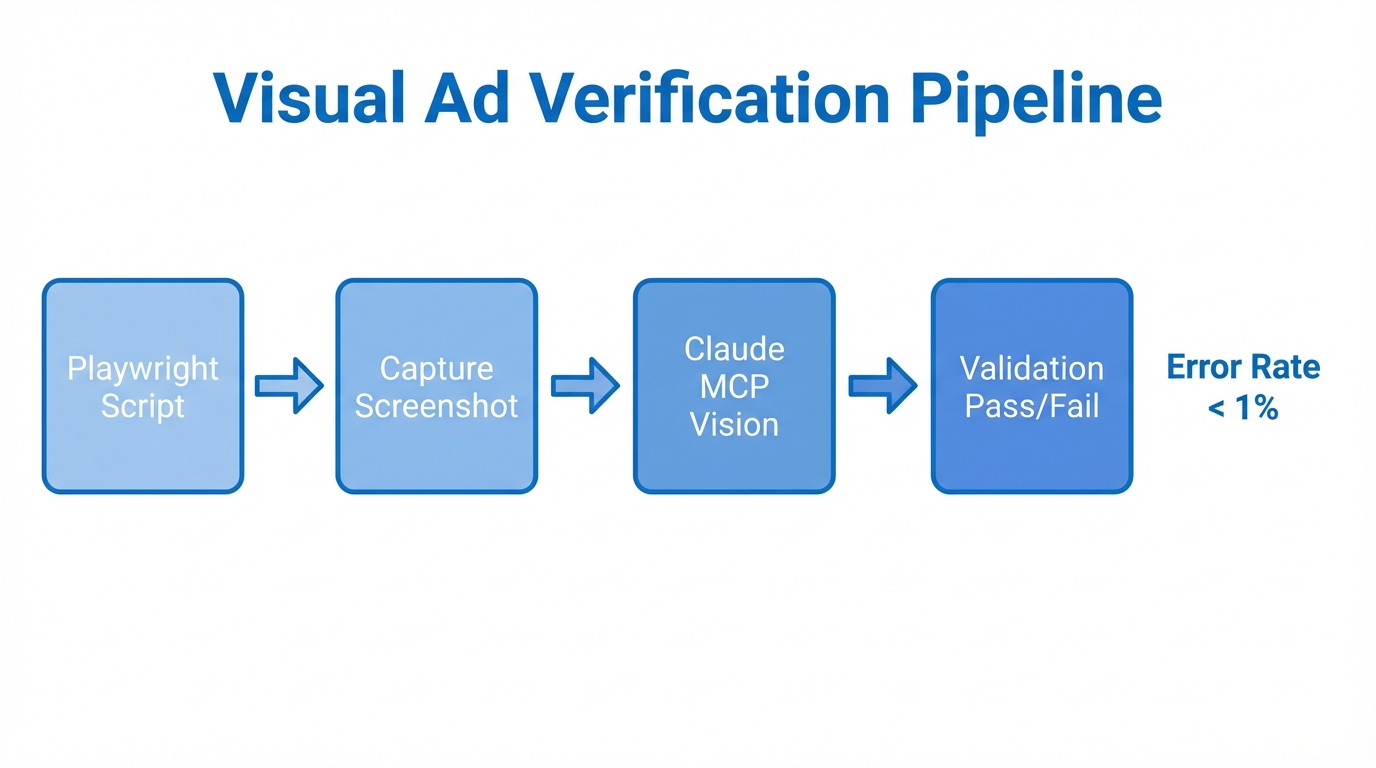
A major pitfall in ad automation is "lack of full-stack visibility." Just because a script says an ad is live doesn't mean the landing page looks right or the tracking pixels are firing correctly. This is where Playwright MCP becomes essential. By giving Claude Code browser access, it can verify how your ads and landing pages appear to actual users.
You can instruct the agent to:
- Navigate to the final URL of an ad.
- Take a screenshot of the mobile view to check for layout shifts.
- Verify that the Google Analytics tag is present.
- Confirm that the CTA button is visible above the fold.
This level of autonomous quality control ensures that your Google Ads automation doesn't just run fast, but runs correctly. While Claude handles the technical deployment, platforms like Stormy AI provide the essential creator discovery and vetting tools to ensure the "creative" side of your ads is as high-quality as the automation running them.
Conclusion: The Future of the Autonomous Marketer
The transition to Claude Code for marketing isn't just a tool change; it's a paradigm shift. We are moving from a world of manual dashboard clicking to a world of autonomous growth agents. By setting up specialized skills, mastering the Plan vs. Edit workflow, and utilizing MCP for live data, growth marketers can achieve levels of efficiency that were impossible just twelve months ago.
Start small: automate your next PPC audit using the CLI. Once you see the power of 190+ checks running in seconds, you'll never want to go back to manual management. The future belongs to the marketers who can code their way to growth.