In the fast-paced digital economy of 2026, the influencer marketing industry has undergone a radical transformation, moving from manual outreach to a sophisticated model of influencer marketing automation. With the total market valuation projected to reach $32.55 billion by the end of 2026, brands are no longer satisfied with static databases or manual spreadsheet tracking. Today, the competitive edge lies in the adoption of autonomous AI agents that act as digital Sales Development Representatives (SDRs) to discover, vet, and negotiate with creators at scale. This playbook explores how growth marketers are leveraging platforms like Stormy AI to close the ‘execution gap’ and manage thousands of creator relationships with minimal human intervention.
The 2026 Shift: From Databases to Autonomous Agents
For years, marketers relied on tools that were essentially glorified search engines. You would search for a keyword, export a CSV, and spend weeks manually emailing creators. In 2026, that workflow is obsolete. According to data from Influencer Marketing Hub, roughly 73% of brands now utilize AI not just for discovery, but for optimization and ROI tracking. We have moved from AI-assisted workflows to AI-led execution, where autonomous creator relationships are managed by software that understands brand voice and economic constraints. This shift has allowed small teams to manage portfolios that previously required entire agencies.
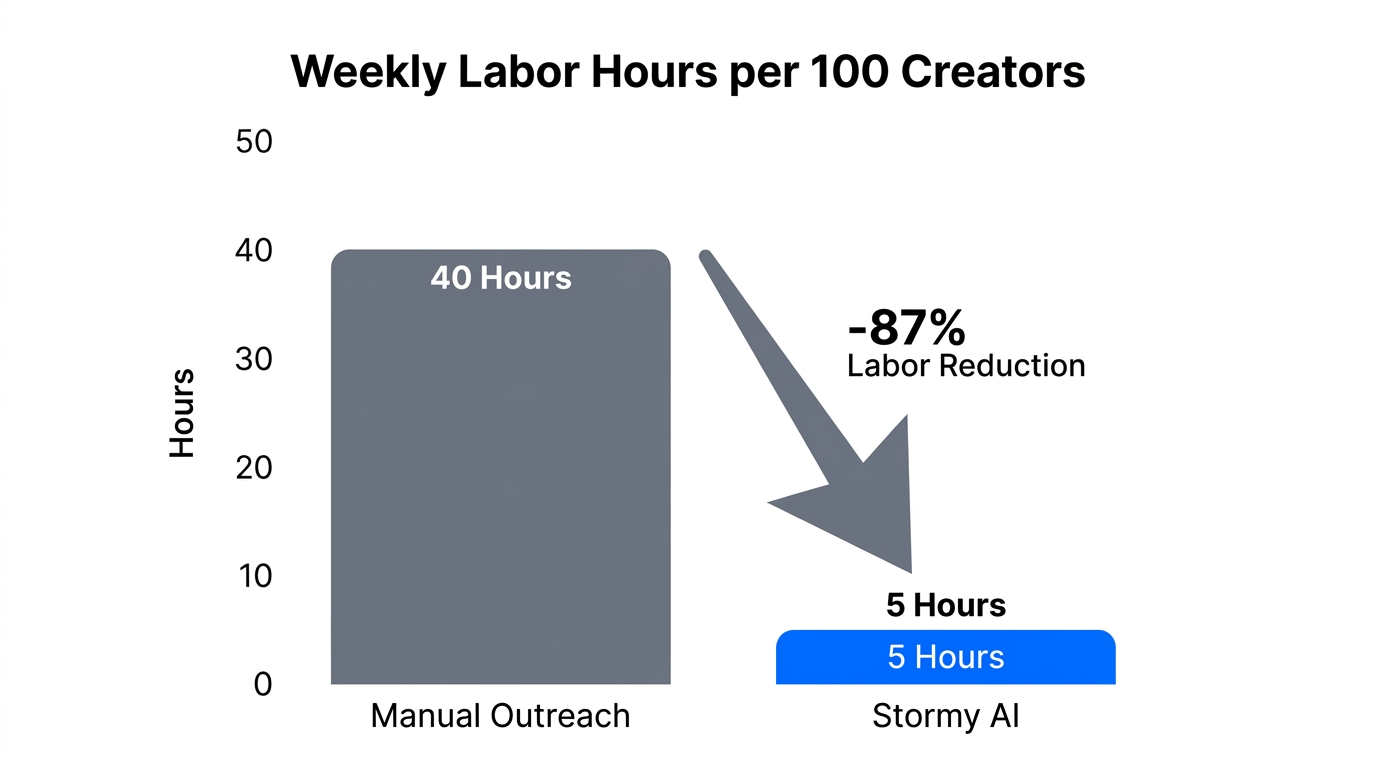
"2026 is the year we stop managing creators and start architecting portfolios. The 'boring 80%' of logistics is now the domain of the AI agent."The efficiency gains are staggering. Brands that have integrated agentic workflows report up to an 80% reduction in manual labor. By using an influencer marketing SDR model, companies can maintain a 24/7 outreach cycle, following up with creators while the marketing team sleeps. This high-volume approach is essential for modern campaigns on platforms like TikTok and Instagram, where content fatigue happens in days, not months.
Setting Economic Guardrails: Maximum CPA and Negotiation Logic
One of the biggest fears in automated creator relationships is the loss of financial control. However, modern AI agents operate within strict economic guardrails. Before deploying an agent for AI influencer negotiation, marketers must define their Maximum Cost Per Acquisition (CPA) or target CPM. The AI then uses this data to negotiate fees autonomously. If a creator’s initial quote exceeds the brand’s limits, the agent can offer performance-based bonuses or tiered structures processed via platforms like Stripe to keep the deal within the desired ROI range.
| Workflow Phase | Traditional Manual Method | Stormy AI SDR Model (2026) |
|---|---|---|
| Discovery | Keyword-based manual filtering | Semantic "Vibe" Search |
| Outreach | Standardized email templates | Hyper-personalized AI Agent |
| Negotiation | 15+ back-and-forth emails | Autonomous CPA-limited negotiation |
| Tracking | Manual spreadsheet updates | Real-time Post Tracking & Analytics |
The ‘SDR Model’ Playbook: High-Volume Outreach with Stormy AI
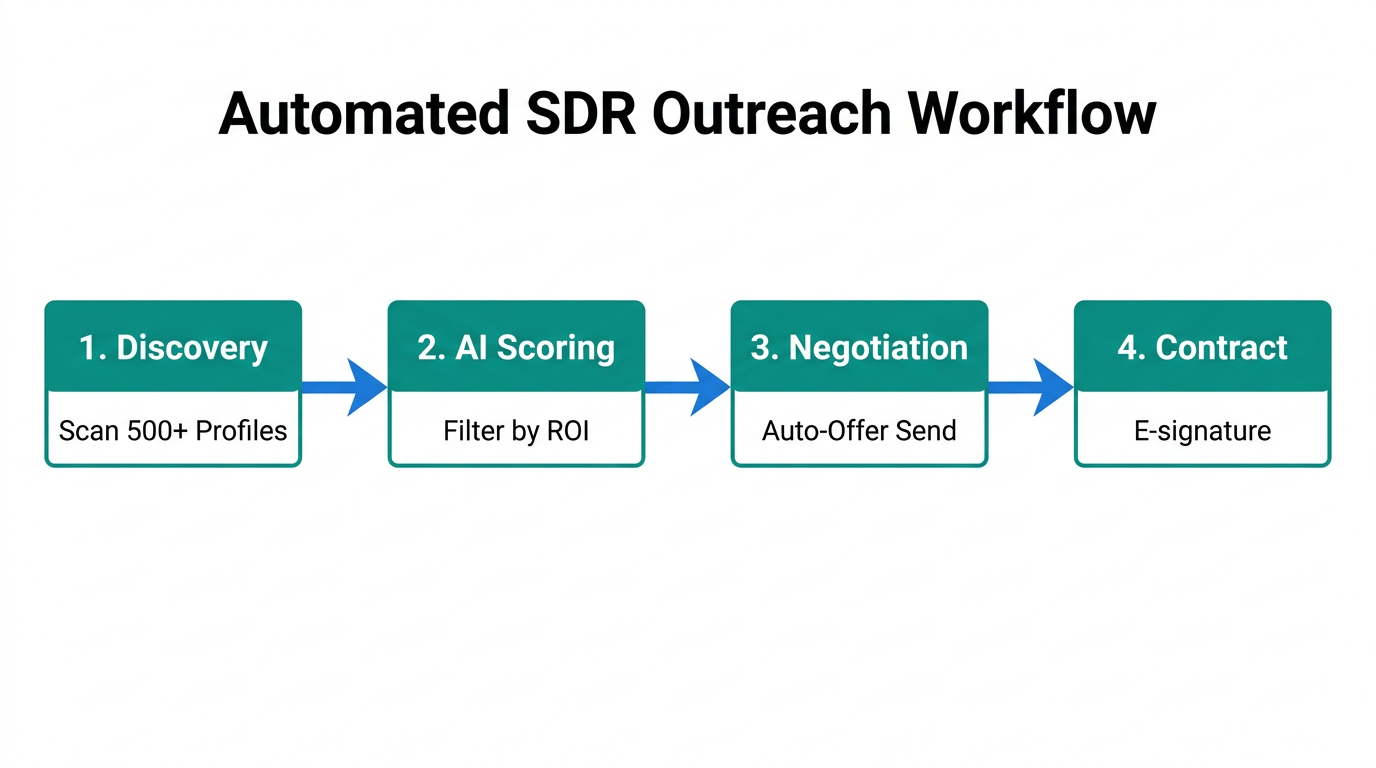
To implement an effective SDR model for influencer marketing, you need to treat your creator pipeline like a sales funnel. This requires a transition from one-off collaborations to a continuous flow of high-quality UGC. Using Stormy AI outreach tools, brands can set up an AI agent that works through the following four steps autonomously.
Step 1: Vibe-Based Semantic Discovery
Instead of searching for broad categories like "fitness," use natural language prompts to find the exact aesthetic your brand requires. For example, a growth marketer might prompt: "Find minimalist home decor creators in New York with a focus on sustainable materials and high engagement among Gen Z." This semantic search bypasses the limitations of traditional tagging and finds creators based on the actual visual and textual content of their posts.
Step 2: Automated Vetting and Quality Scoring
Before the outreach begins, the AI must verify the quality of the audience. Tools that detect engagement fraud and fake followers, such as Social Blade, are now integrated directly into the discovery phase. As noted by Influencer Marketing Hub, over 60% of marketers now use AI-driven vetting to ensure they are not wasting budget on bot traffic. This ensures that every creator the SDR agent contacts has been pre-cleared for authenticity.
"Automation without rigorous vetting is just an efficient way to burn your marketing budget. Vetting is the foundation of any scalable SDR model."Step 3: Multi-Touch AI Outreach
The AI agent generates hyper-personalized emails for each creator. This isn't just inserting a first name; it's referencing specific recent videos, commenting on their unique style, and explaining why they are a fit for the specific campaign. The agent then handles the first three to five follow-ups automatically. This is where the influencer marketing SDR shines, as it maintains the persistence required to get a response without burdening the human manager.
Step 4: Real-Time Pipeline Management
All conversations are centralized in an AI-powered inbox. The agent categorizes responses based on intent: "interested," "negotiating," "declined," or "creative questions." This allows the human manager to jump into only the conversations that require a creative or strategic decision, while the AI handles the logistical confirmation of addresses, shipping details, and basic contract terms.
The 80/20 Rule: Balancing Automation with Human Creativity
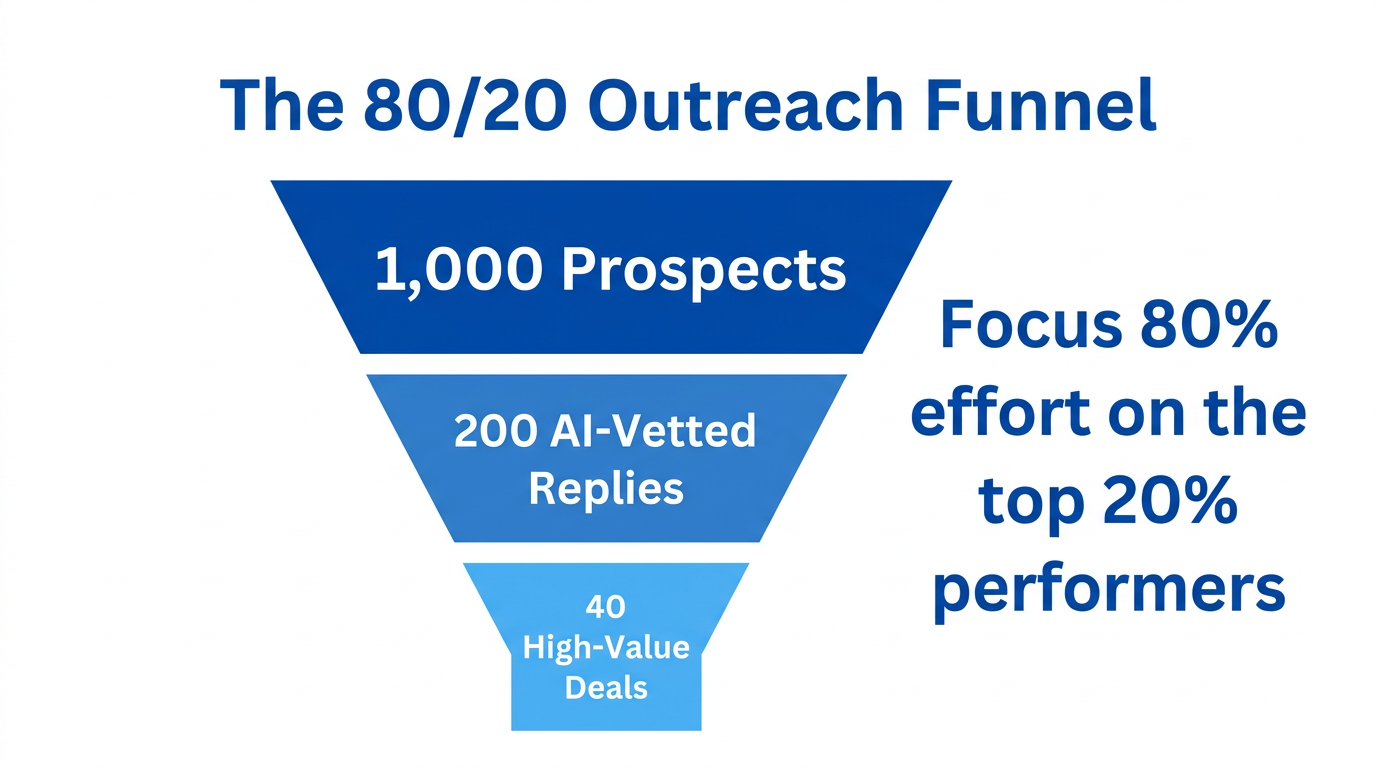
Despite the power of influencer marketing automation, the human element remains vital. Experts at Stormy AI advocate for a hybrid model where AI handles the "boring 80%" of logistics, outreach, and data entry, while humans focus on the "creative 20%." This includes final creative direction, building long-term brand affinity, and signing off on the final contract. The goal is to evolve the role of the Influencer Manager into a "Portfolio Architect," overseeing a vast network of creators managed by AI agents.
When working with complex campaigns that involve multi-channel strategies like Apple Search Ads or Meta Ads Manager, the human manager must ensure that the creator's content aligns with the broader performance marketing goals. The AI can find the creator and negotiate the price, but the human ensures the story is right.
Data Hygiene: Avoiding Hallucinations in Your Outreach
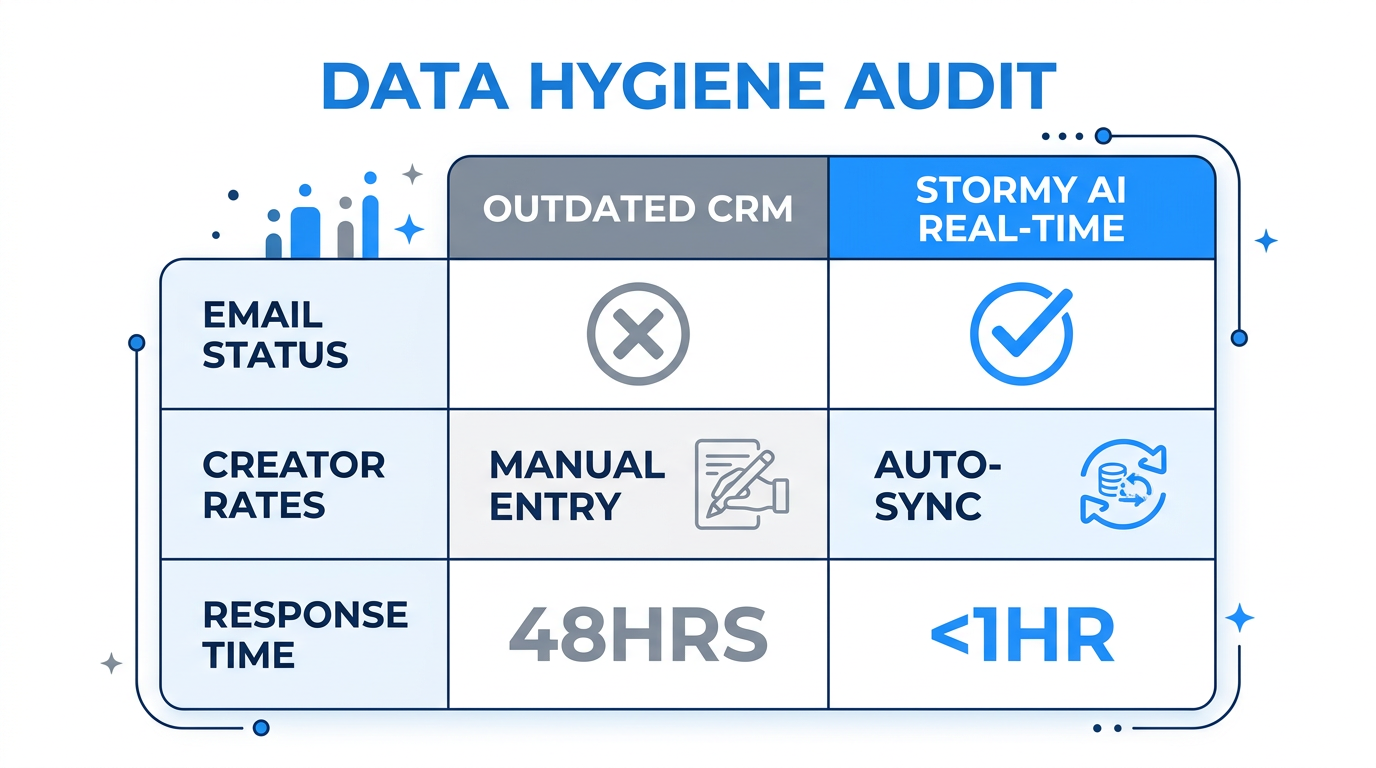
The biggest risk in 2026 for automated outreach is "AI Hallucination" caused by poor data hygiene. If your CRM is outdated or contains duplicate profiles, your AI agent might reference the wrong account or use an old handle, which instantly signals to the creator that the outreach is automated. As Salesforce points out, AI is only as good as the data it consumes. Clean, updated data is the fuel for a successful automation strategy.
Furthermore, brands must ensure their AI agents comply with evolving regulations. Ensuring your outreach and partnerships follow FTC disclosure guidelines and GDPR data privacy standards is non-negotiable. Many modern platforms now include compliance checks as part of their automated workflow, flagging any content that misses a required #ad or #sponsored tag.
"Data hygiene is no longer a back-office task; it is a front-line marketing necessity for anyone using AI agents."Conclusion: Evolving into the Portfolio Architect
The era of manual influencer marketing is over. By embracing influencer marketing automation through an SDR model, brands can achieve scale that was previously impossible. Leveraging Stormy AI for discovery, vetting, and negotiation allows growth marketers to focus on strategy and creative excellence rather than spreadsheets and follow-up emails. As we move further into 2026, the brands that win will be those that successfully pair autonomous AI agents with human-led creative vision to build massive, high-performing creator portfolios.