In the modern digital economy, we are drowning in attention but starving for affinity. Most growth marketers obsess over the former—chasing the high of a viral tweet or a trending TikTok sound—only to realize that millions of views rarely translate into millions of dollars. The reality is that 'cheap' attention is a commodity, while brand affinity is an asset. According to Goldman Sachs research, the creator economy is set to approach $480 billion by 2027, yet the majority of that value is captured by those who build deep trust. To build a sustainable business, startups must move beyond the scroll-stopper and enter the realm of authority. This transition from being a 'meme' to being a 'movement' is the secret to social media monetization and long-term customer loyalty.
The LTV Gap: Why Millions of Followers Fail to Drive Revenue
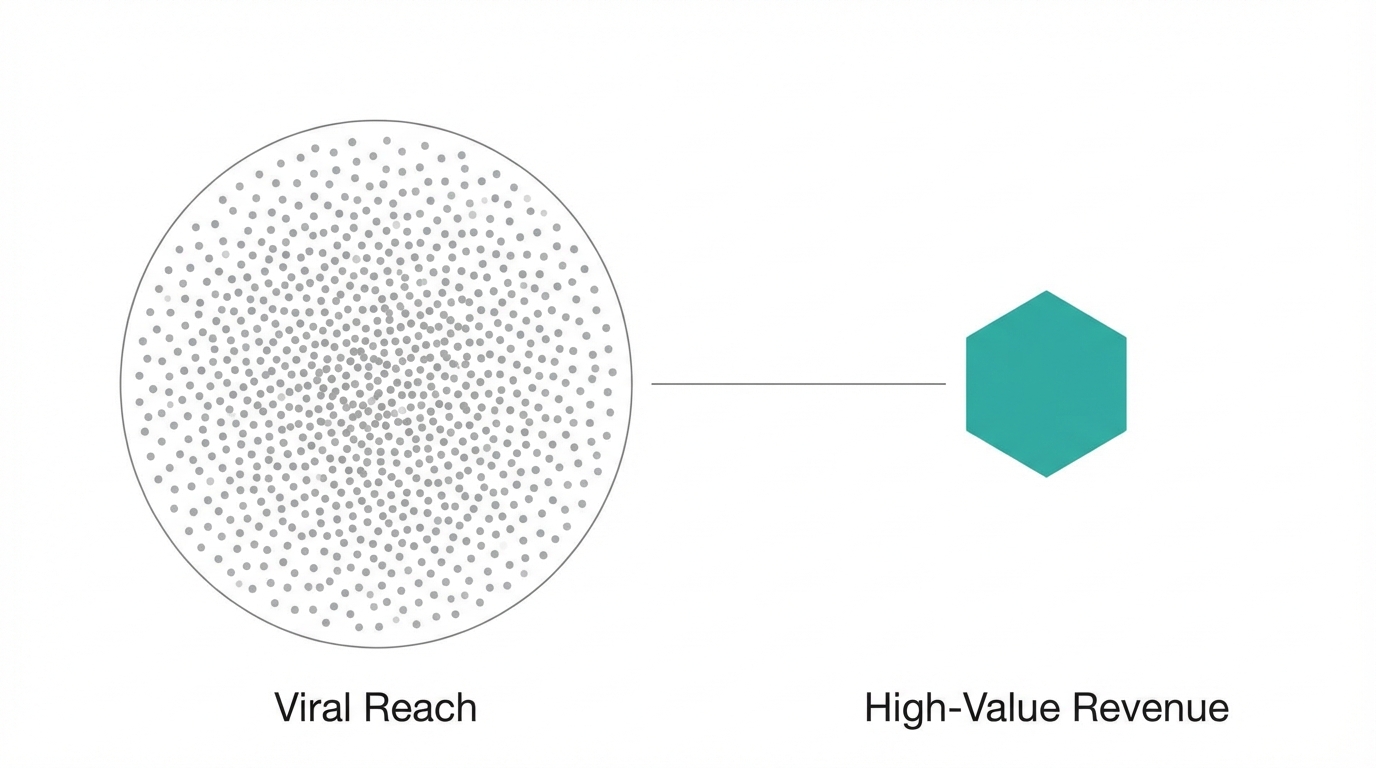

There is a massive disconnect in the current influencer landscape known as the LTV (Lifetime Value) Gap. We see it constantly: an influencer with five million followers launches a product and fails to move 500 units, while a niche authority with 100,000 followers generates seven-figure revenue in a single weekend. This phenomenon occurs because attention is not the same as trust. Data from Influencer Marketing Hub suggests that micro-influencers often see 60% higher engagement rates than mega-celebrities because of this perceived authenticity. If your content strategy is built solely on entertainment, your audience views you as a performer, not a provider.
When users scroll through TikTok or Instagram, they are in a passive consumption state. They might give you a 'like' for a funny skit, but they won't give you their credit card information unless you have established authority and affinity. High-LTV customers are won through consistency and depth, not just frequency. For startups, content marketing for startups must prioritize 'buying' the user's brain space rather than just their momentary glance. This requires a shift from being a marketer to being a 'social engineer' who understands how to build algorithms into their creative process.
The Investigative Journalist Layer: Building Credibility Through Data
One of the most effective ways to bridge the gap between brand affinity vs attention is by adopting the 'Investigative Journalist' layer in your content strategy. This approach involves posting data-backed, high-effort content that provides actual utility to the viewer. While a meme page might post a funny photo of a politician, an authority account like the Pelosi Tracker dives into the financial disclosures, SEC filings, and legislative timelines.
Consider the difference in these two content pieces:
- The Meme Approach: "Nancy Pelosi just bought NVIDIA again! Insider trading is crazy!" (High virality, low trust).
- The Investigative Journalist Approach: "Nancy Pelosi just disclosed a purchase of NVIDIA. Interestingly, this comes six months after the passage of the CHIPS Act, which allocated $40 billion to US-based tech. Here is how that capital flows down to NVIDIA's balance sheet." (Moderate virality, extremely high authority).
The latter builds credibility. Even if it gets fewer views than the meme, it attracts a higher quality of follower—people who are actually interested in the product (in this case, an investment app). By doing the heavy lifting and the 'grinding' of manual research, you prove to your audience that you are an expert worth following. This data-backed approach is essential for any brand looking to maximize influencer analytics and ROI, as it targets the 'bottom of the funnel' even while the content is sitting at the 'top of the funnel.'
Meme vs. Authority: The Balancing Act of Social Engineering
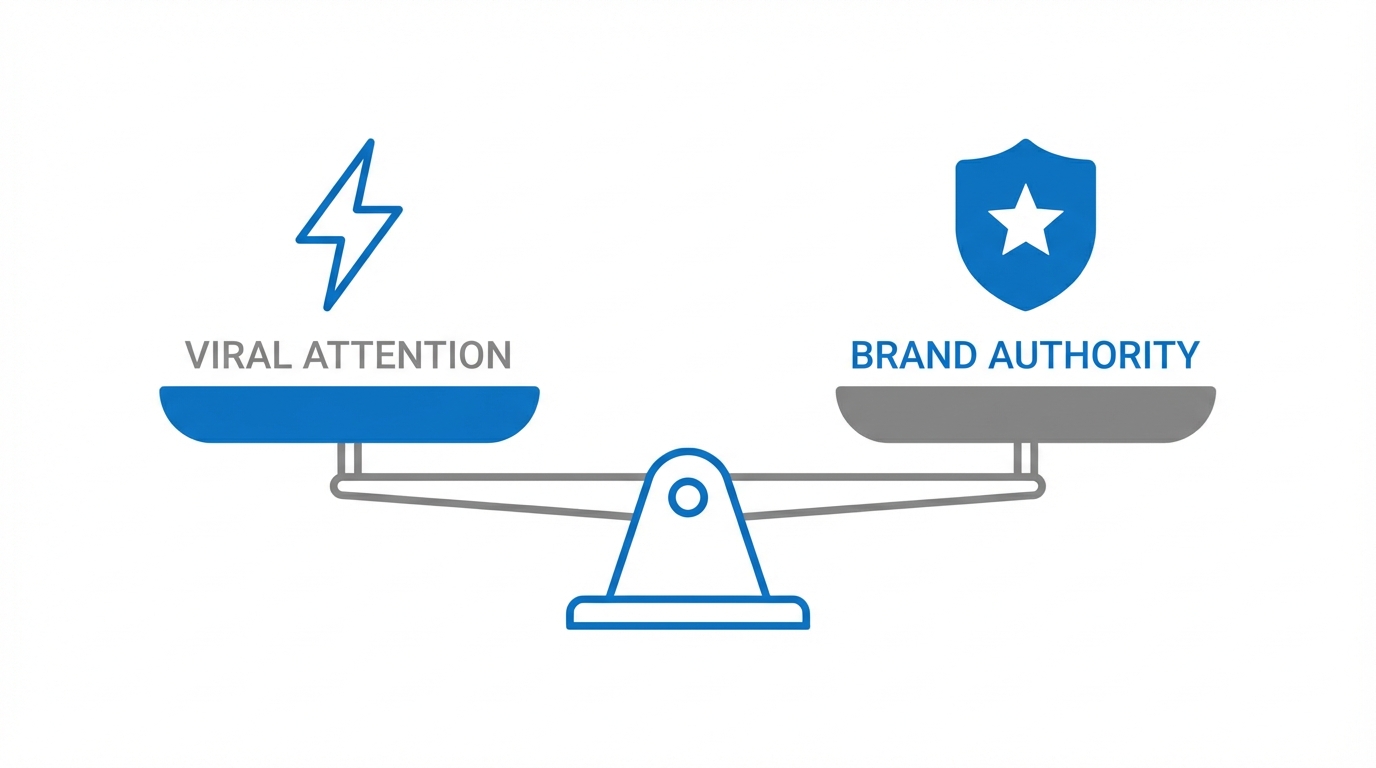

To dominate social media today, you cannot choose one or the other; you must marry them. This is the core of social engineering. You need the 15-second scroll-stoppers to feed the X (formerly Twitter) and Instagram algorithms, but you need the informative, 'legit' content to build brand loyalty. If you go 100% meme, you'll never sell a product. If you go 100% investigative journalist, you'll never reach a wide enough audience to scale.
A successful framework involves trend hacking. Think of social media as a river of conversations. Different 'boats' (trends) are constantly floating down that river. Your brand needs to throw a 'life jacket' onto those boats to get pulled along with the current. For example, if the public is talking about government spending, you launch an account called 'Stop the Spend' instead of just 'Tax Savings App.' People follow movements, not companies. By naming your account after the outcome the audience desires, you build immediate affinity.
When managing these relationships, platforms like Stormy AI can help source and manage UGC creators who already have this balance mastered, allowing you to find 'authority' figures in niche markets like finance, fitness, or tech rather than just general entertainers.
Case Study: Sponsoring the UFC and Maximizing Viral Surface Area
The recent marketing campaign by the investment app Autopilot at a major UFC event serves as a masterclass in turning attention into affinity. Most brands would simply pay for a banner on the octagon and call it a day, hoping for brand recognition. A social engineer, however, looks to maximize the surface area for virality.
The strategy didn't stop at the sponsorship. They created multiple 'viral moments' to support the main event:
- The Octagon Ad: Placing the slogan "Invest Like a Politician" in red, white, and blue directly in the noon camera angle for maximum visibility.
- The Fake Pelosi: Sending a Nancy Pelosi look-alike to sit front row, causing thousands of fans to take photos and wonder if it was real.
- The Cybertruck: Driving a Tesla Cybertruck wrapped in "Pelosi 2024" around Las Vegas to spark organic conversations on TikTok.
By layering these creative 'stunts' on top of a traditional sponsorship, the brand increased its chances of virality significantly. This didn't just drive app downloads; it built brand loyalty. People started to view the company as 'cool' and 'bold,' differentiating them from traditional, boring competitors in the fintech space. This is how you use brand affinity to stand out in a crowded marketplace.
How Affinity Lowers Customer Acquisition Costs (CAC)
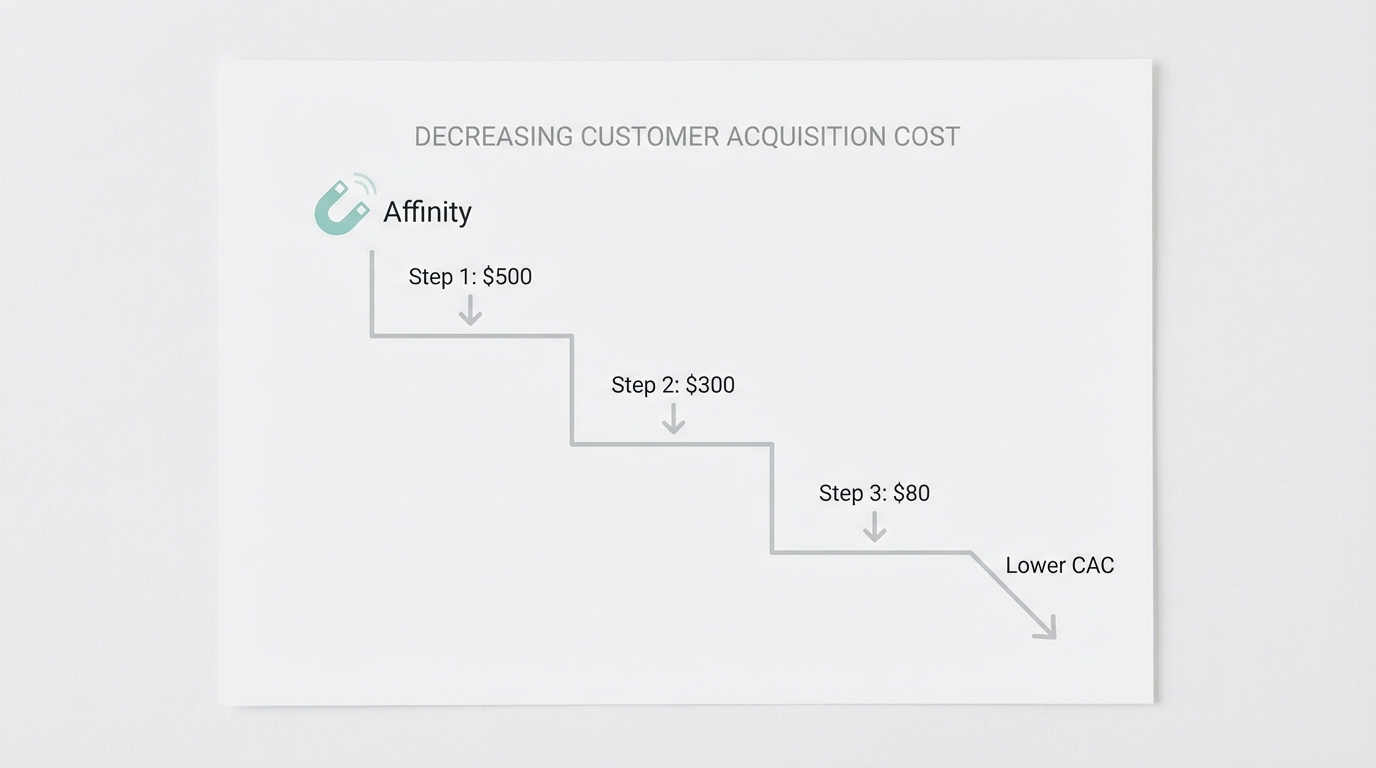
In the world of content marketing for startups, the ultimate goal is to lower your Customer Acquisition Cost (CAC) to a level that makes paid social actually profitable. If you rely solely on Meta Ads Manager or Google Ads without a strong organic presence, your CAC will remain high because you are competing against everyone else for the same 'cold' attention. According to Statista, CAC in highly competitive industries like finance can exceed several hundred dollars per user.
However, when you have affinity, your CAC drops dramatically. This happens because:
- Higher CTR: People are more likely to click on an ad from a brand they already recognize and trust from their organic feed.
- Word of Mouth: High-affinity customers become brand evangelists. One person sharing a 'funny but smart' post about your product is worth $1,000 in ad spend.
- Free Press: By building a list of journalists who cover your niche and feeding them high-quality 'investigative' content, you can land placements in outlets like CNBC or the New York Post without a PR agency.
As you scale, using an AI-powered influencer discovery platform like Stormy AI helps you identify these 'high-affinity' creators. Instead of looking for the biggest following, you can use Stormy's vetting tools to find creators with high engagement rates and audience quality scores, ensuring your influencer analytics and ROI remain top-tier.
The Playbook: Turning Viral Traffic into High-LTV Customers

If you want to replicate this success, follow this step-by-step playbook to move from attention to affinity.
Step 1: Choose Your Movement
Don't name your social page after your product. Name it after the outcome or the enemy. If you're building a fitness app, create an account called 'The Seed Oil Tracker' or 'Anti-Processed Club.' People follow movements because it signals something about their own identity.
Step 2: Implement the 80/20 Content Split
Focus 80% of your energy on 'The Meme' (short-form, high-virality, funny content) to feed the algorithm and get the top-of-funnel reach. Focus 20% on 'The Investigative Journalist' (deep-dives, data, statistics, and high-effort research) to build the trust necessary for conversion.
Step 3: Build a Press 'Beehive'
Don't wait for the press to find you. Manually scrape or find the emails of every journalist who covers your specific niche. Send them high-value data once a week with no 'ask.' When you finally have a viral stunt or a product launch, they will already see you as an authority and will be 10x more likely to cover you.
Step 4: Create 'Scroll-Stopping' Stunts
When you do a sponsorship or a big campaign, don't be boring. Ask yourself: 'What can I do that will make someone take a double-take?' Whether it's a fake celebrity at an event or a provocative billboard, you need to create a moment that people feel compelled to tell their friends about.
Conclusion: The Long Game of Affinity
In a world where attention is fleeting, affinity is the only true competitive advantage. By balancing the humor of the meme world with the rigor of investigative journalism, brands can build a loyal community that doesn't just watch their content, but trusts their products. Social media monetization isn't about the number of views—it's about the depth of the relationship. Whether you are using tools like Stormy AI to discover the right creators or engineering your own viral moments, the goal remains the same: move beyond the scroll and into the heart of the customer. Start building your authority today, and the revenue will follow.