In the high-velocity marketing landscape of 2026, most brands are still playing a linear game. They invest one dollar and hope for two dollars back. They spend one hour of labor and expect one hour of output. But the most successful brands of this decade aren't thinking in lines; they are thinking in asymmetric curves. The secret to explosive, viral success isn't just about better creative or higher budgets—it is about increasing your 'Luck Surface Area' and applying portfolio theory to your growth strategy. By understanding how to cap your downside while leaving your upside uncapped, you can build a brand that doesn't just grow, but compounds while you sleep.
The Math of Asymmetry: Capped Downside vs. Uncapped Upside
Discover how to limit your potential losses while leaving room for massive gains.
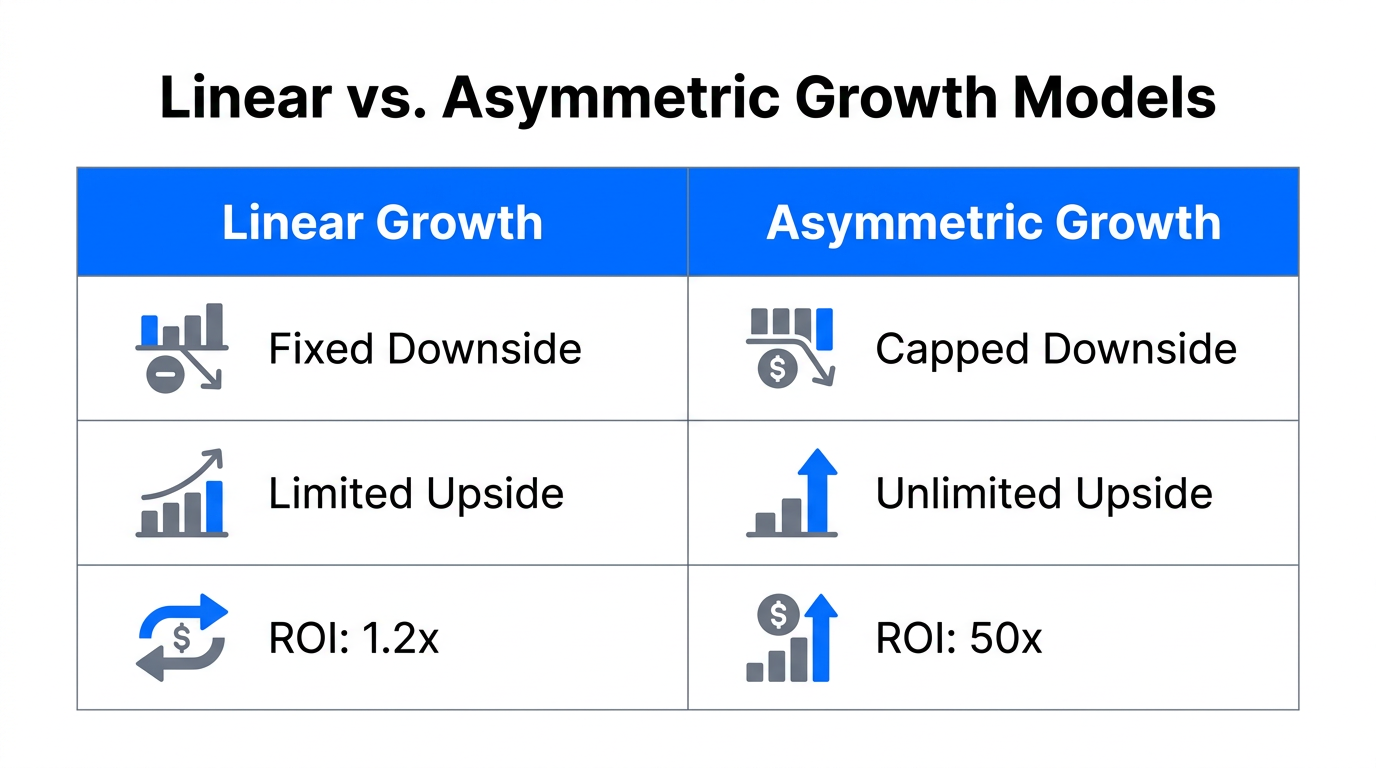
The core principle of a successful asymmetric marketing strategy is simple: find opportunities where the cost of failure is small, but the reward for success is transformative. In traditional venture capital, an investor might put $3 million into a startup. The absolute most they can lose is that $3 million. However, the potential gain could be $300 million or more. This is asymmetric risk. As discussed in recent deep dives into Google Ads and investment theory, your marketing department should function like a venture fund.
When you run 100 small experiments—perhaps 100 different UGC (user-generated content) videos or 100 micro-influencer collaborations—most will fail or break even. But if one of those videos goes viral on TikTok or Instagram, the return can be 100x or 1,000x your initial influencer acquisition cost. The downside of a failed $500 video is just $500. The upside of a viral hit is millions in revenue and brand equity. This is why high-volume, low-cost experimentation is the only way to find 'power law' winners in 2026.
"You can only lose one times your money, but you can gain a hundred or a thousand times your money back. That kind of breaks the brain, but it’s how the biggest brands are built today."Increasing Your 'Surface Area' of Opportunity
Evaluate if success is purely random or a result of expanding your opportunities.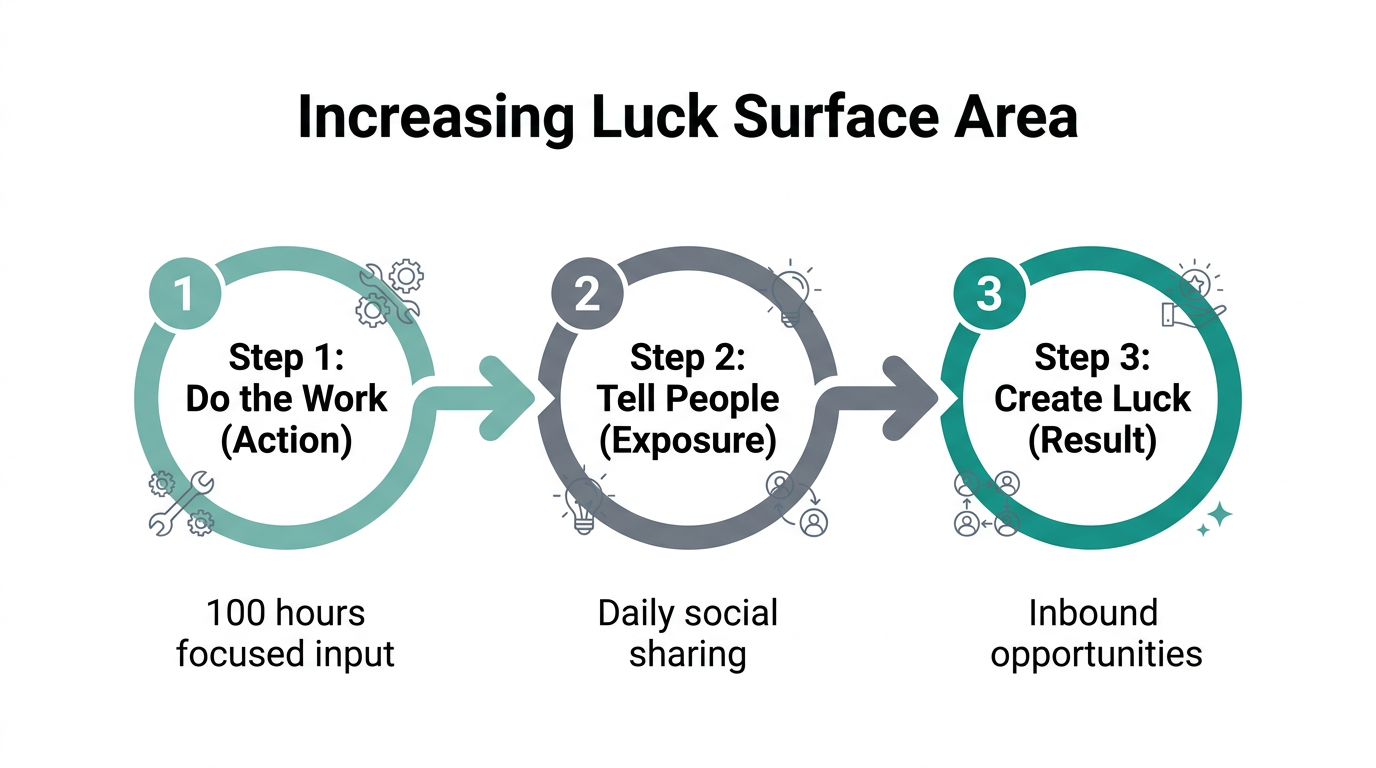
Success is often attributed to luck, but in 2026, luck is a controllable variable. Your 'Luck Surface Area' is the product of your passion and the number of people you communicate it to. For a brand, this means getting your product in front of as many influencers, decision-makers, and potential advocates as possible. The more people who know you exist, the higher the probability that a serendipitous connection—like a top-tier creator discovering your product organically—will happen.
To increase this surface area, you need to be everywhere. This doesn't mean spending millions on Meta Ads Manager; it means building assets that act as magnets. Whether it's a high-value newsletter on Beehiiv, an active X/Twitter presence, or a consistent presence on TikTok, these channels are 'inbound luck' generators. Platforms like Stormy AI streamline this by helping brands discover thousands of niche creators who can expand that surface area instantly across multiple social platforms.
The Power Law of Relationships: Why 10% Drive 90%
In any portfolio, whether it's a $450 million venture fund or a creator marketing campaign, the returns are heavily skewed. Out of 100 influencers you work with, roughly 10 will drive 90% of your total acquisition. This is the Power Law of Relationships. Many marketers make the mistake of spreading their attention equally across all partners. Instead, your goal should be to identify the 'outliers' early and double down on them.
| Creator Tier | Volume of Partnerships | Expected ROI Contribution | Primary Strategy |
|---|---|---|---|
| The 'Power' 10% | 10 creators | 90% | Long-term contracts, custom whitelisting, deep collaboration. |
| The 'Testing' 30% | 30 creators | 7% | Performance-based incentives, iterative content testing. |
| The 'Discovery' 60% | 60 creators | 3% | Seed with product, monitor for organic 'spikes' in engagement. |
To find these winners, you must first cast a wide net. You cannot predict which creator will resonate with the algorithm on any given day. By using AI-powered search engines to discover creators on Stormy, you can find the specific niches—like the 'Silver Sneakers' fitness demographic or the Breaking Bad superfan community—that others are overlooking. Once a creator shows an asymmetric return on a small test, you move them into your 'Power 10%' and scale the budget.
Building Your 'Digital Yacht': The Social Proof Hack
Learn the metaphor of building a yacht to represent high-value business growth.One of the most powerful brand growth tactics for 2026 is the concept of 'Building Your Own Yacht.' This analogy, inspired by Greek shipping tycoon Aristotle Onassis, suggests that you should create an environment—a 'yacht'—where social proof is instant and the law of reciprocity is in your favor. For Onassis, it was a literal yacht where he hosted celebrities and business titans. For you, it’s a digital ecosystem.
When a creator or customer enters your 'frame'—whether that's an exclusive community, a high-quality podcast, or a beautifully designed Framer landing page—the hurdles of skepticism are bypassed. By providing immense value upfront (free tools, insights, or entertainment), you trigger the law of reciprocity. When you eventually ask for a partnership or a sale, they are far more likely to say yes. This is the ultimate high-ROI growth marketing move: building a 'warm' relationship asset that compounds over time.
"From the moment you step foot on the yacht, social proof is done. In marketing, your content and community are your yacht. They do the selling so you don't have to."Transitioning from Linear to Compound Interest
Most marketing activities are 'linear.' If you stop running Apple Search Ads, the traffic stops. If you stop posting manually, the engagement drops. To achieve true scale, you must transition to assets that grow while you sleep. This is why 2026 is the year of the AI-agent-driven marketing stack.
Consider the difference between a manual outreach team and an automated system. A manual team has a linear output capped by hours worked. An AI agent, however, can discover, vet, and outreach to creators 24/7. By building systems that leverage OpenAI's latest models or Anthropic's Claude for research, you are building a compounding knowledge asset. Every creator you add to your CRM and every relationship you nurture becomes a brick in a wall that protects your brand from rising influencer acquisition costs.
Playbook: Running a 'Portfolio Style' Marketing Department
Explore how to convert knowledge into free downloadable resources for effective brand marketing.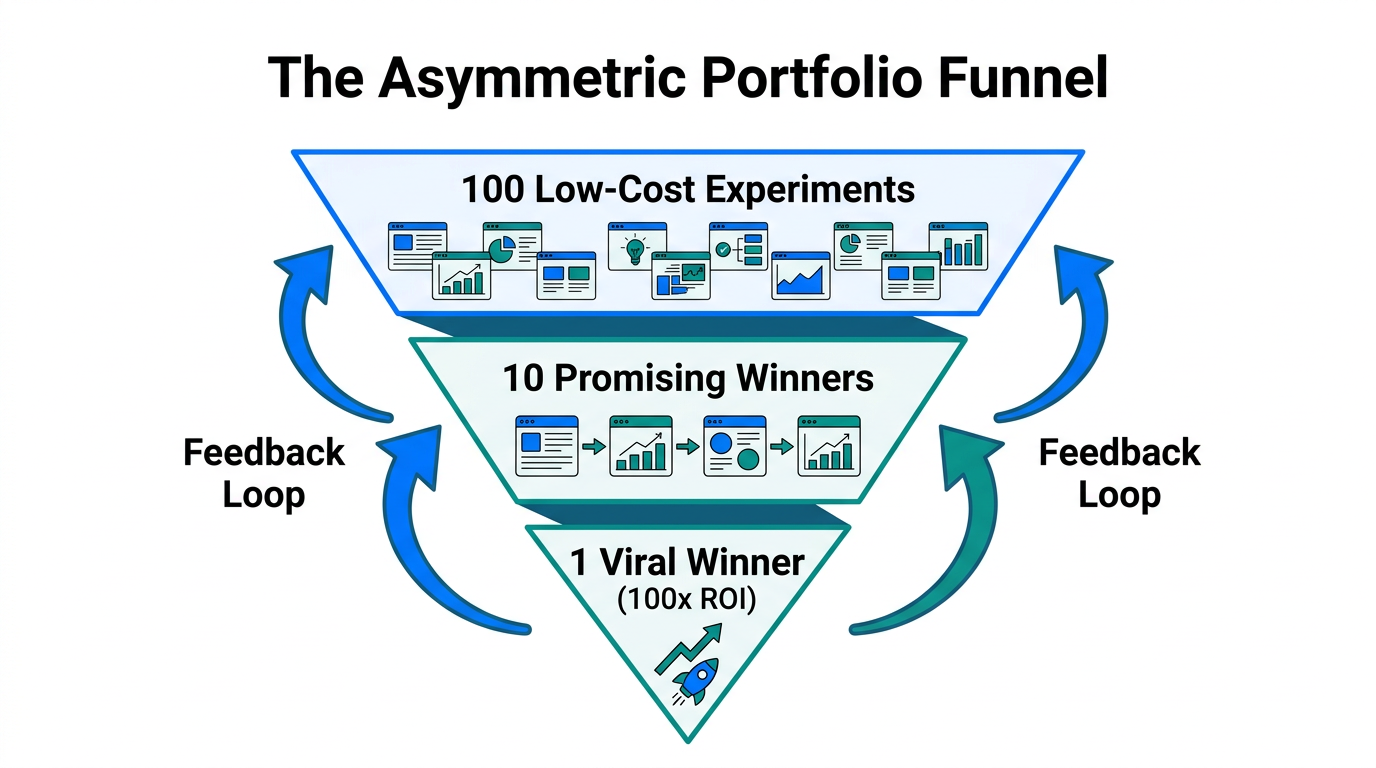
To implement an asymmetric marketing strategy, follow this step-by-step playbook to transform your growth department into a high-yield experiment engine.
Step 1: Set Your 'Experiment Budget'
Allocate 20-30% of your total marketing spend to high-risk, high-reward experiments. This money is 'burnt' in the sense that you don't expect a 1:1 return, but you do expect to find one winner that offers a 10x-100x return. Use tools like Klaviyo to track which experiments convert into long-term customer value.
Step 2: Increase Volume with AI Discovery
Use a search engine like Stormy AI to find 500+ micro-influencers in your niche. Don't over-vet them manually at this stage—the goal is to increase your surface area. Use AI to personalize outreach at scale so you aren't trading your team's time for linear results.
Step 3: Run 'Micro-Tests'
Send products or small flat-fee offers to your 500 creators. Ask for one simple video or post. Use post-tracking analytics to monitor which creators get the most 'algorithmic lift.' Look for outliers who have a high engagement-to-follower ratio.
Step 4: The 10x Double-Down
Once you find the 10-15 creators who drove 80% of the results, move them into a 'Partner' tier. Offer them long-term contracts, higher commissions, or even equity. This is where you move from testing to harvesting the power law.
Step 5: Productize Your 'Yacht'
Create a recurring asset that creators and customers want to be part of. This could be a monthly 'Founders Dinner,' a featured spot in your newsletter, or an invite-only beta testing group. This builds the 'moat' around your brand that keeps your acquisition costs low even as the market gets noisier.
Conclusion: The Future Belongs to the Experimenters
In 2026, the brands that win aren't the ones with the biggest budgets—they are the ones with the most experiments. By applying portfolio theory to your growth marketing, you can cap your downside and wait for the 'black swan' viral event that changes your company's trajectory forever. Focus on increasing your luck surface area, building your digital 'yacht' for social proof, and identifying the power-law winners in your influencer network. The math of asymmetry is on your side—you just have to start playing the game.