In a digital marketplace where the Apple App Store hosts over 2.2 million apps and Google Play exceeds 3.7 million, the margin for error in mobile marketing has vanished. Discovery is no longer a simple game of high-volume keywords; it is a battle for intent-aligned conversion. While traditional App Store Optimization (ASO) focuses on getting your app seen, Conversion Rate Optimization (CRO) ensures that once seen, the user actually installs. When these two disciplines are siloed, growth stalls. However, by leveraging Claude Code, developers and marketers can now bridge this gap, aligning metadata with visual assets to drive mobile app install growth by as much as 95%.
The Invisible Wall: Why Discovery Isn't Enough
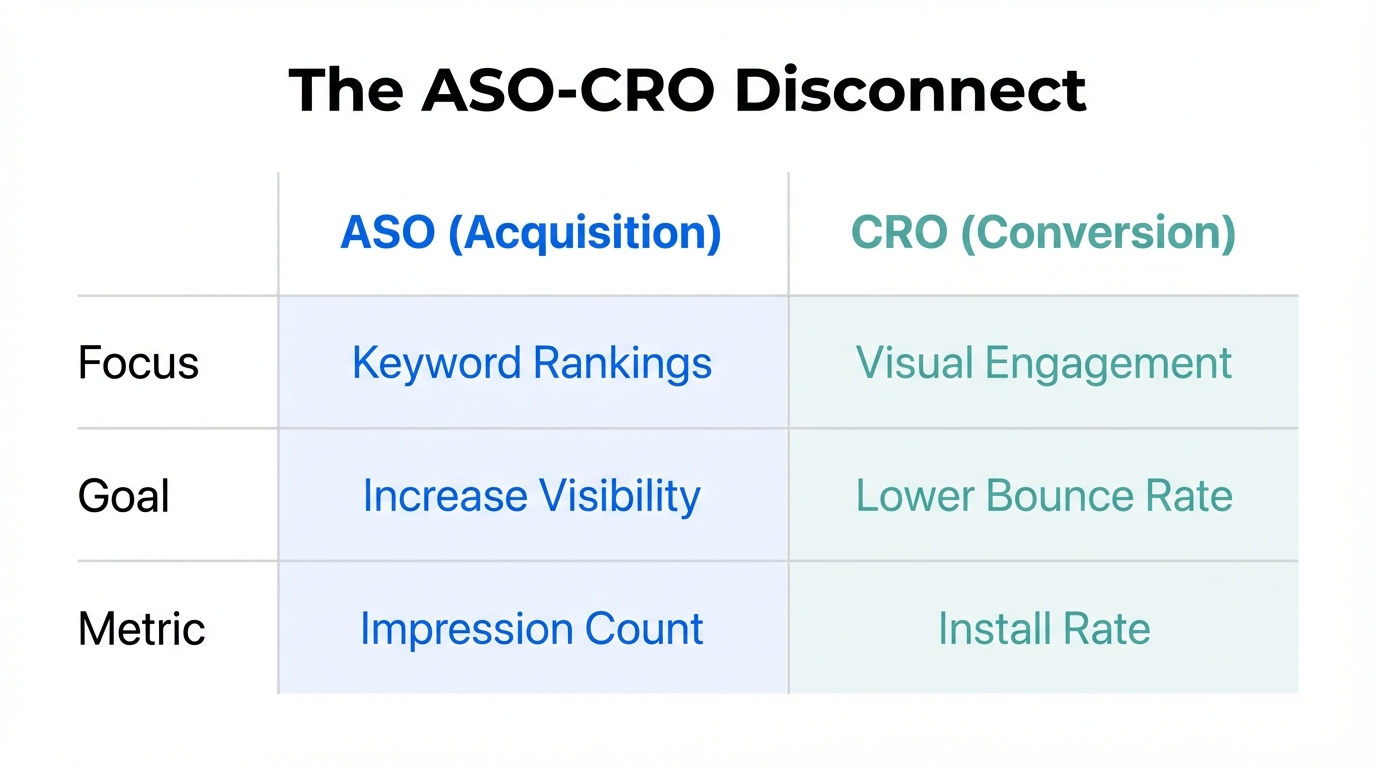
For years, the industry focused on "keyword stuffing"—the practice of cramming high-volume terms into titles and subtitles. But as of 2025, the landscape has shifted toward semantic intent. According to Sensor Tower, roughly 70% of all app installs originate directly from app store searches. However, appearing in a search result is only half the battle. If your keywords promise a "budget tracker" but your screenshots showcase generic "financial planning," the cognitive dissonance leads to a bounce.
Bridging the gap between ASO conversion rate optimization and discovery requires a unified data layer. This is where app store marketing is evolving into "Agentic ASO," where AI tools don't just suggest words—they map the entire user journey from the first query to the final click.
Claude Code: The Technical Engine for ASO Automation
Claude Code is Anthropic’s official CLI and agentic tool, designed to operate within a developer's terminal. Unlike a standard chatbot, Claude Code can execute terminal commands, manage file structures, and connect to live search data through the Model Context Protocol (MCP).
Setting Up Your ASO Agent
To begin, you must install the CLI and connect it to live app store data. This allows the AI to move beyond its training data and analyze the current market in real-time. Use the following steps to initialize your environment:
- Installation: Run
npm install -g @anthropic-ai/claude-codeto get the agent running locally via npm. - Connect Live Data: Use the SerpAPI MCP to bridge Claude with live Google and App Store search results.
- Specialized Tooling: Integrate the ASO-MCP, which provides specific tools for keyword discovery and traffic scoring.
"Claude Code allows us to build a 3-month ASO roadmap in under 20 minutes, automating competitor gap analysis that previously took entire marketing teams days to complete."
Mapping High-Converting Keywords to Visual Design
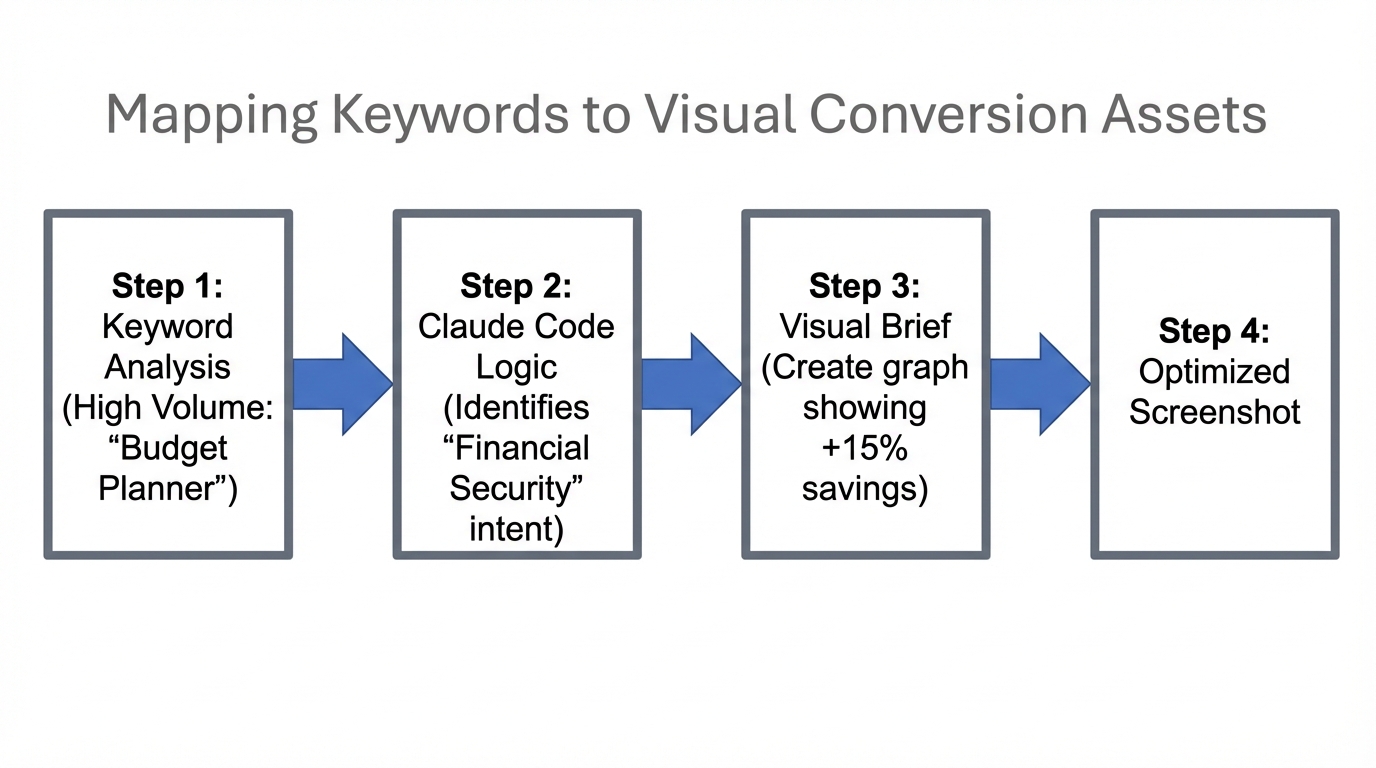
The most common mistake in app store marketing is treating the keyword list and the creative brief as separate documents. Claude Code solves this by performing a "Semantic Mapping" of your top-ranking keywords to specific visual cues for your designers.
| Keyword Category | User Intent | Screenshot Requirement | CRO Impact |
|---|---|---|---|
| Functional/Utility | How it works | Step-by-step UI flow | High |
| Aspirational/Lifestyle | Who I will become | High-quality UGC or lifestyle photography | Medium |
| Trust/Security | Is it safe? | Social proof and encryption badges | Critical |
By using the "6 Circles" research method within Claude Code, you can prompt the agent to score keywords based on Relevance, Difficulty, Volume, Conversion Potential, Competitor Gap, and Semantic Authority. For example, if the agent identifies "safe investment for beginners" as a high-potential keyword, it doesn't just suggest adding it to the metadata; it generates a creative brief for a screenshot that specifically highlights the app’s security certifications and simplified UI.
Analyzing 90 Days of Sentiment to Drive Conversions
Conversion isn't just about what you say; it's about how well you answer the user's existing frustrations. An analysis of 90 days of user reviews can reveal why users are leaving or what they are desperately seeking in a competitor’s app. A case study involving a health app found that users in the Indian market were frequently requesting "Hindi local recipes." By identifying this via AI analysis and adding it to the metadata and screenshots, the app saw a 12% increase in conversion within 30 days.
You can automate this process by feeding review exports into Claude Code. The agent can categorize thousands of reviews into "Feature Requests," "Pain Points," and "Delighters." When these insights are mirrored in your app store creative optimization, the user feels an immediate sense of relevance that drives the install.
"The metadata impact on rankings has stabilized; the real growth engine is now aligning those keywords with visual assets that speak to current user sentiment."
Leveraging UGC for Creative Optimization
Once Claude Code identifies the "What" (the keywords and themes), you need the "How" (the actual creative assets). Static, polished studio shots are increasingly less effective than authentic content. This is where modern sourcing platforms change the game. To find the right creators for these visuals, platforms like Stormy AI streamline creator sourcing and outreach, providing the raw, authentic footage that converts searchers into users.
By sourcing User Generated Content (UGC) that mirrors the keywords identified in your ASO conversion rate optimization strategy, you create a cohesive narrative. If your keyword strategy focuses on "easy meal prep," a video of a real person using the app to prep meals in a real kitchen will significantly outperform a generic graphic. Using Stormy AI allows you to discover creators in specific niches—like fitness or finance—who can produce the exact visual hooks your ASO data demands.
Refining Metadata with AI-Driven A/B Testing
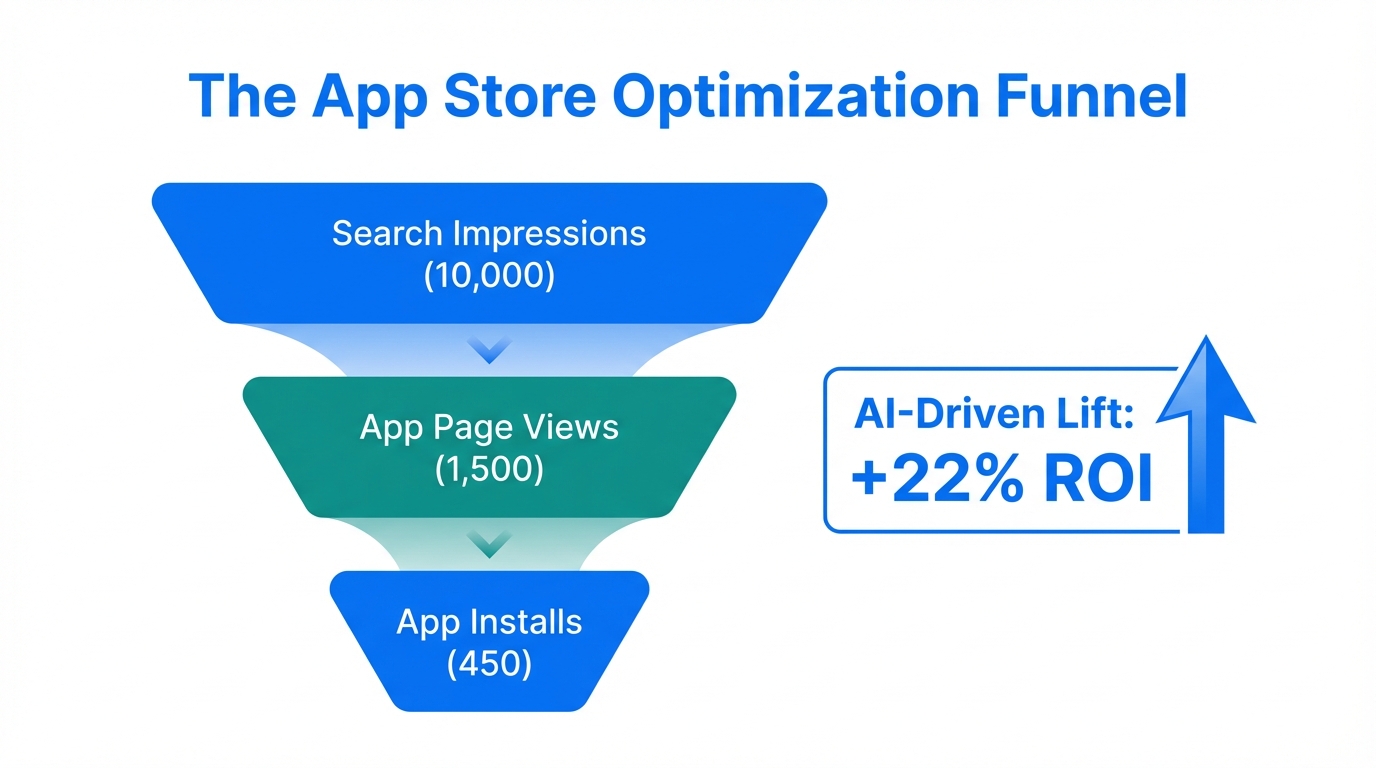
Refining your metadata is not a one-time event. Continuous mobile app install growth requires a feedback loop of A/B testing. Traditional testing can be slow, but AI-driven predictive modeling can forecast which variations are likely to perform best before you even spend a dollar on advertising.
When running these tests, focus on the following metrics:
- Tap-Through Rate (TTR): How many people click your app from the search results?
- Conversion Rate (CVR): How many people download after landing on the page?
- Keyword Ranking Velocity: How quickly do you move up for specific terms after a metadata update?
The Playbook: A Continuous Improvement Workflow
To maintain a competitive edge, you must implement an automated workflow for app store creative optimization. Follow this step-by-step playbook to keep your app store presence fresh and high-converting.
Step 1: Automated Trend Monitoring
Set a weekly cron job for Claude Code to scan competitors and market leaders. Identify any new keywords they are ranking for or changes in their screenshot styles.
Step 2: Sentiment-to-Keyword Mapping
Monthly, export your latest 500 reviews. Instruct Claude to update your keyword list based on shifting user language. If users start calling your "social networking app" a "community for creators," adjust your metadata to reflect that exact vernacular.
Step 3: Creative Refresh
Every quarter, refresh your top three screenshots. Use the high-performing keywords from Step 2 to brief your design team or source new content. Ensure the text overlays on your screenshots match the highest-volume search terms currently driving traffic.
The Future of App Store Growth
The convergence of ASO and CRO is no longer optional. In 2025 and beyond, app store marketing will be defined by how effectively brands can use AI to interpret user intent and translate it into a compelling visual story. By integrating Claude Code into your technical workflow and aligning it with authentic creative sourcing, you can move beyond static optimization and enter a cycle of continuous, data-driven growth. Start by installing the CLI, connecting your live data, and letting the AI reveal the hidden conversion opportunities in your app’s metadata today.